How to Buy Bitcoin in the UAE in 2026: 5 Exchanges Compared — Fees, AED Payments and the 0% Tax Rule
Bitcoin just fell to $75,500 — and UAE residents can buy the dip with 0% personal tax on gains. We compared 5 VARA-licensed exchanges on fees, AED deposits and withdrawal limits, and worked out what AED 10,000 of BTC actually costs on each.
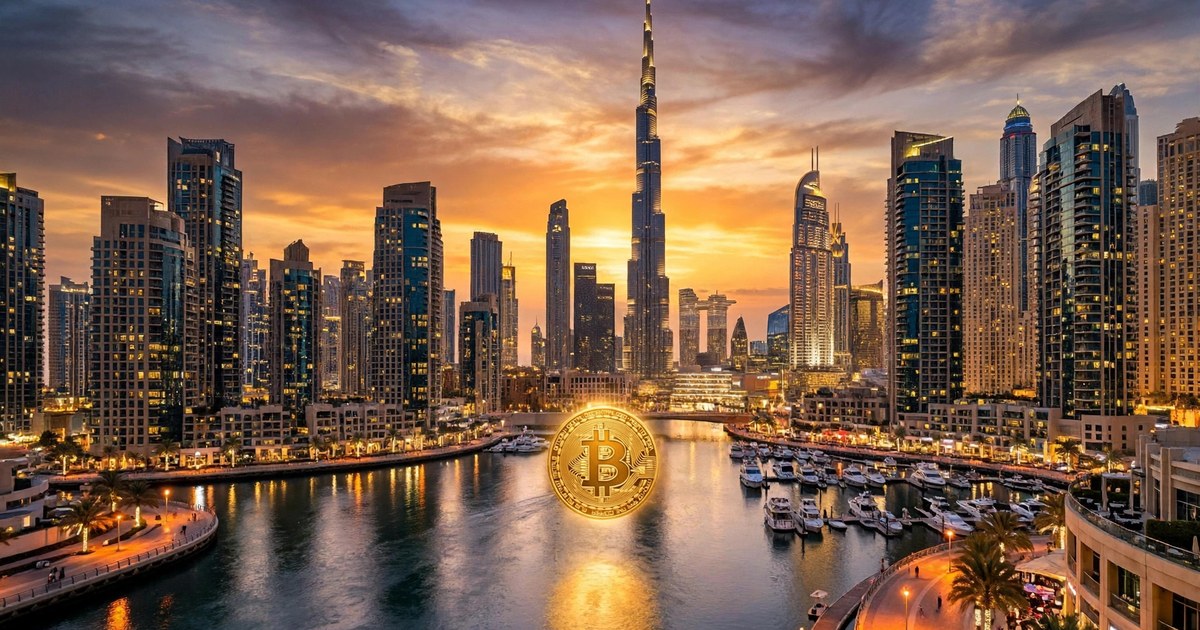
Bitcoin is trading near $75,500 after a $1.24 billion liquidation day — and if you live in the UAE, you can buy this dip with 0% personal tax on any gains you make. No capital gains tax, no income tax on your crypto profits, and five fully licensed exchanges that accept dirhams directly. Here is exactly how to do it, what it costs on each platform, and the five mistakes that quietly eat UAE buyers' money.
Is Bitcoin Legal in the UAE?
Yes. Buying, owning and trading Bitcoin is fully legal in the UAE, and the country has built one of the clearest crypto regulatory frameworks in the world. But the rules are split across several regulators, and which one covers you depends on where you live and where the exchange is licensed:
- VARA — the Dubai regulator: The Virtual Assets Regulatory Authority, established in 2022, licenses crypto exchanges, brokers and custody providers in Dubai (outside the DIFC). Platforms without VARA authorisation cannot legally serve Dubai residents.
- ADGM and the FSRA — the Abu Dhabi regulator: The Abu Dhabi Global Market's Financial Services Regulatory Authority licenses crypto firms in Abu Dhabi. Several exchanges hold licences here as well as in Dubai.
- DFSA — the DIFC regulator: The Dubai International Financial Centre has its own regulator, the DFSA, covering firms inside the DIFC free zone.
- SCA — the federal regulator: The Securities and Commodities Authority covers crypto activity at the federal level, including in the northern Emirates.
One important distinction: Bitcoin is not legal tender in the UAE, so you cannot pay a bill in BTC — but trading and investing through a regulated platform is permitted and actively supported. The practical rule is simple: only use an exchange that can show a current VARA, ADGM/FSRA or DFSA licence, and verify it on the regulator's public register before you deposit a single dirham. Guides such as Invezz's UAE crypto guide list the same licensed platforms and the same warning: platforms without authorisation cannot legally serve Dubai residents.
The 0% Tax Rule — What It Actually Means for You
The UAE levies no personal income tax and no capital gains tax on individuals. That applies to crypto as well: if you buy Bitcoin as a private individual and later sell it at a profit, there is no UAE tax on that gain. That is the single biggest reason the Emirates attract crypto investors — a genuine, structural advantage, not a loophole.
But the 0% rule has edges that catch people out:
- It covers individuals, not businesses: The UAE introduced a 9% federal corporate tax in June 2023 on business profits above AED 375,000. If you trade crypto as a business activity, your profits can fall inside that net.
- Your home country may still tax you: The 0% rate is a UAE rule. If you remain tax-resident in another country, that country may tax your crypto gains under its own rules.
- Keep records anyway: Even with no tax to pay, keep a clean record of every buy and sell — dates, amounts in AED, and the exchange used. If your bank asks about a large incoming transfer, those records prove the money's origin.
None of this is tax advice, and your situation depends on your residency status. If your crypto activity is large or business-like, talk to a UAE tax advisor before you scale up. For most residents buying and holding Bitcoin personally, though, the position is straightforward: zero tax on gains. Independent UAE guides confirm the same position — no capital gains tax on disposals for individuals, with the 9% corporate tax applying only to business profits above AED 375,000.
5 Licensed Exchanges Compared: Fees, AED Deposits and Limits
All five exchanges below hold a current UAE licence and accept dirham deposits. They differ mainly on fees, on how you can fund your account, and on who they suit best — and a 0.6% taker fee costs six times more than a 0.1% fee on the same purchase.
| Exchange | Licence | Spot trading fee | AED deposits | Best for |
|---|---|---|---|---|
| Rain | VARA (full licence, October 2026), ADGM FSRA, Central Bank of Bahrain | 0% commission, about 0.2% built into the price as a spread | Free local bank transfer, free AED withdrawals, debit card, Apple Pay and Google Pay | Beginners and halal-conscious investors — the only Shari'a-compliant platform in the UAE |
| OKX | Full VARA licence | 0.40% maker / 0.60% taker for regular users | Free AED bank transfer from your own UAE bank account; direct BTC/AED and ETH/AED pairs | Active traders who want dirham pairs and derivatives |
| Binance | VARA licence (Binance FZE) plus ADGM-licensed global platform | 0.10% maker / 0.10% taker | Bank transfer via ADCB, free deposits, AED 7.2 million daily limit | Low fees and the deepest liquidity, with 300+ coins |
| Bybit | VARA exchange licence issued 20 October 2026, spot trading | About 0.10% spot | AED balances tradable directly against USDT, BTC, ETH and SOL since February 2026 | Spot buyers who want a newly licensed Dubai option |
| BitOasis | VARA (Dubai) | 0.10% to 0.25% | Local bank transfer with zero deposit fee | MENA-focused buyers who want a regional platform |
A few details behind the table matter. Rain joined the VARA public register on 5 October 2026 with a full licence, and it is the platform most often recommended for first-time UAE buyers. OKX was among the first global exchanges to offer direct AED bank transfers and dirham pairs, but its AED deposits must come from a local UAE bank account in your own name — transfers from e-wallets and services such as Wise and Revolut are rejected. Binance's AED 7.2 million daily deposit limit through ADCB makes it the practical choice for large purchases, though the exchange was hit by a $6.3 billion security breach in October 2026 — check its current status before depositing large sums. Bybit only received its VARA licence on 20 October 2026, so it is the newest licensed option in Dubai. Datawallet's UAE exchange comparison confirms the same fee and licence picture.
For a deeper comparison of how exchanges stack up on fees and security in general, see our guide to the best crypto exchanges of 2026. And if you are new to Bitcoin itself, start with our plain-English explainer, What Is Bitcoin?
What AED 10,000 of Bitcoin Actually Costs on Each Platform
Headline fees hide the real cost, so here is the same purchase — AED 10,000 of Bitcoin, roughly $2,720 at the dirham's long-standing peg of about 3.67 per dollar — priced on each platform using the fees above. These are approximate trading costs only; spreads and withdrawal fees are extra where noted.
| Exchange | Fee on AED 10,000 | What you pay |
|---|---|---|
| Binance | 0.10% | About AED 10 |
| Bybit | About 0.10% | About AED 10 |
| BitOasis | 0.10% to 0.25% | About AED 10 to AED 25 |
| Rain | 0% commission, about 0.2% spread | About AED 20, built into the price you get |
| OKX | 0.60% as a taker, 0.40% as a maker | About AED 60 as a taker, or AED 40 with a limit order |
Two lessons fall out of that table. First, on a AED 10,000 buy, the gap between the cheapest and the most expensive platform is about AED 50 — small once, but it compounds fast if you buy every month. Someone buying AED 10,000 a month for a year pays roughly AED 120 in fees on Binance and roughly AED 720 on OKX as a taker. Second, Rain's "zero commission" is real but not free: the roughly 0.2% spread means you buy slightly above the market price, about AED 20 on this purchase. The honest way to compare is always total cost — fee plus spread — not the headline number. One more cost to watch: withdrawal fees, which vary by platform and can exceed the trading fee on small purchases.
How to Buy Bitcoin in the UAE, Step by Step
The process is the same on all five platforms, and it takes about 15 to 30 minutes plus whatever time your bank transfer needs:
- Choose a licensed exchange and verify it: Pick from the table above, then confirm the company's name on the VARA public register. If the name does not appear, do not deposit. This single check is the most important step in this whole guide.
- Create your account and complete KYC: You will need your Emirates ID or your passport plus your UAE residence visa, and a selfie check. UAE anti-money-laundering rules require this, and accounts are normally verified within a day.
- Link a UAE bank account in your name: Enter the IBAN of a personal account whose name exactly matches your verified identity. Joint accounts, company accounts and e-wallet transfers are often rejected.
- Deposit dirhams: Transfer AED from your bank. Deposits are usually free on the platforms above, and funds typically arrive within minutes to a few hours depending on your bank.
- Place your order: Search for BTC/AED if the platform offers a dirham pair, or buy USDT with AED first and then swap USDT for BTC. A limit order lets you set the price you pay — and on OKX it cuts your fee from 0.60% to 0.40%. A market order buys instantly at the current price.
- Move your Bitcoin to your own wallet: For any meaningful amount, withdraw to a wallet you control. Exchanges are convenient for buying, but history — most recently the $6.3 billion Binance breach in October 2026 — keeps proving that coins left on an exchange are coins at risk.
Where to Keep Your Bitcoin After You Buy It
Buying Bitcoin is the easy half of the job. Keeping it safe is the half that decides whether you still own it in five years. The rule is simple: not your keys, not your coins.
For amounts you can afford to lose, leaving coins on a licensed exchange is acceptable. For anything meaningful, move them to self-custody: a hardware wallet — a small device that keeps your private keys offline — for long-term holdings, and a reputable mobile wallet for smaller amounts. Write your recovery phrase (the 12 or 24 words the wallet gives you) on paper, store it somewhere physically safe, and never photograph it, store it in a cloud note, or share it with anyone — including someone claiming to be exchange support.
Our comparison of the best crypto wallets of 2026 ranks seven options on security, price and ease of use after the Binance hack. The short version: a hardware wallet costs roughly AED 200 to AED 600, cheap insurance once your holdings pass a few thousand dirhams. If you are buying from outside the UAE, note that local exchanges require Emirates ID verification and non-residents typically cannot open accounts; our guide to how to buy Bitcoin in the USA covers the equivalent route for American buyers.
5 Mistakes That Cost UAE Bitcoin Buyers Money
Check yourself against this list before your first purchase. Each of these is a real way UAE buyers lose money, and each is avoidable in under a minute:
- Buying on an unlicensed platform: If the exchange has no VARA, ADGM or DFSA licence, you have no local regulator to turn to when something goes wrong. Verify the licence on the regulator's public register before depositing.
- Paying taker fees when a limit order saves money: On OKX, a market order costs 0.60% and a limit order costs 0.40%. On a AED 10,000 buy that is AED 20 saved for thirty seconds of patience.
- Funding from the wrong account: Depositing from a joint account, a company account, Wise or Revolut gets rejected or frozen on several UAE platforms. Always fund from your own personal UAE bank account in your exact verified name.
- Leaving large holdings on the exchange: The October 2026 Binance breach — $6.3 billion — is the freshest reminder that even the biggest platforms get hit. Withdraw to self-custody once your balance matters to you.
- Forgetting the spread: A platform advertising "zero commission" still earns money, usually through the spread between its buy and sell prices. Always compare total cost — fee plus spread — and check the price you actually receive against the live market price.
Bitcoin at $75,500: Is Now a Good Time to Buy?
This is the question every buyer asks after a crash, and the honest answer is that nobody knows the short term. Here is what the evidence actually says right now, without the hype.
The bearish case is straightforward. Bitcoin has fallen more than 40% from its peak earlier this year, and the November 5 selloff was driven by a genuine scare: the Nasdaq's 5.52% drop, AI valuations being questioned, and $1.24 billion in liquidations showing leveraged traders caught badly offside. Ethereum fell further than Bitcoin, down 8.5% to about $2,217, and Solana dropped 6.7% to $89 — a classic risk-off signal, and further downside is a real possibility. Our analysis of whether Bitcoin falls below $70,000 lays out the five price levels that decide the next move.
The bullish case is quieter but real. Spot Bitcoin ETFs took in $74.57 million on November 4 — their first inflow of the month after three straight sessions of withdrawals — and Ethereum ETFs added $53.02 million the same day. ETF buyers tend to be slower, larger and less emotional than leveraged traders. The $75,000 level is also psychologically important: holding it keeps the recovery story alive, while a sustained break below it could open the door to deeper declines. And for UAE buyers specifically, the arithmetic of the dip is different: a 5% discount on Bitcoin plus 0% tax on the eventual gain is a combination no taxed jurisdiction can match.
The balanced approach most experienced buyers use is to split the difference: decide the total amount you want to invest, buy part of it now, and spread the rest over the coming weeks. That way a further fall lets you buy cheaper, and a recovery means you already own some. Before deciding, read our honest assessment of whether Bitcoin is a good investment in 2026 — and never invest money you need for rent, bills or an emergency fund. This article is educational, not financial advice.
Frequently Asked Questions
Is it legal to buy Bitcoin in the UAE?
Yes. Buying, owning and trading Bitcoin is legal through platforms licensed by VARA (Dubai), the ADGM's FSRA (Abu Dhabi), the DFSA (DIFC) or the SCA (federal). Bitcoin is not legal tender, so you cannot use it to pay bills, but investing through a regulated exchange is fully permitted.
Do I pay tax on Bitcoin profits in the UAE?
As a private individual, no. The UAE has no personal income tax and no capital gains tax, so gains on Bitcoin you buy and sell personally are not taxed in the UAE. The 9% corporate tax introduced in June 2023 applies to business profits above AED 375,000, and your country of tax residence may have its own rules if you remain resident elsewhere.
Which is the best exchange to buy Bitcoin in the UAE?
For most beginners, Rain is the strongest all-round choice: zero commission, free AED transfers and withdrawals, a full VARA licence since October 2026, and Shari'a-compliant status. Binance is best for low fees (0.10%) and the widest coin selection, while OKX suits active traders who want direct BTC/AED pairs. Verify any platform's licence on the regulator's register before depositing.
Can I buy Bitcoin in the UAE with AED?
Yes. All five exchanges in this guide accept dirham deposits by local bank transfer, and OKX and Rain offer direct BTC/AED trading pairs. Fund your account from a UAE bank account in your own name — transfers from e-wallets, Wise or Revolut are rejected on several platforms.
How much Bitcoin can I buy in the UAE?
There is no general legal limit for individuals. Practical limits come from the platform: Binance, for example, accepts up to AED 7.2 million in deposits per day through ADCB. Your bank may also have its own transfer limits, and very large deposits can trigger anti-money-laundering checks — normal, and resolved with a clean paper trail.
Do I need to be a UAE resident to buy Bitcoin there?
For local licensed exchanges, effectively yes. Platforms require Emirates ID or a passport plus a UAE residence visa for verification, and non-residents typically cannot open local accounts. Visitors can use international platforms that serve their home country instead.
Conclusion
Buying Bitcoin in the UAE in 2026 is straightforward once you know the three things that matter: use a VARA-licensed exchange, fund it from your own UAE bank account, and move your coins to self-custody once the amount matters. Rain is the simplest starting point for most residents, Binance is the cheapest for larger and more frequent buys, and OKX is the pick for traders who want dirham pairs. On a AED 10,000 purchase, the real cost ranges from about AED 10 to about AED 60 depending on the platform — a small difference once, a large one compounded over a year of monthly buys.
The bigger picture is the tax edge. Bitcoin is down sharply, near $75,500 after a $1.24 billion liquidation day, and UAE residents are among the few buyers in the world who can buy that dip knowing that if the recovery comes, they keep all of it. That is not a reason to rush — it is a reason to buy carefully, on a licensed platform, with a plan, and with your coins in a wallet you control.