How to Buy Bitcoin in Thailand in 2026: 5 SEC-Licensed Exchanges Compared — Fees, PromptPay and the 0% Tax Rule That Ends in 2029
Thailand charges 0% tax on Bitcoin gains — but only on SEC-licensed exchanges, and only until 31 December 2029. Here are the 5 licensed platforms compared on fees, PromptPay funding and safety, plus the 5 exchanges Bangkok blocked in June 2025.
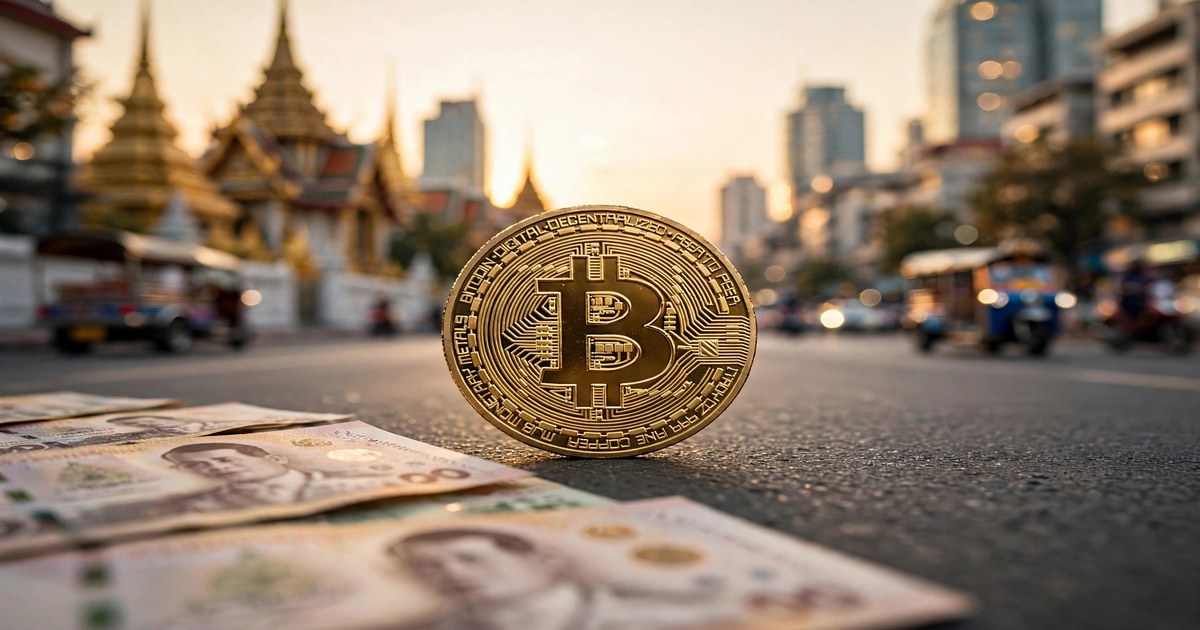
Thailand Charges 0% Tax on Bitcoin Gains — But Only If You Buy in the Right Place
Thailand will let you keep 100% of your Bitcoin gains — zero personal income tax — until 31 December 2029. The catch is brutally specific: the exemption only applies to trades made through exchanges licensed by Thailand's Securities and Exchange Commission, and it vanishes the moment you trade on an unlicensed offshore platform. Buy on Bitkub or Binance TH and your profit is tax-free; buy the same coin on a blocked exchange and you can owe up to 35%. This guide compares the 5 SEC-licensed exchanges where Thais can legally buy Bitcoin in 2026, shows you how to fund an account in seconds with PromptPay, and explains exactly how the 0% tax window works — and when it closes.
Bitcoin itself is having a rough week: it fell about 6% to roughly $75,700 on 6 November 2026 after Wall Street's worst tech sell-off since 2020 wiped out the post-midterm rally and triggered more than $1 billion in crypto liquidations.
Is Buying Bitcoin Legal in Thailand?
Yes. Owning and trading cryptocurrency is fully legal in Thailand. Crypto is classified as a digital asset under the Emergency Decree on Digital Asset Businesses B.E. 2561 (2018), and the Securities and Exchange Commission (SEC) regulates every company that runs an exchange, brokerage or dealing business. Any platform serving Thai residents needs a Thai licence — there is no "operate from offshore and hope" option in the rules.
One restriction surprises newcomers: since 2022 the Bank of Thailand, the SEC and the Finance Ministry have limited the use of digital assets as a means of payment for goods and services. Buying and holding Bitcoin as an investment is legal; paying for your coffee with it is not the intended use. That distinction matters because it shapes which platforms the regulator protects — exchanges, not payment apps.
The SEC keeps two public lists that every buyer should check before depositing a single baht: its online licence check, which listed 31 licensed digital asset businesses as of 29 September 2026, and its investor alert list, which names unlicensed operators.
The 5 SEC-Licensed Exchanges Compared
Five licensed platforms cover almost every Thai buyer's needs in 2026. They differ on fees, coin choice, baht funding and who holds your money — and the cheapest is not always the best first account.
| Exchange | Trading fee | Coins | Baht funding | Best for |
|---|---|---|---|---|
| Bitkub | 0.25% maker / taker | 250+ | PromptPay, bank transfer | Deepest THB liquidity; Thailand's largest exchange |
| Binance TH | From 0.10% | 200+ | PromptPay, bank transfer | Lowest fees; Binance engine under Thai rules |
| Orbix | Varies by pair — check the fee schedule | 30+ | Bank transfer | Beginners who want a bank-owned account |
| Bitazza | Varies by pair — check the fee schedule | 100+ | PromptPay, bank transfer | OTC trades and larger orders |
| Upbit Thailand | Varies by pair — check the fee schedule | 100+ | Bank transfer | Polished app; Korean exchange pedigree |
1. Bitkub — Thailand's biggest exchange
Bitkub is where most of the country trades, and that depth carries real weight for a local buyer. It runs the deepest Thai baht order books of any licensed platform, so a market order for Bitcoin fills tight against the baht without the spread you eat when you route through a stablecoin first. Funding by PromptPay lands in seconds at no cost, and a Kasikornbank transfer clears the same day. It is spot-only, lists around 250 assets paired against the baht, and holds client funds with BitGo and Coinbase Custody. The flat 0.25% fee is higher than Binance TH, but for a first-time buyer the liquidity and the local support are worth the difference. Bitkub is also part of the TouristDigiPay trial, and gains made on it qualify for the tax exemption below.
2. Binance TH — the lowest fees
Binance TH is the best overall choice on price. Run as Gulf Binance — a joint venture with Gulf Energy launched in early 2024 — it holds a Thai SEC licence, takes baht by PromptPay and bank transfer, and puts Binance's global matching engine behind a local account. Fees start at 0.10%, less than half of Bitkub's. The trade-off is a curated catalogue: every token needs SEC clearance, so the Thai list is a slice of global Binance, and the interface assumes more confidence than a first-timer may have. Note that Binance TH is a separate, Thai-licensed login from global Binance with its own KYC — you onboard as a local, you do not carry a global account across.
3. Orbix — the bank-owned beginner account
Orbix, formerly Satang Pro, is one of Thailand's earliest crypto exchanges, operating since 2017, and it is now owned by Kasikornbank — one of the country's biggest banks. That ownership is its selling point: cautious first-time buyers get a bank-owned account with a smaller coin list (30+ assets) and straightforward baht funding. It will not win on fees or coin count, but for a buyer whose main fear is "will this company still exist next year", a bank balance sheet behind the exchange is a genuine comfort.
4. Bitazza — OTC access and a broad list
Bitazza rounds out the field with over-the-counter (OTC) trading for larger orders and a broad coin list. If you are buying a meaningful amount and do not want your order to move the market, an OTC desk quotes you one price for the whole trade instead of letting you eat through the order book. Check its fee schedule before you commit — fees vary by pair and by order type.
5. Upbit Thailand — app polish from Korea's biggest exchange
Upbit Thailand brings the app polish of South Korea's largest exchange to the Thai market, with 100+ coins and baht funding by bank transfer. It is a solid all-rounder, particularly if you already know the Upbit interface, though its Thai baht liquidity is thinner than Bitkub's.
How to Buy Bitcoin in Thailand: Step by Step
Buying your first Bitcoin in Thailand takes about 15 minutes once you have your ID ready. The process is the same on every licensed exchange:
- Choose a licensed exchange. Pick from the five above and verify it on the SEC's online licence check before you sign up. Never deposit on a platform that is not on that list.
- Open an account and verify your ID. Sign up with your email or phone number, upload a Thai national ID card or passport, and take a selfie. Most exchanges will not let you trade until KYC is complete — usually within a few hours.
- Deposit Thai baht. PromptPay is the fastest rail: the baht lands in seconds and costs nothing on Bitkub and Binance TH. Bank transfer works too, and Kasikornbank transfers to Bitkub clear the same day.
- Place your order. Search for the BTC/THB pair, enter the amount in baht, and check the final quote — the fee and the exact Bitcoin you receive — before you confirm. A market order fills instantly; a limit order lets you set your price.
- Check what you paid. On a ฿10,000 buy, Bitkub's 0.25% fee costs ฿25, while Binance TH's 0.10% costs ฿10. On a ฿100,000 buy the gap is ฿250 versus ฿100 — small per trade, but it compounds if you buy every month.
- Move it to your own wallet. Leaving coins on any exchange carries platform risk. For amounts you plan to hold, withdraw to a hardware wallet. Our guide to the best crypto wallets in 2026 compares 7 options after the $6.3 billion Binance hack — including the one beginner mistake to avoid.
If you are still deciding whether Bitcoin belongs in your portfolio at all, read Is Bitcoin a Good Investment in 2026? first — it works through the risks, the returns and a sensible allocation before you spend a baht. And if you are completely new to the asset, What Is Bitcoin? The Complete Beginner's Guide explains how BTC works from first principles.
What Most People Get Wrong About Bitcoin in Thailand
Thailand's crypto rules are generous — and widely misunderstood. These are the five mistakes that cost Thai buyers real money:
- "Crypto is tax-free in Thailand." Wrong, or at least dangerously incomplete. Only capital gains on trades through SEC-licensed platforms are exempt, and only until 31 December 2029. Staking rewards, airdrops and mining income are still taxable at your progressive rate, up to 35%.
- "Any big global exchange is fine." No. Five major platforms — Bybit, OKX, CoinEx, XT.COM and 1000X — have been blocked in Thailand since 28 June 2025 for operating without a licence. Money on a blocked exchange is money the Thai regulator cannot help you recover.
- "The 15% withholding tax applies to everything." The 15% withholding rate exists in the Revenue Code, but in practice licensed exchanges do not withhold it on exempt capital gains — the exemption is what makes the 0% rate real.
- "I can pay with Bitcoin anywhere." The Bank of Thailand restricts using digital assets as a means of payment. Shops and services are not supposed to accept crypto for goods, and the TouristDigiPay trial for visitors is a limited, licensed exception — not a general green light.
- "A cheap fee is the only thing that matters." The cheapest fee on an unlicensed platform is the most expensive trade you will ever make if the platform is blocked or your withdrawal freezes. Licence first, fee second — the gap between 0.10% and 0.25% is ฿15 on a ฿10,000 buy.
Thailand's Crypto Tax in 2026: The 0% Window Explained
The single most valuable fact in this guide is Ministerial Regulation No. 399, published in the Royal Gazette on 5 September 2025. It exempts gains from transferring cryptocurrency or digital tokens from personal income tax when the transfer is made on a licensed digital asset exchange, through a licensed broker, or to a licensed dealer — for income received from 1 January 2025 to 31 December 2029.
| Activity | Tax treatment (individuals) | Notes |
|---|---|---|
| Capital gain on a licensed Thai exchange | 0% — exempt | 1 Jan 2025 – 31 Dec 2029 (Ministerial Regulation No. 399) |
| Capital gain on an unlicensed/offshore platform | Up to 35% progressive rate | No exemption; gains are assessable income under Section 40(4)(i) |
| Staking, airdrop or mining rewards | Up to 35% progressive rate | Taxable on receipt at market value; not eligible for the exemption |
| Profit share from investment tokens | 15% withholding | Section 40(4)(h); 15% may be a final withholding option |
| VAT on a trade through a licensed exchange | Exempt | Royal Decree No. 788; VAT-free on licensed venues since 2024 |
Three conditions decide whether your gain is 0% or up to 35%: the trade must happen on an SEC-licensed Thai platform, it must be a capital gain (selling for more than you paid), and the income must be received before the exemption expires on 31 December 2029. Foreign-sourced gains remitted into Thailand do not qualify. After 2029, unless the policy is extended, normal capital gains tax resumes — which is why the buyers who benefit most are the ones who start on a licensed platform now and keep clean records.
Bitcoin is down roughly 40% from its $126,080 all-time high — a buyer entering near $75,700 on a licensed exchange keeps every baht of the recovery.
The 5 Exchanges Bangkok Blocked — and Why It Matters
On 28 June 2025 the Ministry of Digital Economy and Society, acting on the SEC's findings, blocked access to five unlicensed platforms: Bybit, OKX, CoinEx, XT.COM and 1000X. The block was not symbolic — Thai users lost straightforward access, and the regulator's message was explicit: if a platform will not get a Thai licence, it will not serve Thai users.
KuCoin TH is the cautionary sequel. The Thai arm of KuCoin has been suspended by the SEC since January 2026 — withdrawals only, no trading — a reminder that even a locally branded operation can lose its licence. Before you deposit anywhere, check the SEC's licence list and its investor alert list. It takes two minutes, and it is the difference between a regulated account and a frozen one.
The blocked list also explains why the licensed five are worth their fees. Bitkub, Binance TH, Orbix, Bitazza and Upbit Thailand all passed the SEC's licensing process, hold client money under Thai rules, and — critically — are the only venues where the 0% tax exemption applies. An offshore account saves you 0.15% on fees and costs you up to 35% on tax. That is not a bargain.

Thailand vs Singapore vs Japan: Where Should You Buy?
Thailand sits between two very different neighbours. Singapore charges 0% capital gains tax too, but its licensed exchanges are fewer and its regulator, MAS, has kept retail leverage and marketing on a tight leash — read our guide to buying Bitcoin in Singapore for the comparison. Japan, by contrast, taxes crypto gains as miscellaneous income at up to 55%, with a reform cutting that to 20% on the way — see how to buy Bitcoin in Japan. Thailand's 0% window until 2029 makes it the most tax-friendly of the three for now — but Japan's rate is permanent law, while Thailand's is a five-year holiday with an expiry date. If you are choosing where to base your trading, the question is not just today's rate but whether the rate will still exist when you sell.
Storing Your Bitcoin Safely After You Buy
Buying is the easy half. The $6.3 billion Binance hack — after which Binance reopened withdrawals on 1 November 2026 — is the latest reminder that exchanges get attacked, and the Zipmex collapse is Thailand's own local lesson: yield products and custody risk matter more than a slick app. The rule is simple: an exchange is a place to buy, not a place to store. Withdraw meaningful holdings to a hardware wallet, keep your seed phrase offline and on paper (never in a photo or a cloud note), and enable every security feature your exchange offers. If you earn yield by staking, remember the tax catch — staking rewards are taxable income in Thailand even while your capital gains are exempt, as explained in our crypto staking guide.
Frequently Asked Questions
Is it legal to buy Bitcoin in Thailand in 2026?
Yes. Buying, holding and trading Bitcoin is legal in Thailand under the Digital Asset Business Decree of 2018. Exchanges, brokers and dealers must hold a licence from the Securities and Exchange Commission. Paying for goods and services with crypto is restricted by the Bank of Thailand, but investing is not.
Which is the best exchange to buy Bitcoin in Thailand?
For most buyers, Bitkub (deepest baht liquidity, 250+ coins, 0.25% fee) or Binance TH (lowest fees from 0.10%, Binance's engine under a Thai licence) are the best starting points. Beginners who want a bank-owned account should look at Orbix, owned by Kasikornbank. Always verify the licence on the SEC's website before depositing.
Do I pay tax on Bitcoin profits in Thailand?
Not if you trade on an SEC-licensed Thai exchange: capital gains are exempt from personal income tax from 1 January 2025 to 31 December 2029 under Ministerial Regulation No. 399. Gains on unlicensed or offshore platforms are taxable at up to 35%, and staking, airdrop and mining rewards are always taxable.
Can I use Bybit or OKX in Thailand?
No — not legally. Bybit, OKX, CoinEx, XT.COM and 1000X have been blocked in Thailand since 28 June 2025 for operating without a licence. Use one of the five SEC-licensed exchanges instead, or you lose both regulatory protection and the tax exemption.
How do I pay for Bitcoin in Thailand?
PromptPay is the fastest way: the baht lands in seconds at no cost on Bitkub and Binance TH. Thai bank transfer works too. You cannot legally pay with crypto for goods and services in Thailand, and international card deposits are usually more expensive than a local bank rail.
How much Bitcoin can I buy with ฿10,000?
It depends on the price at the moment you buy — with Bitcoin near $75,700, ฿10,000 buys a fraction of a coin, and you do not need to buy a whole Bitcoin. What you can control is the fee: ฿25 on Bitkub at 0.25%, or ฿10 on Binance TH at 0.10%. Start small, learn the platform, and only scale up once you are comfortable withdrawing to your own wallet.
The Bottom Line
Thailand is one of the best places in Asia to buy Bitcoin in 2026 — but only through the front door. The 0% tax window until 31 December 2029, instant PromptPay funding and five licensed exchanges make buying simple and cheap. The trap is the back door: unlicensed platforms that look cheaper, cost up to 35% in tax, and can be blocked overnight. Pick Bitkub for liquidity or Binance TH for the lowest fees, verify the licence on the SEC's list, fund with PromptPay, and move your coins to a hardware wallet when you are done. Do that, and the next time Bitcoin recovers from a $75,700 dip, every baht of the gain is yours to keep — tax-free, until the end of 2029.
Disclaimer: This article is for information only and is not financial, investment or tax advice. Tax rules can change — confirm the current position with a licensed Thai tax adviser before making large trades.