How to Buy Bitcoin in Japan in 2026: 5 FSA-Regulated Exchanges Compared — Fees, JPY Deposits and the 55% Tax That Falls to 20%
Buying Bitcoin in Japan means FSA-licensed exchanges only — and a tax bill that can hit 55% today but drops to a flat 20%. We compared bitFlyer, Coincheck, GMO Coin, bitbank and SBI VC Trade on fees, JPY deposits and ease of use, so you can buy BTC in yen in under an hour.
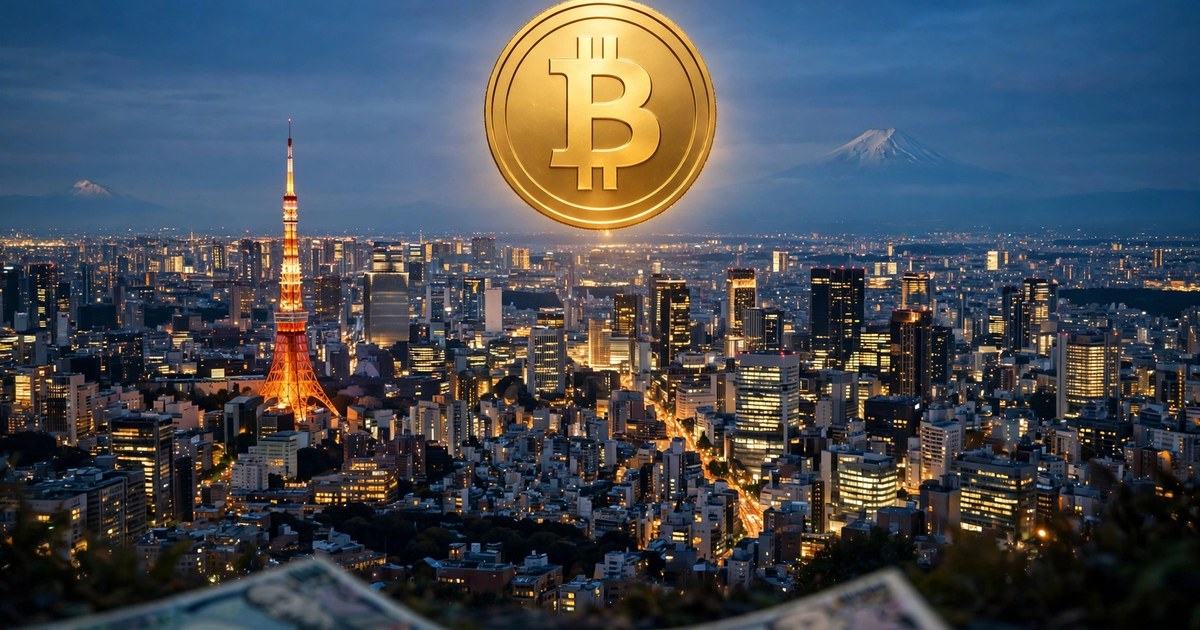
Japan taxes Bitcoin profits at up to 55% — the highest rate of any major economy. A law already passed by parliament will cut that to a flat 20%, possibly from January 2028. That is why buying Bitcoin in Japan in 2026 looks different from anywhere else — and why the exchange you choose matters more here than almost anywhere.
Bitcoin traded near $75,900 on November 5, 2026, down 5.7% on the day after Wall Street suffered its worst session in 18 months — a sharp pullback from the $81,105 peak just a day earlier. For Japan-based buyers, that dip lands in the most tightly regulated crypto market on earth: only exchanges licensed by the Financial Services Agency (FSA) may legally serve Japanese residents, and roughly 30 firms hold that licence. This guide compares the five best FSA-regulated exchanges, walks through the buying steps, and explains the tax bill.
Is It Legal to Buy Bitcoin in Japan?
Yes — buying Bitcoin in Japan is fully legal, and Japan was the first major country to regulate it. The Payment Services Act of 2017 recognised cryptocurrency as a legal means of payment and as property, and the Financial Services Agency supervises every exchange in the country. Any platform serving Japanese customers must register with the FSA as a Crypto Asset Exchange Service Provider and follow strict rules on security, customer protection and anti-money-laundering. Verify any exchange on the FSA's official register before you deposit a yen.
That licence matters more than the brand name. Offshore exchanges may not serve Japanese residents, and unregistered platforms lack the protections Japanese law requires — segregated funds, cold-wallet custody rules, regular audits. If an exchange is not on the FSA register, do not use it from Japan. The roughly 30 registered firms include bitFlyer, Coincheck, bitbank, GMO Coin and SBI VC Trade — all five are covered below.
Leverage on crypto derivatives is capped at 2x, listings are narrower than on global exchanges, and identity checks are strict — from April 2027, online verification must read your My Number card's IC chip. None of that stops you buying Bitcoin; it just makes the process more formal.
The 5 Best FSA-Regulated Exchanges in Japan Compared
Every exchange below is FSA-registered. What separates them is cost, yen funding and who they suit best — and one distinction matters most: an exchange order book trades you against other users at near-market prices, while a "simple buy" screen sells you Bitcoin at a markup that can reach 5%. Always buy on the order book.
| Exchange | BTC/JPY trading fee | JPY deposit | JPY withdrawal | Coins listed | Best for |
|---|---|---|---|---|---|
| bitFlyer | 0.01%–0.15% (Lightning) | Bank transfer, konbini | ¥220–¥770 | 40+ | Liquidity and security record |
| Coincheck | 0% on the exchange | Bank transfer, konbini | ¥407 | 30+ | Beginners and the mobile app |
| GMO Coin | Maker −0.01%, taker 0.05% | Bank transfer, instant deposit | Free | 20+ | Lowest all-in cost |
| bitbank | Maker −0.02%, taker 0.12% | Bank transfer | Varies | 40+ | Active traders and charting |
| SBI VC Trade | Varies by pair | Bank transfer | Varies | 20+ | Staking and SBI Group users |
Fees come from the exchanges' published tables as reported by independent Japanese comparisons in 2026. Simple-buy spreads are separate — and almost always the bigger cost.
1. bitFlyer — Best for Liquidity and Security
bitFlyer has operated since January 2014 without losing customer funds, and it holds FSA licence No. 00003. Its Lightning terminal holds Japan's deepest yen Bitcoin order book — one measurement found ¥176 million on the sell side within half a percent of the market, more than any rival — so large orders move the price less.
Lightning fees run 0.01% to 0.15% by 30-day volume, and yen withdrawals cost ¥220 to ¥770. Choose bitFlyer for reliability and liquidity — and use Lightning, not the simple-buy screen, to keep costs down.
2. Coincheck — Best for Beginners
Coincheck is Japan's most-downloaded crypto app and the easiest first exchange for most buyers. Its exchange charges 0% to makers and takers on BTC/JPY — the only zero-fee Bitcoin order book among the majors — though its simple-buy service carries a markup of 0.1% to 5.0%, so always use the exchange screen. The company rebuilt its security under Monex Group after the 2018 hack, and its parent, Coincheck Group, is Nasdaq-listed and files audited accounts with the US SEC.
It lists 30+ coins, runs an NFT marketplace and hosts initial exchange offerings. Yen deposits arrive by bank transfer or konbini payment; withdrawals cost ¥407. Pick Coincheck for the smoothest mobile experience and a zero-fee order book.
3. GMO Coin — Best for the Lowest All-In Cost
GMO Coin, part of TSE-listed GMO Internet Group, is the cheapest place to buy Bitcoin in Japan once every cost is counted. Makers earn a 0.01% rebate and takers pay 0.05% on major pairs; instant yen deposits, standard yen withdrawals and crypto transfers to external wallets are all free. One independent test priced a ¥100,000 Bitcoin order at just ¥6 over the market on GMO Coin — against ¥20 on Coincheck's exchange and ¥131 on bitFlyer Lightning and bitbank.
It lists 20+ coins, offers staking and lending, and allows up to 2x leverage. It works in Japanese only and generally opens accounts from age 20. Choose GMO Coin if minimising total cost — not just the headline fee — is your priority.
4. bitbank — Best for Active Traders
bitbank is the trader's exchange: TradingView charts, deep altcoin liquidity, a 0.02% maker rebate and a 0.12% taker fee on most pairs, with 40+ coins listed — among the widest selections of any FSA-registered platform. It suits limit-order traders who earn the rebate, not market-order buyers who pay the taker rate.
Yen funding is by bank transfer. Trade frequently and the maker rebate pays; buy once and hold, and a cheaper taker-fee option above costs less.
5. SBI VC Trade — Best for Staking and SBI Customers
SBI VC Trade is the crypto arm of SBI Group, one of Japan's largest financial conglomerates, and it is fully FSA-registered. It focuses on the majors — Bitcoin, Ethereum and XRP — and offers staking alongside spot trading. Fees vary by pair, so check the fee page for the exact BTC/JPY rate.
If you already bank with an SBI Group company, the shared ecosystem simplifies funding; otherwise the four exchanges above have clearer fee advantages. For a long-term holder who wants staking beside spot trading, SBI VC Trade is a solid choice.
How to Buy Bitcoin in Japan in 5 Steps
Buying takes under an hour once your account is verified. Verification is the slow part — allow a day or two for document approval.
Step 1 — Pick a licensed exchange. Choose from the five above and confirm the company on the FSA register — Coincheck or bitFlyer for beginners, GMO Coin for cost-sensitive buyers. Never register with an unlicensed offshore platform while resident in Japan.
Step 2 — Complete identity verification. You need a residence card or My Number card, proof of address and a smartphone for the eKYC photo check. Foreign residents can open accounts — legal residence, not nationality, is the requirement. Most exchanges set the minimum age at 20, and from April 2027 online checks must read your My Number IC chip.
Step 3 — Deposit Japanese yen. Bank transfer (furikomi) is standard and free or nearly free at most exchanges; GMO Coin's instant deposit costs nothing. Coincheck and bitFlyer also accept konbini payments, and Binance Japan supports PayPay Money top-ups up to ¥1 million a day. Avoid credit-card funding — it is limited in Japan and usually carries extra fees.
Step 4 — Buy on the exchange order book. Open the exchange or Lightning screen — not the simple-buy button — select BTC/JPY, enter the yen amount, and place a limit order near the market price. A ¥100,000 order costs about ¥6 over the market at GMO Coin and ¥20 at Coincheck; a simple-buy screen can add hundreds or thousands of yen in spread on the same order.
Step 5 — Move your Bitcoin to your own wallet. Leaving coins on an exchange exposes you to platform risk, however well regulated it is. Withdraw to a hardware wallet or reputable self-custody wallet and keep your recovery phrase offline. GMO Coin charges nothing for crypto withdrawals; others charge a small network fee. Our guide to the best crypto wallets for beginners explains hot versus cold storage.
What It Actually Costs to Buy Bitcoin in Japan
Headline fees are only part of the bill: trading fee, spread, yen deposit fee and withdrawal fee. Independent testing priced a ¥100,000 Bitcoin purchase at ¥6 over the market at GMO Coin, ¥20 at Coincheck's exchange, and ¥131 at bitbank and bitFlyer Lightning — before deposit and withdrawal charges.
That ranking flips on the simple-buy screen. Coincheck's fee page puts its dealer markup at 0.1% to 5.0% — on a ¥100,000 order, ¥100 to ¥5,000 in hidden cost, up to 800 times the ¥6 an order-book trade costs at GMO Coin. The lesson is worth more than any fee comparison: always buy on the exchange screen.
For a first purchase of ¥10,000 to ¥100,000, the cheapest route is GMO Coin's order book with free instant yen deposit, then Coincheck's zero-fee exchange. Above ¥1 million, bitFlyer's deeper book can matter more than its 0.15% entry fee. Whatever you choose, compare the quoted price with the live market before confirming.
Japan's Crypto Tax: the 55% Problem and the 20% Fix
This is the section that decides whether buying Bitcoin in Japan makes financial sense for you — and it is where most guides go out of date fastest. Here is the position as it stands in November 2026.
| Current system (2026) | Reformed system (enacted, start date pending) | |
|---|---|---|
| Classification | Miscellaneous income (zatsu shotoku) | Separate capital-gains-style taxation |
| Top rate | Up to 55% (45% national + 10% resident tax) | Flat 20% (20.315% with surtax) |
| Losses | No carry-forward | Three-year loss carry-forward |
| Scope | All crypto income | 105 FSA-approved tokens on registered exchanges only |
Today, the National Tax Agency classifies crypto profits as miscellaneous income, stacked on your salary at progressive rates of 5% to 45%, plus a flat 10% residence tax — a combined 55% at the top bracket, before the 2.1% reconstruction surtax. Selling Bitcoin, swapping it for another coin or spending it all count as taxable events, and losses cannot be carried forward.
The reform changes all of that. Parliament enacted the reclassification of 105 major crypto assets — Bitcoin and Ethereum included — as financial products under the FIEA in July 2026, and the accompanying tax amendment sets a flat 20% rate with a three-year loss carry-forward, matching stocks. The start date is not yet fixed — it is set by cabinet order, with January 1, 2028 the widely reported target. Until then, the 55% regime applies in full.

Two limits matter. The 20% rate will apply only to the 105 FSA-approved tokens traded on registered exchanges — DeFi yields, staking rewards, NFT profits and tokens bought on foreign platforms stay under the old rules. It is one more reason to buy on an FSA-registered exchange: only trades there will qualify for the lower rate. We covered the reform in our guides to Japan's flat 20% crypto tax and the tax-cut bill's passage through parliament.
Keep records from day one: every buy, sell, swap and fee, with yen values at the time. Exchanges provide annual transaction reports, and the National Tax Agency expects a return (kakutei shinkoku) by March 15 if miscellaneous income exceeds ¥200,000. If unsure, a Japanese tax accountant (zeirishi) who handles crypto is worth the fee.
5 Mistakes That Cost Japan-Based Bitcoin Buyers Money
- Using an unregistered offshore exchange: it is not permitted for Japanese residents, your funds have no FSA protections, and trades there will not qualify for the 20% rate. The register check takes thirty seconds.
- Buying on the simple-buy screen: dealer markups of up to 5% dwarf every fee in this guide — ¥5,000 in spread on a ¥100,000 simple-buy order versus ¥6 on GMO Coin's order book.
- Leaving Bitcoin on the exchange: Japan's exchanges are among the safest in the world, but no exchange beats your own wallet. Withdraw to cold storage, especially for holdings you plan to keep for years.
- Ignoring tax until March: a big sale in December becomes a tax bill in March. Set aside a share of every profitable sale — up to 55% at the top bracket — the day you sell, not when the return is due.
- Assuming the 20% rate is already live: it is enacted but its start date is not fixed, with January 2028 the widely reported target. Filing at 20% today would be wrong, and the three-year loss carry-forward only starts with the new regime.
What Most People Get Wrong About Buying Bitcoin in Japan
Myth: "Coincheck is unsafe because of the 2018 hack." Coincheck lost around $530 million in NEM tokens in January 2018, but reimbursed customers, was acquired by Monex Group, and rebuilt its security under FSA supervision; its parent is now Nasdaq-listed. The hack is history.
Myth: "I can just use Kraken or Coinbase in Japan." Both exited Japan in January 2023. They remain on the FSA register with no coins listed, which confuses comparison sites — but neither accepts new Japanese customers. Your compliant options are the domestic exchanges in this guide.
Myth: "The 20% flat tax already applies." Not yet. The law is enacted, but the effective date is set by cabinet order and had not been issued as of late 2026. The current regime, with rates up to 55%, applies in full until then.
Myth: "Japan's exchanges are expensive because Japan is regulated." The opposite is true on the order books. A ¥100,000 Bitcoin order costs ¥6 over the market at GMO Coin and nothing in trading fees at Coincheck's exchange — cheaper than most global platforms once spreads are counted. Regulation raised the safety bar; competition kept prices low.
Bitcoin in Japan: the Bigger Picture
Japan's crypto market sits at an unusual inflection point. Bitcoin fell to about $75,900 on November 5, 2026 as an AI-stock rout dragged the Nasdaq to its worst day in 18 months and wiped out more than $1 billion in leveraged crypto positions — a reminder that Bitcoin still trades like a risk asset in a panic. Yet the structural story points the other way: the FIEA reclassification makes Bitcoin a regulated financial product, the 20% tax reform aligns crypto with stocks, and a spot ETF pathway is openly discussed for 2027.
The Bank of Japan adds a second current: a December rate hike is on the table, and the yen carry trade that has funded global risk-taking for years is under pressure — a dynamic we examined in our analysis of the Bank of Japan's December hike and Bitcoin. For Japan-based buyers the takeaway is simpler: yen strength makes Bitcoin cheaper in yen terms, yen weakness makes it dearer, and the exchange rate is part of your return whether you track it or not.
None of this makes Bitcoin safe — it fell 6% in a day this week. What Japan offers is rarer: a fully legal, tightly supervised way to buy it, with a tax regime about to get friendlier.
Frequently Asked Questions
Can foreigners buy Bitcoin in Japan?
Yes. Foreign residents with a valid residence card and My Number can open accounts at FSA-registered exchanges, with proof of a Japanese address and a Japanese bank account for yen deposits. Tourists and short-term visitors generally cannot, because exchanges require proof of residence.
Can I buy Bitcoin with a credit card in Japan?
Mostly no. Japanese exchanges generally do not accept credit cards for crypto purchases, and those that do charge extra. Bank transfer is standard, with konbini payments and PayPay Money top-ups at some exchanges. Plan on funding from a Japanese bank account.
Is Bitcoin legal tender in Japan?
No. The Payment Services Act recognises Bitcoin as a legal means of payment and as property, but it is not legal tender like the yen — no shop must accept it. In practice it is an asset you buy, hold and sell, not a currency for everyday spending.
When does Japan's 20% flat crypto tax start?
The reform is enacted law, but its start date is fixed by cabinet order and had not been issued as of late 2026. Reporting widely points to January 1, 2028 for individuals. Until then, crypto profits remain miscellaneous income taxed at up to 55%.
Conclusion
Buying Bitcoin in Japan in 2026 means choosing between five good FSA-regulated exchanges. GMO Coin wins on all-in cost, Coincheck on ease of use with a zero-fee order book, bitFlyer on liquidity and a twelve-year security record, bitbank for active traders, and SBI VC Trade for long-term holders who want staking. Whichever you pick, buy on the order book, fund with a free bank transfer, move your coins to your own wallet, and keep tax records from the first trade.
The bigger prize is the calendar. Japan's 55% top rate is the harshest in the developed world, and the law replacing it with a flat 20% is already passed — only the start date is outstanding. A buyer who opens a compliant account on an FSA-registered exchange now is positioned for both: today's regulated market and tomorrow's friendlier tax regime. New to Bitcoin? Start with our complete beginner's guide to Bitcoin and our general guide to buying your first BTC before your first yen order — and our guide to selling Bitcoin safely covers the exit.
Sources: exchange fee tables via Datawallet and AlphaFinance; JapanUpdates; TechTimes and WeeX on the FIEA reclassification and tax reform; MailMate's Japan tax guide; CoinDesk and Motley Fool, November 5, 2026. Prices and fees change — verify the live fee page before trading. Educational content, not financial advice.