How to Buy Bitcoin in Singapore in 2026: 5 MAS-Licensed Exchanges Compared — Fees, PayNow and the 0% Capital Gains Tax
Singapore taxes your Bitcoin gains at 0% — but one-tap buy buttons quietly add up to 1.8% per trade. We compared 5 MAS-licensed exchanges on fees, PayNow funding and the rules that catch beginners out.
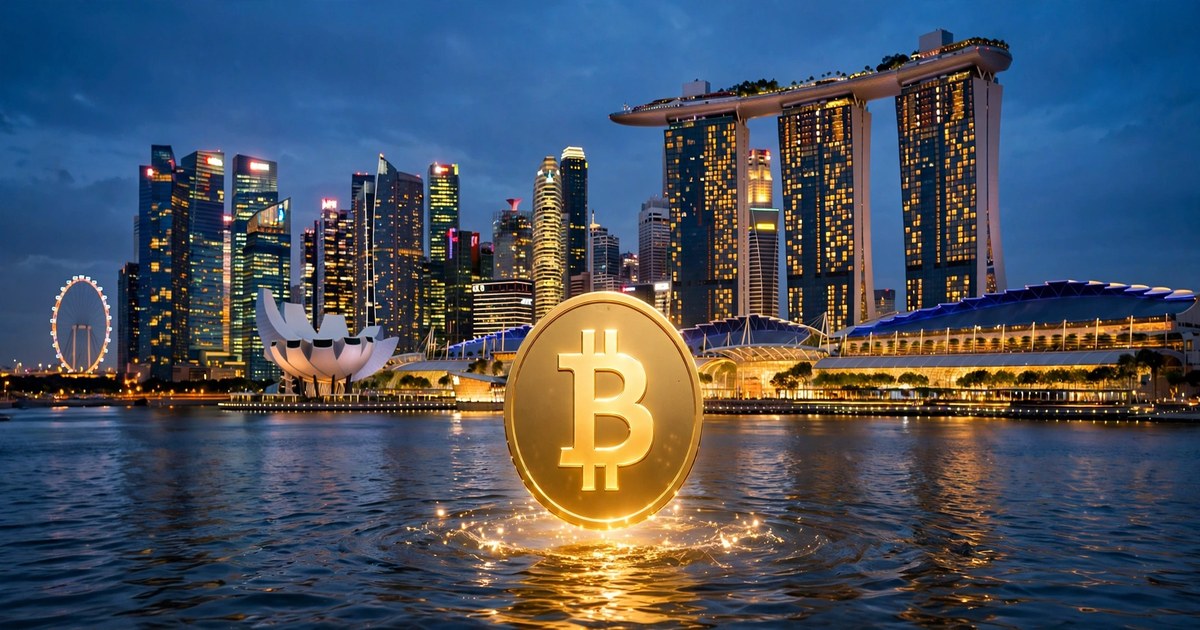
Singapore charges 0% capital gains tax on your Bitcoin — but the wrong buy button can still cost you 1.8% of every purchase. On a S$10,000 buy, that is S$180 gone before Bitcoin moves a single dollar. And with Bitcoin trading near $76,000 on November 6, down almost 40% from its $126,080 peak, thousands of Singaporeans are asking the same question: where do I buy it safely, cheaply, and legally?
This guide answers exactly that. We compared the five MAS-licensed exchanges Singapore residents actually use, priced them off their own fee pages, and explain the PayNow funding trick, the tax rule, and the five mistakes that cost beginners real money. If you are new to crypto entirely, start with our complete beginner's guide to what Bitcoin is before you buy your first satoshi.
Is Buying Bitcoin Legal in Singapore?
Yes. Buying, holding and selling Bitcoin is fully legal in Singapore, and the city-state has one of the clearest regulatory frameworks in the world. The Monetary Authority of Singapore (MAS) regulates crypto under the Payment Services Act 2019. Any company that offers digital payment token (DPT) services to the public — buying, selling or holding Bitcoin for customers — must hold a Major Payment Institution (MPI) licence carrying the DPT activity.
That licence is the single most important filter in this guide. As of October 21, 2026, exactly 38 entities hold an MPI licence for DPT services, according to the MAS Financial Institutions Directory. Dozens more operate offshore without one. The unlicensed ones are where the horror stories come from: frozen withdrawals, vanished customer funds, and no regulator to complain to. Every exchange in this guide holds the licence. You can verify any platform yourself on the MAS Financial Institutions Directory before you deposit a single dollar.
One thing the licence does not do: it does not protect you from Bitcoin's price. Bitcoin fell more than 5% on November 5 alone as a tech-stock sell-off swept through global markets, and it now sits roughly 40% below its all-time high. Regulation makes the platform safer. It does not make the asset safe. Our honest guide to whether Bitcoin is a good investment in 2026 walks through the risks before you commit money you cannot afford to lose.
5 MAS-Licensed Exchanges Compared
Here is the short version. Fees below are the cheapest way to buy on each platform, taken from the exchanges' own fee pages and re-checked in October 2026. The "one-tap buy" column is the trap most beginners fall into: the big friendly Buy button on the app home screen almost always costs more than placing an order on the exchange itself.
| Exchange | Cheapest trade fee | One-tap buy cost | SGD in / out | Coins | Best for |
|---|---|---|---|---|---|
| Coinhako | 0.5% (limit order or recurring buy) | 0.6% market buy | PayNow free / S$2 out | 108 | Singapore beginners who want the easiest SGD on-ramp |
| Independent Reserve | 0.50% flat | Same 0.50% — one published rate | PayNow free, FAST free above S$1,000 / S$1.50 out | 42 | Cheapest simple buying at retail size |
| Crypto.com Exchange | 0.250% maker / 0.500% taker | App pricing is separate and higher | SGD supported in-app | 415 | Active traders and altcoin buyers |
| Coinbase Singapore | 0.4% maker / 0.6% taker (Advanced Trade) | ~1% plus a spread of up to 1.875% | PayNow & FAST free | 210+ | Trust, Singpass onboarding, huge coin list |
| Bitstamp | 0.30% maker / 0.40% taker | Fixed 1.8% spread, plus up to 0.5% when volatile | PayNow free both ways | 166 | Low exchange fees — if you avoid the one-tap button |
The spread between the cheapest and the most expensive way to buy is not small. Buying S$10,000 of Bitcoin costs S$50 at Independent Reserve's flat 0.50%, but up to S$180 plus a card fee if you tap the wrong button on the wrong platform. Over a year of regular buying, that gap runs into four figures. The rest of this guide shows you how to stay on the cheap side of it.
The 5 Exchanges in Detail
1. Coinhako — the Singapore Home Team
Coinhako is the homegrown option, founded in Singapore, and it is the easiest SGD on-ramp in the country. PayNow deposits are free, a limit order or recurring buy costs 0.5%, and the advertised 0.6% market-buy rate is what most casual users actually pay. It lists 108 coins, which covers everything a beginner needs, and withdrawals cost S$2. If you want the shortest path from your DBS, OCBC or UOB account to your first Bitcoin, this is it. The trade-off is the coin list: 108 is plenty for Bitcoin and the majors, but thin if you later want obscure altcoins. Full fee detail is in this independent comparison of Singapore exchanges.
2. Independent Reserve — the Cheapest Simple Buy
Independent Reserve wins the price test at retail size: a flat 0.50% on every trade, with no separate one-tap surcharge hiding in the small print. PayNow deposits are free, FAST is free above S$1,000, and withdrawals cost S$1.50. The catch is the coin list — 42 coins — and an interface that feels built for adults rather than first-timers. If your plan is to buy Bitcoin and maybe Ethereum and hold them, that is not a catch at all. Fees fall further at high volume, down to 0.02% for very large traders.
3. Crypto.com Exchange — the Trader's Pick
Crypto.com's Exchange offers the lowest headline rates of the five: 0.250% maker and 0.500% taker on volumes below US$10,000, with 415 coins listed — by far the widest choice here. The warning is that the Exchange and the Crypto.com app are two different products with two different price lists. App pricing is separate and materially higher, so beginners who download the app and tap Buy are not getting the 0.25% rate. Use the Exchange, place limit orders, and it is the cheapest route for anyone who trades more than occasionally.
4. Coinbase Singapore — the Trust Pick
Coinbase Singapore obtained its MPI licence from MAS in October 2023 and is the world's second-largest exchange, serving over 100 million clients globally. Singpass onboarding makes verification fast, SGD deposits arrive free over PayNow and FAST, and the platform lists 210+ coins for Singapore users. The price is the problem: a simple buy costs around 1% plus a spread of up to 1.875% baked into the quoted price. The fix is Advanced Trade, where maker fees start at 0.4% and taker fees at 0.6% with no spread. Coinbase One, a subscription, removes trading fees on up to S$10,000 of monthly volume. Use Coinbase for its trust and onboarding — but never use the simple buy button. See the StashAway comparison of MAS-regulated exchanges for the full fee table.
5. Bitstamp — Low Fees, One Expensive Button
Bitstamp is the oldest exchange on this list and its Exchange fees are genuinely cheap: 0.30% maker and 0.40% taker below US$10,000, with PayNow free in both directions and 166 coins listed. But its Basic Trading one-tap buy adds a fixed 1.8% spread, plus up to 0.5% more when markets swing — and 4% if you pay by card. That makes Bitstamp the best and the worst option on this page at the same time, depending entirely on which button you press. If you can place a limit order, it belongs on your shortlist. If you only ever tap Buy, it is the most expensive exchange here.
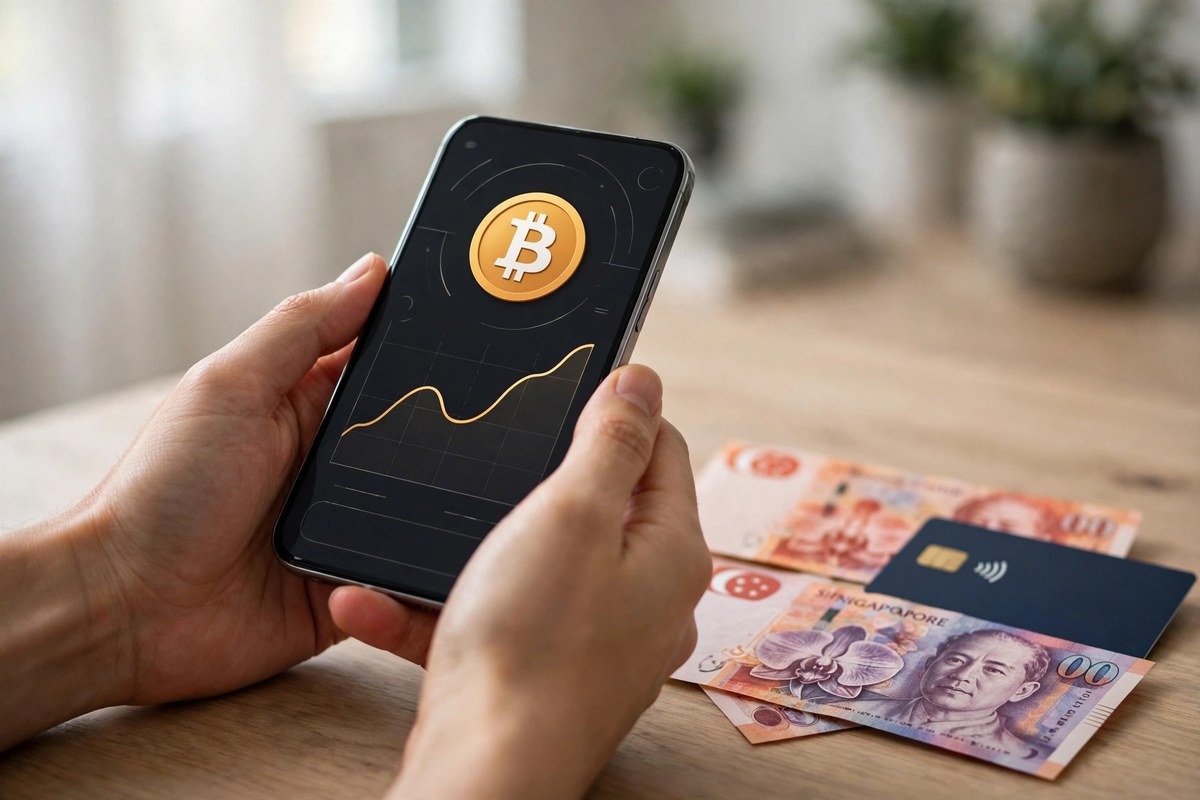
How to Buy Bitcoin in Singapore, Step by Step
The whole process takes under an hour, and most of that is waiting for identity verification. Here is the exact sequence.
- Pick a licensed exchange from the table above. Beginners should start with Coinhako or Independent Reserve; traders should look at Crypto.com Exchange or Bitstamp's order book. Check the licence on the MAS directory first — it takes two minutes.
- Create your account and complete KYC. Every MAS-licensed exchange must verify your identity. You will need your NRIC or passport, and sometimes proof of address. Singpass onboarding, where offered, speeds this up considerably. Verification usually completes within minutes to a few hours.
- Deposit Singapore dollars with PayNow or FAST. Both are free on every exchange in this guide and the money arrives in seconds. Do not use a credit card: MAS bars licensed exchanges from accepting locally issued credit cards from retail customers, and card funding carries fees of 3% to 4% where it is available at all.
- Place a limit order, not a market buy. On the exchange's trading screen, set the price you are willing to pay. A limit order on Coinhako costs 0.5% instead of 0.6%; on Coinbase Advanced Trade it is 0.4% instead of ~1% plus spread; on Bitstamp it saves you the entire 1.8% spread. This single habit is worth more than picking the "best" exchange.
- Move your Bitcoin to a wallet you control. Exchanges get hacked — the $6.3 billion Binance breach in October 2026 is the latest reminder, and billions of dollars left the platform in withdrawals afterwards. Our guide to storing crypto safely explains cold storage and seed phrases, and our Ledger vs Trezor comparison picks the right hardware wallet. If you are still choosing a wallet, read our best crypto wallets for beginners guide first.
For a general walkthrough of the same process anywhere in the world, see our complete beginner's guide to buying your first Bitcoin. The Singapore-specific rules above are what change.
PayNow and FAST: Funding Your Account in Seconds
Singapore's instant payment rails are the unsung advantage of buying Bitcoin here. PayNow and FAST transfers are free and settle in seconds on every licensed exchange, which means you can fund an account and buy during a dip instead of waiting days for a bank wire. A few practical details catch beginners out:
- PayNow has a default daily limit of S$5,000 at UOB, S$1,000 at DBS and OCBC — raise it in your banking app before a large buy, or the transfer will bounce.
- Adding a new payee triggers a 12-hour cooling-off period at UOB (and similar holds at other banks), so set up the exchange as a payee the day before you plan to buy, not five minutes before.
- FAST deposits sometimes need a unique deposit account number or a reference code — copy it exactly from the exchange's deposit screen, or your money can sit in limbo.
- Never deposit from someone else's bank account. Exchanges reject third-party deposits under anti-money-laundering rules, and getting the money back takes weeks.
DBS customers have one extra option: the DBS Digital Exchange, which trades Bitcoin, Ethereum, Bitcoin Cash, XRP, Polkadot and Cardano. It is open only to accredited and institutional investors, so retail buyers should use the licensed retail exchanges above. The UOB-specific funding walkthrough in this guide to buying crypto with UOB covers the cooling-period and limit details for that bank.
Tax in Singapore: the 0% Rule — and Its One Catch
Here is the headline that brings many buyers to Singapore in the first place: Singapore has no capital gains tax. An individual who buys Bitcoin, holds it, and later sells at a profit generally owes no tax on that gain. Compare that with the 30% flat tax in India, the 31.4% flat tax in France, or the 55% top rate Japan is only now cutting to 20% — the Singapore rule is worth real money on a large gain.
There is one catch, and it matters. Singapore's tax authority, IRAS, can treat your crypto profits as taxable income if your buying and selling amounts to a trade or business rather than an investment. The classic triggers are frequent short-term trading, using borrowed money, and running the activity in an organised, business-like way. A person who buys Bitcoin monthly and sells once a year is an investor. A person who day-trades with leverage from a dedicated setup may be treated as a trader — and taxed on the profits at income-tax rates.
Three rules keep you on the safe side. First, keep records of every buy, sell and transfer, including dates, amounts and fees — IRAS can ask, and exchanges keep the data anyway. Second, if you trade frequently or at scale, get professional tax advice before you sell, not after. Third, remember that the 0% rule covers the gain itself, not everything around it: if you are paid in crypto for work, or you earn staking rewards, that income can be taxable. Our guide to crypto staking explains how staking rewards work — and why they are taxed differently from a simple price gain.
5 Mistakes That Cost Singapore Beginners Money
Most first-time buyers in Singapore lose money the same five ways. Check yourself against this list before your first trade.
- Tapping the one-tap buy button. The 1.8% spread on Bitstamp's Basic Trading, or the ~1% plus spread on Coinbase's simple buy, is the single most expensive click in Singapore crypto. Always use the exchange order screen and a limit order.
- Leaving coins on the exchange. Licensed does not mean risk-free. Exchanges are hacked, frozen and occasionally collapse. Move meaningful holdings to a wallet you control — see our guide to what a crypto wallet is.
- Buying with a credit card. MAS bars licensed exchanges from accepting locally issued retail credit cards, and where card funding exists it costs 3% to 4%. PayNow and FAST are free — use them.
- Using an unlicensed offshore platform. If it is not one of the 38 MPI licence holders, you have no regulator to turn to when something goes wrong. The fee saving is never worth it.
- Keeping no records. Without a paper trail of buys and sells, you cannot prove your gains were investment gains if IRAS ever asks — and you cannot calculate what you actually made after fees.
Bitcoin at $76,000: Is Now a Good Time to Buy?
Bitcoin is trading near $76,000 on November 6, 2026, down 5.5% in 24 hours and almost 40% from its $126,080 all-time high, after a Nasdaq sell-off wiped $2.5 trillion from US tech stocks and triggered more than $1 billion in crypto liquidations. The $2.65 billion options expiry landing today and the US jobs report tonight will decide whether $75,000 holds or breaks.
Nobody can tell you the bottom, and anyone who claims to is selling something. What the numbers do say is that buyers at $76,000 are paying 40% less than buyers at the peak — and that Singapore's 0% capital gains tax makes the eventual upside more valuable here than almost anywhere else. The disciplined approach is the one our beginner's guide recommends: decide your allocation, buy in tranches rather than all at once, use limit orders, and move the coins to cold storage. If you would rather hold Bitcoin through a regulated fund instead, read our guide to how spot Bitcoin ETFs work first. This is education, not financial advice — your risk tolerance and time horizon are yours to judge.
FAQs
Is Bitcoin legal in Singapore?
Yes. Bitcoin is legal to buy, hold and sell in Singapore. The Monetary Authority of Singapore regulates exchanges under the Payment Services Act 2019, and 38 entities hold an MPI licence for digital payment token services. Use a licensed exchange and you are operating inside a clear, regulated framework.
Do I pay tax on Bitcoin gains in Singapore?
Individuals generally pay no tax on Bitcoin capital gains, because Singapore has no capital gains tax. The exception is if IRAS treats your activity as a trade or business — frequent short-term trading, for example — in which case profits can be taxed as income. Keep records of every transaction.
What is the minimum amount of Bitcoin I can buy?
Most exchanges let you start with as little as S$10 to S$50. Fractional buying means you do not need S$76,000 to own Bitcoin — S$100 buys you a small slice of one coin. Start small while you learn the platform.
Can I buy Bitcoin with PayNow?
Yes. PayNow and FAST are the standard way to fund a licensed Singapore exchange, and deposits are free and near-instant on Coinhako, Independent Reserve, Coinbase and Bitstamp. Watch the daily PayNow limit in your banking app and the 12-hour cooling period when you add a new payee.
Can I use a credit card to buy Bitcoin in Singapore?
Not on MAS-licensed exchanges: the regulator bars them from accepting locally issued credit cards from retail customers. Where card funding is offered elsewhere it typically costs 3% to 4%. Bank transfer via PayNow or FAST is free and is the right way to fund your account.
Which is the cheapest exchange to buy Bitcoin in Singapore?
At retail size, Independent Reserve's flat 0.50% is the cheapest simple buy, and Coinhako's 0.5% limit order matches it. For active traders, Crypto.com Exchange starts at 0.250% maker. The real cost driver is not the exchange but the order type — a limit order on the exchange screen always beats the one-tap buy button, which can add up to 1.8% in hidden spread.
The Bottom Line
Singapore is one of the best places in the world to buy Bitcoin: 38 licensed platforms, free instant funding via PayNow and FAST, and a 0% capital gains tax rate for individual investors. The system works in your favour — as long as you use it properly. Pick a licensed exchange, fund it by PayNow, place a limit order instead of tapping Buy, and move your coins to a wallet you control. The cheapest buy on the page costs 0.50%; the most expensive button costs 1.8% plus spread. On a S$10,000 purchase, that difference is S$130 or more — money that should be in your Bitcoin, not in a spread.
Bitcoin at $76,000, 40% below its peak, is the dip many Singapore buyers have been waiting for. Whether it is the right moment for you depends on your own plan, not on a headline. But if you do decide to buy, buy it the cheap way — and keep it somewhere only you control.