How to Buy Bitcoin in the Philippines in 2026: 5 BSP-Licensed Exchanges Compared — Fees, GCash and the 35% Tax Rule
Bitcoin is ₱4.75 million — 40% below its peak — and five BSP-licensed exchanges will sell it to you in pesos. One charges 0.10%, another hides its fee in the spread, and the taxman takes up to 35% of your gains. Here is the cheapest legal route, step by step.
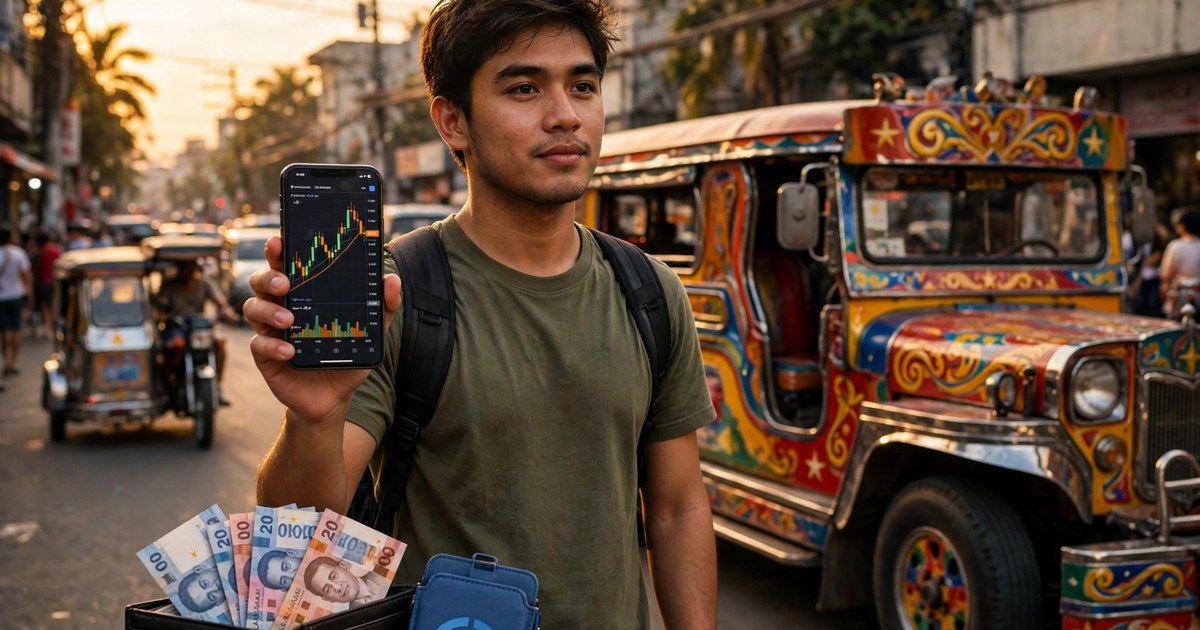
Bitcoin is trading at roughly ₱4.75 million today — about $76,000, and 40% below its $126,080 peak — and five BSP-licensed exchanges in the Philippines will sell it to you in pesos, funded straight from GCash or your bank. One of them charges just 0.10% per trade. Another hides its fee inside the price. And when you sell, the Bureau of Internal Revenue can take up to 35% of your gain. This guide compares all five, works out the real cost of a ₱10,000 buy, and shows you the cheapest legal route from pesos to Bitcoin.
The timing matters. Bitcoin fell about 5% on November 5, 2026, as the Nasdaq suffered its worst day since the 2020 pandemic and more than $1 billion in leveraged crypto positions were liquidated. US spot Bitcoin ETFs lost $430.2 million in a single day. For a Filipino buyer, that crash is also a discount: the same Bitcoin that cost over ₱7.9 million at the October 2025 peak now costs roughly ₱4.75 million.
Bitcoin in the Philippines right now: 5 numbers that set the scene
Before comparing exchanges, here is the market you are stepping into:
- ₱4,748,968 is the price of one Bitcoin in pesos at the time of writing, down 3.86% in 24 hours. The peso price moves with both the dollar price of Bitcoin and the USD/PHP exchange rate, so it can shift even when Bitcoin is flat in dollars.
- 40% below the peak: Bitcoin hit roughly $126,080 in October 2025. At $76,000 it has given back two-fifths of its value, which is why this guide exists — crashes are when most Filipinos start asking how to buy.
- $1.08 billion liquidated in 24 hours: the November 5 sell-off wiped out leveraged traders, mostly longs. Spot buyers were not liquidated — leverage, not Bitcoin itself, did the damage.
- 90 million GCash accounts: the Philippines runs on e-wallets, and that is why buying Bitcoin here is easier than in most countries. GCash alone reported 40.4 million monthly active users as of March 2026.
- 10 BSP-registered VASPs: the Bangko Sentral ng Pilipinas licenses Virtual Asset Service Providers, and a three-year moratorium on new applications has been in place since August 2022. The licensed list is short, which makes choosing safer — if a platform is not on it, you have no local regulator to complain to.
The 5 BSP-licensed exchanges compared
These are the five platforms a Filipino resident can use today with full local licensing. Every one of them is BSP-registered; they differ on fees, funding, and who they are built for.
| Exchange | Best for | Trading fee | PHP funding | Coins | Licence |
|---|---|---|---|---|---|
| Coins.ph (Coins Pro) | Lowest fees, first-time buyers | 0.10% maker / 0.15% taker | GCash, Maya, InstaPay, PESONet, cards, 7-Eleven | 100+ | BSP VASP since Sept 2017 |
| PDAX | Serious traders, limit orders | 0.40% maker / 0.50% taker | InstaPay, PESONet, bank transfer | 50+ | BSP VASP since Sept 2018 |
| GCash (GCrypto) | Buying inside the app you already use | Included in the spread | GCash balance | 40+ | Trades executed by PDAX |
| Maya | All-in-one wallet + crypto | Included in the spread | Maya balance, bank transfer | 20+ | BSP VASP |
| UnionBank / GoTyme | Bank-grade custody | Varies by channel | Bank account, InstaPay | Selected assets | BSP VASP (UnionBank since Sept 2023) |
Two names are deliberately missing from this table. Binance is not BSP-licensed and the Philippine SEC moved against it in 2024 for soliciting Filipino investors without registration — its website was blocked locally. Coinbase Philippines appears in some listings, but for a peso-funded first purchase the five above are the licensed, local rails. Unlicensed platforms carry a growing compliance risk as the Philippines moves toward OECD Crypto-Asset Reporting Framework (CARF) data sharing in 2028.
Coins.ph: the cheapest published fees in the country
Coins.ph, operated by Betur Inc., has held BSP authorization since September 2017 — the longest of any platform here — and stacks a VASP licence on top of electronic-money and remittance permissions. That is why cash-in and cash-out run through InstaPay, PESONet, GCash, Maya, cards, and over-the-counter partners including 7-Eleven. Its Coins Pro order-book interface charges 0.10% for makers and 0.15% for takers at the entry tier, falling to 0.03% and 0.05% at the top volume band — the cheapest published trading fees available to a Philippine resident, according to independent comparisons of Filipino exchanges. Cash-in is free via InstaPay, PESONet and intrabank transfer, and peso withdrawals cost ₱5.
Coins.ph also did something no other local exchange has: in April 2026 it connected stablecoins to the national QR Ph network, and added Bitcoin and Ether in June, so a balance now spends at close to 700,000 merchants. For a first-time buyer who wants the lowest fees and the widest set of peso on-ramps, Coins.ph is the default pick — with one warning: use Coins Pro, not the instant "Convert" button, because the instant quote carries a wider spread that quietly costs more than the 0.15% fee suggests.
PDAX: the trader's exchange — and the engine behind GCash
The Philippine Digital Asset Exchange (PDAX) has held its BSP licence since September 2018, serves roughly four million users, and runs genuine peso order books rather than broker quotes. Spot trading costs 0.40% for makers and 0.50% for takers — about four times the entry rate on Coins Pro — but depth on the BTC/PHP and ETH/PHP pairs has absorbed larger test orders with less slippage than any competitor. PDAX is also the only local exchange offering tokenized Philippine government treasury bonds alongside its 50-plus crypto assets, and it is the licensed engine behind GCash's GCrypto feature: when you buy Bitcoin inside GCash, the trade is executed by PDAX, not an offshore counterparty.
The honest trade-off is the 2021 outage and trade reversal, still the most serious platform failure in the local market. PDAX has operated cleanly since, but it is the one black mark on its record — and the reason some buyers split holdings across two platforms rather than keeping everything in one place.
GCash GCrypto: the easiest first buy in the Philippines
GCash reaches further into Filipino life than any dedicated exchange can. Its parent Mynt reported 40.4 million monthly active users out of roughly 90 million accounts as of March 2026, and filed in June for a ₱92.3 billion listing on the Philippine Stock Exchange — the largest IPO in the country's history. GCrypto, its in-app crypto feature, lists more than 40 coins including Bitcoin and Ether, supports limit orders and external transfers, and funds directly from your GCash balance. There is no separate exchange account to open and no bank transfer to arrange. The cost is the catch: fees are included in the spread rather than published as a percentage, so you cannot see exactly what you are paying until you compare the quoted price against the market price. For a first ₱1,000 test buy, that convenience is worth it. For regular ₱10,000-plus purchases, an order-book exchange will almost always be cheaper.
Maya: the wallet that does everything
Maya, formerly PayMaya, is a BSP-licensed VASP and the country's other super-app wallet. Its crypto feature sits beside bills, savings, and loans inside the same app, which makes it the natural choice if Maya — not GCash — is already your daily wallet. Like GCash, its fees sit inside the spread rather than on a published schedule, and its coin list is narrower, at around 20-plus assets.
UnionBank and GoTyme: the bank-grade option
UnionBank is the only universal bank in the Philippines holding a full VASP licence, granted by the BSP in September 2023. GoTyme, the digital bank backed by the Gokongwei group, also holds one. Neither is the cheapest way to buy Bitcoin, and neither lists as many coins as Coins.ph — but for buyers who want their crypto inside a regulated bank relationship, they are the only options in the country.
Step by step: your first Bitcoin purchase in the Philippines
Converting pesos into Bitcoin takes less than fifteen minutes on any licensed platform — BitPinas' step-by-step beginner's guide walks through the same flow. This is the order that works:
- Pick the platform that matches how you hold money. GCash or Maya user buying for the first time: start inside the wallet app. Want the lowest fees: open Coins.ph and use Coins Pro. Want limit orders and peso order-book depth: open PDAX.
- Complete KYC with a government ID and a selfie. Every BSP-licensed exchange must verify your identity under Philippine anti-money-laundering rules. A passport, driver's licence, UMID, or national ID all work. Verification usually completes within minutes, occasionally within a day.
- Deposit pesos. InstaPay is near-instant and typically costs ₱10–25 through your bank; GCash and Maya cash-ins are instant; PESONet is cheaper for larger amounts but settles within the banking day. Never deposit from someone else's account — the name must match your verified identity.
- Buy on the order book, not the Convert button. Place a limit order at or near the market price instead of tapping instant buy. The spread on instant quotes is the single biggest hidden cost for Filipino beginners, often 1–2% against a 0.10–0.15% trading fee.
- Move serious amounts to your own wallet. Exchanges are for buying, not storing. For amounts you cannot afford to lose, withdraw to a wallet you control — see our guide to what a crypto wallet is and how it works before your first withdrawal, and compare hardware options in our best crypto wallets in 2026 ranking.
What a ₱10,000 Bitcoin purchase actually costs
Fees look small until you add them up. Here is the same ₱10,000 buy on three routes, using published fee schedules:
| Cost | Coins Pro (limit order) | PDAX (limit order) | GCash GCrypto (instant) |
|---|---|---|---|
| Deposit (InstaPay) | ₱0–25 | ₱0–25 | ₱0 |
| Trading fee / spread | ~₱15 (0.15%) | ~₱50 (0.50%) | ~₱100–200 (spread, est.) |
| Bitcoin received | ~₱9,960–9,985 | ~₱9,925–9,950 | ~₱9,800–9,900 |
| Withdrawal to own wallet | Network fee only | Network fee only | Network fee only |
The gap between the cheapest and the easiest route is roughly ₱100–185 on a ₱10,000 buy — 1–2% — and it repeats on every single purchase. Over a year of monthly ₱10,000 buys, that is ₱1,200–2,200 a year. The lesson is not that GCash is bad — for a first buy it is excellent — but that convenience has a price, and once you are comfortable, the order book is where the savings live.
The tax rule most Filipinos get wrong
Here is the number that surprises almost every Filipino buyer: there is no special crypto tax in the Philippines, and no 15% crypto capital gains tax. The Bureau of Internal Revenue has issued no revenue regulation classifying crypto, so gains fall under the general income tax — graduated rates from 0% to 35%, as detailed in this 2026 Philippine crypto tax breakdown.
What that means in practice:
- The first ₱250,000 of annual taxable income is tax-free. Gains below that threshold, combined with your other income, can be entirely untaxed.
- Hold for more than 12 months and only 50% of the gain counts. Under Section 39(B) of the Tax Code, a capital asset held longer than a year has only half its gain included in taxable income. Buy Bitcoin at ₱4.75 million, sell at ₱6 million thirteen months later, and only ₱625,000 of the ₱1.25 million gain is taxable.
- The 15% rate you see quoted online is for something else. It applies to net gains on shares of stock in a domestic corporation that are not traded on the stock exchange. Crypto is not that. Real property has its own 6% rate. Neither reaches a Bitcoin sale.
- Trading as a business is taxed differently. A registered trader may elect 8% of gross sales above ₱250,000 instead of the graduated rates, and business traders may also face 12% VAT on VASP services in certain contexts.
- Almost everything is a taxable event. Selling for pesos, swapping Bitcoin for another coin, spending crypto on goods, and receiving crypto as payment can all create tax consequences. Buying and holding, and moving coins between your own wallets, generally do not.
- Reporting is coming. The Philippines is moving toward OECD Crypto-Asset Reporting Framework compliance in 2028, which means global data sharing on crypto transactions. Keep records of every purchase price, date, and transfer in pesos.
This is general information, not tax advice. Philippine crypto taxation is principles-based and can change with new BIR issuances, so confirm your filing obligations with a qualified Philippine tax professional before acting on large gains.
5 checks before you buy Bitcoin in the Philippines
Run through this list before your first purchase, and again before any purchase over ₱50,000:
- Licence check: confirm the platform appears on the BSP's published list of registered VASPs. If it is not there, you have no local regulator to complain to — and the SEC has already blocked one major offshore exchange for operating without registration.
- Fee check in pesos, not percentages: work out what a ₱10,000 buy actually costs you on that platform, spread included. A 0.10% fee with a 2% spread is worse than a 0.50% fee with no spread.
- Cash-out check: confirm you can withdraw pesos to your own bank account, and what it costs. Some platforms make buying easy and selling slow — test a small withdrawal before committing a large deposit.
- Wallet check: decide where the Bitcoin will live after you buy it. If the answer is "on the exchange forever," reconsider — the $6.3 billion Binance hack in October 2026 was a reminder that even the largest platforms are targets. Our beginner's wallet guide explains hot versus cold storage in plain language.
- Tax-record check: screenshot or export every buy confirmation with the peso price and date. The BIR taxes gains under general income rules, and your records are the only proof of what you paid.
What most people get wrong about buying Bitcoin in the Philippines
"Binance is the cheapest option." Binance is not BSP-licensed, its website was blocked locally after the SEC's 2024 action, and using unlicensed platforms carries growing compliance risk as CARF reporting arrives in 2028. Coins Pro's 0.10% maker fee is cheaper than most offshore alternatives anyway.
"GCash is free." GCash deposits are free, but GCrypto's fee is inside the spread — you pay it invisibly, in the price. Free funding is not the same as a free trade.
"Crypto gains are taxed at 15%." They are not. The 15% rate belongs to unlisted shares. Bitcoin gains join your taxable income at graduated rates up to 35%, with the 50% inclusion rule for assets held over 12 months.
"I need a bank account." You do not. GCash, Maya, 7-Eleven cash-in, and over-the-counter partners let unbanked Filipinos buy Bitcoin with cash — one reason around 13% of the population owns Bitcoin.
"The crash means I should wait." Nobody knows whether ₱4.75 million is the bottom — Bitcoin just fell 5% in a day and could fall further toward $72,000, the next support level analysts are watching. What is knowable is your cost: buying on a 0.15% order book instead of a 2% spread saves you money at any price. If you are buying for the long term, the platform decision matters more than the day decision. For the broader question of whether Bitcoin belongs in your portfolio at all, read our honest guide to whether Bitcoin is a good investment in 2026, and if you want income from your holdings rather than just price gains, crypto staking explained covers how ETH, SOL and ADA rewards work.
Frequently asked questions
Is Bitcoin legal in the Philippines?
Yes. Cryptocurrency is legal as a virtual commodity, regulated by the BSP for exchanges and the SEC for securities-style products. It is not legal tender — no one is obliged to accept it — but buying, holding, and selling Bitcoin through a licensed VASP is fully legal.
Can I buy Bitcoin with GCash?
Yes, two ways. GCrypto inside the GCash app buys Bitcoin directly from your GCash balance, with trades executed by PDAX. Or fund Coins.ph or PDAX from GCash via InstaPay and buy on their order books, which is usually cheaper for larger amounts.
How much tax do I pay on Bitcoin gains in the Philippines?
Gains fall under general income tax at graduated rates of 0% to 35%, with the first ₱250,000 of annual taxable income exempt. If you hold Bitcoin for more than 12 months, only 50% of the gain is counted. There is no separate 15% crypto capital gains tax. Keep records of every purchase in pesos.
Which is the cheapest exchange to buy Bitcoin in the Philippines?
Coins.ph's Coins Pro, at 0.10% maker and 0.15% taker, has the cheapest published trading fees for a Philippine resident, with free peso cash-in via InstaPay and PESONet. PDAX charges 0.40%/0.50% but offers deeper peso order books. GCash and Maya hide their fees in the spread, which usually costs more on larger buys.
Is Binance legal in the Philippines?
No — not as a licensed platform. Binance is not BSP-licensed, and the SEC moved against it in 2024 for soliciting Filipino investors without registration, resulting in its website being blocked locally. Filipinos who use it do so without local regulatory protection. The licensed alternatives — Coins.ph, PDAX, GCash, Maya, UnionBank, and GoTyme — cover every peso funding method Binance offered.

The bottom line
Bitcoin at ₱4.75 million is 40% below its peak, and the Philippines gives you one of the easiest on-ramps in the world: GCash in your pocket, InstaPay in seconds, and five BSP-licensed exchanges competing for your pesos. The cheapest route is Coins.ph's Coins Pro at 0.10–0.15%, the easiest is GCrypto inside the GCash app you already use, and the most serious trading venue is PDAX. Whichever you choose, buy on the order book, move serious holdings to your own wallet, and keep peso records of every purchase — because the taxman taxes up to 35% of your gains.
This article is for educational purposes only and is not financial, investment, or tax advice. Crypto prices are volatile and can change within minutes. Verify current fees, licensing status, and tax rules with the platform and a qualified professional before acting.