Paraguay Bank Collapse: 3 Million Depositors Locked Out Overnight — 5 Lessons for Anyone With Money in a Bank
Paraguay's central bank seized Ueno Bank on November 3, locking 3 million depositors out of their savings overnight — and ousting a president within 4 days. Here are 5 lessons for anyone who trusts a bank with their money.
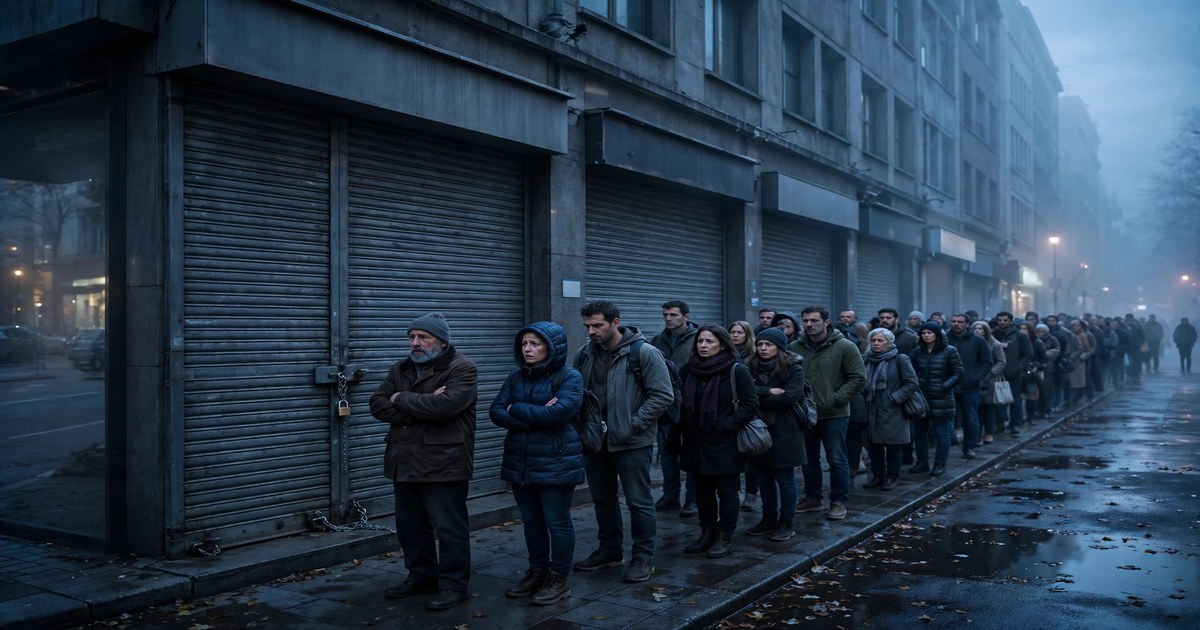
On the morning of November 3, 2026, around 3 million people in Paraguay woke up to find their money gone — not stolen, not hacked, but locked behind a bank's doors by their own central bank. Their cards stopped working, their apps went dark, and their savings became a government promise instead of cash. Four days later, the country's president was out of office. This is what happens when a bank fails in real time — and it holds five lessons for anyone with money in a bank.
Ueno Bank was not a tiny fringe lender. It was Paraguay's fifth-largest bank, holding $2.836 billion — 8.9% of the country's deposits — and claiming about 3 million customers in a nation of 6.5 million, over 60% of its adults. More than a million Paraguayans had opened their first-ever bank account there. Then, in a single dawn announcement, it was over.
The collapse is the clearest test in years of a question every saver should ask: how safe is money you do not hold yourself?
What Happened: The Timeline of a Four-Day Collapse
There was no slow bank run, no weeks of warning headlines. The bank went from operating normally to seized in under 24 hours, and from seized to a presidential ouster in four days.
Monday, November 2: Paraguay's central bank (BCP) voted unanimously to open a resolution procedure against Ueno Bank after finding its solvency ratio — the cushion of capital a bank must hold to absorb losses — had fallen below half the legal minimum.
Tuesday, November 3, before dawn: The BCP announced the seizure publicly. At the same moment, Ueno's app, cards and transfers went dark and its branches locked their doors. Roughly 3 million depositors could no longer withdraw cash or use their cards. Central bank president Carlos Carvallo resigned the same day. Eight senior Ueno executives were detained within hours, including founder Miguel Vázquez, bank president Juan Manuel Gustale and CEO Federico Miguel Vázquez.
Wednesday, November 4: Congress rushed through emergency legislation requiring the deposit guarantee fund to repay depositors within five business days, and a rush by panicked customers to open accounts elsewhere crashed rival banks' mobile apps. Prosecutors charged 27 people, including Ueno's controlling shareholder, with breach of trust and attempted fraud. Authorities seized nine luxury cars from Vázquez's home, plus a yacht and small planes.
Thursday, November 5: President Santiago Peña — who had held shares in Ueno's parent, Grupo Vázquez, until March 2025 — offered his resignation. Payouts to depositors began, starting with accounts holding up to 10 million guaraníes (about $1,600). A judge ordered six directors into pretrial detention.
Friday, November 6–7: The lower house voted 78–0 to impeach Peña, and on November 7 the Senate removed him in a unanimous vote of the 44 senators present. Vice President Pedro Alliana succeeded him. The attorney general ordered three criminal investigations into oversight of the lender and the placement of public funds there.
A bank failed on a Tuesday. By Friday, the president was gone. That is how fast a banking collapse travels — from a balance sheet to the presidential palace in 96 hours.
How a "Safe" Bank Collapsed in Days
Ueno did not fail because of a market crash or a bank run. It failed because its books were, according to the central bank's own criminal complaint, fiction: large unsecured loans to companies inside Ueno's own corporate group, expenses wrongly counted as assets, and new borrowing used to cover repeated overdrafts.
Once the accounts were corrected, the damage was stark: a shortfall of more than 1.6 trillion guaraníes — about $260 million — in funds set aside for losses, and the bank admitted it could not replenish $70 million in required reserves. Its capital cushion had fallen to less than half the legal minimum.
The most damning detail is the warning depositors never got. Fitch rated Ueno "BB" as recently as March 2026 — eight months before the seizure. A "BB" rating is not a gold star, but it is nowhere near a collapse warning. Depositors who checked it had no reason to move their money — the ratings system, designed to warn the public, gave them nothing.
The public-money angle made the scandal explosive. About $800 million in public funds sat at Ueno as of October — roughly a quarter of its deposits — including money from the state pension and health funds and the operators of Paraguay's giant hydroelectric dams. The bank lent heavily to its own owners' companies while holding the retirement savings of 32,000 pensioners. When a bank gambles with public money, its failure becomes a national crisis.
What Depositors Actually Get — and When
Paraguay has a deposit guarantee covering up to about $36,000–$38,000 per depositor (228.3 million guaraníes). The central bank estimates 97% of Ueno's depositors fall entirely within that ceiling, so the overwhelming majority should eventually recover their full balances.
That is genuinely good news for most depositors — eventually. But "eventually" is doing a lot of work. Here is what the guarantee does not do:
- It does not keep your money accessible. Depositors were locked out on November 3; payout notifications only began November 5, smallest accounts first. If your rent was due on November 4, the guarantee was useless.
- It does not cover everyone. The 3% above the ceiling — businesses and larger savers — face uncertain, partial recovery from a liquidation that could take years.
- It does not move at the speed of life. The emergency law requires repayment within five business days, but that clock started only after a law had to be written, passed and signed in a hurry. About 280,000 people who banked only with Ueno are being issued accounts at other banks just to receive their own money back.
- It does not undo the panic. When Ueno's customers rushed to open accounts elsewhere, other banks' apps crashed under the load. A guarantee protects balances, not a society's trust in its banks.
The deposit guarantee is a safety net, not a shield. It catches most people after the fall — but nothing stops you being locked out of your own money while the net is being set up.
Bank Deposit vs. Self-Custody Bitcoin: The Honest Comparison
The Ueno collapse is, at its core, a story about custody: who actually holds your money, and what happens when the holder fails. Bitcoin was invented precisely for this problem — but self-custody is not a free lunch either. Here is the honest comparison:
| What matters | Money in a bank | Bitcoin in self-custody |
|---|---|---|
| Who holds it | The bank — you hold a claim on it | You — you hold the keys |
| Can access be frozen overnight? | Yes — regulator, court or bank decision | No — no one can freeze your keys |
| What if the holder fails? | Deposit insurance up to a limit, after delays | Nothing fails — there is no holder |
| Can it be lent out without your knowledge? | Yes — fractional-reserve lending is the business model | No — your coins cannot be lent by anyone |
| What if you lose access? | Bank can restore it with ID | Lost keys mean lost coins — no recovery |
| Protection against theft | Bank security, fraud reimbursement | Entirely your responsibility |
| Speed of access | Instant — until it is not | Always instant, 24/7, anywhere |
The table's lesson: the two options fail in opposite ways. Banks fail when the institution fails — and you cannot control that. Self-custody fails when you fail — and you can control that, if you learn how. Our guide on how to store Bitcoin safely in 2026 walks through the seven steps that keep self-custody from becoming its own disaster — 3.7 million BTC are already lost forever, mostly to careless key management you can avoid.
What Most People Get Wrong About Bank Safety
The Ueno collapse exposes five myths most savers still believe. Each one failed in Paraguay within a week.
Myth 1: "My deposits are safe because the bank is regulated." Ueno was regulated, supervised and rated. Its solvency ratio fell below half the legal minimum anyway, and the regulator acted only after the damage was done. Regulation is a speed limit, not a seatbelt.
Myth 2: "Credit ratings would warn me before a collapse." Fitch rated Ueno "BB" in March 2026; eight months later the bank was seized. Ratings agencies are paid by the institutions they rate and are famously slow to downgrade. By the time a rating turns to junk, the doors are usually already locked.
Myth 3: "Deposit insurance means I can always get my money." Insurance covers the balance, not the access. Ueno's depositors waited days for payouts to begin, smallest accounts first. Insurance is a reimbursement scheme, not an ATM.
Myth 4: "Big banks can't fail overnight." Ueno was the fifth-largest bank in its country, holding nearly 9% of all deposits, and went from normal operations to seized in under 24 hours. The 2008 crisis, the 2023 failures of Silicon Valley Bank and Credit Suisse, and now Ueno all tell the same story: size slows a collapse; it does not prevent one.
Myth 5: "My money sits in a vault with my name on it." It does not. Your deposit is an unsecured loan to the bank, which lends it out and — as Ueno allegedly did — can lend it to its own owners' companies. When you deposit money, you become the bank's creditor. If the bank cannot pay its creditors, you are in line with all the others.
None of this means emptying your bank account tomorrow. It means understanding what a bank deposit actually is — a loan to a business that can fail — and sizing your exposure accordingly.
5 Lessons for Anyone With Money in a Bank
Here are five concrete lessons drawn directly from what happened in Paraguay.
1. Keep your emergency money where no one can lock it. The depositors hurt worst needed cash that week — rent, food, medicine — and found their cards dead. Keep one to three months of essential expenses where no institution can freeze it: physical cash at home, or Bitcoin in a wallet you control. One institution's failure must never leave you unable to buy groceries.
2. Learn self-custody before you need it. The week your bank fails is the worst time to learn how a hardware wallet works. Setting up secure self-custody takes an afternoon, not a crisis. Our guide explains how to store Bitcoin safely, including the seed-phrase backup mistake that permanently destroys more coins than any hack.
3. Spread your money across more than one institution. Ueno's most exposed customers were the roughly 280,000 who banked only with Ueno — no fallback account at all when the seizure hit. Two accounts at different banks, plus a self-custodied crypto position, means no single failure can cut you off completely. Diversification is not just an investment idea; it is a survival idea.
4. Know your country's deposit insurance limit — and stay under it. In Paraguay the ceiling is roughly $36,000–$38,000 per depositor; in the EU €100,000; in the US $250,000 per depositor per bank. Balances above the limit are at risk in a failure. Check your country's limit today, not the day your bank is seized — and remember it protects your balance eventually, not your access today.
5. Watch for the red flags regulators miss. Ueno grew from obscurity to the fifth-largest bank in a few years, turbocharged by more than $800 million in public money. Explosive growth on government deposits, heavy lending to its own owners' companies, a president who held shares in the bank's parent until 2025 — each was visible before the collapse. No single red flag proves a bank is failing, but a cluster is a reason to move at least some of your money elsewhere.
What the Ueno Collapse Means for Crypto
Bitcoin was created in the aftermath of the 2008 bank bailouts — its Genesis Block carries a newspaper headline about bank rescues. The Ueno collapse is the same story in miniature: a bank that lent recklessly, a regulator that acted too late, and ordinary people locked out of their savings while executives were detained and politicians fell.
That is why this story matters to crypto holders even though no crypto was involved. Every bank collapse demonstrates the problem Bitcoin was built to solve: money no institution can freeze, lend out, or lose. When 3 million people discover overnight that their savings are a promise rather than a possession, holding your own keys stops sounding paranoid.
Bitcoin trades near $75,800 this week, about 40% below its all-time high of $126,156, with the Fear & Greed Index at 28 — firmly in "fear" territory — and spot Bitcoin ETFs shedding $1.28 billion in a single week. But the Ueno story is a reminder that Bitcoin's case was never only about price: it is about what happens when trusted institutions break that trust — and how quickly. Our analysis of the Fear and Greed Index at 28 and what nine years of data say happens next puts this week's fear in historical context.
There is also a practical side. For Paraguayans locked out of Ueno, crypto offered something no bank could that week: payments needing no bank's permission. Bitcoin's Lightning Network — the layer that processes roughly $1 billion a month in payments — lets people send money instantly without a bank account. Our explainer on what the Lightning Network is shows how it works in plain English. And for anyone moving part of their savings into crypto after a scare like this, our comparison of five ways to cash out Bitcoin in 2026 shows the cheapest route costs $25 on $10,000 — and the worst $1,500.
What Happens Next
The Ueno story is far from over. Will the five-day repayment promise hold? Payouts began November 5 with the smallest accounts, but processing roughly 3 million claims on schedule is the first real test of the guarantee fund. Depositors above ~$38,000 depend on liquidating Ueno's remaining assets — typically years of process returning cents on the dollar.
Will the criminal cases stick? Twenty-seven people charged, six directors in pretrial detention, three criminal investigations, seized luxury cars, a yacht and small planes — a test of whether Paraguay's justice system can hold a politically connected banking group accountable. And can trust in banking recover? More than a million Paraguayans opened their first bank account at Ueno; for many, their first experience of banking ended with their money locked away and their president ousted — a first impression that shapes financial behavior for a generation, pushing some toward cash, other banks, and self-custody.
Most depositors will likely get their money back over the coming weeks, the criminal cases will grind on for years, and Paraguay's banking rules will get tightened. But no regulation fixes the deeper lesson: when your money is someone else's liability, your access depends on their honesty and competence. Ueno's depositors trusted both. They were wrong about at least one of them.
Frequently Asked Questions
What happened to Ueno Bank in Paraguay?
Paraguay's central bank seized Ueno Bank on November 3, 2026, after its solvency ratio fell below half the legal minimum. The bank's app, cards and transfers went dark, locking roughly 3 million depositors out. The collapse triggered President Santiago Peña's resignation and Senate removal within four days.
Will Ueno Bank depositors get their money back?
Most will. Paraguay's deposit guarantee covers up to about $36,000–$38,000 per depositor, and the central bank estimates 97% fall fully within that limit. Emergency legislation requires repayment within five business days; payouts began November 5 with the smallest accounts. Those above the ceiling face uncertain recovery from liquidation.
Why did Ueno Bank collapse?
Investigators found large unsecured loans to companies inside its own corporate group, expenses counted as assets, and new borrowing used to cover overdrafts. Correcting the books exposed a shortfall of about $260 million in loss provisions, and the bank could not replenish $70 million in required reserves.
How many people were affected by the Ueno Bank collapse?
Ueno claimed about 3 million customers — more than 60% of Paraguay's adults — in a country of 6.5 million, though press counts put account holders nearer 1.7 million. The bank held $2.836 billion in deposits, about 8.9% of the country's deposit system, including over $800 million in public funds.
What does a bank collapse have to do with Bitcoin?
Bitcoin was designed so no bank or government can freeze, lend out, or lose your money — you hold the keys yourself. A bank collapse demonstrates the risk Bitcoin removes: counterparty risk. Self-custody is not risk-free — lose your keys and the coins are gone forever — but its risks are yours to control.
Conclusion
Three million people went to sleep with money in the bank and woke up with a government promise instead. Their president resigned, their central bank chief quit, 27 people were charged, and a bank holding nearly a tenth of the country's deposits vanished in a dawn announcement. The guarantee will make most of them whole — eventually. But no guarantee can give back the days they could not buy food, pay rent, or reach their savings.
The Ueno collapse is not a story about Paraguay. It is a story about what a bank deposit really is: a loan to a business that can fail, in a system that can freeze your access overnight. The five lessons are simple — keep emergency money beyond any institution's reach, learn self-custody before you need it, spread your money around, know your insurance limit, watch for red flags. None requires predicting the next failure — only admitting it will come, somewhere, and catch the people who believed it could not happen to them.
Sources: Associated Press via The Week; Gulf News; TFTC; CoinJuice; ZeroHedge. Prices and market data as of November 8, 2026. This article is for information only and is not financial advice.