New Jersey Just Killed Its 3-Year Coinbase Staking Ban — But NJ Users Still Can't Stake: $15M Missed, 4 States Left, 5 Myths Debunked
New Jersey rescinded its 1,242-day Coinbase staking ban and $5M penalty on Oct 30 — yet as of Nov 2, NJ users still couldn't stake. Here's the $15M they missed, the 4 states still blocking staking, and the 5 myths to ignore.

New Jersey just killed a 1,242-day ban on Coinbase staking — and yet, as of November 2, a New Jersey resident opening the Coinbase app still could not stake a single new coin. That contradiction is the whole story. The ban is legally dead, the $5 million penalty that came with it is withdrawn, and Coinbase says access returns "very soon." But the switch had not actually been flipped, the rescission was issued "without prejudice" — meaning the state can come back — and four other states are still blocking staking outright. If you live in New Jersey, or in one of those four states, the headline you saw this week is only half the news. The other half is worth real money: Coinbase says New Jersey users missed millions of dollars in staking rewards over three-plus years, with one estimate putting the figure above $15 million.
This article separates what actually changed from what only sounds like it changed. You will get the full timeline of the 2023 order and its October 30, 2026 rescission, the five myths already spreading about the decision, the exact list of states still restricting Coinbase staking, and a practical checklist for New Jersey holders deciding what to do this week. None of this is financial or legal advice — staking rewards are not guaranteed and are not insured like a bank deposit — but every number below is sourced, and every prediction is labelled as one.
What Actually Happened: The 1,242-Day Ban, Ended in Two Pages
On June 6, 2023, the New Jersey Bureau of Securities issued a cease-and-desist order against Coinbase, arguing that its staking products were unregistered securities offerings under state law. The order carried a $5 million civil penalty and barred Coinbase from offering the named "Coinbase Staking Securities" in the state. In practice, the restriction applied to new staking only: New Jersey customers who already had staked balances kept earning rewards on them, but they could not stake new funds, restake, or compound their rewards through Coinbase. For more than three years, that was the status quo — a slow bleed of foregone yield that most affected users could feel but could not easily quantify.
The reversal arrived in two steps. First, in its quarterly report for the period ended September 30, filed with the U.S. Securities and Exchange Commission on October 29, 2026, Coinbase disclosed that New Jersey's securities regulator had told the company that same day that it planned to withdraw the June 2023 order. Then, on October 30, 2026, the Bureau of Securities signed a formal notice of rescission, published and shared by Coinbase general counsel Molly Abraham on November 2. The notice, signed by Acting Bureau Chief Keith A. Alt, cancels the order and its $5 million penalty. Coinbase chief executive Brian Armstrong posted the same day: "To our New Jersey users: very soon, you'll finally be able to participate in staking again." He gave no date.
Here is the timeline that matters, because the dates explain why the celebration ran ahead of reality:
| Date | What happened |
|---|---|
| June 6, 2023 | New Jersey issues cease-and-desist order against Coinbase staking; $5 million penalty; new staking blocked in the state. |
| June 2023 (same month) | The SEC sues Coinbase over its staking and trading programs in a parallel federal case. |
| February 2025 | The SEC agrees to dismiss its case against Coinbase with prejudice — meaning it cannot be refiled. |
| March–April 2025 | Five states — Illinois, Kentucky, South Carolina, Vermont and Alabama — drop their own staking actions against Coinbase. |
| October 29, 2026 | New Jersey tells Coinbase it plans to rescind the order; Coinbase discloses this in its quarterly SEC filing. |
| October 30, 2026 | New Jersey signs the formal notice of rescission, cancelling the order and the $5 million penalty. |
| November 2, 2026 | Coinbase announces the rescission publicly; Armstrong says staking returns "very soon" — but no date is set. |
| As of November 2 evening | Coinbase's staking eligibility page still lists New Jersey among states where new staking is unavailable. |
The pattern is unmistakable: New Jersey is the latest domino, not the first. The federal case died in February 2025, five states walked away in spring 2025, and now New Jersey has followed — one day before the November 3 U.S. midterm elections, in a cycle where prediction markets were favouring critics of the crypto industry for Senate control. Timing like that invites speculation, but the documents themselves say nothing about elections. What they do say is narrower, and more important, than the headlines suggest.
The $15 Million Question: What New Jersey Stakers Actually Lost
Coinbase says New Jersey users missed "millions of dollars" in rewards over the three-plus years of the ban. One published estimate, attributed to Crypto Briefing, puts the shortfall at about $15 million. Treat that number with the care it deserves: it is an estimate, not a figure from the state or a line item in a Coinbase filing, and it depends on assumptions about how much New Jersey users would have staked and at what rates. But even halving it leaves a striking fact — a state enforcement order quietly cost ordinary savers eight figures in foregone yield, with no compensation mechanism attached to the rescission.
Why was the loss so large? Because the ban blocked compounding, not just first-time staking. A New Jersey user who staked before June 2023 kept earning on the original balance, but could not add to it or restake rewards through Coinbase. Over 1,242 days, that is the difference between a balance that grows and one that stands still while the rest of the market's stakers compound. And the damage was not limited to New Jersey: across all the states that still face or faced staking restrictions, the broader missed-rewards figure has been estimated at more than $110 million. That is the real money-at-stake behind what looks like a dry administrative notice.
There is also an unanswered question about the $5 million penalty itself. The rescission notice does not say whether Coinbase paid any part of the penalty, or whether any of it will be returned. Unchained's reporting on the notice flags exactly this gap. For users, the practical point is simpler: do not expect a refund or a back-payment of missed rewards. The rescission restores future access; it does not reimburse the past. Anyone promising New Jersey stakers a payout from this decision is selling something.
5 Myths About the New Jersey Decision, Debunked
The news travelled faster than the fine print, and five myths are already doing the rounds. Each one is wrong in a way that could cost a reader money or a missed deadline.
Myth 1: "New Jersey users can stake again right now"
Wrong — at least as of November 2. The legal order is rescinded, but Coinbase had not yet switched staking back on for New Jersey residents, and its own eligibility page still listed the state as restricted. Armstrong's "very soon" is a promise of timing, not a statement that the feature is live. Check the eligibility page and the app itself before assuming access; do not move funds in anticipation of a feature that has not shipped.
Myth 2: "The ban is gone for good"
Wrong. The rescission was issued "without prejudice" and "without an adjudication on the merits." In plain language: New Jersey made no finding that its original claims were right or wrong, and it expressly kept the power to bring a fresh enforcement action against Coinbase under the state's Securities Law. Compare that with the SEC's February 2025 dismissal, which was with prejudice and cannot be refiled. New Jersey's door is closed, but it is not locked. That distinction matters if you are deciding whether to stake a large balance through a single exchange.
Myth 3: "This was a court ruling that staking is not a security"
Wrong. The rescission is a two-page administrative notice, not a lawsuit judgment, and it contains no ruling on whether staking products are securities. It does not even mention staking resuming. The legal question that started this fight in 2023 remains formally unanswered in New Jersey. What changed is enforcement policy, not the law — which is precisely why the "without prejudice" wording matters.
Myth 4: "All the states have now dropped their staking cases"
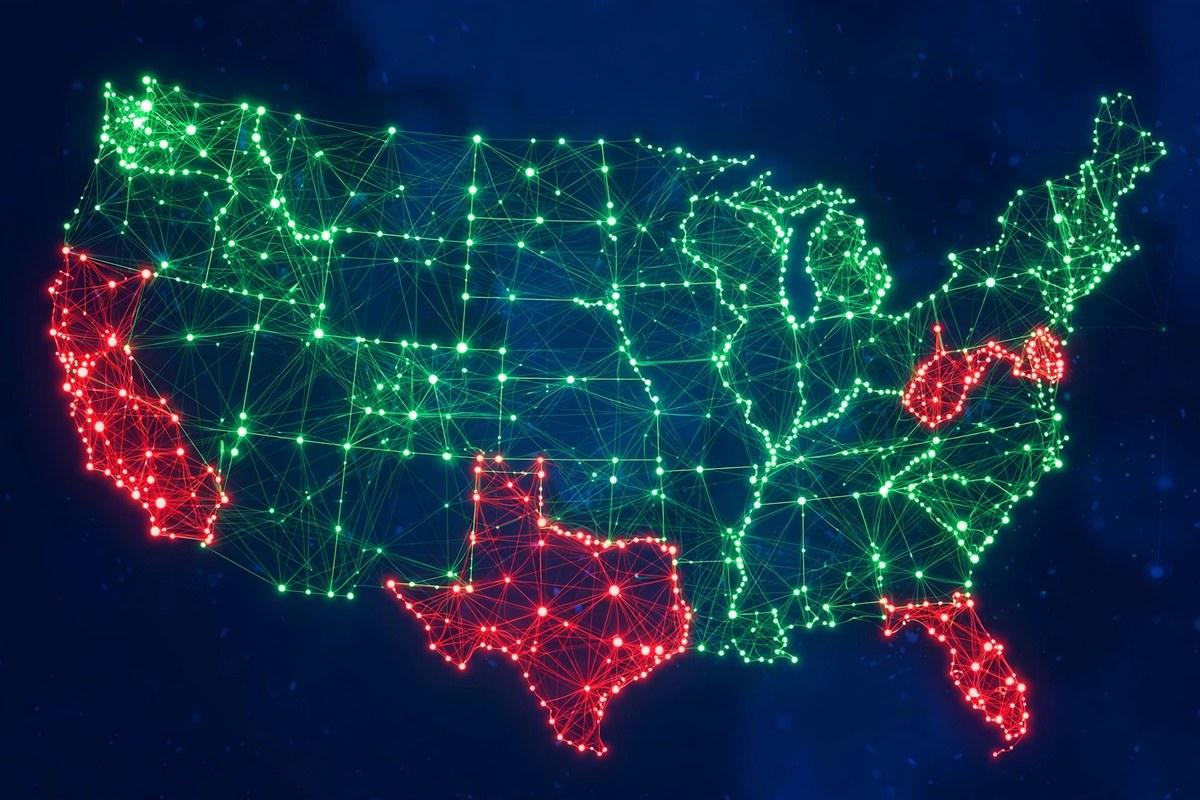
Wrong. Four states are still in the fight: California, Maryland, Wisconsin and Washington. Coinbase's own counsel named them as "next" in the same announcement that celebrated New Jersey. Until those four move, the United States still has a patchwork map for exchange staking, and a resident's rights depend on their postcode. Note one nuance: Washington's case is still open, but residents there can currently stake — the remaining restrictions bite differently state by state, so check your own state's status rather than assuming a national rule.
Myth 5: "Staking is now risk-free because regulators backed off"
Wrong, and the most dangerous of the five. Staking rewards are variable, they are not guaranteed, and they are not insured like a bank deposit. Tokens can be slashed, unstaked balances can be locked for days, and the underlying asset can fall far more than a year's rewards are worth — Ethereum is down roughly 55% from its August 2025 high even as its staking ecosystem grows. Regulatory retreat removes one risk; it does not remove market risk, smart-contract risk, or validator risk. If you are new to the concept, start with a beginner's explainer on what crypto staking is and how rewards actually work before committing funds.
The 4 States Still Blocking Coinbase Staking — and What Comes Next
After New Jersey, the remaining map is short enough to memorise. California, Maryland, Wisconsin and Washington still have staking enforcement actions pending against Coinbase, according to Coinbase and multiple reports on the rescission. Five states — Illinois, Kentucky, South Carolina, Vermont and Alabama — abandoned their actions in March and April 2025. The direction of travel is clear: from ten states acting in 2023 to four holdouts in November 2026. But the holdouts include California, the largest state economy in the country, so "most states dropped out" is not the same as "most Americans can stake."
What happens next is a prediction, labelled as such: Coinbase's counsel has publicly named the four remaining states as "next," and the New Jersey rescission gives those states a template — withdraw without prejudice, avoid a court ruling, move on. If the pattern of 2025 repeats, expect one or two more withdrawals before year-end, with California last precisely because it is the biggest and most complex case. The counter-scenario is the midterm result: if crypto critics gain Senate control, as prediction markets suggested heading into November 3, state regulators in holdout states may feel less pressure to fold. Either way, the New Jersey notice shows the playbook — and its "without prejudice" clause shows why no state should be treated as permanently settled.
What New Jersey Holders Should Do This Week: A 7-Step Checklist
If you live in New Jersey and hold crypto you intended to stake, this is the practical sequence — in order, because order matters when a feature is "very soon" but not yet live.
- Check the eligibility page first, not the headlines. Coinbase's staking eligibility page is the live source of truth. Until New Jersey disappears from its restricted list, you cannot stake new funds — whatever social media says.
- Do not move funds early. Transferring assets to Coinbase in anticipation of staking exposes you to price moves and transfer risk for a feature with no launch date. Wait for the switch to flip.
- Audit your existing staked balance. If you staked before June 2023, those rewards kept accruing. Check whether your rewards are sitting unclaimed or unstaked — the ban blocked restaking, so you may have idle yield to redeploy once access returns.
- Compare exchange staking with self-staking before you commit. Exchange staking is convenient but takes a cut and adds counterparty risk; direct staking keeps control but demands technical care. Our guide to how to stake Ethereum in 2026 walks through both routes, and the November staking comparison explains why a headline APY is not the same as real yield.
- Size the position for a "without prejudice" world. Because New Jersey can act again, avoid staking everything through one venue. Diversification across venues — or self-custody — is the hedge against a future order, and our beginner's wallet guide covers the custody side.
- Record the tax position. In the U.S., staking rewards are generally taxable when you gain control of them. Three years of blocked compounding may have created a messy record; reconcile it before the next tax season, not during it.
- Watch the four holdout states, not just New Jersey. If you move, or hold assets in California, Maryland, Wisconsin or Washington, your staking rights are a different map. Set a reminder to re-check eligibility quarterly — this story has moved in bursts, not steadily.
Why This Matters Beyond New Jersey
Zoom out and the New Jersey rescission is a data point in a larger shift. In 2023, staking was treated by a dozen regulators as an unregistered securities offering to be shut down. By late 2026, the federal case is dismissed with prejudice, six of the ten state actions have been dropped, and the conversation has moved from "is staking legal?" to "how is staking supervised?" — including the SEC's new crypto rules redefining decentralisation that we covered in our report on the SEC's token-rule comment period. That is a genuine regime change, and it is part of why exchange stocks like Coinbase keep drawing analyst attention even in a drawdown — Morgan Stanley just cut its Coinbase target by 53% to $120, a reminder that regulatory relief and share-price relief are not the same thing, as we detailed in our COIN versus Bitcoin breakdown.
But the regime change is incomplete in exactly the way that should keep investors cautious. A rescission "without prejudice" is a regulator choosing not to fight today, not a lawmaker settling the question tomorrow. The durable fix — legislation or a rulemaking that defines staking's status — still does not exist at the federal level, and the midterm elections on November 3 could change the legislative arithmetic in either direction. Until that fix arrives, staking in America will remain a postcode lottery with a shrinking, but still real, list of excluded states.
Frequently Asked Questions
Can New Jersey residents stake on Coinbase now?
Not yet, as of November 2, 2026. The order is rescinded, but Coinbase had not re-enabled new staking for New Jersey users and its eligibility page still listed the state as restricted. CEO Brian Armstrong said access returns "very soon," with no date given. Check the eligibility page for the current status.
What was the original 2023 order?
On June 6, 2023, New Jersey's Bureau of Securities issued a cease-and-desist order against Coinbase, arguing its staking products were unregistered securities under state law. It carried a $5 million civil penalty and blocked new staking in the state, while existing staked balances kept earning.
How much did New Jersey users lose?
Coinbase says users missed millions of dollars in rewards; one published estimate puts the figure above $15 million. That estimate is not from the state or a Coinbase filing, and no compensation or back-payment is attached to the rescission. Across all restricted states, missed rewards have been estimated above $110 million.
Which states still restrict Coinbase staking?
California, Maryland, Wisconsin and Washington. Illinois, Kentucky, South Carolina, Vermont and Alabama dropped their actions in March and April 2025, and New Jersey rescinded its order on October 30, 2026. Washington's case is open but residents there can currently stake, so check your state's page.
Does "without prejudice" mean New Jersey could ban staking again?
Yes, in principle. The rescission was issued without an adjudication on the merits and expressly preserves the Bureau of Securities' power to bring future enforcement action under state law. That is different from the SEC's February 2025 dismissal, which was with prejudice and cannot be refiled.
Is staking safe now that regulators have backed off?
Regulatory risk has fallen, but market, validator and smart-contract risks have not. Rewards are variable and uninsured, unstaking can involve lock-up periods, and the staked asset itself can fall more than a year's yield. Never stake funds you cannot afford to lock up, and compare real net yield — after fees — rather than headline APY.
Conclusion
New Jersey's decision is real progress wrapped in a warning label. A 1,242-day ban is dead, a $5 million penalty is withdrawn, and a state that once treated Coinbase staking as an unregistered security has walked away — following the SEC and five other states out the door. But the door is not locked behind them: the rescission is without prejudice, the app had not yet flipped the switch as of November 2, and four states still say no. For New Jersey holders, the smart move is boring and specific: verify eligibility before moving funds, audit the rewards you could not compound, diversify venues against a future order, and treat the $15 million estimate as a lesson in what slow regulation costs ordinary people — not as a cheque that is coming. The staking map of America is being redrawn state by state. New Jersey just moved. Watch California next.
Sources: New Jersey Bureau of Securities notice of rescission (October 30, 2026); Coinbase Q3 2026 SEC filing disclosure (October 29, 2026); Unchained, Cointelegraph, CoinCentral, The Crypto Guide and CoinLab reporting on the rescission, November 2–3, 2026. External coverage: Unchained, Cointelegraph, CoinCentral, The Crypto Guide.