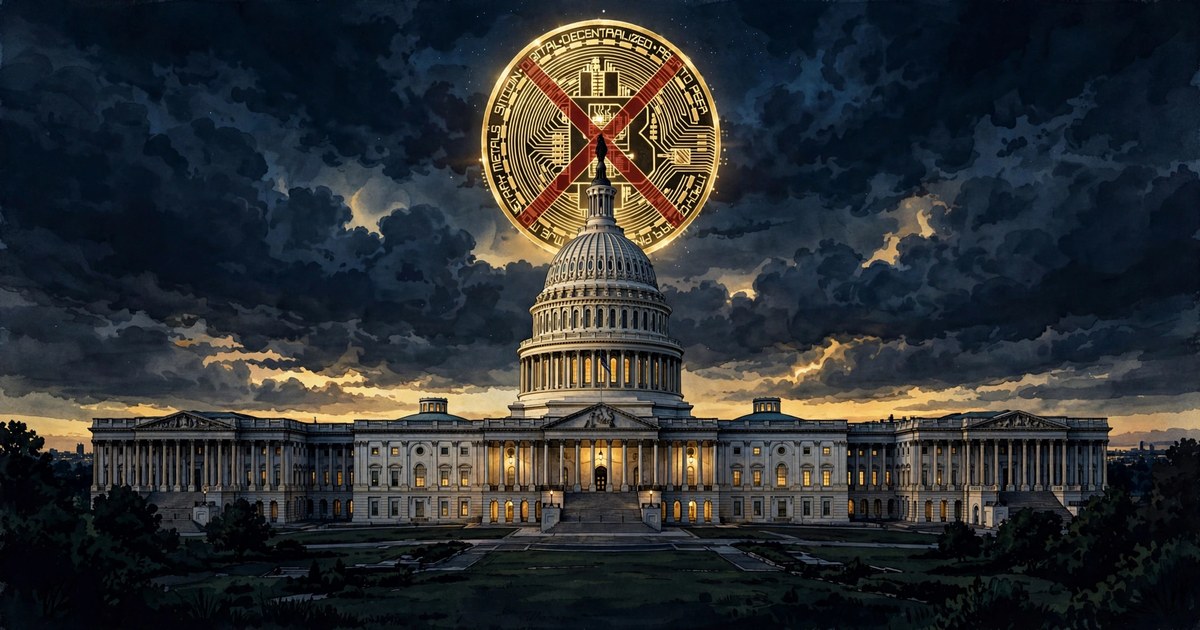
Is Zcash Banned in Europe? Paris ETP Halted Hours After Launch — 7 Moves for ZEC Holders Before the 10 July 2027 Deadline
Zcash is not banned for holders in Europe — but regulated platforms must stop handling privacy coins from 10 July 2027, and a Paris Zcash fund was halted hours after launch. Here are 7 moves for ZEC holders before delistings start.

No, Zcash is not banned in Europe — if you hold ZEC in your own wallet, no EU law makes that illegal. But here is the catch that matters for your money: from 10 July 2027, regulated crypto firms in the EU must stop keeping accounts that let transactions be obscured through anonymity-enhancing coins, and a brand-new Paris Zcash fund was halted just hours after its launch on 28 October 2026. That gap — legal to hold, increasingly hard to buy, sell or custody through a regulated firm — is the real story for ZEC holders, and it has a deadline.
Zcash traded at around $1,130 on 3 November 2026, down roughly 11% on the day in one market snapshot, even as its biggest technical upgrade in years sits just two days away. The coin's market capitalisation was quoted at about $18.6 billion at $1,126.89 on the morning of 3 November. So the market is not waiting for July 2027 to price in the risk: it is reacting now, to a halted fund, a looming upgrade, and a regulatory clock that exchanges are already obeying early. This article explains what the EU rule actually says, what it does not say, why Zcash is treated differently from Monero, what the Paris halt really proves, and the seven moves European ZEC holders should make well before the deadline.
What happened in Paris: a Zcash fund halted hours after launch
On 28 October 2026, CoinShares launched a physically backed Zcash exchange-traded product (ETP) on Euronext Paris, trading under the ticker ZCSH in euros, 100% backed by ZEC held in institutional custody, with an annual fee of 1.50%. It would have been the fourth Zcash fund to list in Europe in 2026, following earlier launches from 21Shares, Virtune and Valor. Hours later, Euronext pulled it from the Paris market.
Euronext gave no reason in its initial suspension notice, which is why speculation immediately linked the halt to Europe's privacy-coin crackdown. A company spokesperson later said the freeze was about settlement plumbing rather than regulation: the product would remain frozen until standard settlement operations could be fully supported by the Central Securities Depository (CSD). That distinction matters, and it cuts both ways. If the halt is purely operational, ZCSH could return once settlement is fixed. If exchanges and market infrastructure are simply more cautious about privacy assets, the "settlement" explanation may be the polite version of a deeper reluctance. Either way, the market read it as a warning: even a fully backed, regulated, euro-denominated Zcash product could not stay listed on day one.
For comparison, the 21Shares Zcash product is also physically backed, charges 2.50% a year, and holds its ZEC with custodians including Coinbase Custody, Anchorage Digital Bank and BitGo. CoinShares' 1.50% fee would have undercut it by a full percentage point — a meaningful saving for long-term holders.
What the EU rule actually says — and what it does not
The rule at the centre of this story is Article 79 of Regulation (EU) 2024/1624, the EU's Anti-Money Laundering Regulation (AMLR), adopted in May 2024. It bars credit institutions, financial institutions and crypto-asset service providers (CASPs) from keeping anonymous accounts or accounts that allow transactions to be obscured, "including through anonymity-enhancing coins". The obligation applies from 10 July 2027.
Three points in that wording decide almost everything for holders. First, the text does not name a single coin. It defines anonymity-enhancing coins by what they do: crypto-assets with built-in features that hide transfer details, whether by default or as an option. Second, the ban targets the regulated business in the middle, not the person holding the coin. Reports based on the regulation stress that personal, non-custodial wallets and peer-to-peer transfers fall outside the rule, and that self-hosted wallet providers with no access to or control over the wallets are excluded. Third, the rule is about accounts, not ownership: a user in Berlin can still hold Zcash in a self-custody wallet after the deadline and send it to another private wallet. What changes is whether a licensed exchange, broker or custodian will touch it.
That is why the common headline "EU bans Zcash" is wrong, and why the accurate headline is scarier in a different way. A ban on owning ZEC would be clear, challengeable and easy to plan around. A ban on regulated handling is fuzzy: each exchange, custodian and fund administrator makes its own legal-risk call, often years early, and holders learn about it through a delisting notice with a short window to act.

Why Zcash is in a grey zone — and Monero is not
Not all privacy coins face the same risk, and the difference explains why Zcash still has regulated products while Monero largely does not. Monero hides the sender, receiver and amount of every transaction by default, so its position under Article 79 is clear. Zcash gives users a choice: transparent addresses work much like Bitcoin, while shielded addresses use zero-knowledge proofs (zk-SNARKs) to hide transaction details. It also offers viewing keys, which let a holder grant an auditor or regulator visibility into specific shielded activity without broadcasting the data publicly.
That optionality is Zcash's best legal argument and its biggest weakness at the same time. Supporters argue that a transparent Zcash transfer is traceable, and that viewing keys give compliance a workable path. Regulators and risk-averse exchanges counter that the regulation covers optional anonymity features too, so a coin that can obscure transactions is caught even if most of its transactions do not. Until supervisors publish detailed guidance on how they read that clause, keeping ZEC listed remains a legal bet for any licensed platform — and the safer choice for many is to drop it.
History shows exchanges do not wait for the deadline. Kraken delisted Monero for clients in the European Economic Area in 2024, with trading and deposits stopping on 31 October 2024 — more than two and a half years before Article 79 applies. Japan and South Korea pushed exchanges to drop privacy coins years ago, and Dubai's financial-services framework bars privacy tokens from regulated activity. The EU's own Markets in Crypto-Assets (MiCA) framework adds a second hurdle: trading platforms must prevent admission of crypto-assets with an inbuilt anonymisation function unless holders and their transaction history can be identified by the platform operator. The pattern is consistent: delistings arrive early, quietly, and one platform at a time.

Zcash vs Monero vs Dash: who is most exposed?
| Coin | Privacy model | EU regulated-platform risk | What holders should note |
|---|---|---|---|
| Zcash (ZEC) | Optional: transparent by default, shielded via zk-SNARKs, viewing keys available | Grey zone — some regulated products exist, but listings are fragile | Self-custody and transparent transfers are its compliance bridge |
| Monero (XMR) | Always on: sender, receiver and amount hidden by default | Highest — already delisted across much of the EEA | Trading has shifted to decentralised and peer-to-peer venues |
| Dash (DASH) | Optional mixing feature | Grey zone, similar to Zcash but with less institutional product support | Optional privacy still counts under the regulation's wording |
The table explains the market's split verdict. Privacy-coin demand has not disappeared — Zcash's market value above $20 billion was cited by CoinShares at its ETP launch, and Monero traded near multi-year highs around $600 in late September 2026 — but the venues where that demand can be served legally in Europe are shrinking. In the United States, by contrast, regulators pulled back in October 2026: the Financial Crimes Enforcement Network withdrew a 2020 proposal on unhosted-wallet reporting and a 2023 proposal targeting crypto mixers. Europe is tightening while America loosens, and Zcash sits exactly on that fault line.
The NU7 upgrade on 5 November: faster blocks, same issuance
Two days after this article's publication date, Zcash faces a second, very different deadline. Network Upgrade 7 (NU7) is expected to activate when the mainnet reaches block 3,543,405, which developers expected around 5 November 2026 — the block height, not a fixed clock time, determines activation. NU7 cuts the target block interval from 75 seconds to 25 seconds under ZIP 218, making the chain roughly three times faster at producing blocks.
Daily ZEC issuance does not change, because the subsidy per block is adjusted for the faster cadence — so NU7 is a speed and usability upgrade, not a supply shock. It also disables legacy version 4 transactions, ending further spending from the older Sprout pool at activation, and node operators need compatible software to follow the new consensus rules. The Zcash Foundation released Zebra 7.0.0 with NU7 support. For holders, the practical point is simple: if you run a node or hold ZEC in an old wallet, upgrade before activation; if you hold on an exchange, confirm the exchange supports NU7, because a platform that has not upgraded cannot credit post-upgrade activity normally.
NU7 also arrives in the middle of a governance fight that investors should not ignore. A proposal from Josh Swihart would end the development fund before its scheduled November 2028 expiration, while a separate proposal would redirect the 8% share allocated to Zcash Community Grants to the Network Sustainability Mechanism. Both were still under discussion in early November, with no code changes made. Add the January 2026 resignation of the Electric Coin Company development team — which later reorganised under a new structure — and the picture is a protocol whose technology is advancing while its funding model is openly contested. That is not a reason to panic-sell, but it is a reason to size any ZEC position as a higher-risk holding, not a core one.
What most people get wrong about the "ban"
The most common mistake is treating a delisting as a ban on the coin itself. It is not. Your ZEC does not become illegal, worthless or unmovable when an exchange delists it; it becomes harder to convert through that exchange, and its price on remaining venues can diverge. The second mistake is the opposite: assuming that because Zcash ETPs launched in Europe in 2026, the July 2027 rule must not apply to ZEC. It does apply to the accounts behind those products, and issuers are racing to build regulated exposure precisely because the window may narrow. The third mistake is waiting until June 2027 to act. Exchanges have shown they move years early, and withdrawal windows after a delisting notice are often measured in weeks, not months.
The honest verdict is therefore split. For a European holder who self-custodies, understands shielded versus transparent addresses, and does not need to sell through a regulated exchange on short notice, Zcash remains usable after July 2027. For a holder who keeps ZEC on an EU exchange, relies on a regulated fund, or may need to liquidate quickly, the risk is real and rising: your exit route may close before the law even takes effect. That is why the checklist below is organised around exit routes, not price predictions.
7 moves for ZEC holders before the 10 July 2027 deadline
- Move exchange-held ZEC to self-custody — and test it. Withdraw a small amount first to a wallet you control, confirm it arrives, back up the seed phrase offline, then move the rest. A wallet you have never tested is not a plan. Our beginner guide to choosing a crypto wallet explains hot versus cold storage.
- Know which address type you are using. Transparent addresses behave like Bitcoin and are the easiest to explain to any platform; shielded addresses give privacy but are the feature regulators target. Do not mix them up when a platform asks how you received funds.
- Check your exchange's ZEC status in writing. Search its delisting and asset-support pages, not social media, and screenshot the answer. If it has already restricted ZEC in your country, assume further restrictions are possible.
- Do not rely on a single ETP as your only exposure. The Paris halt shows even a launched, physically backed fund can freeze on day one. If you hold a Zcash ETP, know its fee (CoinShares 1.50% versus 21Shares 2.50%), its custodian, and what happens to your money if trading is suspended. Our guide to how crypto ETFs and ETPs work covers the mechanics.
- Upgrade before NU7. Update wallets and nodes to NU7-compatible software before block 3,543,405 (expected around 5 November 2026), and confirm any exchange you use supports the upgrade. Legacy Sprout-pool spending ends at activation.
- Keep records of every purchase and transfer. If a future platform asks for source-of-funds evidence, transparent transaction history and exchange statements are your evidence. Shielded history cannot be reconstructed later if you did not keep viewing keys or records at the time.
- Set a personal decision date — not July 2027. Pick a date in early 2027 to re-check listings, and decide in advance what you will do if your main exchange delists ZEC: which venue, wallet or sale you will use. Decisions made calmly beat decisions made during a delisting notice countdown.
None of this is financial advice, and none of it requires selling ZEC. It requires something less dramatic and more useful: making sure that if you ever want to sell, move or prove ownership of your ZEC, you still have a route to do it.
What happens next: three dates that decide ZEC's European future
First, 5 November 2026: NU7 activation. A smooth upgrade supports the "Zcash is a serious, maintained protocol" case; a messy one hands sceptics fresh ammunition. Second, the return — or not — of the CoinShares ZCSH product once its settlement issue is resolved. A relaunch would show regulated appetite is real; a quiet disappearance would show it is not. Third, the steady drip of exchange decisions through 2027: each delisting or restriction before 10 July will tell holders more than any single regulator speech. Watch those three, not daily price swings, to judge whether Europe's regulated door for Zcash is narrowing or holding.
For context, Bitcoin slipped below $77,000 on 3 November as US spot Bitcoin ETFs recorded $399 million of net outflows on 2 November — a risk-off backdrop that punishes higher-risk assets first. Zcash's sharp daily drop fits that pattern, but its regulatory story is its own.
Readers new to the space should start with what Bitcoin is and how it works, then our guide to the best privacy coins in 2026 and our earlier Zcash NU7 levels analysis for the price-side picture. If you are buying any crypto for the first time, read how to buy crypto safely as a beginner before sending money anywhere.
Frequently asked questions
Is Zcash banned in Europe?
No. No EU law bans owning Zcash or holding it in a self-custody wallet. From 10 July 2027, Article 79 of Regulation (EU) 2024/1624 bars regulated firms — banks, financial institutions and crypto-asset service providers — from keeping accounts that allow transactions to be obscured through anonymity-enhancing coins. The restriction targets the regulated intermediary, not the holder.
Will European exchanges delist Zcash before July 2027?
Some may, and history suggests they will not all wait. Kraken delisted Monero for EEA clients in 2024, years before the deadline, and several exchanges dropped privacy coins in Japan and South Korea long before any EU date. Check your own exchange's support pages rather than assuming it will keep listing ZEC until July 2027.
Why was the CoinShares Zcash ETP halted in Paris?
Euronext halted the ZCSH product hours after its 28 October 2026 launch and initially gave no reason. A spokesperson later said the freeze was about settlement operations needing full support from the Central Securities Depository, not regulation. The product was 100% physically backed by ZEC, traded in euros, and charged 1.50% a year.
What does the NU7 upgrade change?
NU7, expected around 5 November 2026 at block 3,543,405, cuts Zcash's target block time from 75 seconds to 25 seconds. Daily issuance stays the same because the per-block subsidy is adjusted, legacy version 4 transactions are disabled, and spending from the old Sprout pool ends at activation.
Is Zcash safer than Monero under EU rules?
Legally, Zcash has a stronger argument because its privacy is optional and transparent transfers are traceable, with viewing keys for audits. Practically, both face risk: the regulation covers optional anonymity features too, so Zcash's grey-zone status depends on how supervisors interpret that wording. Monero's always-on privacy leaves no such argument.
Should I sell my Zcash before July 2027?
That depends on how you hold it and whether you may need a regulated exit. Holders in self-custody with tested wallets and good records face a different risk from holders relying on a single EU exchange or fund. This article is not financial advice: work through the seven moves above, check your own platform's status, and decide based on your exit route, not on price headlines alone.
Conclusion
Zcash in Europe is not a story about a coin being outlawed. It is a story about access narrowing in slow motion: a fund halted on launch day, exchanges that have already shown they delist years early, a rule that bans regulated handling rather than ownership, and a deadline — 10 July 2027 — that is close enough to plan for and far enough away to ignore. Holders who ignore it risk discovering, during a short delisting window, that their exit route closed while they were watching the price. Holders who act early — self-custody tested, address types understood, records kept, a decision date set — keep their options open whatever regulators and exchanges decide next. In a market where the regulated door can shut without warning, an open exit route is worth more than any price prediction.
Sources: Euronext/CoinShares ZCSH launch and halt reporting; Regulation (EU) 2024/1624, Article 79; Zcash NU7 upgrade reporting (block 3,543,405, 75 to 25 seconds); market snapshots for 3 November 2026. External sources: Zcash NU7 upgrade report, Zcash availability in Europe under new privacy rules, Euronext halts CoinShares Zcash ETP, privacy-coin regulatory compliance data, Zcash regulatory challenges explained, and Bitcoin below $77,000 as Zcash plunges.