How to Buy Bitcoin in Morocco in 2026: 5 Exchanges Compared — Fees, MAD P2P and the $14.6B Law That Changes Everything
$14.6 billion flowed into crypto in Morocco in one year — while buying Bitcoin was still technically illegal. Draft Law 42-25 changes the rules: here are the 5 best exchanges, their fees, and the fines to avoid.
The $14.6 Billion Paradox
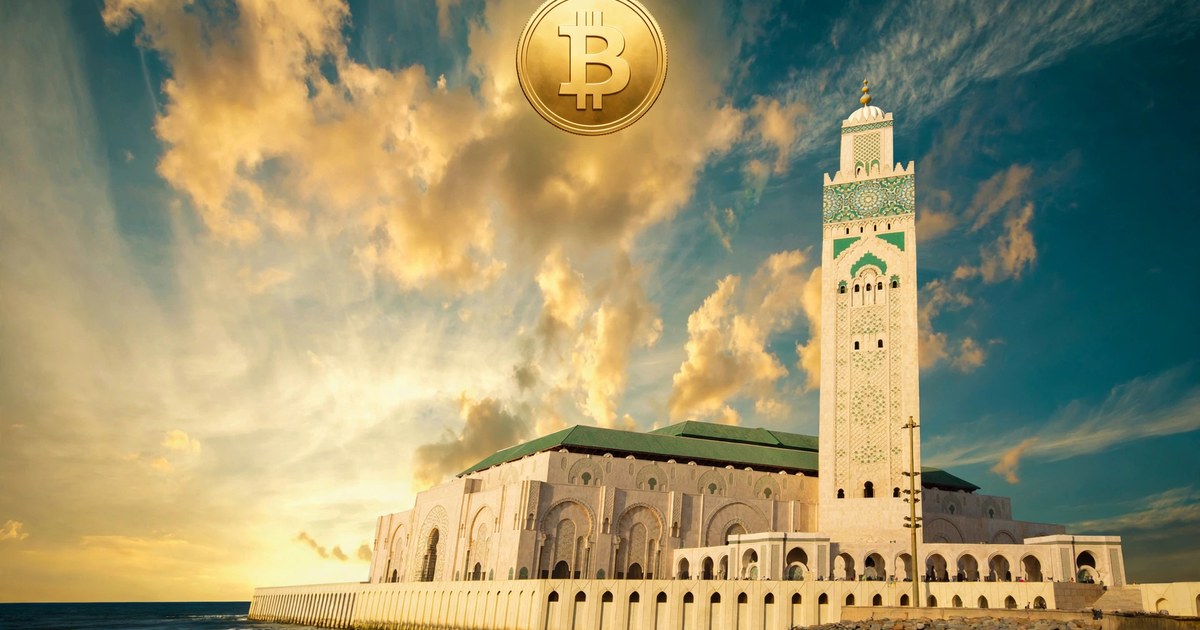
$14.6 billion flowed into cryptocurrency in Morocco between July 2025 and June 2026 — while buying Bitcoin was still, technically, illegal. That is the number blockchain analytics firm Chainalysis put on Morocco's crypto inflows in a report published this week, and it makes Morocco one of the largest crypto markets in Africa despite a ban that has stood since 2017. Now Draft Law No. 42-25, published for public consultation on October 31, 2025, is set to turn that grey market into a licensed one — and the window between the old ban and the new rules is exactly when first-time buyers make the most expensive mistakes. This guide shows you how to buy Bitcoin in Morocco in 2026, compares the five exchanges Moroccans actually use, works out what a 10,000 MAD purchase really costs, and flags the fines that still apply today.
Bitcoin itself trades near $75,966 on November 7, 2026, holding just above its 30-day low of $75,775 while the Crypto Fear & Greed Index sits at 25 — extreme fear. For a Moroccan buyer, a beaten-down price plus a market about to be legalized is the whole story — but only if you buy through the right channel and stay on the right side of the rules.
Is Bitcoin Legal in Morocco in 2026?
The short answer: owning and trading Bitcoin for investment is tolerated and on its way to being licensed — but paying with it is not, and buying it the wrong way can still cost you a fine.
In November 2017, Bank Al-Maghrib, the Ministry of Economy and Finance and the Moroccan Capital Market Authority (AMMC) issued a joint statement effectively banning all cryptocurrency transactions, citing volatility, fraud and foreign-exchange violations. The Office des Changes reinforced the position in April 2022. Yet the ban never stopped adoption: by 2023, around 4.9% of Moroccans owned some form of cryptocurrency, and the $14.6 billion of inflows Chainalysis recorded for the year to June 2026 arrived with no legal framework behind it at all.
The turn came in November 2024, when Bank Al-Maghrib governor Abdellatif Jouahri announced a draft law to legalize and regulate cryptocurrency. That became Draft Law No. 42-25 on Cryptoassets, published on October 31, 2025 for public consultation through November 30. Prepared with the Ministry of Economy and Finance and the AMMC, the draft covers trading platforms, digital-asset service providers and certain tokens including stablecoins, with consumer protection, anti-money-laundering controls and financial stability as its stated goals. Bank Al-Maghrib confirmed in its 22nd annual banking supervision report, presented in Casablanca in July 2026, that work on finalizing the legislation is continuing — but as of November 2026 the bill is still a draft and has not entered into force.
What that means in practice, right now:
- Buying and holding Bitcoin as an investment is the tolerated use case — the draft law treats crypto-assets as instruments people can buy, hold and trade through authorized platforms.
- Paying for goods and services with crypto is prohibited — businesses cannot accept Bitcoin or stablecoins, and all commercial payments must go through traditional banking channels.
- Mining Bitcoin remains completely illegal — the draft law excludes mining from its scope, and the ban has been consistent since 2017.
- Unlicensed platforms are the violation, not the coin itself — trading on any exchange without Bank Al-Maghrib authorization is treated as a foreign-exchange violation.
- Fines are real and current — individuals face MAD 20,000 to MAD 100,000 (roughly $2,000 to $10,000), and businesses up to MAD 500,000. In February 2025, authorities investigated people using Bitcoin and Tether to buy real estate and bypass currency controls.
The honest position for a buyer in November 2026: no exchange holds a Moroccan license yet, because no licensing regime exists until Law 42-25 passes. Use large, regulated international exchanges, keep records of every transaction, declare gains, and never use crypto to pay for goods, property or services inside Morocco.
5 Best Exchanges to Buy Bitcoin in Morocco Compared
Because the Moroccan dirham (MAD) is not directly supported for card or bank deposits on international exchanges, almost every Moroccan buyer uses the same two-step route: buy USDT from a dirham peer-to-peer (P2P) seller, then swap USDT for Bitcoin on the spot market. The P2P market is where the differences between platforms matter — depth of MAD advertisers, payment methods, and the spread over the market rate.
| Exchange | Spot fee | MAD funding | Coins listed | Best for |
|---|---|---|---|---|
| Bybit | 0.10% | P2P: bank transfer, Wafacash, CashPlus | 2,600+ | Deepest MAD P2P desk |
| Binance | 0.10% (0.075% with BNB) | P2P: Attijariwafa, CIH, BMCE, Crédit Populaire and more | 500+ | Most MAD/USDT advertisers |
| OKX | 0.08% maker / 0.10% taker | P2P: bank transfer; cards | 350+ | Lowest spot fees |
| Bitget | 0.10% | P2P: bank transfer, cards | 800+ | Copy trading, 800+ coins |
| Kraken | 0%–0.25% maker / 0.10%–0.40% taker | Cards (no MAD P2P) | 200+ | Best security record |
Bybit tops most Morocco rankings because a user can fund, trade and withdraw inside one app, and its dirham P2P desk has run since September 2022. Its mid-2026 attestation recorded $16.5 billion in customer assets with coverage above 100% for each major coin — worth noting because Bybit suffered a $1.5 billion Ether cold-wallet breach in February 2025, the largest single exchange loss to date. Binance has the most active MAD/USDT advertisers of any platform, with P2P transfers from Attijariwafa, CIH, BMCE, Crédit Populaire and other Moroccan banks. OKX undercuts the field on spot fees at 0.08% maker, while Kraken is the security-first pick but has no MAD P2P market, so funding it by card is exactly the kind of transaction the Office des Changes flags. For most first-time buyers, the shortlist is Bybit or Binance for P2P depth, with OKX as the low-fee alternative.
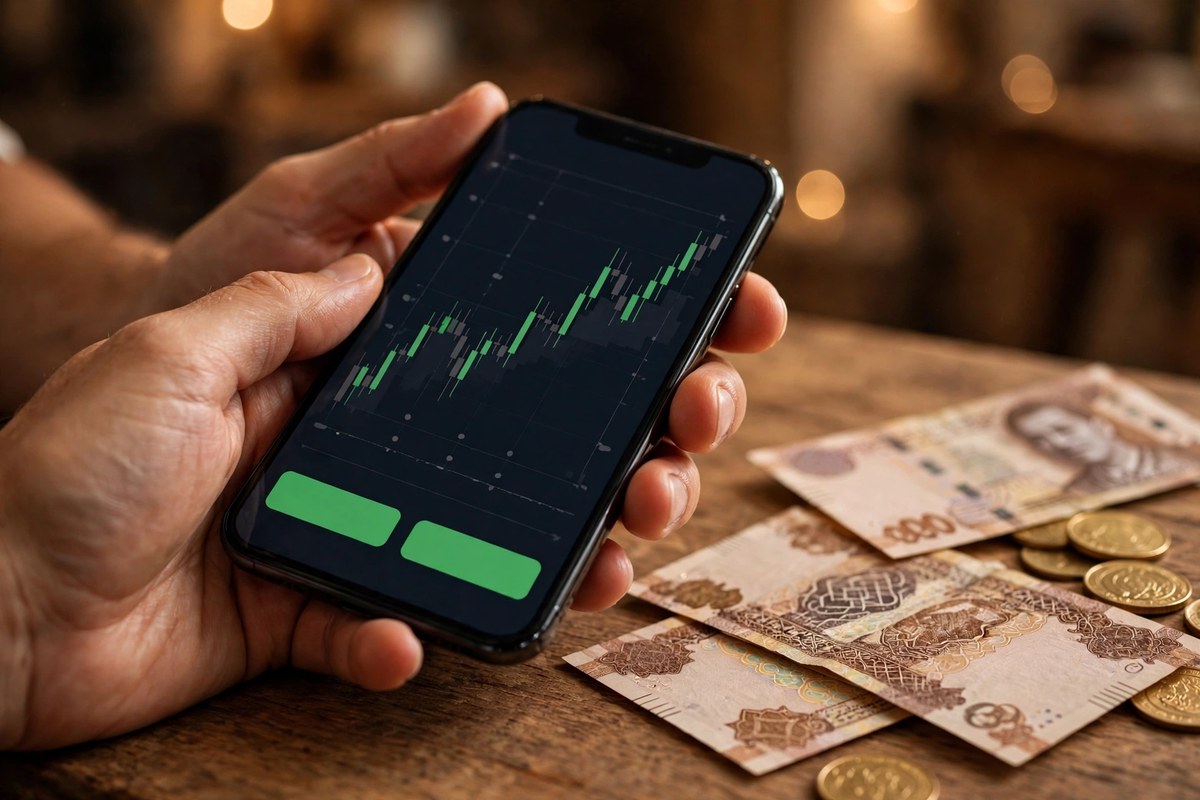
How to Buy Bitcoin in Morocco: Step by Step
The cheapest dependable method is the same on Bybit, Binance and OKX: buy USDT from a dirham P2P advertiser, then place a Bitcoin limit order on the spot market. Here is the full process.
Step 1: Choose your exchange and verify your identity
Register on Bybit or Binance and set Morocco as your country of residence — using a different country to dodge restrictions is the fastest way to get an account frozen later. Complete identity verification (KYC) with your Moroccan national ID card (CIN) or passport plus a selfie; both exchanges require a face check before P2P trading. Turn on two-factor authentication with an authenticator app, not SMS.
Step 2: Buy USDT with dirhams on the P2P market
Go to the P2P section, select "Buy USDT", set the currency to MAD and the payment method to bank transfer, Wafacash or CashPlus. Filter for sellers with 98%+ completion rates and hundreds of completed trades, and compare their USDT price against the market rate — a seller offering USDT far below market price is a scam, not a bargain. Enter the amount in dirhams, confirm the order, and pay exactly as instructed — never pay outside the platform's escrow, never accept a request to cancel and re-pay. The exchange holds the seller's USDT in escrow until you confirm receipt.
Step 3: Swap USDT for Bitcoin on the spot market
Once the USDT lands in your funding wallet, transfer it to your spot wallet and place a limit order for BTC/USDT at or just below the current price. A limit order costs the maker fee (0.08%–0.10%) instead of the taker fee, and on a volatile day it also stops you buying at a spike. At Bitcoin's November 7 price near $75,966, 10,000 MAD buys roughly 0.013 BTC before fees — a small fraction of a coin, which is normal.
Step 4: Move your Bitcoin to your own wallet
Do not leave your Bitcoin on the exchange any longer than you have to. The $6.3 billion Binance hack of October 2026 and Bybit's $1.5 billion breach the year before are why every serious guide says the same thing: exchanges get hacked, wallets you control do not. Withdraw to a hardware wallet such as a Ledger or Trezor, or at minimum a reputable software wallet where you hold the recovery phrase. Our comparison of the 7 best crypto wallets after the Binance hack covers prices and setup for each option. Write your recovery phrase on paper, store it offline, and never photograph it or type it into any website.
What a 10,000 MAD Bitcoin Purchase Actually Costs
Fees look tiny as percentages and add up fast as dirhams. This worked example uses Bitcoin at $75,966, roughly 10 MAD per US dollar, and the published fee schedules above — your real numbers will differ slightly with the P2P spread, the biggest hidden cost in Morocco.
| Cost | Bybit | Binance | OKX | Kraken (card) |
|---|---|---|---|---|
| P2P spread on USDT (typical 1–2%) | ~100–200 MAD | ~100–200 MAD | ~100–200 MAD | No P2P — card fee ~3.75% + €0.25 (~375 MAD) |
| Spot trading fee on 10,000 MAD | 10 MAD (0.10%) | 10 MAD (0.075% with BNB) | 8 MAD (0.08% maker) | 10–40 MAD |
| Bitcoin withdrawal fee | ~0.0002 BTC (~150 MAD) | ~0.0002 BTC (~150 MAD) | ~0.0002 BTC (~150 MAD) | ~0.0002 BTC (~150 MAD) |
| Total cost, approx. | 260–360 MAD | 260–360 MAD | 258–358 MAD | 535–565 MAD |
| Bitcoin received, approx. | 0.0127 BTC | 0.0127 BTC | 0.0127 BTC | 0.0124 BTC |
Two lessons fall out of that table. First, the P2P spread dwarfs the trading fee — ten to twenty times larger — so the seller you pick matters far more than the exchange's headline rate. Second, buying with a card where there is no MAD P2P market roughly doubles your cost, which is why Kraken is a poor first choice for Moroccan buyers despite its security record.
Bitcoin Taxes in Morocco: The 15% Rule
Profits from cryptocurrency transactions are subject to a 15% capital gains tax in Morocco, according to current 2026 guidance, and users must report those gains to the tax authorities (Direction Générale des Impôts, DGI). Some older sources quote a 15%–30% range, with individual income taxed at progressive rates of 10% to 38% — the treatment is still being defined as Law 42-25 moves forward, and the DGI and Bank Al-Maghrib are already building tracking systems together.
What to do now: keep a record of every purchase (date, amount in MAD, exchange, P2P seller), every sale, and every withdrawal. If you sell Bitcoin at a profit, declare the gain. If you only buy and hold, you have no gain to declare — but keep the records anyway, because once Law 42-25 takes effect, exchanges operating in Morocco will be expected to report, and a clean paper trail is the difference between a routine filing and an investigation. Our guide to Greece's new 10% crypto tax shows how another country handles the same transition: declare early, declare honestly, keep receipts.
What Most People Get Wrong About Buying Bitcoin in Morocco
Three myths cause most of the losses Moroccan buyers report.
Myth 1: "Bitcoin is banned, so I need a VPN and a foreign account." Wrong, and dangerous. Registering with a false country of residence is the most common reason Moroccan accounts get frozen with funds inside. The 2017 ban targeted payments and unlicensed activity, not ownership, and Law 42-25 is legalizing investment use. Use your real identity, complete KYC properly, and trade on the P2P market like everyone else.
Myth 2: "The cheapest USDT seller is the best deal." Wrong. On P2P markets, a seller offering USDT 5% below the market rate is not generous — they are laundering, running a chargeback scam, or about to ask you to pay outside escrow. Honest sellers cluster within 1–2% of the market rate, with 98%+ completion rates and hundreds of trades. Paying 1% more to a trusted seller is cheaper than losing 100% to a scammer.
Myth 3: "Once Law 42-25 passes, everything is legal." Wrong. The draft law legalizes buying, holding and trading crypto as an investment through licensed platforms. It does not legalize crypto as a payment method, it excludes mining, and it excludes NFTs and central bank digital currencies. Paying for a flat in Casablanca with USDT will still be a violation the day after the law passes — and the February 2025 real-estate investigations show the authorities already enforce that line.
5 Costly Mistakes to Avoid: The Checklist
Run through this list before every purchase — each item is a real way Moroccan buyers have lost money.
- Paying outside escrow is how P2P scams work — if a seller asks you to pay by a method the platform cannot see, or to cancel the order and pay directly, walk away.
- Leaving Bitcoin on the exchange after buying it is an unnecessary risk — withdraw to a wallet you control. The $6.3 billion Binance hack hit the world's largest exchange; no platform is too big to fail.
- Photographing or typing your recovery phrase anywhere is how wallets get drained — write it on paper, store it offline, and never share it with anyone, including "support staff" who message you first.
- Buying with a Moroccan card directly on an exchange can flag your bank account — the Office des Changes treats direct card purchases as foreign-exchange violations. Use the P2P route instead.
- Forgetting to record the purchase means a tax headache later — screenshot the P2P order, the spot trade and the withdrawal, and keep a spreadsheet of dates and dirham amounts.

What Happens Next: 3 Dates That Decide Morocco's Crypto Future
Three milestones will decide how easy — and how legal — buying Bitcoin in Morocco becomes.
| When | What | Why it matters |
|---|---|---|
| November 30, 2025 (passed) | Public consultation on Draft Law 42-25 closed | Draft text is final; parliament decides next |
| 2026 (in progress) | Bank Al-Maghrib finalizes the law; AMMC prepares licensing | Once enacted, exchanges must apply for licenses — the first licensed platforms will be the safest |
| 2026–2027 | e-Dirham CBDC pilot with the Central Bank of Egypt and the World Bank | The central bank's own digital currency will be the only legal digital currency in Morocco |
Until the law passes, the practical rules are unchanged: buy through P2P on a major exchange, keep records, declare gains, never pay for things with crypto, never mine.
Frequently Asked Questions
Is it legal to buy Bitcoin in Morocco in 2026?
Buying and holding Bitcoin as an investment is tolerated and on its way to being licensed under Draft Law No. 42-25, published October 31, 2025. Paying for goods and services with crypto is prohibited, mining is illegal, and trading on unlicensed platforms can draw fines of MAD 20,000 to MAD 100,000. The law has not yet entered into force, so the safest route is a major international exchange's P2P market — with full records kept.
Which exchange is best for buying Bitcoin in Morocco?
Bybit and Binance have the deepest Moroccan dirham P2P markets — Bybit's has supported dirhams since September 2022, and Binance lists the most active MAD/USDT advertisers, including sellers accepting transfers from Attijariwafa, CIH and BMCE. OKX is the low-fee alternative at 0.08% maker. Kraken is the most security-focused but has no MAD P2P market, so funding it by card costs more and can flag your bank account.
Can I buy Bitcoin with Moroccan dirhams (MAD) directly?
Not directly by card or bank transfer — no international exchange supports direct MAD deposits. The standard route is peer-to-peer: buy USDT from a dirham seller on the exchange's P2P market using bank transfer, Wafacash or CashPlus, then swap the USDT for Bitcoin on the spot market. Expect a 1–2% spread on the P2P step — the biggest cost in the whole purchase.
How much Bitcoin can I buy with 10,000 MAD?
At Bitcoin's November 7, 2026 price near $75,966 and roughly 10 MAD per dollar, 10,000 MAD buys about 0.013 BTC before fees — around 0.0127 BTC after the P2P spread, trading fee and withdrawal fee on Bybit, Binance or OKX. Bitcoin is divisible to eight decimal places, so buying a fraction of a coin is normal.
Do I pay tax on Bitcoin in Morocco?
Yes — profits are subject to a 15% capital gains tax, and gains must be reported to the Direction Générale des Impôts (DGI). Keep records of every purchase, sale and swap with dates and dirham amounts. The exact treatment is still being defined as Law 42-25 moves forward.
What happens when Law 42-25 passes?
Exchanges will need licenses from Bank Al-Maghrib and the AMMC before operating in Morocco, and buying Bitcoin through a licensed platform will become explicitly legal. Crypto will still not be usable as a payment method, mining will stay excluded, and stablecoins will fall under Bank Al-Maghrib's supervision. Buy through major exchanges now, keep clean records, and switch to a licensed platform once the first licenses are issued.
Conclusion
Morocco's $14.6 billion crypto paradox — one of Africa's biggest crypto markets, built entirely outside the law — is about to resolve. Draft Law 42-25 will not make Bitcoin legal tender or let you pay for dinner with it. What it will do is give Moroccan buyers something they have never had: a licensed platform, a regulator standing behind it, and clear rules for taxes and trading. Until then, the playbook is simple: register honestly on Bybit or Binance, buy USDT from a high-completion P2P seller with dirhams, swap it for Bitcoin with a limit order, withdraw to a wallet you control, and write everything down. At $75,966, with extreme fear across the market and a legal framework finally on its way, the buyers who get the process right now will be ready when Morocco's crypto market steps out of the shadows. If you want to understand what you actually own before you buy, start with our beginner's guide to Bitcoin — and if you plan to hold for the long term, learn how crypto staking works before you chase yield.
This article is for information only and is not financial advice. Cryptocurrency prices are volatile, Moroccan regulation is changing, and you should verify the current legal position before buying.