How to Buy Bitcoin in Russia in 2026: 5 Ways Compared — the ₽300,000 Cap, the Mandatory Test and the 0.048 BTC Limit
From November 17, Russians can legally buy Bitcoin — but a full year's allowance buys just 0.048 BTC. Here are the ₽300,000 cap, the mandatory test, and the 5 ways to buy, ranked.
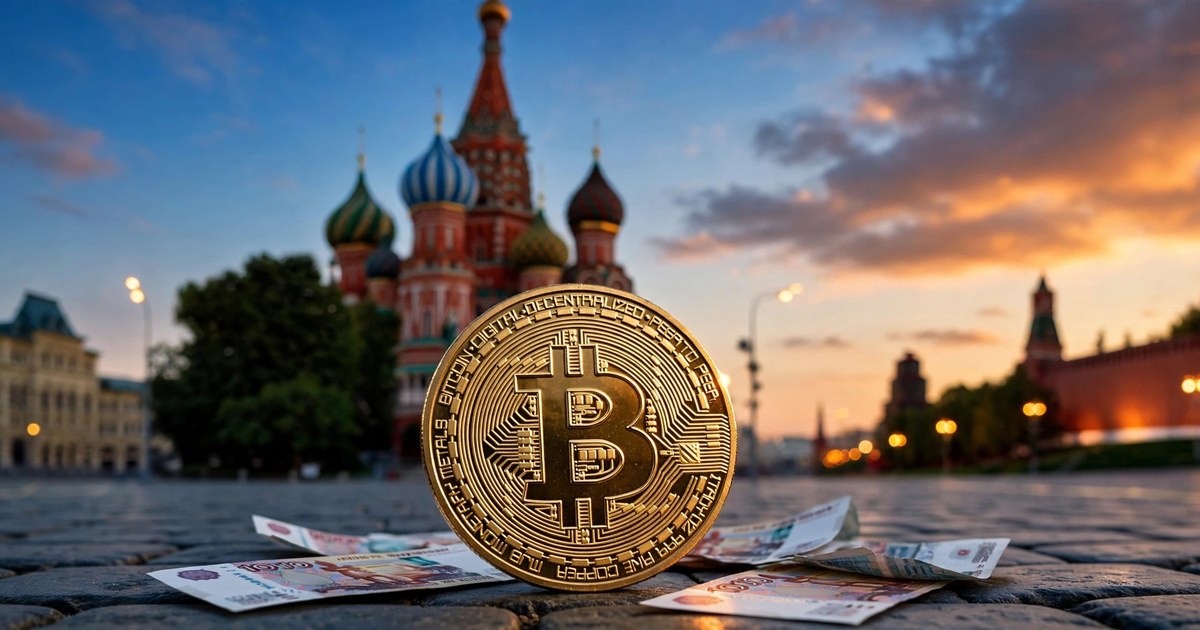
From November 17, 2026, ordinary Russians can legally buy Bitcoin on a regulated domestic exchange for the first time — but a full year of permitted buying adds up to just 0.048 BTC. The Bank of Russia's new rules cap retail purchases at 300,000 rubles (about $3,700) a year per broker, allow only three coins, force every buyer through a mandatory test, and ban moving your coins to your own wallet. This guide compares the five real ways to buy Bitcoin in Russia in 2026, with fees, limits and the traps that catch first-time buyers.
Russia is opening its crypto market to 144 million people — and closing almost every loophole at the same time. Get one detail wrong and your purchase can be refused, or your coins stuck in an account you cannot move them out of.
What Changes on November 17, 2026
The Bank of Russia published its directive on November 6, 2026, and it takes effect on November 17. Signed by governor Elvira Nabiullina under Federal Law No. 282-FZ, the instruction lets trading organisers admit three crypto assets to public trading: Bitcoin (BTC), Ethereum (ETH) and Tether's USDT. Everything else stays closed to ordinary retail buyers.
The selection was deliberate. The central bank said only the most liquid assets made the list, chosen on market capitalisation, average daily trading volume and at least five years of pricing history on foreign exchanges. Qualified investors can buy any crypto asset without restrictions, but they still have to pass the mandatory test.
Here is the part that surprises most people. The 300,000-ruble cap is not a one-off limit. It is the maximum value of digital currency a non-qualified resident can buy through one intermediary in a calendar year — and it counts both completed purchases and pending orders through that broker. At the central bank's official rate of 82.14 rubles to the dollar on November 7, the annual allowance is worth about $3,652. At Bitcoin's price of roughly $75,984 that buys 0.048 BTC — 25,000 rubles a month, about $304.
The 5 Rules Every Russian Bitcoin Buyer Must Know
These five rules decide whether your purchase works at all.
1. Only three coins are legal for retail buyers
Bitcoin, Ethereum and USDT. That is the entire retail menu from November 17. Solana, XRP, Dogecoin and every other coin remain off-limits to non-qualified investors on regulated domestic venues.
2. The ₽300,000 cap is per broker, per year
The ceiling applies to purchases through each individual intermediary — a broker, an asset manager or a licensed crypto exchange provider. It is denominated in the ruble cost of your purchases, not in the value of your holdings. The cap resets each calendar year.
3. You cannot move your coins to your own wallet
This is the rule most buyers miss. Under the central bank's interpretation of the new law, individuals cannot transfer cryptocurrency from a regulated digital account to a non-custodial wallet. Coins bought from November 17 sit with a licensed intermediary in a digital depository account. If self-custody is non-negotiable for you, the regulated route is not your route — and the alternatives carry their own risks, which we cover below.
4. Paying with crypto is still banned
Using cryptocurrency to pay for goods and services inside Russia remains strictly prohibited. Crypto is property for tax purposes, not money. You can buy it, hold it and sell it — you cannot spend it at a shop.
5. Peer-to-peer trading dies on July 1, 2027
Direct P2P transactions between individuals will no longer be permitted from July 1, 2027. That date matters because P2P is currently the main way most Russians buy crypto with rubles. Anyone building a buying habit on P2P today needs a plan for what replaces it.
5 Ways to Buy Bitcoin in Russia in 2026, Compared
There is no single best way to buy Bitcoin in Russia. The right route depends on how much you want to buy, whether you need self-custody, and how much regulatory protection you want.
| Method | Coins | Typical fee | Annual cap | Self-custody | Best for |
|---|---|---|---|---|---|
| 1. Regulated broker / Moscow Exchange | BTC, ETH, USDT only | Broker commission (TBC) | ₽300,000 per broker | No | Legal certainty, first-time buyers |
| 2. Sberbank crypto service | BTC, ETH, USDT | Bank pricing (TBC) | ₽300,000 per broker | No | Existing Sberbank customers |
| 3. International exchange (Bybit, OKX, Gate, MEXC, KuCoin) | Thousands | 0.00–0.20% spot | None (platform limits only) | Yes | Choice, self-custody, larger buys |
| 4. P2P marketplaces | Mostly USDT, then BTC | 0–2% spread | None — banned July 1, 2027 | Yes | Ruble funding today |
| 5. OTC desks and exchange offices | BTC, ETH, USDT | 1–3% premium | None | Yes | Large one-off purchases |
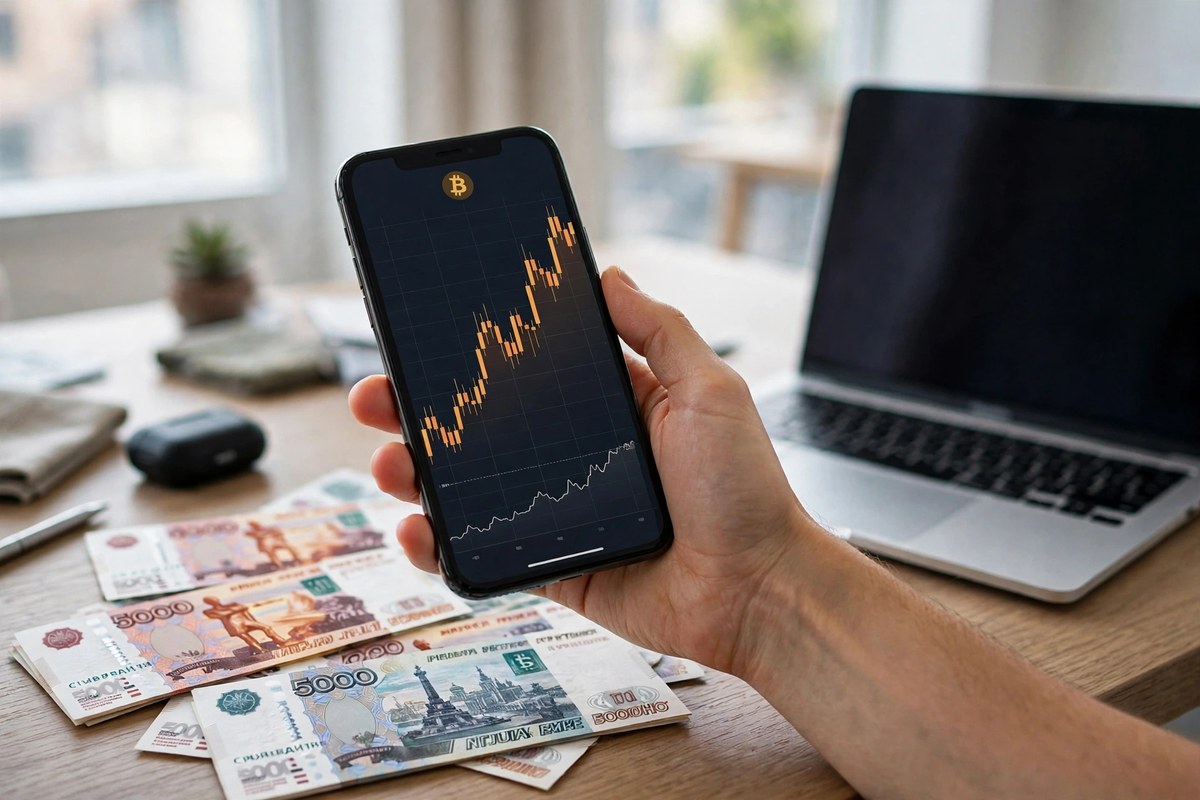
Option 1: A regulated broker or the Moscow Exchange
From November 17, licensed brokers, asset managers and crypto exchange providers can sell BTC, ETH and USDT to retail investors, on-exchange and over the counter. The Moscow Exchange is preparing its own crypto market, with pilot transactions starting December 1, 2026, using its existing securities-market infrastructure and a partner digital depository to record ownership and settlement.
This is the only route with full legal certainty. You pass the test, you buy through a licensed intermediary, and your ownership is recorded in a digital depository. The trade-off is the full set of restrictions: three coins, the ₽300,000 annual cap per broker, and no self-custody. Broker commissions have not been published yet — compare them against the 0.10% spot fees on international exchanges before committing real money.
Option 2: Sberbank
Sberbank, Russia's largest bank, was authorised to begin offering crypto exchange services in October 2026. For the millions of Russians who already bank with Sberbank, this is likely to become the simplest on-ramp: rubles in, Bitcoin out, inside an app they already use. The same ₽300,000 cap and three-coin limit apply, and coins stay in the bank's custody. Watch for Sberbank's fee schedule when it launches — bank crypto services historically charge more than specialist exchanges.
Option 3: International exchanges — Bybit, OKX, Gate, MEXC, KuCoin
International exchanges remain the route most Russians actually use today, and on fees and choice they are far ahead of the new regulated market. Bybit charges 0.10% on spot trades and runs the deepest ruble P2P market — Russia has supplied close to a third of the platform's web traffic at points over the past two years. OKX charges 0.08–0.10% but offers no direct ruble funding, so it only works if you already hold stablecoins. Gate lists more than 4,000 coins at 0.20%. MEXC is the cheapest, with zero maker fees and 0.05% taker fees. KuCoin charges 0.10% and offers ruble payment methods and Russian-language support.
The catch is legal standing. None of these platforms holds a Russian authorisation, so there is no domestic recourse if an account is frozen, and all of them screen against UK, EU and US sanctions lists. They also sit outside the November 17 framework entirely: no ₽300,000 cap, no three-coin limit, and full self-custody — which is precisely why experienced buyers prefer them, and precisely why the central bank is building a regulated alternative.
Option 4: P2P marketplaces
After international payment systems exited Russia, P2P became the primary way Russians buy crypto with rubles: you send rubles to a seller's card through Sberbank, Tinkoff or VTB, and receive USDT or Bitcoin in return. Spreads are typically 0–2%, and cards from most Russian banks are supported.
It is also the method with a hard expiry date. Direct P2P crypto trading between individuals becomes illegal on July 1, 2027. If P2P is your only route, use the next eight months to open a regulated account or an international exchange account — do not wait until June 2027 to discover your on-ramp has vanished.
Option 5: OTC desks and exchange offices
For large one-off purchases, over-the-counter desks and physical exchange offices offer execution guarantees and no platform account. Rates typically run 1–3% above market, and crypto ATM fees can reach 5–10%. Exchange offices are the least regulated option on this list and carry the highest scam risk — verify any office's reputation independently before handing over rubles.
How to Buy Bitcoin in Russia: Step by Step
Step 1: Choose your intermediary. Pick a licensed broker, Sberbank, or the Moscow Exchange once its pilot opens on December 1. Check that the intermediary is actually licensed to offer crypto under the new framework — the Bank of Russia's register is the source of truth, not the broker's own marketing.
Step 2: Pass the mandatory test. Complete the suitability test and confirm you have read the risk notice before your first purchase. The test is free and a pass stays valid for one year.
Step 3: Fund your account in rubles. Deposit rubles by bank transfer or card. Remember the cap counts the ruble cost of your purchases through that broker in the calendar year — a ₽300,000 deposit is your full annual allowance with that intermediary.
Step 4: Place your order. Buy BTC, ETH or USDT. At current prices, ₽300,000 buys about 0.048 BTC or 1.64 ETH. Consider splitting purchases across the year rather than spending the whole allowance in one trade — Bitcoin's 30-day range has swung between roughly $75,775 and $84,082 in the past month alone.
Step 5: Understand where your coins live. Your Bitcoin sits in a digital depository account with the intermediary. You cannot withdraw it to a hardware wallet. If that is a deal-breaker, the international-exchange route is the alternative — with its own risks, covered below.
Step 6: Keep records for tax. Every sale is a taxable event. Keep the purchase price, date, fees and sale proceeds for every trade, because you will need them when you file. Our general beginner's guide to buying Bitcoin explains the basic mechanics — wallets, orders and fees — that apply on any exchange, in any country.
What Most People Get Wrong About Buying Bitcoin in Russia
"Bitcoin is now fully legal, so I can buy as much as I want." Wrong. Only three coins are approved for retail, and the ₽300,000 annual cap per broker is hard law. Buying more means qualifying as a professional investor or using multiple intermediaries.
"I can move my Bitcoin to my own wallet like anywhere else." Wrong, and this is the most expensive misunderstanding in the new framework. Transfers from a regulated digital account to a non-custodial wallet are not permitted. If you buy through the regulated route, your Bitcoin stays in custody.
"P2P will always be there." Wrong. P2P trading between individuals is banned from July 1, 2027. The eight months between now and then are a transition window, not a permanent arrangement.
"The cap is $3,700, so it doesn't matter." It matters more than it looks. At $76,000 per Bitcoin, the full annual allowance is less than a twentieth of one coin. For a saver putting aside 25,000 rubles a month, that is a meaningful discipline — but anyone expecting to build a serious position through the regulated route alone will hit the ceiling fast.
"Crypto gains are tax-free because crypto isn't money." Wrong. Cryptocurrency has been property for tax purposes since a law signed in November 2024 took effect at the start of 2025. Gains are taxed, and the Federal Tax Service administers them under the standard personal income tax code.
Tax on Bitcoin in Russia: the 13% and 15% Rules
Russian residents pay 13% on crypto gains up to ₽2.4 million in a year, and 15% on anything above that — calculated on proceeds minus documented acquisition and transaction costs. Non-residents pay a flat 30%. You must file a tax return and calculate the tax yourself; there is no automatic withholding on most crypto sales. Mining is taxed separately: newly mined coins are valued at receipt and taxed as income, with no VAT imposed.
Two practical consequences follow. First, keep every receipt: without documented acquisition costs, the tax office can treat the full sale proceeds as your gain. Second, the ₽2.4 million threshold is generous relative to the ₽300,000 annual purchase cap — most retail buyers will stay in the 13% band for years. Compare that with India's 30% flat crypto tax: Russia's constraint is the cap, not the rate.
Bitcoin Price Context: What $76,000 Means for a ₽300,000 Buyer
Bitcoin traded near $76,000 on November 7, 2026 — about 40% below its all-time high of $126,156, and sitting almost exactly on its 50-week moving average near $75,560. The market's mood is fearful: the Fear & Greed index reads 25, extreme fear, and US spot Bitcoin ETFs lost about $1.28 billion in the week to November 6.
For a Russian buyer, the price context cuts two ways. A ₽300,000 annual allowance buys more Bitcoin at $76,000 than it would have at $126,000 — but a 40% drawdown is also a reminder that the mandatory risk test exists for a reason. If you are new to Bitcoin, read our guide to what Bitcoin is and how it works before you buy, and check the Fear and Greed Index to understand what extreme fear has meant for Bitcoin prices in past cycles. None of this is investment advice — the numbers above are market data as of November 7, 2026.
Checklist: Before You Buy Your First Bitcoin in Russia
- Decide your route first: regulated broker (legal certainty, capped, no self-custody) or international exchange (choice and custody, no Russian legal protection).
- Pass the test: complete the mandatory suitability test and risk acknowledgement — free, valid one year.
- Know your cap: ₽300,000 per broker per calendar year — about 0.048 BTC at current prices.
- Verify the licence: confirm your broker or exchange is authorised under Federal Law No. 282-FZ.
- Plan for July 1, 2027: if you use P2P today, open your replacement account now, not in June.
- Accept the custody rule: regulated-route coins stay in a digital depository — you cannot withdraw to a hardware wallet.
- Keep every receipt: purchase price, date, fees and sale proceeds, for the 13%/15% tax calculation.
- Never pay for crypto in goods or services: domestic crypto payments remain illegal.
- Start small: test with a small amount before committing your full monthly allowance.
The Risks Nobody Should Ignore
Sanctions screening. International exchanges screen against UK, EU and US sanctions lists. A Russian resident's account can be restricted or closed with little warning, and funds can be frozen during review. Keep only trading amounts on any international platform.
Scams multiply when rules change. Every regulatory opening brings fake "licensed" brokers and Telegram sellers offering to beat the cap. The Bank of Russia's register — not a Telegram channel — is the only proof of authorisation.
The rules are still moving. The Moscow Exchange pilot starts December 1, broker fee schedules are unpublished, and the framework's implementing guidance was last updated on November 3. Re-check the rules before every purchase, not just the first one. Volatility is the product. Bitcoin fell roughly 40% from its peak to November 2026 — the ₽300,000 cap limits how much you can lose in a year through the regulated route, so treat that as the protection it is.
Frequently Asked Questions
Is it legal to buy Bitcoin in Russia in 2026?
Yes — from November 17, 2026, non-qualified investors can legally buy Bitcoin, Ethereum and USDT through licensed brokers, asset managers and crypto exchange providers, under Federal Law No. 282-FZ. Crypto remains property, not legal tender, and paying for goods and services with crypto is still banned.
How much Bitcoin can I buy in Russia per year?
Through the regulated route, ₽300,000 (about $3,700) per intermediary per calendar year — roughly 0.048 BTC at November 2026 prices. The cap counts the ruble cost of purchases through each broker, so using more than one licensed intermediary increases your total allowance. Qualified investors face no cap.
Do I need to pass a test to buy Bitcoin in Russia?
Yes. Every investor — retail and qualified — must pass a mandatory suitability test and confirm they have read the risk notice before their first purchase. The test is free and a pass is valid for one year.
Can I withdraw my Bitcoin to my own wallet?
Not if you buy through the regulated route: transfers from a regulated digital account to a non-custodial wallet are not permitted, and coins stay in a digital depository account. International exchanges do allow self-custody, but they operate outside the Russian framework and without domestic legal protection.
What tax do I pay on Bitcoin gains in Russia?
Residents pay 13% on gains up to ₽2.4 million a year and 15% above that, calculated on proceeds minus documented acquisition and transaction costs. Non-residents pay a flat 30%. You must file a tax return yourself — gains are not withheld automatically.
Conclusion
Russia's November 17 opening is real, and it is narrow. Three coins, a ₽300,000 annual cap per broker, a mandatory test, no self-custody and a P2P ban arriving on July 1, 2027 — that is the deal. For a first-time buyer, the regulated route through a licensed broker or Sberbank is the safest way in: legal, recorded and capped at an amount that limits the damage if Bitcoin falls further. For buyers who want more choice or their own keys, international exchanges still work — at the price of zero domestic protection and live sanctions risk.
Whichever route you choose, do the test, respect the cap, keep your receipts, and plan your exit from P2P before July 2027. The window is open, the rules are written down, and the cheapest mistake in Russian crypto right now is assuming the old ways of buying Bitcoin will still be there next summer. For the full background on the rule change itself, read our earlier report: Russia Opens Bitcoin to 144 Million People on November 17 — But the $3,700 Cap Changes Everything.
Sources: Bank of Russia directive (November 6, 2026) via FinanceFeeds and Blockchain Reporter; exchange fees via DataWallet; tax rules via Gate; prices via CoinGecko and Farside Investors, November 7, 2026.