How to Buy Bitcoin in Ghana in 2026: 5 Exchanges Compared — Fees, MTN MoMo Payments and the New VASP Law
You can buy Bitcoin in Ghana with just a phone and MTN MoMo — no bank account needed. But 352 Ghanaians lost GH¢3.4 million to investment scams in six months. These 5 exchanges, fees and the new VASP law decide whether your first buy is safe.
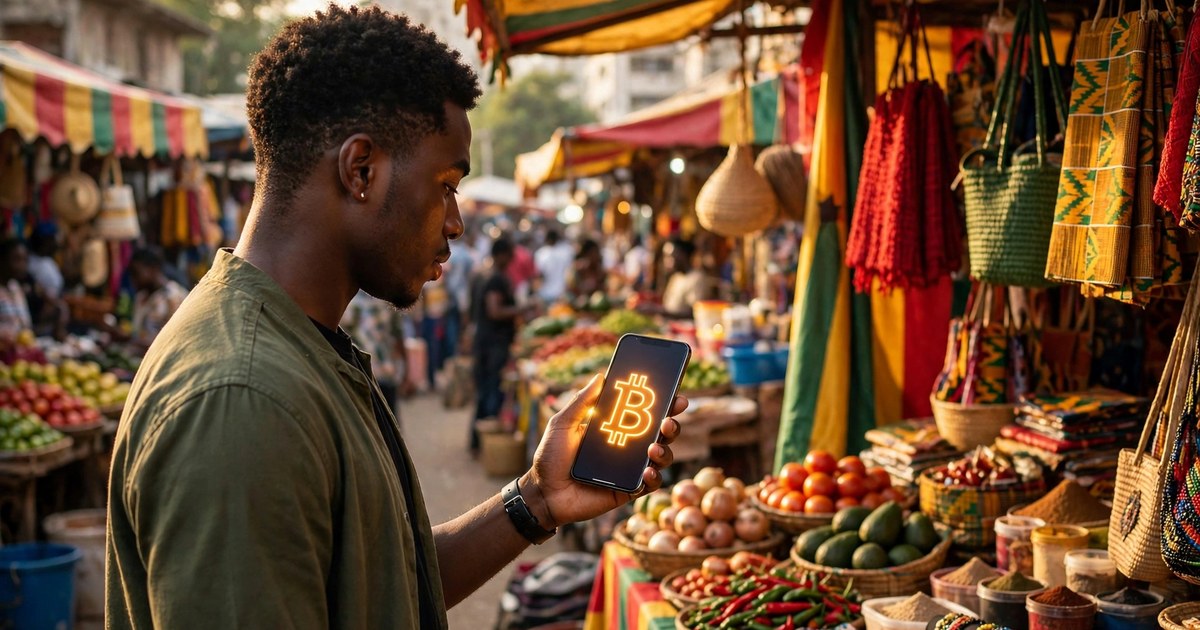
You can buy Bitcoin in Ghana with just a phone and MTN Mobile Money — no bank account, no dollar card, no trip to a forex bureau. MTN alone counts 19.3 million active MoMo users, and peer-to-peer markets let you turn cedis into Bitcoin in about 15 minutes. But here is the number that should come first: Ghana's Cyber Security Authority recorded 352 online investment fraud cases in the first half of 2026 alone, with losses above GH¢3.4 million. The same phone that buys your Bitcoin is the one scammers target. This guide compares the five realistic ways to buy Bitcoin in Ghana in 2026, explains the new VASP law that changed the rules, and shows you how to make your first purchase without becoming case number 353.
Bitcoin trades near $76,000 on November 7, 2026, after a week in which US spot Bitcoin ETFs lost $1.28 billion and global markets sold off on strong US jobs data. For a Ghanaian buyer, the dollar price matters less than the cedi route: the spread you pay on a peer-to-peer trade and the safety of the platform you choose will decide whether your first buy is a good deal or an expensive lesson. If you are completely new to crypto, start with our What Is Bitcoin? beginner's guide before you spend a cedi, and read our general How to Buy Bitcoin guide for the concepts that apply everywhere.
Bitcoin in Ghana in 2026: 5 Numbers That Decide Your First Buy
Five figures explain the whole Ghanaian market right now. Memorise them before you open any exchange app.
| Number | What it means |
|---|---|
| 19.3 million | Active MTN MoMo users at the end of 2025, up 12.3% year on year, across more than 31 million subscribers. Mobile money — not bank transfer — is how Ghana buys Bitcoin. |
| GH¢3.4 million+ | Losses from 352 online investment fraud cases recorded by the Cyber Security Authority in the first half of 2026. Scams, not price crashes, are the biggest risk for a first-time buyer. |
| 20 | Entities admitted to the Securities and Exchange Commission's Virtual Asset Sandbox in March 2026, running for 12 months. These are the only platforms currently authorised to pilot virtual asset services in Ghana. |
| 15 minutes | The usual payment window on a peer-to-peer trade: you send cedis by MoMo and the seller's Bitcoin, already locked in escrow, is released once payment is confirmed. |
| 2027 | The Bank of Ghana's target for full operationalisation of the Virtual Asset Service Providers Act. Licensing for all providers opens after the sandbox phase ends. |
Is Bitcoin Legal in Ghana in 2026?
Yes — buying, holding and selling Bitcoin is legal for individuals in Ghana. It is not legal tender: the cedi remains the only legal tender, and Bitcoin is not backed by the government. That distinction matters, because it means there is no compensation scheme if a platform fails or a scammer takes your money. The new law regulates the providers, not your risk.
Parliament passed the Virtual Asset Service Providers Act, 2025 (Act 1154) in December 2025, naming the Bank of Ghana and the Securities and Exchange Commission as joint regulators. Every crypto service provider operating in Ghana will need a licence under the Act, with operational guidelines and policy sandboxes being phased in through 2026 and full operationalisation targeted for 2027.
The SEC's sandbox, which began in March 2026 and runs for 12 months, admitted 20 entities. The published names include Yellow Card Ghana Limited (a virtual asset exchange), Whitebit Ghana Ltd, Hyro Exchange Ltd, Koinkoin Ghana Ltd, Africoin Ghana Limited (gold tokenisation) and the Ghana Gold Board as a real-world asset custodian. Sandbox participation is a pilot, not a full licence — but it is currently the only official authorisation a platform can hold in Ghana, so it is the first thing to check before you trust a local service with your cedis.
There is one more rule that catches people out. In June 2026 the Bank of Ghana issued a supervisory directive ordering all regulated financial institutions — banks, payment service providers and electronic money issuers — to immediately stop supporting unauthorised foreign-currency digital wallet services offered by cryptocurrency platforms. In practice, that means your Ghanaian bank card will often be blocked if you try to fund an international exchange directly. It is not a ban on Bitcoin. It is the reason mobile money and peer-to-peer trading, rather than card payments, are the working route for almost every Ghanaian buyer.
5 Exchanges Compared: Where Ghanaians Actually Buy Bitcoin
There is no single "best" exchange for Ghana — the right choice depends on whether you want the cheapest rate, the simplest first purchase, or the strongest regulatory standing. Here is how the five realistic options compare.
| Platform | How you pay in cedis | Regulatory position in Ghana | Best for |
|---|---|---|---|
| Binance P2P | MTN MoMo, Telecel Cash, AT Money, bank transfer via P2P merchants | Global exchange; no Ghana SEC licence. Deepest GHS P2P market. | Best rates and most merchants; best for buyers who check escrow carefully. |
| Bybit P2P | MoMo and bank transfer through P2P merchants; stablecoin-first flow | Global exchange; no Ghana SEC licence. | Buying USDT with cedis first, then converting to Bitcoin; strong P2P escrow. |
| Bitget P2P | MoMo via P2P merchants; zero-fee promotions on some spot pairs | Global exchange; no Ghana SEC licence. | Low-fee spot trading after your first P2P buy; copy trading for learners. |
| Yellow Card | Bank transfer and mobile money | Admitted to the SEC Virtual Asset Sandbox (March 2026) — the only official authorisation available in Ghana today. | Buyers who want a locally recognised, sandbox-authorised platform. |
| Luno | Bank transfer and voucher deposits; instant buy/sell | Long-established in African markets; admitted to Nigeria's SEC programme in July 2026. Check its current Ghana status in-app. | Absolute beginners who want the simplest interface and are willing to pay more for it. |
A note on fees, because this is where first-time buyers lose money without noticing. On peer-to-peer markets there is usually no visible "fee" at all — the cost hides in the spread, the gap between the merchant's cedi rate and the real market rate. A merchant offering Bitcoin 3% above the market price is charging you 3%, however "zero fee" the platform claims to be. Always compare the merchant's implied cedi-per-Bitcoin rate with the live dollar price (Bitcoin near $76,000 at the time of writing) before you confirm. On instant-buy services such as Luno, the cost is the opposite: a transparent but higher price, with reported instant-buy markups of around 2% on top of a 0.10% exchange fee in comparable African markets. Neither is a scam — but only one of them shows you the price upfront.
Our How to Buy Bitcoin in Nigeria guide covers the same P2P mechanics in West Africa's biggest market, and the comparison is useful: Nigeria's SEC admitted 14 firms to its own incubation programme, while Ghana's sandbox holds 20. If you have family sending money from abroad, our How to Buy Bitcoin in Kenya guide shows how M-Pesa plays the same role there that MoMo plays in Ghana.
How to Buy Bitcoin With MTN MoMo in 6 Steps
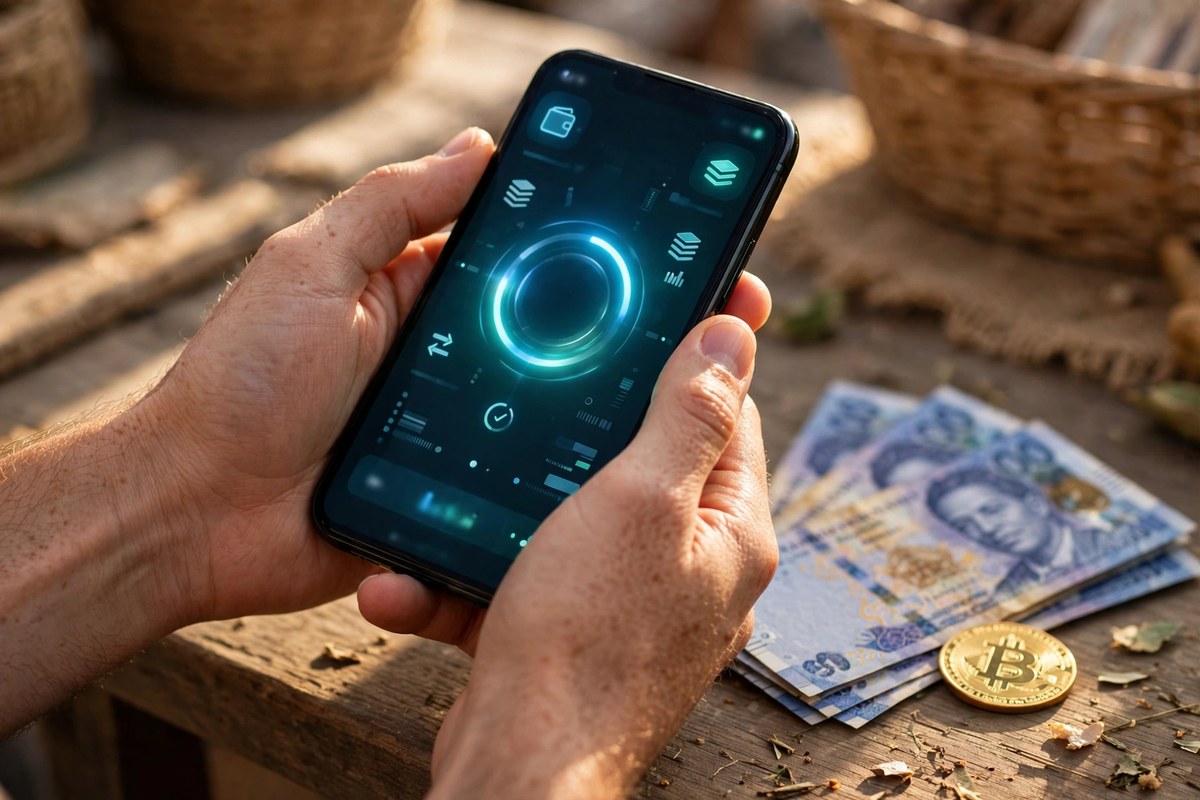
Peer-to-peer trading sounds complicated. In practice it is six steps, and the escrow system does the safety work — provided you never leave it.
- Create and verify your account. Download the exchange app, register with your email or phone number, and complete identity verification with a government-issued ID such as a passport or driver's licence, plus a face scan. Use app-based two-factor authentication, not SMS codes, wherever the platform offers it.
- Pick a merchant, not just a price. Filter P2P offers by coin (BTC), fiat (GHS) and payment method (MTN MoMo, Telecel Cash or AT Money). Choose a merchant with a high completion rate, hundreds of completed trades and positive reviews — not simply the cheapest rate. A rate that looks too good is the oldest trap in P2P.
- Start the trade and lock the price. Enter the cedi amount. The seller's Bitcoin is locked in the platform's escrow the moment the order opens. You now have a payment window, usually 15 minutes.
- Pay from your MoMo wallet — inside the window. The merchant's MoMo details appear on screen. Open your MoMo app and send the exact amount from your own wallet. Never mention "crypto" or "Bitcoin" in the payment note, and never pay outside the platform's trade window.
- Confirm and wait for escrow release. Tap "paid" in the app. The seller confirms receipt and the escrowed Bitcoin is released to your exchange wallet. If the seller stalls, do not cancel — open a dispute and let support resolve it from the chat record.
- Move it to your own wallet. Bitcoin left on an exchange is Bitcoin you do not control. Withdraw it to a wallet you own — our best crypto wallets for beginners guide compares the options — and write down your recovery phrase on paper, never in a photo or a chat message.
One practical detail: your MoMo transaction limits are set by the Bank of Ghana, not by MTN, and the current tiers took effect on 1 March 2024, when the central bank raised every limit. Check your own tier by dialling *170# before a large trade, so a limit does not freeze a payment halfway through the 15-minute window.
What Most People Get Wrong About Buying Bitcoin in Ghana
"My bank card was declined, so Bitcoin must be banned." Wrong. Bitcoin is legal for individuals. What happened is the Bank of Ghana's June 2026 directive: banks must stop supporting unauthorised foreign-currency digital wallet services. Use MoMo and P2P instead of fighting your card.
"The sandbox means every platform in it is fully licensed." Wrong. The SEC sandbox is a 12-month pilot that started in March 2026. Participation is authorisation to test a service under supervision, not a full licence. Full licensing opens after the sandbox phase, with the VASP Act's full operationalisation targeted for 2027.
"A merchant with the cheapest rate is the best deal." Wrong. On P2P, the cheapest rate is often bait: the merchant stalls, pressures you to pay outside escrow, or releases nothing. Completion rate and trade history matter more than a 1% better price.
"Bitcoin is anonymous, so nobody can trace my purchase." Wrong. Bitcoin is pseudonymous, not anonymous — every transaction is public on the blockchain. The Ghana Revenue Authority has said it monitors cryptocurrency transactions, and your MoMo payment leaves a record with your name on it. Keep records of every trade: P2P order IDs, MoMo receipts, wallet addresses and transaction IDs.
"I need thousands of cedis to start." Wrong. Bitcoin is divisible to eight decimal places. You can buy a fraction worth whatever you can afford — the minimum is set by the merchant's P2P ad, often as low as a few hundred cedis. Start small, learn the flow, then scale up.
What Your First Buy Really Costs
There are three costs, and only one of them is obvious. The first is the spread — the gap between the merchant's rate and the market price, typically the largest cost on a P2P trade. The second is the network fee when you withdraw Bitcoin to your own wallet; it varies with blockchain congestion and is charged in Bitcoin, so withdrawing a tiny amount can cost a disproportionate share of it. The third is the MoMo transfer itself, which is usually small but still real.
The practical rules follow from that. First, compare at least three merchants' implied cedi rates before you trade — a 2% spread difference on a GH¢5,000 buy is GH¢100, which is real money. Second, do not withdraw dust: accumulate a meaningful amount on the exchange before moving it to your wallet, so the network fee is a small fraction of the transfer. Third, treat the dollar price as background, not the decision: Bitcoin near $76,000 after a $1.28 billion week of ETF outflows tells you the market is fearful, not whether your cedi route is fairly priced.
Taxes, Records and the Ghana Revenue Authority
Ghana does not yet have a dedicated crypto tax law, and that is not the same as "no tax". The Ghana Revenue Authority has indicated that it monitors cryptocurrency transactions, and income from trading can fall under existing tax rules. The honest position in 2026 is that the framework is still being written — the VASP Act is about licensing providers, not about your personal tax return — and you should keep complete records so you can comply whatever the GRA decides. Save every P2P order confirmation, MoMo receipt, bank statement line, exchange export, wallet address and transaction ID. If you trade regularly or in large amounts, talk to a Ghanaian tax adviser before the year ends rather than after the GRA writes to you.
The GH¢3.4 Million Scam Warning
The Cyber Security Authority's figure — 352 online investment fraud cases and more than GH¢3.4 million lost in the first half of 2026 — is the most important number in this guide, because almost every one of those victims believed they were buying Bitcoin. The patterns are always the same: a "trader" on WhatsApp or Telegram offering Bitcoin below the market rate if you pay first; a fake exchange website that looks identical to Binance; an "investment manager" who promises to double your money in a week; a stranger who asks you to release escrow before they have paid.
The defences are simple and they all work. Never trade outside a platform's escrow — the moment money or Bitcoin moves outside the app, your protection is gone. Never send Bitcoin first to someone you met on social media. Never share your recovery phrase with anyone, for any reason; no real support agent will ever ask for it. Verify every link yourself — type the exchange address rather than clicking a link in a message. And if an offer promises guaranteed returns, it is a scam by definition: Bitcoin's price can fall 40% in a month, as it has from its October 2025 peak near $126,000, and nobody can guarantee otherwise.
Where to Keep Your Bitcoin After You Buy It
Buying is half the job. The exchanges in this guide are marketplaces, not vaults: if one is hacked, frozen or shut down, your coins are at risk. Move your Bitcoin to a wallet you control, keep the recovery phrase offline on paper, and consider a hardware wallet once your holdings are large enough to justify the cost. Our best crypto wallets guide and our What Is a Crypto Wallet? explainer walk through the options step by step. Two habits cover most of the risk: enable two-factor authentication on every account, and never keep your recovery phrase in a photo, an email draft or a cloud note.
Frequently Asked Questions
Is it legal to buy Bitcoin in Ghana in 2026?
Yes. Buying, holding and selling Bitcoin is legal for individuals. Parliament passed the Virtual Asset Service Providers Act, 2025 (Act 1154) in December 2025, with the Bank of Ghana and the SEC as joint regulators. Bitcoin is not legal tender, and there is no government compensation scheme if a platform fails.
Can I buy Bitcoin in Ghana with MTN MoMo?
Yes — it is the most common route. On a peer-to-peer market, choose a merchant who accepts MTN MoMo (or Telecel Cash or AT Money), pay the exact cedi amount from your MoMo wallet inside the 15-minute window, and the seller's escrowed Bitcoin is released to you. You do not need a bank account. Check your MoMo tier limits on *170# before a large trade.
Which exchange is best for buying Bitcoin in Ghana?
Binance P2P has the deepest cedi market and the most merchants, so it usually offers the best rates. Yellow Card is the strongest regulatory choice, as it is admitted to the SEC's Virtual Asset Sandbox. Bybit and Bitget are solid P2P alternatives, and Luno is the simplest option for absolute beginners who accept paying a higher price for simplicity.
How much does it cost to buy Bitcoin in Ghana?
The main cost is the P2P spread — the gap between the merchant's cedi rate and the market price — plus a network fee when you withdraw to your own wallet. Compare at least three merchants before trading. Bitcoin itself is divisible, so you can start with a few hundred cedis; the merchant's minimum, not the Bitcoin price, sets your entry point.
Do I pay tax on Bitcoin in Ghana?
Ghana has no dedicated crypto tax law yet, but the Ghana Revenue Authority monitors cryptocurrency transactions and trading income can fall under existing tax rules. Keep full records of every trade and consult a Ghanaian tax adviser if you trade regularly or in large amounts.
Is Bitcoin safe to buy in Ghana?
Bitcoin itself is a neutral technology; the risk is in how you buy it. The Cyber Security Authority recorded 352 online investment fraud cases and GH¢3.4 million in losses in the first half of 2026. Trade only inside platform escrow, never pay outside the app, never share your recovery phrase, and move your coins to a wallet you control.
Conclusion
Ghana in 2026 is one of the easiest places in Africa to buy Bitcoin — and one of the easiest places to get scammed doing it. The law has finally caught up: the VASP Act is passed, the SEC sandbox is running with 20 participants, and full licensing is targeted for 2027. Mobile money puts Bitcoin within reach of anyone with a phone. Your job is to use the system as designed: a sandbox-authorised platform or a high-reputation P2P merchant, payment inside escrow, a fair spread checked against the live price, and coins moved to your own wallet the same day. Do that, and your first Bitcoin purchase in Ghana is a five-minute task. Skip any one of those steps, and you may join the GH¢3.4 million statistic instead.