How to Buy Bitcoin in Romania in 2026: 5 Exchanges Compared — Fees, RON Payments and the 16% Tax Rule
Bitcoin is legal in Romania, but the tax rate just jumped from 10% to 16% — and the 5 exchanges compared here differ by up to 4× on fees. Here's the cheapest legal way to buy BTC with RON in 2026.
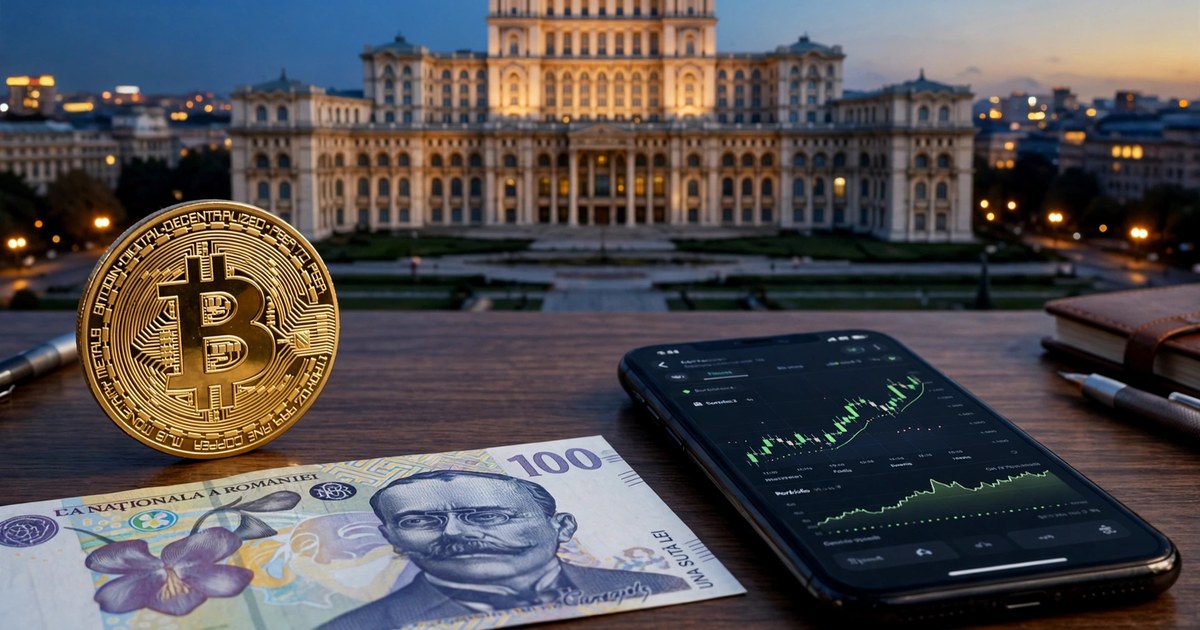
Bitcoin is legal in Romania, buying it takes about 15 minutes, and the cheapest route costs roughly a tenth of what the most expensive one charges. But there is a catch most first-time Romanian buyers miss: from 1 January 2026, Romania taxes crypto gains at a flat 16% — up from 10% — and the 200-leu exemption that used to shelter small trades has strict limits. This guide compares five exchanges that serve Romania, explains the RON payment options, and walks through the tax rule step by step, so you can buy your first Bitcoin without overpaying on fees or getting a surprise from ANAF.
Bitcoin traded at about $76,000 on 7 November 2026, roughly 40% below its all-time high of $126,156 — a level that has pulled a wave of new Romanian buyers into the market looking for a cheaper entry. Romania is one of the easier EU countries to buy from: MiCA-licensed exchanges passport their services in, SEPA transfers are cheap, and several platforms let you pay in Romanian leu. But fees, spreads and tax treatment vary wildly between platforms, and the wrong choice can quietly cost you hundreds of lei on a single purchase.
Is Bitcoin Legal in Romania in 2026?
Yes. Owning, buying, selling and holding Bitcoin is legal in Romania. Crypto is not legal tender — the Romanian leu (RON) is the only official currency — but there is no ban on crypto-assets, and residents can buy freely through licensed exchanges. As an EU member state, Romania applies the EU's Markets in Crypto-Assets Regulation (MiCA, Regulation (EU) 2023/1114) directly; the regulation has applied in full since 30 December 2024, and Romania passed national legislation, Government Emergency Ordinance 10/2025, to implement the regime domestically.
The lead supervisor for crypto-asset service providers is the Financial Supervisory Authority (Autoritatea de Supraveghere Financiară, ASF), working alongside the National Bank of Romania (BNR). Exchanges serving Romanian customers must follow strict anti-money-laundering (AML) and know-your-customer (KYC) rules under Law 129/2019, which is why every reputable platform asks for an ID and proof of address before you can trade. That is normal, not a red flag.
One practical consequence of MiCA matters for your choice of exchange: the EU-wide licensing regime has shrunk the number of registered crypto providers across Europe from more than 3,000 national registrations to roughly 183 licensed crypto-asset service providers, while passporting preserved cross-border access. In plain terms, the big MiCA-licensed exchanges can legally serve Romanian customers from their EU licences, and smaller unlicensed platforms have been squeezed out. For a beginner, the safest choice is simple: buy from a large, MiCA-licensed exchange, not from a random website advertising "no KYC Bitcoin in Romania".
If you are completely new to Bitcoin itself, start with our beginner explainer What Is Bitcoin? The Complete Beginner's Guide to How BTC Works in 2026 before you spend a single leu — it explains wallets, keys and why Bitcoin has a fixed supply of 21 million coins.
The 16% Tax Rule: 5 Numbers That Decide What You Owe ANAF
The tax rule is the single most important thing to understand before you buy Bitcoin in Romania in 2026, because it changed on 1 January 2026 — and many guides online still quote the old rate. Here are the five numbers that decide your bill:
| Rule | What it means |
|---|---|
| 16% flat tax from 2026 | Crypto gains realised from 1 January 2026 are taxed at a flat 16% under Law 239/2025. Gains realised during 2025 are still taxed at the old 10% rate when declared in 2026. |
| 200 RON per transaction | Gains from a single transaction below 200 RON are not taxed — but only if your total annual crypto gains do not exceed 600 RON. |
| 600 RON annual threshold | Once your total crypto gains for the year pass 600 RON, the exemption stops applying and the full gain is taxable. |
| 25 May deadline | Gains are declared on the annual single return, Form 212 (Declarația Unică), filed with ANAF by 25 May of the following year. |
| 10% CASS possible | The 10% health insurance contribution (CASS) can also apply when your total annual non-salary income, including crypto, exceeds six times the gross minimum wage — roughly 24,300 RON. |
Two things are worth spelling out. First, the tax applies to gains, not to the amount you buy: if you buy 0.01 BTC for 3,000 RON and later sell it for 4,000 RON, the taxable gain is 1,000 RON and the tax is 160 RON at the 16% rate. Simply buying and holding Bitcoin triggers no tax at all — only selling, swapping or spending it creates a taxable event. Second, there is no VAT on crypto exchange transactions in Romania.
A note on the moving parts: Romanian crypto tax rules have changed repeatedly, and at various points in 2026 a temporary exemption for crypto capital gains was discussed in parliament. The 16% rate from Law 239/2025 is the rule in force for gains realised in 2026, but because the framework keeps evolving, check the current position with ANAF or a Romanian tax adviser before filing. Keep a record of every buy and sell (date, amount in RON, fees paid) from day one; reconstructing a year's trades from exchange emails in May is miserable. For the wider European picture, see our guide How to Buy Bitcoin in Europe After the $6.3B Binance Hack: 4 MiCA-Licensed Exchanges Compared.
5 Exchanges Compared: Fees, RON Payments and Minimums
Five platforms cover almost every Romanian buyer's needs. They differ on three things that matter: the trading fee, how you can pay in RON, and how beginner-friendly the app is. Fees below are typical spot-trading rates as of November 2026 — exchanges change them, so confirm on the fee page before you trade, and remember that card purchases usually cost extra on top of the trading fee.
| Exchange | Typical spot fee | RON funding | Best for |
|---|---|---|---|
| Binance | From 0.10% | Card, SEPA (EUR), P2P in RON | Lowest fees, deepest liquidity |
| Kraken | From 0.25% (Pro from 0.25% maker / lower tiers) | SEPA (EUR), card | Security record, transparent reserves |
| Coinbase | From ~0.60% on Advanced Trade; higher on simple buy | Card, SEPA (EUR) | Simplest app for absolute beginners |
| Revolut | From ~1.00% (varies by plan) | RON balance, card, bank transfer | Buying inside an app you already use |
| Crypto.com | From ~0.40% | Card, SEPA (EUR) | All-in-one app with a Visa card |
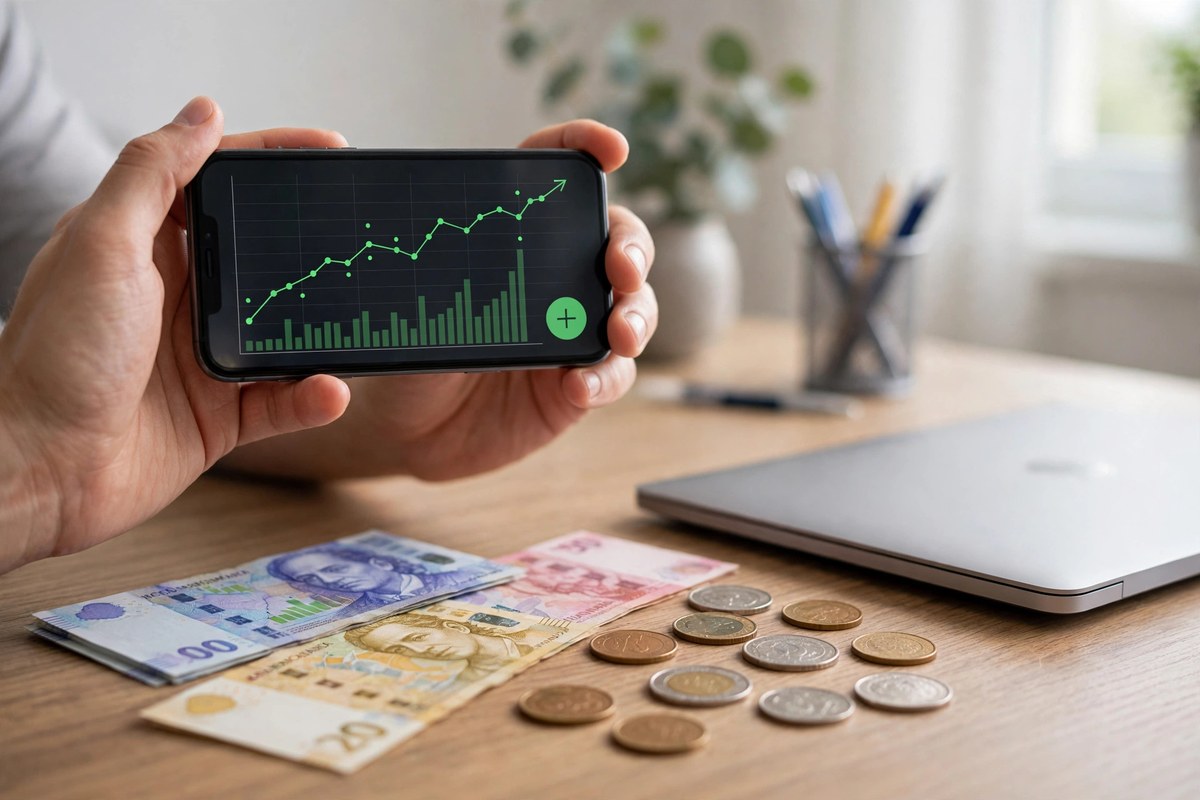
The fee gap is the story. On a 5,000 RON purchase, a 0.10% spot fee costs about 5 RON, while a 1% fee costs about 50 RON — and that is before spreads and card surcharges, which can add another 2% on instant card buys. Over a year of regular buying, the difference between the cheapest and the most convenient option can run into hundreds of lei.
All five platforms are MiCA-licensed or passported into the EU and require KYC, which means an ID check before your first trade. Local Romanian options also exist — CoinFlux is a Romanian exchange with leu-denominated trading and a network of crypto ATMs — but for most buyers the international platforms above offer better liquidity and lower fees. Avoid any platform that promises to sell you Bitcoin without an ID check, and avoid Telegram or social-media sellers entirely: an "off-exchange deal" is the most common way beginners lose money.
Before you choose, read Best Crypto Wallets for Beginners in 2026: Hot vs Cold Wallets Compared — where you store your Bitcoin after buying matters as much as where you buy it.
How to Buy Bitcoin in Romania: Step-by-Step
Here is the exact process, from zero to owning Bitcoin, using any of the exchanges above:
- Create your account and verify your identity. Sign up with your email, then complete KYC: a photo ID (passport or Romanian buletin/carte de identitate) and usually a selfie. Verification typically takes minutes to a few hours. Use a strong, unique password and turn on two-factor authentication immediately — this is the step that protects you if your password ever leaks.
- Deposit Romanian lei. The cheapest route is usually a SEPA transfer in euros from your Romanian bank account — most Romanian banks send SEPA payments for free or for a few lei, and the exchange converts EUR to your trading balance. If you want to pay directly in RON, Revolut lets you fund from a RON balance, and Binance P2P lets you buy from other users by RON bank transfer. Card deposits are instant but cost more.
- Place your buy order. On the exchange, go to the BTC/EUR or BTC/RON market and place a market order for the amount you want — or a limit order if you want to buy only at a specific price. For a first purchase, a small market order is fine. Double-check the amount and the fee shown on the confirmation screen before you confirm.
- Check the fee and the spread. Before confirming, look at the total: the trading fee plus any spread between the buy and sell price. On simple-buy screens the spread is often where the real cost hides, and it can exceed the stated fee. If the total looks high, switch to the exchange's advanced trading view, where fees and spreads are lower.
- Move your Bitcoin to your own wallet. Leaving coins on an exchange means trusting the exchange's security. For any amount you would not want to lose, withdraw to a wallet you control — a mobile wallet for small amounts, a hardware wallet for larger holdings. Withdrawal fees are usually a small fixed amount of BTC, so let a balance build up before withdrawing rather than moving tiny amounts frequently.
That last step is the one most beginners skip, and it is the one that matters most after the $6.3 billion Binance hack reminded the whole market what custodial risk looks like. Our guide How to Store Crypto Safely in 2026: Cold Storage, Seed Phrases and Wallet Security Explained walks through exactly how to set up a wallet and back up your seed phrase.
Paying in RON: SEPA, Card or P2P — Which Is Cheapest?
Romania still uses the leu, not the euro, so every purchase involves either a currency conversion or a RON-native payment method. Here is how the three options stack up:
- SEPA transfer in euros is usually cheapest. Send lei from your bank, let your bank convert to EUR (or hold a EUR account), and transfer to the exchange by SEPA. Transfers typically arrive the same day or next business day and cost little or nothing. The downside is speed: you cannot catch a sudden price dip the same minute.
- Card payment is fastest but priciest. Visa and Mastercard debit or credit cards buy Bitcoin instantly on every major exchange, but card purchases typically carry a 2% to 3% surcharge on top of the trading fee. On a 5,000 RON buy, that is 100 to 150 RON extra. Use cards only when speed matters more than cost.
- P2P in RON cuts out the conversion. On Binance P2P, you buy Bitcoin directly from another user and pay them by RON bank transfer. Prices are often close to the market rate, and there is no EUR conversion at all — but you must trade only inside the platform's escrow system, never send money outside it, and stick to sellers with long histories and hundreds of completed trades.
- Revolut is the RON-native shortcut. If you already hold RON in Revolut, you can buy Bitcoin inside the app without any transfer at all. The trade-off is the higher fee — roughly 1% on the standard plan — and the fact that withdrawing Bitcoin to your own wallet has historically been limited depending on your plan and region, so check the withdrawal rules before buying a large amount there.
5 Mistakes Romanian Beginners Make
Most first-time buyers in Romania lose money the same five ways. All five are avoidable:
- Buying on the simple-buy screen and paying the spread. The big "Buy Bitcoin" button is the most expensive way to trade on every exchange. Use the advanced trading view for anything above a few hundred lei.
- Forgetting the 16% tax. The rate rose from 10% to 16% on 1 January 2026. If you sell at a profit and do not set aside 16% of the gain, the ANAF bill arrives as a surprise the following May.
- Leaving everything on the exchange. Exchanges get hacked, freeze withdrawals and go bankrupt. Your Bitcoin is only truly yours when it sits in a wallet whose keys you control.
- Trusting "no KYC" sellers on social media. Romania's crypto scams usually start with a Telegram group or a Facebook ad promising cheap Bitcoin or guaranteed returns. There is no cheap Bitcoin — only stolen Bitcoin and scams.
- Investing money they need next month. Bitcoin fell roughly 40% from its $126,156 all-time high to about $76,000 in November 2026. That kind of swing is normal for Bitcoin. Never buy with rent money, borrowed money or money you need within a year.
What Most People Get Wrong About Buying Bitcoin in Romania
Myth: "Bitcoin is banned in Romania." False. Crypto is legal to own and trade; it is simply not legal tender, and exchanges must follow AML and KYC rules. The BNR has warned that crypto is a speculative asset, which is a risk warning, not a ban.
Myth: "The 10% tax still applies." Outdated. Gains realised in 2025 were taxed at 10%; gains realised from 1 January 2026 are taxed at 16% under Law 239/2025. Old guides still quoting 10% are wrong for 2026 sales.
Myth: "Small trades are always tax-free." Only partly true. Gains under 200 RON per transaction are exempt only while your total annual crypto gains stay under 600 RON. Pass that threshold and the exemption falls away.
Myth: "MiCA means every exchange is now safe." MiCA licensing raises the bar, but it does not insure your funds or guarantee an exchange will never fail. Regulation reduces risk; it does not remove it. Self-custody is still the strongest protection.
If you are still deciding whether Bitcoin deserves a place in your portfolio at all, read Is Bitcoin a Good Investment in 2026? An Honest Guide to the Risks, Returns and Smart Allocation before you buy — it covers the case for and against, without the hype.
Storing Your Bitcoin After You Buy
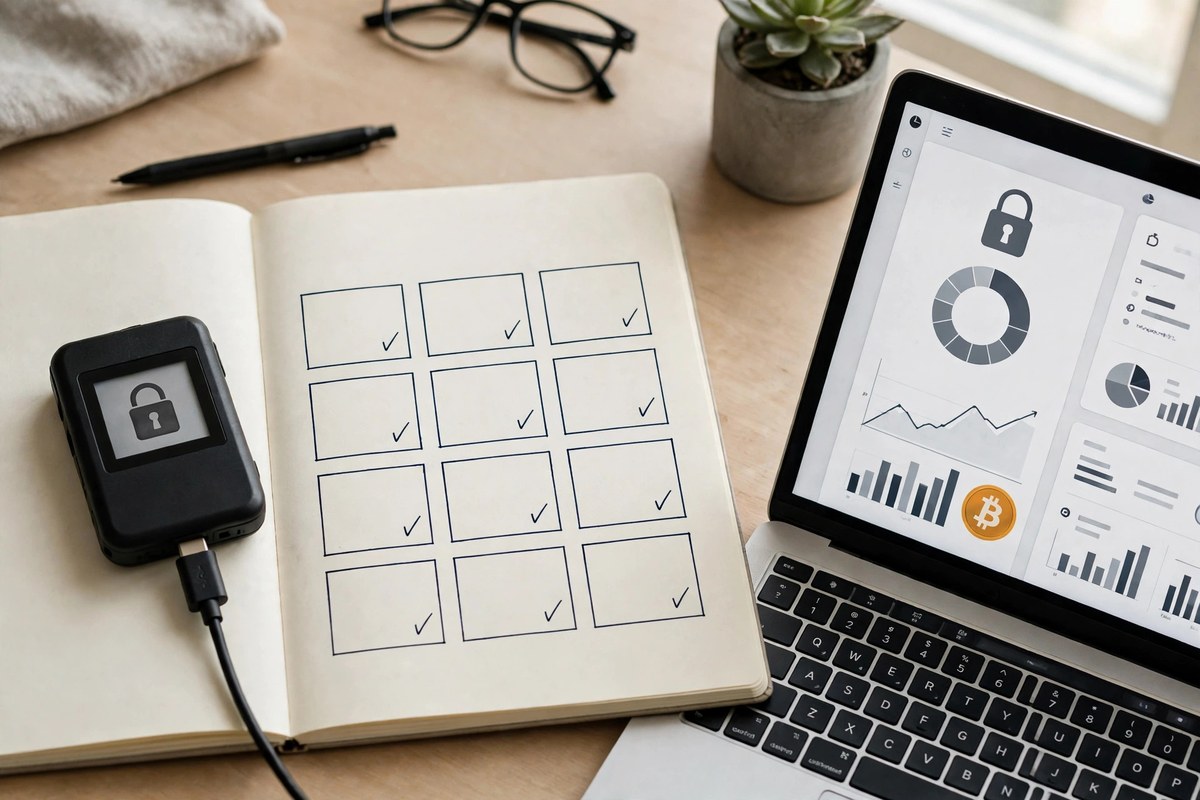
Buying is half the job. For amounts up to a few hundred lei, a reputable mobile wallet is fine. For anything larger, a hardware wallet — a small device that keeps your private keys offline — is the standard recommendation, costing roughly 300 to 700 RON for a well-known model. Whatever you choose, write your seed phrase (the 12 or 24 words the wallet gives you) on paper, store it somewhere safe and offline, and never photograph it, email it, or type it into any website. Anyone who gets your seed phrase gets your Bitcoin, and no exchange or support agent will ever legitimately ask for it.
For the full walkthrough, see our beginner guide How to Buy Bitcoin in 2026: A Complete Beginner's Guide to Your First BTC Purchase.
Frequently Asked Questions
Is Bitcoin legal in Romania?
Yes. Buying, selling and holding Bitcoin is legal in Romania. Crypto is not legal tender, and exchanges must comply with EU MiCA rules and Romanian AML/KYC law, but there is no ban on owning or trading it.
How much tax do I pay on Bitcoin in Romania in 2026?
Gains realised from 1 January 2026 are taxed at a flat 16%. Gains realised in 2025 were taxed at 10%. Gains under 200 RON per transaction are exempt if your total annual crypto gains do not exceed 600 RON, and the 10% CASS health contribution can apply if your total non-salary income exceeds roughly 24,300 RON a year. Declare on Form 212 (Declarația Unică) to ANAF by 25 May.
What is the cheapest way to buy Bitcoin in Romania?
Usually a SEPA transfer to a low-fee exchange such as Binance (from 0.10% spot fee) and a market or limit order on the advanced trading view. Card purchases are instant but typically add 2% to 3%, and simple-buy screens hide extra cost in the spread.
Can I buy Bitcoin with RON directly?
Yes. Revolut lets you buy from a RON balance, Binance P2P lets you pay sellers by RON bank transfer, and local exchange CoinFlux offers leu trading and crypto ATMs. Most international exchanges accept EUR via SEPA, with your bank handling the RON-to-EUR conversion.
Do I need to verify my identity to buy Bitcoin in Romania?
Yes, on every reputable exchange. Romanian AML law and EU MiCA rules require KYC — a photo ID and usually a selfie — before you can trade. Any platform offering Bitcoin with no identity check is a red flag.
How much Bitcoin can I buy with 500 RON?
At about $76,000 per Bitcoin in November 2026, 500 RON (roughly $100) buys about 0.0013 BTC before fees. You do not need to buy a whole Bitcoin — exchanges let you buy tiny fractions, and minimums are typically 10 to 50 RON equivalent.
Conclusion
Buying Bitcoin in Romania in 2026 is straightforward: pick a MiCA-licensed exchange, fund it by SEPA transfer for the lowest cost, buy on the advanced trading view to avoid the spread, and move your coins to your own wallet. The two numbers to remember are 16% — the tax rate on gains realised in 2026, up from 10% — and 600 RON, the annual gains threshold below which small trades stay exempt. Keep records of every trade, set aside the tax when you sell at a profit, and never buy with money you cannot afford to leave alone while Bitcoin does what it always does: swing hard in both directions.
Sources: Romanian crypto regulation and tax rules per WikiCrypto's Romania regulation guide and Blockspot's Romania country data; Bitcoin price context per CoinJuice's Bitcoin market briefing for 7 November 2026. This article is general information, not legal, tax or financial advice — confirm the current rules with ANAF or a qualified Romanian adviser before acting.