How to Buy Bitcoin in Argentina in 2026: 5 CNV-Registered Exchanges Compared — Fees, Pesos and the 15% Tax Rule
Bitcoin trades near $76,000 — 40% below its $126,080 peak — and Argentines are buying the dip. 5 CNV-registered exchanges compared: 0.10% fees, peso deposits via CBU/CVU and Mercado Pago, and the 15% tax rule that catches every sale.
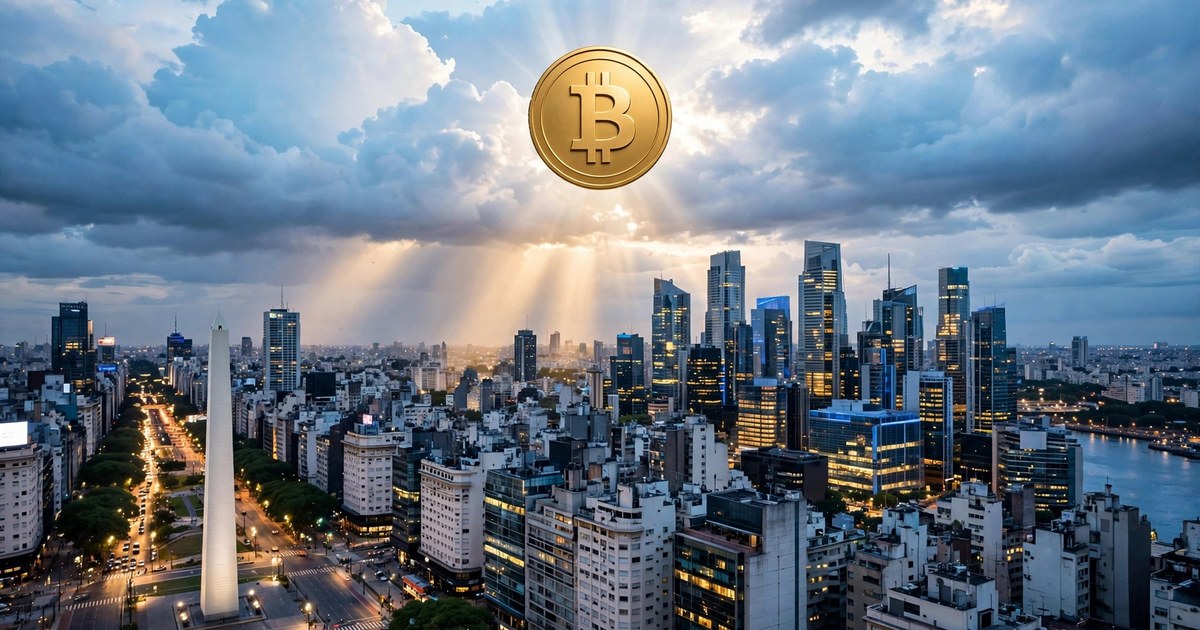
Bitcoin trades near $76,000 on November 6, 2026 — down 5.5% in a single day and roughly 40% below its $126,080 peak from October 2025. In Argentina, that crash is not a reason to look away: it is the moment thousands of savers start asking how to buy Bitcoin with pesos. Argentina now has 81 crypto providers registered with the securities regulator, peso deposits that clear instantly, and a clear 15% tax rule on gains. This guide compares the five best CNV-registered exchanges, shows exactly what $1,000 of Bitcoin costs on each, and flags the mistakes that cost Argentine buyers real money.
Buying Bitcoin in Argentina in 2026 is legal, regulated and — if you pick the right platform — cheap. The catch is that not every exchange serving Argentines is actually registered, and the unregistered ones leave you with no local protection and a tax headache.
Why Argentines Are Buying Bitcoin in 2026
Argentina has one of the highest crypto adoption rates in Latin America, and the reason is simple: for decades, holding pesos meant watching savings lose value. Bitcoin became the escape valve — an asset no government can print. That logic has not changed in 2026, but the environment around it has.
Three things matter for anyone buying now. First, regulation cleared up: Law 27,739 (March 2024) forced crypto providers to register with the CNV, and by October 7, 2026 the public PSAV register listed 81 companies, including Ripio, SatoshiTango, Lemon, Nexo, Binance, Bybit, OKX and Kraken. Second, currency rules loosened: since April 14, 2025, individuals can buy US dollars for savings at their bank with no monthly cap (BCRA Communication A 8226). Third, the price collapsed: Bitcoin fell from above $80,000 to about $76,000 in a day on November 5, wiping out more than $1.26 billion in leveraged longs, according to CoinGlass data reported by CoinDesk. The Crypto Fear and Greed Index sits at 28 — deep fear.
Fear is not a strategy on its own. But for a long-term Argentine buyer who was going to buy anyway, a 40% drawdown changes the entry price, not the process.
Is Bitcoin Legal in Argentina?
Yes. Owning, buying, selling and trading Bitcoin is legal in Argentina. What Bitcoin is not is legal tender: the peso remains the only currency that must be accepted to settle debts, and merchants are not obliged to accept crypto. For tax purposes, crypto is treated as property — an intangible asset — not as money.
The regulator that matters is the CNV. Law 27,739 designated it to run the PSAV registry, and Resolution 1058/2025 — effective May 26, 2025 — tightened the rules: registered providers must meet minimum capital requirements, keep client assets segregated, meet cybersecurity standards and report to the authorities. Full details are in the 2026 Argentina crypto regulation guide.
The practical rule: before depositing anywhere, look the platform up in the CNV's public PSAV register at cnv.gov.ar. If it is not there, it operates without local supervision — not automatically a scam, but you have no local regulator to complain to if something goes wrong. All five exchanges below are registered.
The 5 Best Exchanges to Buy Bitcoin in Argentina Compared
These five are all on the CNV's PSAV register, all accept Argentine residents, and all let you fund with pesos. The differences are fees, funding rails and how useful each platform is to a beginner.
| Exchange | CNV status | Spot fee | Peso funding | Best for |
|---|---|---|---|---|
| Bybit | Registered VASP since Aug 2024 | 0.10% | Bank transfer, P2P, Mercado Pago | Lowest all-round cost, deep P2P market |
| Binance | PSAV N° 76 since Sept 2024 | 0.10% (0.075% with BNB) | Bank transfer (CBU/CVU), P2P, Mercado Pago | Biggest peso liquidity, most coins |
| Ripio | Registered PSAV | ~0.50%–1% (varies) | Bank transfer (CBU/CVU), Mercado Pago | Beginners, simplest peso on-ramp |
| Lemon | Registered PSAV | ~0.50%–1% (varies) | Bank transfer, Lemon card | Local app, card spending |
| OKX | Registered PSAV | 0.10% | Bank transfer, P2P | Low fees, advanced tools |
Fees change, so treat the numbers above as the rates reported by independent comparisons in 2026 — see Datawallet's Argentina exchange comparison — and confirm the live schedule inside the app before your first trade. Global platforms charge around 0.10% per trade; local platforms charge more but make peso funding effortless.
1. Bybit — the cheapest all-round option
Bybit registered as a Virtual Asset Service Provider in Argentina in August 2024, a filing that also covered card services, and it now runs the second-largest P2P marketplace in the world, with more than 100 currencies and 300 payment methods. Its spot fee is a flat 0.10%, and its P2P market charges no fees on USDT, USDC, Bitcoin or Ethereum trades — which matters in Argentina, because P2P is how most people convert pesos at a fair rate.
Peso funding works two ways: direct bank transfer into Bybit's ARS deposit portal, or the P2P market, where sellers quote USDT against pesos with Mercado Pago and bank-transfer payment. One caution: hackers took $1.5 billion from Bybit in February 2025, and the exchange recovered all user funds within 72 hours — a reminder that even the biggest platforms get attacked, and a reason to move large holdings to your own wallet.
2. Binance — the deepest peso market
Binance Services Latinoamérica entered the CNV registry as PSAV number 76 in September 2024, and it runs the deepest peso market in the country. Spot fees are 0.10%, falling to 0.075% when paid in BNB, and the platform lists more than 400 assets. Pesos arrive by bank transfer from a CBU or CVU, and the P2P desk — the most liquid in Argentina, with Mercado Pago sellers active around the clock — is the fastest way to turn pesos into USDT and then into Bitcoin.
Binance is the default choice for most Argentine buyers: whatever you want to do next — earn yield, set up recurring buys, use trading bots — it is already there. As a registered PSAV it reports client activity to the authorities, which is exactly what a compliant investor wants.
3. Ripio — the easiest start for beginners
Ripio is the local veteran: an Argentine exchange that supports direct ARS deposits and withdrawals through bank transfers (CBU/CVU) and Mercado Pago, with a Spanish-language interface built for first-time buyers. It offers Bitcoin, Ethereum and major stablecoins, and its onboarding is the smoothest of the five — sign up, verify your ID, deposit pesos, buy.
The cost is higher: fees run roughly 0.50%–1% depending on the product, versus 0.10% on Bybit or Binance. On a $1,000 purchase that is about $4–$9 extra — worth paying if the simpler interface gets you started, and worth avoiding once you are comfortable with an order book.
4. Lemon — the local app with a card
Lemon (Lemon Cash) is the other big Argentine name: a registered PSAV with a slick local app, peso funding by bank transfer, and a card that lets you spend crypto balances in everyday life. Fees match Ripio's. Lemon makes sense if you want to hold a small Bitcoin balance and spend from it; for pure buying, the global platforms win on fees.
5. OKX — low fees for the ambitious
OKX is also on the CNV's PSAV register and charges 0.10% spot fees, with peso funding by bank transfer and a P2P market. It is a strong alternative to Bybit and Binance — a reminder that the registered list is now 81 companies deep, so you are not limited to two or three names.
How to Buy Bitcoin in Argentina, Step by Step
Step 1 — Pick a registered exchange. Choose from the five above. Verify the name in the CNV's PSAV register before you deposit — the register is public, and every legitimate platform publishes its registration number on its website or app. If you cannot find it, do not deposit.
Step 2 — Create your account and verify your identity. Sign up with your email or phone, then upload your DNI and take a selfie. Registered PSAVs must run KYC (know-your-customer) checks under Argentine anti-money-laundering rules. There is no anonymous on-ramp on a registered platform, and that is the point: registration is what makes your purchase defensible later.
Step 3 — Deposit pesos. Where the exchange gives you a CBU or CVU number, send pesos by instant bank transfer (Transferencias 3.0) — it clears in seconds. Otherwise use the P2P market: buy USDT with Mercado Pago or a bank transfer, then convert USDT to Bitcoin. P2P on Binance and Bybit charges no fee on USDT trades.
Step 4 — Buy on the spot market. Pick Bitcoin, check the price, and place your order. A limit order usually gets you the lower maker fee; a market order fills instantly at the current price. For a first purchase, a market order is fine — the fee difference on a small buy is cents.
Step 5 — Decide where the Bitcoin lives. Leaving it on the exchange is convenient and risky: exchanges get hacked, freeze withdrawals and go bankrupt. For amounts you cannot afford to lose, move the coins to a wallet you control. Our beginner's wallet guide compares hot and cold wallets, and our safe-storage guide walks through seed phrases and cold storage.
Step 6 — Record everything. Screenshot the purchase confirmation and note the peso amount, the Bitcoin amount, the date and the fee. You will need it at tax time.
Fees: What Buying $1,000 of Bitcoin Actually Costs
Fees are where the exchange choice shows up in your wallet. Here is what a $1,000 purchase costs, using the published spot fees above and ignoring deposit fees, which are usually zero for peso bank transfers and P2P:
| Exchange | Trading fee on $1,000 | Typical spread | Bitcoin received (approx.) |
|---|---|---|---|
| Bybit | $1.00 | Minimal | ~$999.00 of BTC |
| Binance | $1.00 ($0.75 with BNB) | Minimal | ~$999.00 of BTC |
| OKX | $1.00 | Minimal | ~$999.00 of BTC |
| Ripio | ~$5.00–$10.00 | Wider | ~$990.00–$995.00 of BTC |
| Lemon | ~$5.00–$10.00 | Wider | ~$990.00–$995.00 of BTC |
Two costs hide outside the trading fee: the spread — wider on simple buy screens than on order books, and widest on P2P when you accept a bad rate in a hurry — and the withdrawal fee, which varies with network congestion. On a $1,000 purchase the gap between the cheapest and the most expensive option is roughly $9; on $10,000 it is roughly $90.
The 15% Tax Rule: What ARCA Expects From You
Argentina taxes crypto, and the rules are clearer than most buyers assume. This is general information, not tax advice — confirm your position with a qualified Argentine accountant. The framework, per the 2026 Argentina crypto tax guide, is:
Capital gains: 15% flat. Gains from selling crypto — for pesos or in a swap for another token — are taxed at a flat 15% for individuals. The purchase alone triggers nothing; tax starts when you dispose of the coins at a gain. The old 5% rate some articles mention applied only to the temporary 2024 asset-regularization program ("Blanqueo"), which ended in late 2024.
Income: 5%–35% progressive. Income from mining, staking or frequent trading is added to your general income tax base at progressive rates from 5% to 35%. If you are mining or earning staking rewards, that income is taxed as income, not as a capital gain.
Wealth tax: 0.5%–1.75% a year. Crypto holdings count toward the Bienes Personales tax base once your total taxable wealth exceeds the threshold. The rate runs 0.5% to 1.75% on the value held as of December 31 — so holding through year-end has a tax cost even if you never sell.
Reporting is tightening. The tax authority ARCA (which replaced AFIP in late 2024) requires local exchanges to report user transactions, and it cross-references declared and undeclared income. Annual tax returns are due by June 30, with penalties of 25% of unpaid tax plus interest. Argentina is also aligning with the OECD Crypto-Asset Reporting Framework. Keep records from day one and declare your gains.
5 Mistakes That Cost Argentine Buyers Money
- Buying on an unregistered platform to skip KYC: you save ten minutes and lose every protection — no regulator, no segregated client assets, no recourse if the platform freezes your funds. Check the PSAV register first, every time.
- Paying the P2P premium in a panic: during a crash, P2P sellers widen their rates. A 3% premium on a $1,000 buy is $30 gone before you own a single satoshi. Compare the P2P rate against the spot price, and use a limit order instead of accepting the first offer.
- Leaving everything on the exchange: Bybit lost $1.5 billion to hackers in February 2025 and made users whole — but not every exchange can. Bitget, ranked top by some 2026 comparisons, reported about $351.6 million in unauthorized transfers from its wallets and paused withdrawals while it investigates. If you cannot withdraw, you do not own the coins yet.
- Forgetting the wealth tax: Bienes Personales applies to holdings on December 31. A buyer who accumulates all year and never sells still owes tax on the balance. Budget for it.
- Buying with leverage: Bitcoin's November 5 crash liquidated more than $1.26 billion in long positions — most of it from traders who bought with borrowed money. Buying spot with money you can hold for years is a different decision from buying on a 125x futures account.
Storing Your Bitcoin Safely After You Buy
Buying is the easy part. Keeping the coins is where most losses happen — not from price moves, but from hacks, phishing and lost passwords. The rule is simple: the exchange is a shop, not a vault.
For small amounts you trade often, a reputable mobile wallet is fine. For savings you will not touch for a year or more, a hardware wallet (Ledger or Trezor) keeps your private keys offline, where no exchange hack can reach them. Write the 12- or 24-word recovery phrase on paper or metal, store it separately from the device, and never photograph or email it. Anyone who gets the phrase gets the coins — there is no password reset in Bitcoin.
Our comparison of the best crypto wallets for beginners covers hot versus cold storage in detail. If you are weighing whether Bitcoin fits your finances at all, read our honest guide to Bitcoin as an investment first.
What Most People Get Wrong About Buying Bitcoin in Argentina
"Bitcoin is banned." It is not. Crypto is legal to own and trade; it is simply not legal tender. The confusion comes from the BCRA's 2022 ban on banks facilitating crypto — a banking rule, not a ban on Bitcoin, and one the central bank is now drafting rules to reverse.
"Now that Bitcoin crashed, the opportunity is gone." Bitcoin is 40% below its peak and the Fear and Greed Index reads 28. That is either a buying opportunity or the start of a deeper fall — nobody knows, and anyone who tells you they do is selling something. What is knowable is the process: buy on a registered exchange, pay the lowest total cost, store the coins yourself, declare the gains. The process works in a bull market and a bear market alike.
Frequently Asked Questions
How much Bitcoin can I buy in Argentina?
There is no legal cap. Your limit is set by the exchange's verification tier and by how many pesos you can fund. Since April 2025 you can also buy US dollars at your bank with no monthly cap for savings.
Which is the cheapest exchange to buy Bitcoin in Argentina?
Bybit, Binance and OKX all charge around 0.10% in spot fees, with Bybit and Binance offering zero-fee P2P on USDT. Local platforms like Ripio and Lemon charge roughly 0.50%–1% but are simpler for first-time buyers. On a $1,000 purchase the gap is about $4–$9.
Is Binance legal in Argentina?
Yes. Binance Services Latinoamérica entered the CNV's PSAV registry as number 76 in September 2024. As a registered provider it reports client activity to the authorities, which is what a compliant buyer wants.
How is Bitcoin taxed in Argentina in 2026?
Capital gains are taxed at a flat 15%. Income from mining or staking is taxed at progressive rates of 5%–35%. Holdings count toward the Bienes Personales wealth tax (0.5%–1.75%) on December 31 values. Returns are due by June 30, and penalties run to 25% of unpaid tax plus interest.
Should I buy Bitcoin now while it is down 40%?
Bitcoin at $76,000 is 40% below its $126,080 peak, US spot Bitcoin ETFs saw $430 million in outflows on November 5, and leveraged traders just lost more than $1.26 billion. Fearful markets have historically been better entry points than euphoric ones — but they can always get more fearful. If you buy, buy spot, buy an amount you can hold for years, and never buy with borrowed money. This is not financial advice.
Conclusion
Buying Bitcoin in Argentina in 2026 is a solved problem: pick a CNV-registered exchange, verify it in the PSAV register, fund with pesos by bank transfer or P2P, buy on the spot market for around 0.10% in fees, move the coins to a wallet you control, and declare the 15% capital gain when you sell. Bybit and Binance are the cheapest routes; Ripio and Lemon are the easiest first steps; OKX is a strong third global option.
The price will do what it does — on November 6 it is $76,000 and falling, and the next headline could take it to $70,000 or back to $85,000. What you control is the cost of entry, the safety of storage and the cleanliness of your tax position. Get those three right and the market can do whatever it wants. If you want the global version of this process, our complete guide to buying your first Bitcoin covers the same steps without the Argentine specifics.
Disclaimer: This article is for informational purposes only and does not constitute financial, tax or legal advice. Tax rules change; confirm your position with a qualified Argentine professional before acting.