How to Withdraw Crypto From Binance After the $6.3B Hack: 15 Networks Reopen Today — 10 Checks Before You Send a Dollar
Binance reopened withdrawals on 15 networks today after recovering 95% of the $6.3B hack — but 5% is still missing. Here are the 10 checks to move your crypto safely, plus the networks open now and the ones still locked.
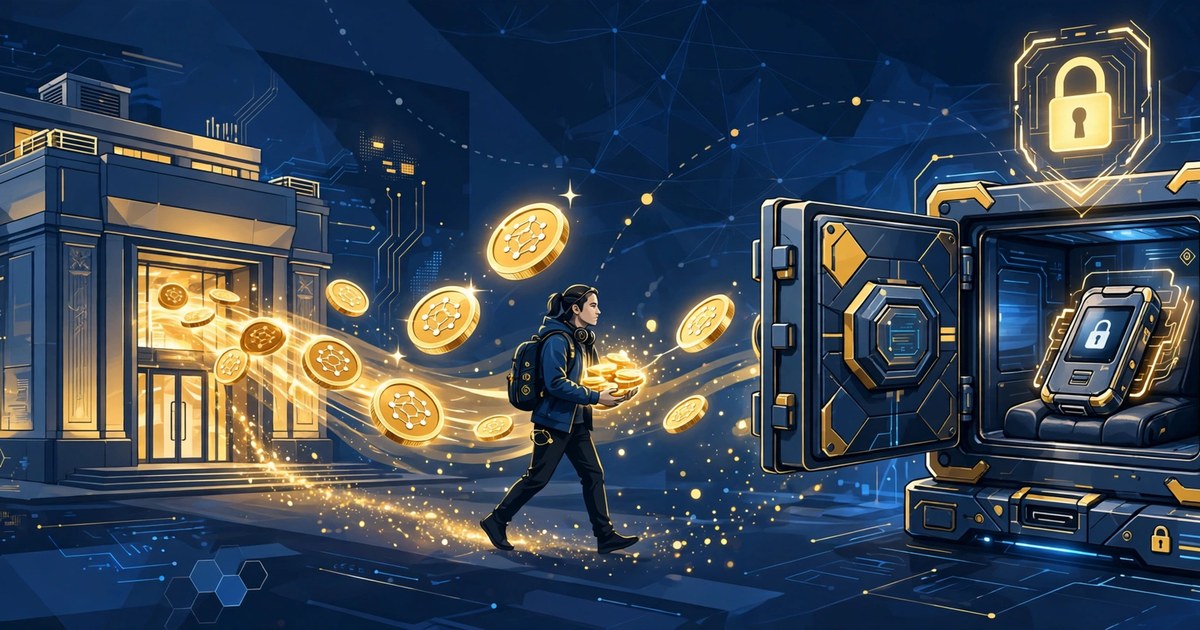
Binance reopened crypto withdrawals this morning, November 1, 2026, between 06:00 and 09:00 UTC — but only on 15 networks, and only after the exchange says it has recovered 95% of the $6.3 billion stolen in the largest crypto heist in history. That leaves roughly $315 million still unrecovered, mostly in less-liquid tokens outside the top 10, and it means the single most important step before you move anything is checking whether your coin is actually in phase one. If it is, move it carefully. If it is not, your funds are still waiting on security audits — and no amount of clicking will speed that up.
This guide walks you through exactly how to withdraw crypto from Binance in 2026: which networks reopened today, which coins are fully backed, the step-by-step withdrawal process, and the 10 checks that stand between a smooth transfer and an irreversible mistake. Sending crypto to the wrong network or the wrong address cannot be undone, and the hours after a major exchange reopens are exactly when mistakes spike — high traffic, rushed users, and scammers running fake "refund" sites. Slow down, follow the checklist, and your coins will land where you intended.
What happened: $6.3 billion gone in about 20 minutes
On October 29, 2026, attackers drained approximately $6.36 billion worth of cryptocurrency from Binance's hot wallets across 10 blockchains, in what is being described as the largest cryptocurrency theft in history. According to blockchain intelligence firm TRM Labs, most of the money moved within approximately 20 minutes, beginning shortly after 8 pm UTC. The attack reportedly began with a compromised employee laptop and a hijacked transaction-signing system, and the first wallets hit were five wallets on the XRP Ledger that transferred 233.46 million XRP, worth approximately $296 million.
The breakdown of what was taken shows why the recovery has been uneven. Roughly $3.79 billion came from Ethereum, $1.47 billion from Bitcoin, $628 million from Tron, $296 million from the XRP Ledger, $96 million from Solana, and smaller amounts from Arbitrum, Optimism, Base, Avalanche and Polygon. Investigators including the FBI have attributed the attack to North Korea-linked actors, and more than 600 addresses have been blacklisted, with around $3 billion frozen on-chain. Binance has said customer losses will be covered through its reserves and company resources, and it has set aside more than $6.34 billion of company funds for that purpose.
Withdrawals were suspended while the exchange assessed the damage and secured its infrastructure. That suspension is what made this hack different from most exchange incidents for ordinary users: it was not just a headline about stolen funds, it was days when you could not move your own coins at all. Today's reopening ends that freeze — partially.
Phase one: the 15 networks reopening today
Binance announced on November 1 that it would begin resuming withdrawal services progressively, with wallets enabled as they pass security and infrastructure readiness checks. The first phase covers 15 blockchain networks. Here is what is open, based on the exchange's announcement:
| Network | Key assets | Status on November 1 |
|---|---|---|
| Bitcoin | BTC | Reopening in phase one |
| Ethereum | ETH, USDT, USDC | Reopening in phase one |
| BNB Smart Chain | BNB | Reopening in phase one |
| XRP Ledger | XRP | Reopening in phase one |
| Solana | SOL | Reopening in phase one |
| Tron | TRX, USDT | Reopening in phase one |
| Dogecoin | DOGE | Reopening in phase one |
| TON | TON | Reopening in phase one |
| Polygon | POL | Reopening in phase one |
| Avalanche | AVAX | Reopening in phase one |
| Arbitrum | ARB | Reopening in phase one |
| Base | Base assets | Reopening in phase one |
| Sui | SUI | Reopening in phase one |
| Zcash | ZEC | Reopening in phase one |
| Stablecoin networks | USDT, USDC, USD1, RLUSD | Reopening in phase one |
Binance says balances in Bitcoin, Ethereum, USDT, BNB, Solana, USDC, XRP, USD1, RLUSD and Zcash are now fully backed at a minimum 1:1 ratio. Wallets for other cryptocurrencies are still undergoing repeated security audits and perimeter checks, prioritized by market cap, locked funds and user base. Binance has not announced a definitive timeline for restoring withdrawals across all remaining tokens — so if your coin is not in phase one, the honest answer is that nobody outside Binance knows your date yet.
One practical note: phased reopenings create congestion. Expect slower processing, longer confirmation times and occasional "network busy" messages on the first day. That is normal after a multi-day freeze, and it is not a reason to re-submit a withdrawal or switch networks mid-transfer. One withdrawal, one network, patience.
The 5% gap nobody should ignore
The headline number — 95% recovered — sounds like the story is over. It is not. Five percent of $6.3 billion is roughly $315 million, and Binance itself says that outstanding amount consists largely of tokens outside the top 10, which are less liquid and therefore take longer to source in the required quantities. The exchange says it is buying the outstanding tokens through market and over-the-counter channels with support from industry partners, and will keep buying until coverage reaches 100% across all affected tokens.
That matters for two groups of users. First, if you hold a smaller token that is not in phase one, your withdrawal is genuinely still blocked, and any site, message or "support agent" telling you otherwise is a scam — Binance's own refund-scam warnings have been a running theme since the hack. Second, even for fully-backed coins, "recovered" and "returned" are not the same word: the exchange has covered the loss from its own resources, including its SAFU fund, futures insurance fund and corporate treasury, which is why it can reopen while the last 5% is still being sourced. Your balance showing as available is what counts, not the recovery percentage in a press update.
Bitcoin itself is trading around $77,400–$78,000 as November opens, with total market capitalisation near $2.6 trillion and Bitcoin dominance around 59–60%. Liquidations have collapsed to just $76.69 million in 24 hours — a sign forced selling is exhausted for now. None of that changes the checklist below, but it explains why so many users want their coins in their own wallets right now.
How to withdraw crypto from Binance, step by step
The process itself is straightforward. The mistakes happen in the details — network selection, address pasting, and skipping the test transaction. Here is the full sequence:
- Confirm your coin is in phase one. Check Binance's withdrawal page for your asset. If the withdrawal button is disabled or the network list is empty, your coin is still in audit — wait, do not try workarounds.
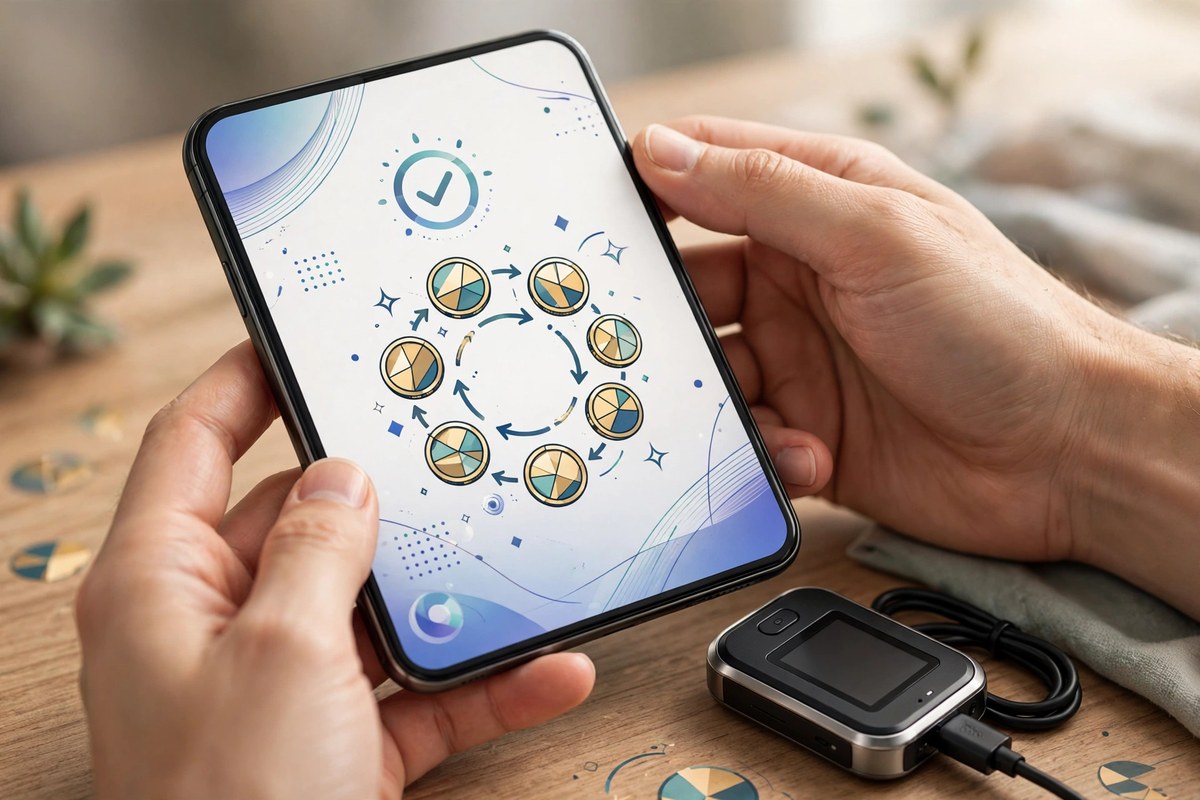
- Set up your destination wallet first. For large amounts, that means a hardware wallet you control, with its seed phrase written down offline. Our guides to storing crypto safely with cold storage and the best hardware wallets of 2026 walk through the setup before you move anything.
- Copy your receiving address from the wallet itself. Open your wallet app or device, select the exact coin and network, and copy the address it shows. Never type an address by hand and never trust an address sent to you in a chat message or email.
- On Binance, go to Wallet, then Withdraw, and select the coin. Paste the address, then select the network — and make sure it matches your wallet's network exactly. USDT on Tron is not USDT on Ethereum, and sending to the wrong network is the most common irreversible error.
- Enter a memo or tag if your wallet asks for one. XRP, and some other assets, require a destination tag. Leaving it blank when one is required can strand your funds.
- Send a small test transaction first. For any amount that matters to you, withdraw a tiny amount, wait for it to arrive and confirm in your wallet, and only then send the rest. The few minutes this costs are nothing compared with recovering a wrong-network transfer — which usually cannot be recovered at all.
- Complete security verification. Binance will ask for email and authenticator confirmation. This is the step scammers try to bypass by impersonating support; Binance support will never ask you to disable two-factor authentication or share your codes.
- Wait for confirmations and verify on-chain. Do not consider the transfer done when Binance says "completed" — check that the coins appear in your destination wallet, and for larger sums, verify the transaction on the relevant block explorer.
The 10 checks before you send a dollar
Print this list or keep it open beside you. Every item below has cost someone real money in past exchange incidents:
- Check the network matches exactly: the network on Binance must be identical to the network your receiving wallet supports for that coin.
- Check the address character by character: compare the first and last six characters after pasting, and beware of clipboard malware that swaps addresses.
- Check whether a memo or destination tag is required: XRP and similar assets need one; missing tags are a classic loss.
- Check that your coin is in phase one: if withdrawals for your asset are still suspended, wait — do not accept "alternative" withdrawal routes from strangers.
- Check the fee and the minimum withdrawal: after a major incident, fees and minimums can change; a small balance may not be worth moving if the fee eats most of it.
- Check your wallet is backed up before anything arrives: a wallet without a tested seed-phrase backup is not self-custody, it is a different single point of failure.
- Check the sender is really Binance: withdrawal emails, "refund claim" sites and fake support accounts are surging after the hack — Binance will never ask you to connect your wallet to claim a refund.
- Check the amount twice before confirming: decimal-point slips and pasted amounts from other transactions are embarrassingly common under stress.
- Check the transaction on a block explorer: for large transfers, confirm the transaction ID on the correct chain before you relax.
- Check that you still control the destination: if you set up a new wallet in a hurry, make sure you — and only you — hold its seed phrase, and that it is stored offline.
5 things most people get wrong about withdrawals after a hack
Myth 1: "95% recovered means my coins are 95% safe." Recovery percentages describe Binance's balance sheet, not your individual coins. What matters is whether your specific asset is fully backed and withdrawable. The ten named fully-backed assets are in a different position from a small token still in audit.
Myth 2: "Proof of reserves proves the exchange is safe." Proof of reserves shows an exchange held certain assets at a snapshot moment. It does not prove those assets cover all liabilities, it does not audit internal controls, and it does not prevent a future hack. Binance took a fresh proof-of-reserves snapshot at 00:00 UTC on October 31, with the full zero-knowledge proof expected to take 40–50 hours to generate — verification expected around November 3. Treat it as one useful check, not a safety certificate.
Myth 3: "Withdrawing to another exchange is the same as self-custody." It is not. Moving coins from Binance to another centralized exchange just swaps one counterparty for another. Real self-custody means a wallet where you hold the keys — ideally a hardware wallet for amounts you cannot afford to lose.
Myth 4: "A test transaction is a waste of fees." The fee on a test transfer is the cheapest insurance in crypto. One wrong network selection can cost the entire amount; one test costs a few dollars at most.
Myth 5: "If the withdrawal is slow, something went wrong." After a multi-day freeze, queues are long and networks are congested. A pending withdrawal during a phased reopening is usually just a queue, not a loss — check the status on
Binance and the block explorer before panicking or re-submitting.
Proof of reserves: what the November snapshot proves — and what it does not
Binance's proof-of-reserves update is the next date to watch. The exchange says it took a fresh snapshot at 00:00 UTC on October 31 and updated the figures on its proof-of-reserves page, but the full zero-knowledge proof that lets users independently verify their holdings takes 40–50 hours of computation, putting independent verification around November 3. Users holding the ten fully covered tokens should then be able to verify their assets are backed at a minimum 1:1 ratio.
Here is how to use it properly when it lands: verify your own balance through Binance's verification tool rather than trusting a headline ratio, check that the snapshot covers your specific assets, and remember its limits — a snapshot is a moment in time, it is not an audit of liabilities, and it says nothing about the security of the signing systems that were compromised on October 29. If you want the deeper background on how to protect yourself regardless of what any exchange publishes, our guide to protecting crypto from hacks and scams covers the habits that matter more than any single proof.
For users deciding between exchanges after the hack, our comparison of Coinbase vs Binance after the $6.3B hack and the verdict in is Binance safe after the hack lay out the trade-offs. And if you are moving coins because you are new to self-custody rather than because of the hack, start with how to buy crypto as a beginner and the cold-storage guide linked above — the withdrawal is only step one.
Should you move everything off Binance?
The honest answer depends on what you hold and how you trade. If you hold one of the ten fully-backed assets, you can withdraw it today, and for long-term holdings there is a strong case for moving them to a wallet you control — that is the entire point of self-custody, and the hack is a reminder of why it exists. If you actively trade, keeping some funds on an exchange is a practical choice, but it should be a deliberate one: only what you need for trading, never your full stack, and never funds you cannot afford to have frozen during the next incident.
If your coin is still locked in audit, do not panic and do not fall for refund scams. Binance has pledged to cover losses and is buying the remaining tokens; your realistic options are to wait for your network's phase, and to use the time to set up a proper destination wallet so that the moment withdrawals open, you move coins correctly on the first attempt. The worst outcome after this hack would be surviving the theft, surviving the freeze, and then losing your coins to a rushed, wrong-network withdrawal on reopening day. Follow the 10 checks, send the test transaction, and that will not be you.
Frequently asked questions
Can I withdraw crypto from Binance today, November 1, 2026?
Yes, for assets on the 15 phase-one networks, including Bitcoin, Ethereum, BNB, Solana, XRP, Tron, Dogecoin, TON, Polygon, Avalanche, Arbitrum, Base, Sui, Zcash and major stablecoins. Withdrawals reopened between 06:00 and 09:00 UTC on November 1. Other tokens remain in security audit with no announced date.
Is my Binance balance safe after the $6.3B hack?
Binance says balances in Bitcoin, Ethereum, USDT, BNB, Solana, USDC, XRP, USD1, RLUSD and Zcash are fully backed 1:1, and that it has set aside more than $6.34 billion to cover losses. Smaller tokens outside the top 10 make up most of the outstanding 5% still being sourced. No exchange balance is risk-free — self-custody removes exchange counterparty risk entirely.
What happens if I send crypto to the wrong network?
In most cases the funds are lost or extremely difficult to recover, because the receiving wallet cannot see tokens on a chain it does not support. Always match the network exactly, and always send a small test transaction first for amounts that matter.
Do I need a memo or tag to withdraw XRP?
Yes, if your destination wallet or exchange requires a destination tag for XRP, you must include it exactly. Missing or wrong tags are one of the most common causes of stuck XRP withdrawals.
When will Binance's proof of reserves be verifiable?
Binance took a snapshot at 00:00 UTC on October 31 and said the full zero-knowledge proof would take 40–50 hours to generate, pointing to verification around November 3. Until then, treat the snapshot figures as the exchange's statement, not independently verified proof.
Should beginners move crypto to a hardware wallet?
For amounts you cannot afford to lose, yes — a hardware wallet keeps your private keys offline and out of reach of exchange hacks. Set it up carefully, back up the seed phrase offline, and practice with a small test transfer before moving your full balance.
Conclusion
Binance's reopening is genuinely good news: 95% of a record $6.3 billion theft recovered, 15 networks open, and the ten largest assets fully backed. But the reopening is also the highest-risk moment for ordinary users, because a wrong network, a swapped address or a fake refund site can do what the hackers could not — take the coins that survived. Check that your asset is in phase one, set up your destination wallet before you start, send a test transaction, run through the 10 checks, and verify on-chain. Your crypto survived the biggest heist in history. Do not lose it to a rushed withdrawal.
Sources: Binance's November 1 withdrawal-resumption announcement as reported by U.Today and Business Today; TRM Labs' breakdown of the $6.36 billion theft as reported by Times Now; Binance's proof-of-reserves update as reported by Business Today; market data from TokenPost and Basis Desk. This article is for education only and is not financial advice.
External sources: U.Today on Binance resuming withdrawals, Business Today on what is open from today, Times Now on the $6.3B heist, Business Today on the recovery and proof of reserves, TokenPost market data.