How Long Does It Take to Mine 1 Bitcoin in 2026? 32 Years Solo, 236 Days for a 10 PH/s Farm — the Math at 148 Trillion Difficulty
At today's 148.36 trillion difficulty, a single Antminer S21 would need about 32 years on average to mine 1 BTC solo — a 10 PH/s farm does it in about 236 days. Here's the math, the $33-a-day hashprice reality, and the checklist before you buy a miner.
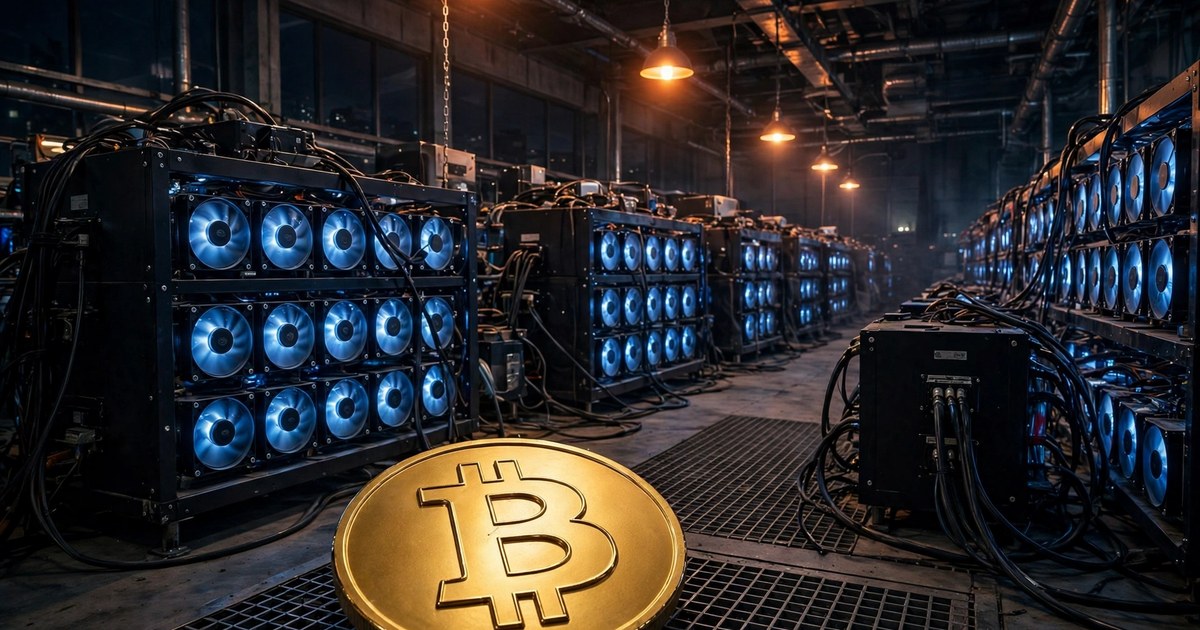
At Bitcoin's current difficulty of 148.36 trillion, a single Antminer S21 would need about 32 years on average to mine 1 BTC on its own. A 10 PH/s farm would do the same job in roughly 236 days, and that same S21 earns only about $6.60 a day in gross revenue at today's hashprice of roughly $33 per PH/s per day. If you are thinking about buying a miner, those three numbers matter more than any sales page headline.
This is not a guess. Bitcoin's difficulty, hashrate and block reward are public quantities, and the arithmetic behind how long to mine 1 Bitcoin is straightforward once you see it. Most online answers skip the difficulty figure, quote a stale hashrate, or quietly assume pool mining without saying so. This guide uses the November 1, 2026 snapshot, shows every calculation step, and ends with a pre-purchase checklist.
One important distinction up front: mining 1 Bitcoin almost never means finding a whole block by yourself. Solo miners compete for the full 3.125 BTC block reward plus fees, while pool miners earn a proportional share of every block the pool finds. The expected time is the same arithmetic either way, but the experience is completely different — a solo miner waits decades for a single payout, while a pool miner gets small daily payments. Keep that distinction in mind throughout, because it is where most confusion starts.
The Short Answer: How Long to Mine 1 Bitcoin in 2026?
Here is the answer in one table, calculated at the November 1, 2026 difficulty of 148.36 trillion and the current block subsidy of 3.125 BTC. These are expected values — averages over a very long run — not guarantees. Difficulty changes roughly every two weeks, so treat them as a snapshot, not a promise.
| Setup | Hashrate | Expected time to mine 1 BTC |
|---|---|---|
| One Antminer S21 (solo or pool share) | 200 TH/s | About 32 years |
| One Antminer S21 Pro | 234 TH/s | About 28 years |
| One Antminer S21 XP | 270 TH/s | About 24 years |
| Small farm | 1 PH/s (1,000 TH/s) | About 6.5 years |
| Mid-size farm | 10 PH/s (10,000 TH/s) | About 236 days |
The pattern is brutally linear: ten times the hashrate means one-tenth the wait. There is no shortcut, no settings tweak and no software that changes this, because the network automatically adjusts difficulty to keep blocks arriving roughly every ten minutes no matter how much computing power joins. If you remember one sentence from this article, make it this one: more machines do not create more Bitcoin, they only split the same fixed daily pie among more participants.
For context, that daily pie is about 450 BTC. With roughly 144 blocks per day and a 3.125 BTC subsidy per block, the network issues around 450 new BTC daily, plus a small amount of transaction fees — recently averaging only about 0.017 BTC per block, or roughly 0.5% of miner revenue. When fees are that thin, the subsidy is the business, and the subsidy halves again at the next halving in early April 2028. Our Bitcoin Halving 2028 guide explains what that cut means for miner revenue.
Why November 2026 Is a Particularly Hard Time to Start Mining
Bitcoin's mining difficulty rose 5.54% on October 29, 2026, to 148.36 trillion at block height 973,728 — the 11th upward adjustment of 2026, out of 22 adjustments so far this year split evenly between rises and falls. The network hashrate stood at roughly 1,065 EH/s after that adjustment, down from about 1,228 EH/s the week before, a sign that some miners switched off as profitability tightened. The next adjustment, expected around November 12, is currently estimated to be roughly flat to slightly down, with some estimates pointing to a decrease of around 3.5% — but estimates move daily with block times, so do not plan a purchase around a single forecast.
The revenue side is just as tight. Hashprice — the daily revenue per unit of hashrate — sits near $33 per PH/s per day, its lowest since August and down from a September average near $40. That single number explains the squeeze better than any headline: every PH/s you own earns about $33 a day before electricity, pool fees, maintenance and hardware costs. Five large public miners — IREN, Core Scientific, Bitfarms, TeraWulf and Cipher — mined a combined 7,075 BTC from January 1 to October 19, 2026, versus 13,263 BTC in the same period of 2025, a 47% drop that shows even industrial-scale operators are producing far less Bitcoin per unit of effort than a year ago.
Meanwhile Bitcoin itself trades near $77,700 as November opens, down about 10% over 30 days and roughly 38% below its all-time high, after closing October down 7.3% — its worst October in at least a decade. A lower BTC price directly cuts hashprice in dollar terms, which is why miner margins compress fastest exactly when headlines about the price look bleakest. If you are new to the asset itself, our What Is Bitcoin? beginner's guide covers the basics before you go deeper into mining economics.
The Math, Step by Step (So You Can Check It Yourself)
You do not need to trust this article's table. Here is the full calculation, using only public network data, so you can rerun it whenever difficulty changes.
Step one is the expected number of hashes to find one block. That equals difficulty multiplied by 2 to the power of 32. At 148.36 trillion difficulty, that is roughly 6.37 × 10²³ hashes per block. Step two is dividing that figure by your hashrate. A 200 TH/s machine performs 2 × 10¹⁴ hashes per second, so it needs about 3.19 × 10⁹ seconds — roughly 101 years — to find one block on average. Step three is dividing by the block reward: one block pays 3.125 BTC in new coins, so one Bitcoin takes about one-third of that block time, or roughly 32 years for the S21.
Pool mining does not change the expected time, it changes the variance. In a pool, your 200 TH/s earns a proportional share of every block the pool finds, so instead of waiting a century for 3.125 BTC, you receive tiny daily payments that add up to the same expected total over time — minus the pool's fee, typically a few percent. That is why the table above works for both solo and pool mining: the expected time to 1 BTC is identical, but only the pool version pays you anything this year.
Two warnings belong here. First, difficulty is not frozen: if it rises another 5% at the next adjustment, every figure in the table gets about 5% longer. Second, expected time is an average with enormous variance for small miners — a solo miner could theoretically get lucky in year one, but planning around luck is gambling, not mining. For a deeper explanation of hashrate, difficulty and block production, see our complete guide to how Bitcoin mining works in 2026.
What 1 BTC Actually Earns Per Day Right Now
Time to mine is only half the decision. The other half is cash flow: what does the machine earn, and what does it cost to run? At a hashprice of about $33 per PH/s per day, the daily gross revenue figures look like this before costs.
| Machine | Hashrate | Gross revenue per day | Electricity per day at $0.05/kWh | Electricity per day at $0.10/kWh |
|---|---|---|---|---|
| Antminer S21 | 200 TH/s | About $6.60 | About $4.20 (3,500 W) | About $8.40 |
| Antminer S21 Pro | 234 TH/s | About $7.72 | About $4.21 (3,510 W) | About $8.42 |
| Antminer S21 XP | 270 TH/s | About $8.91 | About $4.37 (3,645 W) | About $8.75 |
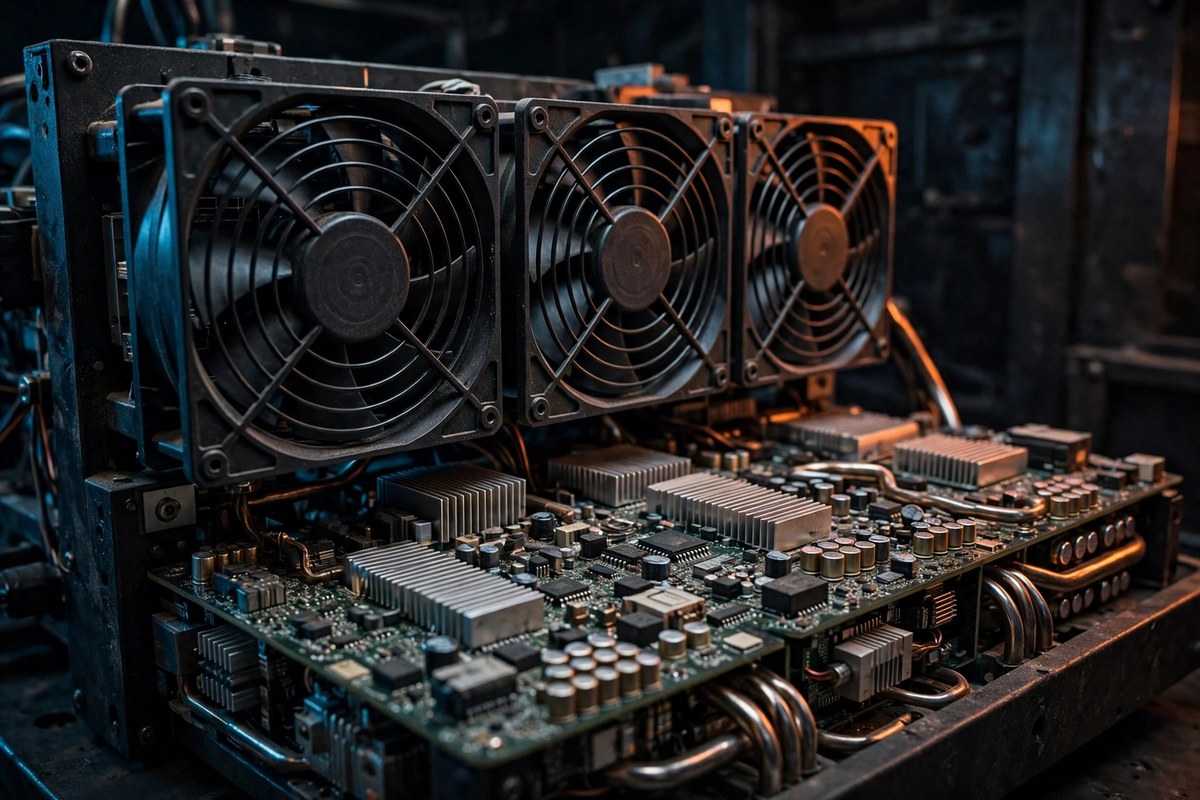
Read that table carefully, because it contains the whole home-mining verdict. At $0.05 per kWh — a cheap industrial or off-peak rate most households do not have — an S21 nets roughly $2.40 a day before pool fees, repairs, internet and the cost of the machine itself. At $0.10 per kWh, a rate many households pay or exceed, the same machine loses money every single day before any other cost. Efficiency, measured in joules per terahash, is what separates survivors from shutdowns as difficulty climbs: the S21 XP at 13.5 J/TH earns its keep far longer than the original S21 at 17.5 J/TH, even though both machines look similar on a spec sheet.
This is also why the largest miners are changing shape: several public miners now fund AI data-center builds with asset-backed debt rather than selling Bitcoin, tying solvency to GPU utilization rather than hashprice alone. When professionals diversify away from pure mining revenue, a home miner should ask what edge they hold — usually very cheap power, heating reuse, or conviction in Bitcoin itself, in which case buying directly deserves a fair comparison, as our guide to buying Bitcoin in 2026 sets out.
5 Things Most People Get Wrong About Mining 1 Bitcoin
Most bad mining decisions trace back to one of these five misunderstandings. Each one is worth killing before you spend money.
- Myth one, my laptop or GPU can mine Bitcoin: not profitably, and not meaningfully. CPUs and GPUs are millions of times slower than SHA-256 ASICs at Bitcoin's algorithm, and their electricity costs more than the coins they could ever earn. GPU mining belongs to other coins, not Bitcoin.
- Myth two, more miners means more Bitcoin is created: false. Issuance is fixed at about 450 BTC per day regardless of hashrate. New machines split the same pie thinner, and difficulty rises to compensate — which is exactly what the October 29 adjustment did.
- Myth three, the pool owns my hashrate: pools coordinate miners, they do not own their machines. Miners can switch pools freely; the real concentration risk is in transaction selection and payout policy, not in ownership of hardware.
- Myth four, fees will rescue miners when the subsidy halves: not at current levels. Fees recently averaged about 0.017 BTC per block, under 1% of the block reward. Fees spike during congestion, but nothing in today's data suggests they replace the subsidy by the April 2028 halving.
- Myth five, a quoted daily profit is a promise: every calculator snapshot assumes a difficulty, a BTC price, a power tariff and a hashprice that all move. A machine profitable at $0.05/kWh and $78,000 BTC can be unprofitable a month later if difficulty rises 5% and the price falls 10%. Always rerun the numbers at worse assumptions than today's.
The Pre-Purchase Checklist: 7 Questions Before You Buy a Miner
Run through this list honestly. If you cannot answer most of these, you are not ready to buy hardware — and that is a useful, money-saving result.
- Checked power price question one: what is your all-in electricity tariff, including delivery charges and taxes, per kWh? If it is above roughly $0.07–$0.08/kWh, most current-generation ASICs struggle at today's hashprice.
- Checked efficiency question two: what is the machine's efficiency in joules per terahash, and how does it compare with the S21 XP's 13.5 J/TH? Older machines above 20 J/TH are the first to shut off when difficulty rises.
- Checked heat and noise question three: where will 3,500 watts of continuous heat and industrial fan noise actually live? A miner is a space heater that never turns off, and many home setups fail on this practical point alone.
- Checked pool and fee question four: which pool will you use, what is its fee and payout scheme, and what is its minimum payout? Pool fees of a few percent come straight off the gross figures in the table above.
- Checked payback question five: at today's hashprice and your power price, how many months until the machine pays for itself — and how many months if difficulty rises 10% and BTC falls 15%? If the honest answer exceeds the machine's competitive life, walk away.
- Checked halving question six: what happens to your plan when the block subsidy drops from 3.125 BTC to 1.5625 BTC in early April 2028? Any payback period stretching past the halving needs a price or fee assumption to survive it.
- Checked exit question seven: what is the machine worth second-hand, and can you actually sell it, if mining turns unprofitable? ASICs have no other use, so resale value collapses exactly when everyone else is selling too.
If you work through that list and the numbers still work — typically that means cheap power, a modern efficient machine, and a plan that survives the halving — mining can make sense as a long-term, hands-on way to accumulate Bitcoin. If the numbers only work at today's difficulty, today's price and a power tariff you do not actually pay, buying Bitcoin directly is almost certainly the cheaper, simpler route to owning 1 BTC. Staking is a different route again for different coins, and our November 2026 staking guide compares headline yields with real yields for those who want income rather than infrastructure.
What Happens Next: Three Dates That Change the Math
First, the difficulty adjustment expected around November 12, 2026. Current estimates range from roughly flat to a decrease of about 3.5%, which would modestly shorten every time estimate in this article — a useful reminder that difficulty moves both ways, even in a year with 11 increases. Second, the GENIUS Act stablecoin framework takes effect on January 18, 2027, which matters indirectly: regulated dollar rails make it easier for miners to convert revenue and manage treasury, but they do not change hashprice. Third, and most important, the Bitcoin halving in early April 2028 cuts the subsidy to 1.5625 BTC per block. From that date, every time estimate in this article roughly doubles unless the BTC price or fee revenue rises enough to compensate.
Past cycles do not guarantee future price action, and miners who overpaid for hardware on a halving narrative have repeatedly been forced to sell at the bottom. The disciplined approach is boring by design: buy efficiency, lock in the cheapest power you genuinely have, assume difficulty rises, and treat price appreciation as a bonus, not the business plan.
Frequently Asked Questions
How long does it take to mine 1 Bitcoin with one ASIC in 2026?
At the November 1, 2026 difficulty of 148.36 trillion, one Antminer S21 (200 TH/s) takes about 32 years on average to mine 1 BTC, whether solo or as a pool share. A more efficient S21 XP (270 TH/s) takes about 24 years. These are expected values that lengthen if difficulty rises.
Can I mine 1 Bitcoin faster by joining a mining pool?
A pool does not change your expected time to 1 BTC, it changes how you get paid. Instead of waiting decades for a single block reward, you receive small daily payments proportional to your hashrate, minus pool fees. For a single machine, pool mining is the only practical way to see regular income.
How much electricity does it take to mine 1 Bitcoin?
At 17.5 J/TH (Antminer S21), mining 1 BTC requires roughly 6.37 × 10²³ hashes, consuming on the order of 3,100 megawatt-hours before cooling losses. More efficient machines use proportionally less.
Is Bitcoin mining profitable in November 2026?
It depends almost entirely on your power price. At a hashprice near $33 per PH/s per day, an S21 earns about $6.60 a day gross and spends about $4.20 on electricity at $0.05/kWh, leaving a thin margin before other costs. At $0.10/kWh the same machine loses money daily. Cheap power and modern efficiency are the deciding factors.
What is hashprice, and why does it matter?
Hashprice is the daily revenue earned per unit of hashrate, currently about $33 per PH/s per day. It combines the BTC price, difficulty, block subsidy and fees into one number. When hashprice falls — as it has to its lowest since August — every miner earns less per machine, regardless of how new the hardware is.
Will mining get easier or harder after the 2028 halving?
The difficulty mechanism itself does not change, but miner revenue per block halves from 3.125 BTC to 1.5625 BTC. Unless the BTC price or transaction fees rise enough to offset that cut, less efficient miners will shut off, difficulty will eventually fall to match the remaining hashrate, and the time to mine 1 BTC for survivors will depend on the new equilibrium — not on today's figures.
Conclusion: The Honest Verdict
So, how long does it take to mine 1 Bitcoin in 2026? For one modern ASIC, the honest answer is measured in decades solo and paid out in daily drips through a pool — about 32 years of expected effort for an Antminer S21 at today's 148.36 trillion difficulty. For a farm, it is months, not years, but only with industrial power prices and modern hardware. The network does not care about your enthusiasm; it adjusts difficulty every two weeks to keep blocks at ten minutes, and it splits a fixed 450 BTC per day among everyone who shows up.
That is not an argument against mining. It is an argument for mining with open eyes: check your real power tariff, buy efficiency over raw hashrate, model the April 2028 halving into your payback, and compare the total cost against simply buying Bitcoin. If the math survives those tests, mining is a legitimate, hands-on way to earn Bitcoin. If it only survives on optimistic assumptions, the cheapest miner you will ever own is the one you never buy — and the Bitcoin you buy directly will already be in your wallet while the hypothetical machine is still warming up. This article is for information only and is not financial advice; rerun the numbers with your own tariff and today's difficulty before making any decision.
Sources: network difficulty and hashrate data via TokenPost's October 31 difficulty report and MillionMiner's live difficulty chart; miner specifications and revenue estimates via ASICMetrics; block reward and fee data via this November 2026 mining explainer; Bitcoin price and market context via TokenPost's November 1 market snapshot.