How to Buy Bitcoin in Greece in 2026: 5 MiCA-Licensed Exchanges Compared — SEPA, Fees and the 15% Tax Bill Heading to Parliament
Greece's Finance Ministry is sending a 15% crypto tax bill to Parliament this month — retroactive to January 2025 — and from January 2026 your exchange already reports your trades to the tax office. Here are the 5 MiCA-licensed exchanges to use, what €1,000 of Bitcoin actually costs on each, and the €500 exemption that saves small traders.
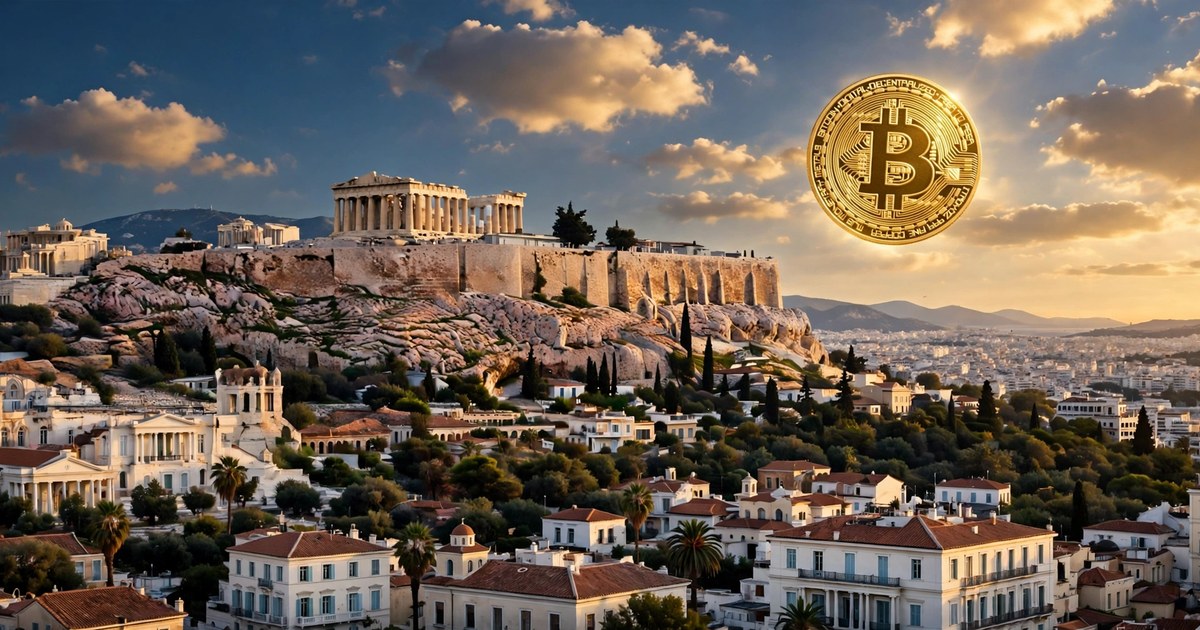
Greece is about to tax your Bitcoin. The Finance Ministry has drafted a bill that taxes crypto gains at a flat 15%, with only the first €500 of yearly gains exempt — and it is due to reach Parliament in November 2026, applying retroactively to 1 January 2025. At the same time, the EU's DAC8 reporting rules have been in force in Greece since 1 January 2026, which means your exchange already collects your transaction data for the tax authority. Buying Bitcoin in Greece in 2026 is completely legal — but only on a MiCA-licensed exchange, and only with records, because the grey area Greek buyers lived in for years is closing fast. This guide compares the 5 MiCA-licensed exchanges that serve Greece, shows what €1,000 of Bitcoin actually costs on each one, and explains the 15% tax rule before it becomes law.
Bitcoin in Greece right now: the price backdrop
Bitcoin is trading near $75,845 on 6 November 2026, down 5.5% in 24 hours after the Nasdaq suffered its worst session since April 2025 — the S&P 500 fell 4.3% and the Philadelphia Semiconductor Index plunged 12% as the AI trade unwound. Bitcoin now sits roughly 40% below its all-time high of $126,080, and Ether has fallen further, down 7.5% to about $2,230. For a Greek buyer, that sell-off is the context, not the story: the price is down, but the rules around buying it have just become far clearer than they were a year ago.
The important shift is regulatory. Under the EU's Markets in Crypto-Assets Regulation (MiCA), fully applicable since 30 December 2024, the transition period for national licences ended on 1 July 2026. Any exchange that wants to serve Greek customers now needs a MiCA authorisation — a licence from one EU country is valid in all 30 countries of the European Economic Area. The Hellenic Capital Market Commission (HCMC) authorises and supervises crypto-asset service providers in Greece, while the Bank of Greece handles prudential oversight of stablecoin issuers. The European Securities and Markets Authority (ESMA) keeps a public register of authorised providers; as of 29 October 2026 it contained 392 entries.
That gate has real teeth. Binance withdrew its Greek MiCA application on 24 June 2026 and stopped new deposits, orders and sign-ups for EEA customers a week later — no Binance entity appears in the ESMA register. If an exchange cannot show you its MiCA licence and its ESMA register entry, it is serving you illegally in Greece. Every platform in this guide can.
The 5 MiCA-licensed exchanges compared
These five platforms all hold a MiCA licence, accept euro deposits by SEPA bank transfer, and serve Greek residents. Fees are the October 2026 published rates — always check the live schedule before you trade, because exchanges change them.
| Exchange | MiCA licence | Fee per Bitcoin purchase | SEPA deposit | Minimum buy | Best for |
|---|---|---|---|---|---|
| Bitvavo | Netherlands (AFM), 26 June 2025 | 0.25% | Free | €5 | Lowest fees |
| Kraken | Ireland (Central Bank), 25 June 2025 | 0.40% maker / 0.80% taker (Pro); 1% simple buy | Free (incl. SEPA Instant) | €1 | Security record, deep liquidity |
| Coinbase | Luxembourg (CSSF), 20 June 2025 | 0.25% maker / 0.50% taker (Advanced); simple buys up to 1.875% + spread | Free | €1 | Beginners, Nasdaq-listed parent |
| Bitpanda | Austria (FMA), 9 April 2025 | From 0.99% | Free | €1 | One app for crypto, stocks and gold |
| eToro | MiCA-licensed EU entity | 1% per trade + spread | Free | Varies | Crypto alongside stocks and ETFs |
One warning that applies to all five: a MiCA licence is not the same as bank deposit protection. Your euros on deposit with a bank are protected; your crypto is not covered by any compensation scheme. That is why the licence matters — it is the only safety net you get — and why moving larger holdings to your own wallet matters too.
Bitvavo: the cheapest way to buy Bitcoin in Greece
Bitvavo charges a flat 0.25% per trade, the lowest headline rate of the five, with a €5 minimum purchase. It is licensed by the Dutch AFM (26 June 2025) and lists 428 cryptocurrencies. On a €1,000 Bitcoin purchase you pay €2.50 in fees — less than a third of what the same purchase costs at Bitpanda (€9.90) or Kraken's simple-buy rate (€10). SEPA deposits are free. The trade-off is a smaller brand footprint than Coinbase or Kraken and fewer extra products. For a Greek buyer whose only goal is to buy Bitcoin cheaply and regularly, it is the value pick.
Kraken: the security-first choice
Kraken has operated since 2011 without losing customer funds in an exchange breach, publishes proof of reserves, and its 30 June 2026 snapshot showed Bitcoin coverage of 102.9%. Greek customers contract with Payward Europe Solutions Limited, authorised by the Central Bank of Ireland on 25 June 2025. Kraken Pro charges 0.40% maker / 0.80% taker at the entry tier (below $2,500 in 30-day volume); the simple-buy interface charges 1%. SEPA and SEPA Instant deposits are free, while a debit-card deposit costs 3.75% plus €0.25 — never fund with a card if you can use a bank transfer. Kraken lists 600+ assets and offers staking and an OTC desk under its Irish MiCA licence. If you plan to hold for years, Kraken's security record is the reason to pay slightly more than Bitvavo.
Coinbase: the easiest first purchase
Coinbase is the only Nasdaq-listed pure-play crypto exchange of the five, and its Greek service runs through Coinbase Luxembourg S.A., which received its MiCA licence from the CSSF on 20 June 2025. Coinbase Advanced charges 0.25% maker / 0.50% taker; the simple-buy flow charges up to 1.875% plus a spread, which makes it the most expensive way to buy on this list if you use the default button. Always switch to Advanced before you buy — the same Bitcoin costs a fraction of the price. SEPA deposits are free and euro withdrawals are free. One quirk to know: on 27 October 2026 Coinbase gave EEA retail customers until 30 October to withdraw 14 restricted tokens, mostly stablecoins, before conversion — USDT has been restricted or removed on Coinbase EU, Kraken EU and Bitstamp. If you hold stablecoins on a European exchange, check they are still supported.
Bitpanda: crypto, stocks and gold in one app
Bitpanda, founded in Vienna in 2014, was the first firm to receive a MiCA licence from Austria's FMA, on 9 April 2025, and now serves 7.4 million users. A single account holds cryptocurrencies, fractional shares, ETFs and gold or silver, with purchases from €1. The cost is a premium of from 0.99% on Bitcoin buys — €9.90 on a €1,000 purchase — and SEPA deposits and withdrawals are free, while PayPal funding costs 1.49%. Note that in August 2026 the FMA fined Bitpanda €70,000 for a late token white paper, the regulator's first published MiCA penalty. Bitpanda suits a Greek buyer who wants one app for everything rather than the absolute cheapest Bitcoin price.
eToro: Bitcoin next to your stock portfolio
eToro charges 1% per crypto trade plus the market spread — the expensive end for pure Bitcoin buying — but it is the only platform here where Bitcoin sits beside 17,000+ shares, indices and ETFs in one account, which matters if you are building a mixed portfolio. The spread is the hidden cost: the quoted buy price includes a margin over the market rate, so compare the final quoted price, not just the headline fee, before you confirm.
How to buy Bitcoin in Greece, step by step
- Pick a MiCA-licensed exchange. Check the firm's legal entity (not just the brand name) in the ESMA register — for example "Coinbase Luxembourg S.A." or "Payward Europe Solutions Limited" — and confirm it is listed as authorised. If it is not there, do not use it.
- Create and verify your account. You will need a Greek ID or passport and proof of address. Under EU anti-money-laundering rules and DAC8, the exchange collects your identity and transaction data — this is now standard, not a red flag.
- Deposit euros by SEPA transfer. Send euros from any Greek SEPA bank account. SEPA deposits are free on all five exchanges above; SEPA Instant usually arrives within minutes. Never deposit by card: Kraken charges 3.75% plus €0.25, and Bitpanda charges 1.49% via PayPal.
- Buy on the advanced/pro interface, not the simple-buy button. On Coinbase that means Advanced (0.25%/0.50%) instead of simple buy (up to 1.875% + spread); on Kraken it means Kraken Pro (0.40%/0.80%) instead of instant buy (1%). The difference on €1,000 is up to €13.75 — real money.
- Record the trade. Save the date, the amount of Bitcoin, the price in euros and the fee. Greece's new tax rules are retroactive to 1 January 2025, so records from this year already matter.
- Move larger holdings to your own wallet. For anything you plan to hold for months or years, withdraw to a hardware wallet. Our guides explain how to store crypto safely with cold storage and a seed phrase and compare the best crypto wallets for beginners.
What €1,000 of Bitcoin actually costs on each exchange
Headline fees hide the real cost, so here is the same €1,000 purchase priced out on each platform, using the published October 2026 rates. Spreads are excluded because they move with the market — but on simple-buy flows they are the biggest cost of all, which is why the advanced interface matters.
| Exchange | Fee on €1,000 | Bitcoin you receive (before spread) | Round-trip cost (buy + sell) |
|---|---|---|---|
| Bitvavo | €2.50 | €997.50 worth | ~€5.00 |
| Kraken Pro (taker) | €8.00 | €992.00 worth | ~€16.00 |
| Coinbase Advanced (taker) | €5.00 | €995.00 worth | ~€10.00 |
| Bitpanda | €9.90 | €990.10 worth | ~€19.80 |
| Coinbase simple buy | Up to €18.75 + spread | €981.25 or less | ~€37.50+ |
| eToro | €10.00 + spread | €990.00 or less | ~€20.00+ |
The lesson is simple: the cheapest and most expensive options differ by more than €16 per €1,000, and a €200 monthly buyer on Coinbase simple buy instead of Bitvavo pays roughly €195 more a year. If you are new, start with our beginner's guide to what Bitcoin is and our step-by-step guide to buying your first Bitcoin.
The 15% tax bill: what Greek buyers must know
Greece currently has no dedicated crypto tax law — and that is exactly what is about to change. Here is the position as of November 2026, based on the Finance Ministry's draft bill reported by Reuters and local media:
- A flat 15% tax on net crypto capital gains. The bill taxes the net gain — sale price minus purchase cost, after deducting trading and operating fees — at 15%.
- The first €500 of gains each year is exempt. Small retail traders with modest profits would pay nothing.
- Retroactive to 1 January 2025. If passed in its current form, gains from 2025 onward must be declared on the tax returns filed in 2027.
- Bill due in Parliament in November 2026. The draft is being finalised now; the timetable says it reaches the Hellenic Parliament this month.
- Crypto-to-crypto swaps are NOT taxed. Swapping Bitcoin for Ethereum, for example, would not trigger the tax. It applies only when you convert crypto into euros or another fiat currency, or spend it on goods and services.
- Staking and lending rewards are taxed only when sold. Tokens earned from staking would not be taxed on receipt, only at 15% when liquidated into fiat — with a cost basis of zero unless you can prove a different actual cost.
- Businesses pay 22%. Companies trading crypto are taxed on gains as business income at the 22% corporate rate.
Worked example. You buy €5,000 of Bitcoin in early 2025 and sell it for €15,000 in 2026, paying €50 in total trading fees. Your net gain is €9,950; minus the €500 exemption, €9,450 is taxable at 15% — a €1,417.50 bill. A €400 gain would owe nothing. Keep every receipt: fees are deductible only if you can prove them.
Two more things are already in force. First, DAC8: Greece transposed the EU's crypto reporting directive into national law in May 2026, and from 1 January 2026 exchanges must collect detailed user and transaction data and report it to the tax authority, with the first exchanges of data between EU countries due by 30 September 2027. Second, if crypto counts as income rather than investment — salary paid in crypto, mining as a business — the progressive income tax scale applies, from 9% up to 44%. This article is general information, not tax advice: for large amounts, a Greek tax adviser is worth the fee.
What most people get wrong about buying Bitcoin in Greece
Myth 1: "Bitcoin is unregulated in Greece, so tax doesn't apply." Wrong on both counts. MiCA has applied since December 2024, the HCMC supervises providers, and a 15% tax bill is heading to Parliament with retroactive effect to 2025. The grey area is closing.
Myth 2: "If I use a foreign exchange, the Greek tax office can't see it." DAC8 ended that. From January 2026, exchanges report your activity to the authorities automatically, and the first cross-border data exchanges land by September 2027. Foreign custody does not remove Greek tax obligations.
Myth 3: "Swapping Bitcoin for Ethereum is tax-free everywhere." In Greece, under the draft bill, that is actually true — crypto-to-crypto swaps would not be taxable. But selling for euros is, and spending crypto on goods or services is too. Do not confuse the two.
Myth 4: "The cheapest fee is the best exchange." A 0.25% fee means nothing if the platform has no MiCA licence, freezes withdrawals, or disappears. Binance — the world's largest exchange — withdrew its Greek MiCA application in June 2026 and stopped serving new EEA customers. Licence first, fee second.
Myth 5: "Leaving Bitcoin on the exchange is safe because the exchange is licensed." A licence is not deposit insurance and no compensation scheme covers crypto holdings. Licensed exchanges can still be hacked or go bankrupt — move serious holdings to a hardware wallet. If you want the ETF route instead, read how spot Bitcoin ETFs work.
Storing your Bitcoin safely after you buy it
Buying is the easy half; keeping it is the hard half. The $6.3 billion Binance hack of 29 October 2026 — withdrawals were paused for days — is the latest reminder that exchange custody carries real risk, even on the largest platforms. For amounts you cannot afford to lose, withdraw to a hardware wallet, write the seed phrase on paper (never photograph it, never store it in the cloud), and keep it somewhere separate from the device. For day-to-day amounts, a reputable software wallet is fine. The rule is simple: the exchange is a shop, not a vault.
Also watch the market context before sizing a purchase: Bitcoin is down roughly 40% from its $126,080 peak, and the Crypto Fear and Greed Index is a useful sentiment check, not a timing tool. A regular monthly purchase through a low-fee exchange beats trying to time a volatile market.
Frequently asked questions
Is it legal to buy Bitcoin in Greece?
Yes. There is no law barring Greek residents from buying or holding crypto. Since MiCA became fully applicable, exchanges serving Greece must hold a MiCA authorisation, supervised nationally by the Hellenic Capital Market Commission. Use a licensed exchange and you are on solid ground.
Which is the cheapest exchange to buy Bitcoin in Greece?
Bitvavo, at a flat 0.25% per trade — €2.50 on a €1,000 purchase, with free SEPA deposits. Kraken Pro (0.40% maker / 0.80% taker) and Coinbase Advanced (0.25% maker / 0.50% taker) are close behind if you use their pro interfaces. Avoid simple-buy buttons: Coinbase's charges up to 1.875% plus spread.
How much tax do I pay on Bitcoin gains in Greece?
Under the draft bill heading to Parliament in November 2026, a flat 15% on net gains, with the first €500 of annual gains exempt, applied retroactively from 1 January 2025. Until it passes, no crypto-specific rate is in force — but keep records now.
Do I pay tax when I swap Bitcoin for another crypto?
Under the draft bill, no. Crypto-to-crypto swaps would not be a taxable event. Tax would apply only when you convert to euros or another fiat currency, or spend crypto on goods and services.
Can I buy Bitcoin in Greece with a Greek bank account?
Yes. All five exchanges in this guide accept free SEPA transfers from Greek banks. SEPA Instant usually arrives within minutes. Avoid card deposits — they cost up to 3.75% plus €0.25 on Kraken and 1.49% via PayPal on Bitpanda.
Is Binance available in Greece?
Not for new customers. Binance withdrew its Greek MiCA application on 24 June 2026 and stopped new EEA deposits, orders and sign-ups a week later. No Binance entity appears in the ESMA register. Greek buyers should use a MiCA-licensed alternative such as Bitvavo, Kraken, Coinbase or Bitpanda.
Conclusion
Buying Bitcoin in Greece in 2026 is straightforward — and for the first time, the rules are written down. Use a MiCA-licensed exchange, fund it with a free SEPA transfer, buy on the pro interface, and keep records of every trade. Bitvavo is cheapest at 0.25%, Kraken is the security-first pick, and Coinbase is the easiest first purchase if you switch to Advanced. The bigger change is the tax bill: 15% on net gains, a €500 exemption, retroactive to January 2025, with your exchange already reporting under DAC8. Buy legally, buy cheaply, and keep your receipts.
Sources: Bitcoin Magazine — Greece Plans Crypto Capital Gains Tax; TokenTax — Guide to Crypto Tax in Greece for 2026; Kryptos — Greece Crypto Tax Guide 2026; CoinStats — Binance Alternatives: 4 MiCA-Licensed Exchanges Compared; Akka — How to Buy Bitcoin in Europe: 2026 Guide; CoinDesk — Bitcoin drops more than 5% as stocks close out worst day since April 2025. Prices and fees as published in October–November 2026; always verify the live fee schedule before trading. This article is for information only and is not financial or tax advice.