How to Buy Avalanche in 2026: 5 Ways to Buy AVAX at $8.70 — While SkyBridge Tokenizes $300M and BlackRock Parks $482M on the Chain
AVAX trades at $8.70 — 94% below its all-time high — yet SkyBridge just tokenized $300M on Avalanche and BlackRock's BUIDL fund now holds more on the chain ($482M) than on Ethereum. Here are the 5 ways to buy it, the fees, and the 3 mistakes that cost beginners money.
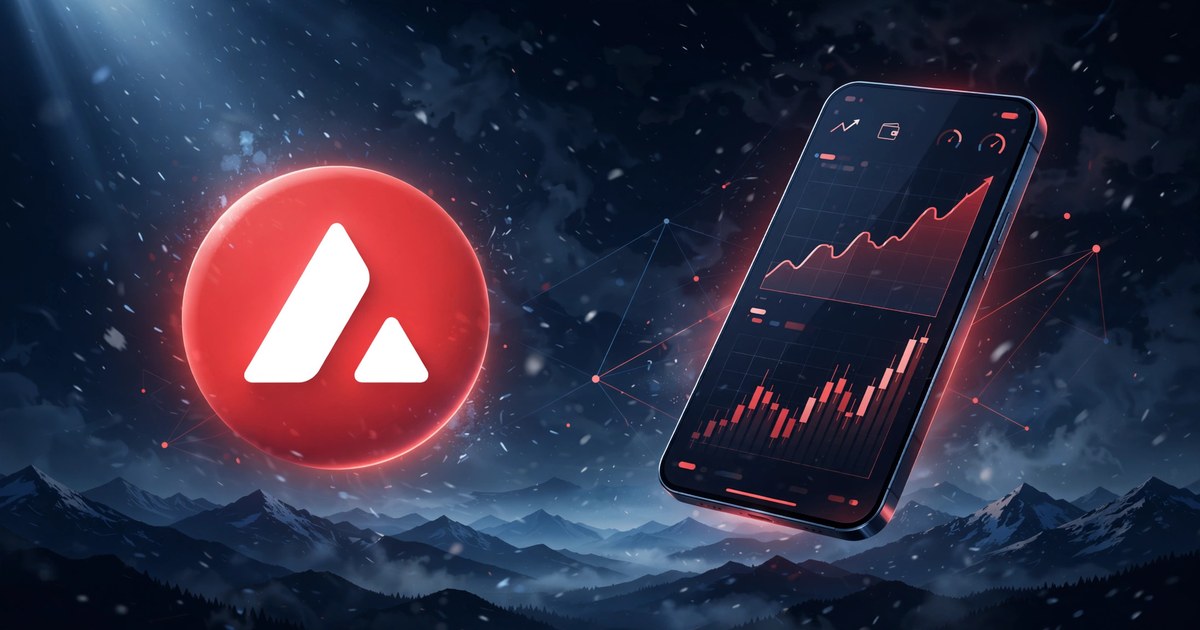
AVAX at $8.70: Institutions Are Buying the Chain While the Price Sits 94% Below Its Peak
Avalanche's AVAX token trades at about $8.70 today — down 46% over the past year and a staggering 94% below its all-time high near $146. Yet in the same week, SkyBridge Capital announced it is tokenizing roughly $300 million in hedge funds on Avalanche, deposits on Aave V4's Avalanche deployment hit a record $125 million, and BlackRock's $2.17 billion BUIDL fund now holds $481.81 million on Avalanche — more than the $422.72 million it holds on Ethereum. Institutions are building on this chain while retail buyers can still pick up the token at single-digit prices. This guide shows you the five ways to buy AVAX in 2026, what each one costs, where to store it safely, and the three mistakes that cost beginners the most money.
If you are new to crypto buying in general, start with our complete beginner's guide to buying crypto first — the steps below assume you know the basics of accounts, verification and wallets.
What Is Avalanche (AVAX)?
Avalanche is a high-throughput smart-contract blockchain that runs on proof-of-stake consensus. It was designed to be fast and cheap: transactions on its main C-Chain typically confirm in under two seconds and cost a fraction of a cent, which is why developers use it for DeFi apps, tokenized real-world assets and custom blockchains called subnets.
AVAX is the network's native token. It pays transaction fees, secures the network through staking, and serves as the unit of account across Avalanche's DeFi ecosystem. The token has a maximum supply of 720 million AVAX, with roughly 62% in circulation today — the remaining supply is released gradually through staking rewards and scheduled unlocks, including about 6.67 million AVAX (worth roughly $58 million) set to unlock over the next 12 months.
For context on how AVAX compares with the two biggest networks, see our Bitcoin vs Ethereum comparison — Avalanche sits in the same smart-contract-platform category as Ethereum, but at a market capitalization of roughly $3.9 billion, it is about 1/75th the size of ETH. That smaller size is exactly why its price moves faster in both directions.
5 Numbers That Explain Why Buyers Are Looking at AVAX Now
The price chart looks miserable. The activity underneath it does not. Here are the five numbers that matter:
| Number | What it means |
|---|---|
| $300 million tokenized | SkyBridge Capital is tokenizing two hedge funds on Avalanche with Tokeny and Apex Group, announced November 1, 2026. |
| $481.81 million in BUIDL | BlackRock's tokenized money-market fund holds more value on Avalanche than on Ethereum ($422.72 million). |
| $125 million in Aave V4 | Deposits on Aave V4's Avalanche deployment hit a record on November 3 — four times September's level. |
| 94% below all-time high | AVAX peaked near $146 in November 2021. At $8.70 it is one of the cheapest large-cap Layer 1 tokens relative to its own history. |
| $599 million TVL | Avalanche's DeFi total value locked, with $1.13 billion in stablecoins on the chain, per DeFiLlama. |
None of this guarantees a recovery — analysts note that institutional tokenization does not automatically create demand for AVAX itself, and the token is still down 21% over the past 30 days. But it explains why "how to buy Avalanche" searches are climbing: buyers want exposure to a chain that Wall Street is suddenly using, at a price that already reflects a full bear market. Our Avalanche price prediction breaks down the key levels — support at $8.00–$8.60, resistance at $9.00–$9.20, and the $12–$15 zone above that.
5 Ways to Buy Avalanche (AVAX) in 2026
There is no single best way to buy AVAX — the right route depends on where you live, how much you are buying, and whether you want to hold it in your own wallet or leave it on an exchange. Here are the five practical options, ranked from easiest to most advanced.
1. Buy on a Centralized Exchange (Easiest for Beginners)
This is how most people buy their first AVAX. Major exchanges including Coinbase, Kraken, Binance, OKX and Bybit all list AVAX with deep liquidity — 24-hour trading volume across the market is roughly $250 million, so even a large order fills instantly at a fair price.
Typical steps: create an account, complete identity verification (a photo ID and a selfie — usually approved within minutes), deposit dollars, euros or another currency by bank transfer or card, search for AVAX, and place a market or limit order. Bank transfers are almost always the cheapest funding method; card purchases typically add 2–4% in fees.
2. Buy Through a Fintech or Brokerage App
Apps such as Cash App, Robinhood and Revolut let you buy AVAX alongside stocks in an app you may already use. The trade-off is control: many of these apps do not let you withdraw AVAX to your own wallet, so you own price exposure rather than the token itself. That is fine for a small speculative position, but it is the wrong choice if you want to stake AVAX or use Avalanche DeFi apps. Check the withdrawal policy before you buy, not after.
3. Buy on a Decentralized Exchange (For Crypto-Native Buyers)
If you already hold USDC or another crypto, you can swap it for AVAX directly on Avalanche's own decentralized exchanges, such as Trader Joe, without creating an account. You connect a wallet like Core or MetaMask, pick the pair, and confirm the swap on-chain. Fees are tiny — a few cents — but you need some AVAX or another token on the Avalanche C-Chain first to pay gas, which is a chicken-and-egg problem for a first purchase. This route makes more sense for topping up than for a first buy.
4. Buy Peer-to-Peer (P2P)
P2P marketplaces let you buy AVAX directly from another person using bank transfer, PayPal or even cash, with the platform holding the crypto in escrow until payment clears. P2P can be useful in countries where exchanges are restricted, but it carries the highest scam risk of any method here: only use platforms with escrow and a dispute system, never release payment outside the platform, and never trade with sellers who ask to move the conversation to Telegram or WhatsApp.
5. Swap Another Cryptocurrency for AVAX
If you already own Bitcoin or Ethereum, you can swap it for AVAX in seconds on a centralized exchange (a BTC/AVAX or ETH/AVAX pair) or through a cross-chain swap service. This avoids a fiat deposit entirely and is often the fastest route for existing crypto holders — but watch the spread: swapping twice (fiat to BTC, BTC to AVAX) can cost more than a single direct purchase.
How Much Does It Cost to Buy AVAX? Fees Compared
Fees are where beginners lose the most money, because they are easy to ignore on a first purchase and brutal at scale. The table below compares typical costs for a $1,000 AVAX purchase:
| Method | Typical cost on $1,000 | Best for |
|---|---|---|
| Exchange, bank transfer | $0–$15 (0–1.5%) | Most buyers — cheapest fiat route |
| Exchange, debit/credit card | $20–$40 (2–4%) | Speed, when minutes matter |
| Fintech/brokerage app | $10–$30 (1–3% spread) | Convenience, small amounts |
| DEX swap | Under $1 in network fees | Crypto holders topping up |
| P2P marketplace | Varies widely, 0–5% | Restricted regions |
Two cost traps deserve a callout. First, the "free" instant-buy button on most exchanges hides a spread of 1–2% above the market price — placing a limit order on the exchange's advanced trading screen usually costs a fraction of that. Second, withdrawing AVAX from an exchange to your own wallet carries a network withdrawal fee that varies by platform; some exchanges charge a flat fee worth several dollars, so moving small amounts frequently is wasteful. Batch your withdrawals.
Where to Store AVAX After You Buy It
Buying AVAX is only half the job. Where you keep it decides whether a hack, a bankruptcy or a frozen withdrawal can touch it — and this week's news is a reminder: the $6.3 billion Binance breach froze withdrawals for days, and a vault linked to Valinor Digital lost $1.01 million in an exploit reported on November 3. Exchanges are convenient, but they are not vaults.
For most buyers, the sensible setup is: keep a small trading amount on the exchange, and move the rest to a wallet you control. Avalanche's official wallet is Core, which supports staking and Avalanche DeFi apps natively. MetaMask also works — add the Avalanche C-Chain network and your AVAX address is the same Ethereum-style address you already have. For larger holdings, a hardware wallet such as a Ledger keeps your keys offline entirely. Our best crypto wallets guide compares hot and cold wallets in detail, including which ones support AVAX staking.
One more thing to check before you withdraw: make sure you are sending AVAX on the Avalanche C-Chain network. Sending AVAX to an Ethereum address, or to an exchange deposit address on the wrong network, is one of the most common ways beginners lose coins permanently. Copy the address, check the first and last four characters, and send a small test amount first.
Can You Stake AVAX? What Beginners Should Know
Yes — AVAX is a proof-of-stake token, and staking is one of its main uses. You can delegate your AVAX to a validator through Core wallet or stake directly if you hold enough to run a validator yourself. Rewards vary with network conditions and the lock-up period you choose, and staked AVAX is locked for the duration you select, so you cannot sell it instantly if the price moves.
Staking is not free money: validator downtime can reduce rewards, and the token's price can fall far more than a year's staking yield — AVAX is down 46% over the past year, which would have wiped out any staking return many times over. Treat staking as a way to earn a little extra on a long-term holding, not as a reason to buy. If you want the full mechanics of staking on another major chain first, our Solana staking guide explains the same concepts — delegation, lock-ups and validator risk — in plain language.
3 Mistakes That Cost AVAX Beginners Money
- Buying the top of a news spike is the classic trap. AVAX jumped after the SkyBridge announcement and then gave much of it back within days. Decide your entry price in advance, consider buying in two or three tranches instead of all at once, and never chase a green candle with money you cannot afford to lose.
- Leaving everything on the exchange is the silent risk. The Binance hack and the Valinor vault exploit both happened this month. If your AVAX sits on an exchange, it is an IOU, not your coin. Withdraw to a wallet you control once your position is big enough to justify the withdrawal fee.
- Ignoring unlocks and dilution is the slow bleed. About 6.67 million AVAX unlock over the next 12 months, and only 62% of the 720 million maximum supply is circulating. New supply does not automatically mean lower prices, but it is a headwind worth knowing about before you size a position.
Is AVAX a Good Investment in 2026?
Honest answer: it depends on what you think you are buying. The bull case is that Avalanche is quietly becoming institutional plumbing — SkyBridge's $300 million tokenization, BlackRock's BUIDL overweight versus Ethereum, Aave V4's record deposits, and the New York Stock Exchange evaluating Avalanche for tokenized stock settlement all point the same way. The bear case is equally real: AVAX is down 46% in a year, 94% from its peak, DeFi TVL of $599 million is small next to Ethereum's, and the token faces steady unlock supply.
Three scenarios frame the decision. In a bull case, AVAX reclaims the $12–$15 resistance zone if institutional tokenization keeps growing and Bitcoin holds above $80,000. In a base case, it chops between $8 and $10 while the market waits for Friday's US jobs report and the December Fed decision. In a bear case, a break below $8 support opens the way toward the $6–$7 zone, where the next meaningful demand sits. These are scenarios, not predictions — and anyone who tells you they know which one happens is selling something.
If you do buy, size the position so that a 50% drawdown — something AVAX has done repeatedly — does not change your life. Diversify, use a wallet you control, and revisit the thesis every quarter: is institutional usage still growing, or was the SkyBridge headline the peak?
Frequently Asked Questions
How much AVAX should a beginner buy?
There is no correct amount. A common approach is to start with an amount you would not miss if it fell 50% — for many beginners that is $100–$500 — and add more only after you understand the wallet, the fees and the volatility. Never borrow money to buy crypto.
Can I buy AVAX with a credit card?
Yes, most major exchanges accept debit and credit cards for AVAX purchases, but card buys typically cost 2–4% in fees versus 0–1.5% for a bank transfer. Cards are also treated as cash advances by some banks, which adds interest from day one. A bank transfer is almost always cheaper.
Is there an Avalanche ETF?
As of November 2026 there is no spot AVAX ETF trading in the US. Bitcoin, Ethereum, XRP and Solana have spot ETFs; Avalanche does not yet. That means buying the token directly on an exchange is currently the only way to get AVAX exposure — which is also why the token is less accessible to traditional investors than its larger rivals.
What is the minimum amount of AVAX I can buy?
Most exchanges let you buy as little as $10 worth of AVAX, and some as little as $1. The practical minimum is set by fees: on a $10 purchase, a $3 withdrawal fee eats 30% of your position, so small buys make sense only if you plan to leave the coins on the exchange or accumulate before withdrawing.
Is AVAX safe to buy after the recent hacks?
AVAX itself has not been hacked — the recent incidents hit exchanges and third-party vaults, not the Avalanche network. The risk is custodial, which is why moving your coins to a wallet you control matters more than which coin you pick. Buy from a reputable exchange, enable two-factor authentication, and withdraw to your own wallet.
Where can I buy AVAX in the US?
Coinbase, Kraken and other US-regulated exchanges list AVAX for American customers. Availability varies by state, and New York residents face extra restrictions, so check your exchange's supported-states page before signing up. Our guide to buying Bitcoin in the USA covers the same platforms and verification steps that apply to AVAX purchases.
Conclusion
AVAX at $8.70 is a paradox: a token down 94% from its peak on a chain that institutions are suddenly building on. SkyBridge's $300 million tokenization, BlackRock's $482 million BUIDL position and Aave V4's record $125 million in deposits do not guarantee a price recovery — but they do mean Avalanche is no longer a forgotten Layer 1. If you decide to buy, use a major exchange and a bank transfer to keep fees low, move your coins to a wallet you control, size the position for a possible 50% drawdown, and watch the $8 support and $9.20 resistance levels before adding more. And remember the golden rule of this market: never invest money you cannot afford to lose.
Disclaimer: This article is for information only and is not financial advice. Cryptocurrency prices are volatile and you can lose money. Do your own research before investing.