How to Buy Litecoin in 2026: 5 Ways to Buy LTC at $56 — Exchange, ETF, and the 3 Mistakes That Cost Beginners Money
Litecoin trades at $56 — 86% below its $413 all-time high — with a live spot ETF, a July 2027 halving ahead, and 5 ways to buy it. Here's the cheapest route, the fees, and the 3 mistakes beginners keep making.
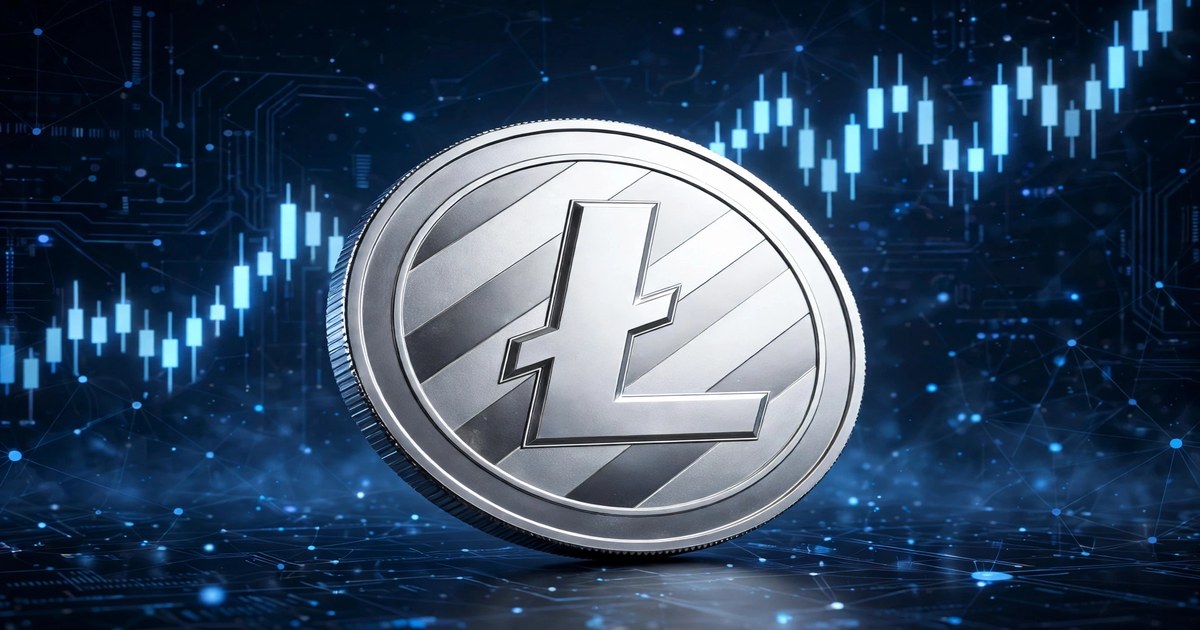
Litecoin trades at $56.30 on November 5, 2026 — up 4.5% in a day, yet still 86% below its $413 all-time high. You can now buy it five different ways, including through a regulated spot ETF that did not exist two years ago, and the next halving in July 2027 will cut new LTC supply in half. This guide compares all five routes, shows exactly what $1,000 of LTC costs on each one, and flags the three mistakes that cost beginners real money.
If you are new to the coin itself, start with our complete beginner's guide to how Litecoin works — this article is the practical companion to it: where to buy, what it costs, and how to store it safely. For the general buying process that applies to any coin, see how to buy crypto in 2026.
Litecoin at a Glance: 5 Numbers That Frame the Decision
Before choosing a route, here is the market you are buying into — all figures as of November 5, 2026, sourced from CoinStats, CoinMarketCap and Canary Capital data reported by Blockchain Reporter.
- Price: $56.30. LTC is up 4.5% in 24 hours after the post-midterm rally that also pushed Bitcoin back above $80,000, but it is down 21.7% over the past 30 days and 5.3% over the past week.
- Market value: about $4.29 billion, ranked #33. Litecoin is a mid-cap coin, not a top-10 asset — which is exactly why it trades at a discount to its history and why liquidity matters when you choose where to buy.
- Distance from the peak: 86% below the $413.60 all-time high. LTC has never reclaimed its 2021 top. Analyst forecasts for December 2026 cluster between $53 and $61, according to Changelly and CoinCodex data cited by TechBullion — modest, not moonshot, expectations.
- Spot ETF assets: $12.4 million. Canary's LTCC, the first US spot Litecoin ETF, began trading on Nasdaq on October 28, 2025, charges a 0.95% fee, and recorded zero net flows on November 2 and 3 — the fifth straight session without inflows.
- Halving: July 2027. At block 3,360,000 the block reward drops from 6.25 to 3.125 LTC. About 92.6% of the 84 million LTC supply already exists, so the halving cuts the remaining new supply in half.
The honest read: Litecoin in late 2026 is a payments coin with real infrastructure — a live ETF, a commodity classification from the SEC in March 2026, and a halving on the calendar — but with almost no institutional flow behind it yet. That combination is precisely why the way you buy matters more than the timing: fees and custody choices decide most of your outcome.
The 5 Ways to Buy Litecoin in 2026
There is no single best route. The right one depends on how much you are buying, how long you plan to hold, and whether you want to own the coins or just the price exposure.
| Method | Best for | Typical cost | You own the coins? | Speed |
|---|---|---|---|---|
| Centralised exchange (Coinbase, Kraken, Binance) | Most buyers; best prices | 0.1%–1.5% per trade | Yes, after withdrawal | Minutes |
| Spot ETF (Canary LTCC on Nasdaq) | Retirement accounts, no-wallet buyers | 0.95% per year + broker commission | No — you own shares | Market hours |
| Brokerage app (PayPal, Revolut, Robinhood-style) | First-time buyers, small amounts | 1%–2.5% spread + fees | Usually no withdrawal | Minutes |
| Instant swap service (Changelly, SimpleSwap-style) | Swapping another coin for LTC | 0.5%–5% spread | Yes, sent to your wallet | Minutes |
| Peer-to-peer / Bitcoin ATM | Cash buyers, no bank account | 5%–12% markup | Yes | Hours |
For most readers, the exchange route wins on cost and control. The ETF wins on convenience inside a retirement account. The other three are niche tools — useful in specific situations, expensive as a default.
How to Buy Litecoin on an Exchange: Step by Step
Buying LTC on a major exchange takes about 15 minutes the first time and under two minutes on repeat purchases.
Step 1: Pick an exchange that lists LTC and fits your country
Litecoin is listed on virtually every major exchange, so availability is rarely the problem — fees and withdrawal rules are. Compare the trading fee, the withdrawal fee for LTC, and whether the platform supports your local payment method before you sign up. Our complete guide to buying crypto walks through the comparison in detail.
Step 2: Create and verify your account
You will need a government ID and, usually, a selfie or proof of address. Verification takes minutes on most platforms but can take a day during busy periods. Do this before you need to buy — the worst time to discover a verification delay is during a price move.
Step 3: Deposit funds
A bank transfer is almost always the cheapest way in — often free, though it takes 1–3 days. Debit and credit card deposits are instant but typically cost 2%–4%, which on a $1,000 purchase is $20–$40 before you have bought a single coin. If you are in a hurry, deposit by card; if you are buying more than a few hundred dollars, wait for the bank transfer.
Step 4: Place a limit order, not a market order
A market order buys at whatever price is available right now. A limit order buys only at the price you set. On a coin with LTC's daily volume — about $235 million in 24 hours — the difference is usually small, but a limit order protects you from a bad fill during a volatile minute. Set your limit at or just below the current price and wait.
Step 5: Withdraw to your own wallet
This is the step most beginners skip, and it is the most important one. Coins left on an exchange are coins you do not control — the $6.3 billion Binance hack in October 2026 froze withdrawals for days and reminded the whole market of that fact. Withdraw your LTC to a wallet you control, and keep only trading funds on the exchange. Our comparison of the best crypto wallets in 2026 covers hot and cold options after that hack.
Buying LTC Through the Spot ETF (LTCC): When It Beats an Exchange
Canary's Litecoin ETF (Nasdaq: LTCC) holds actual LTC and trades like a stock. Grayscale has also filed to convert its roughly $108 million Litecoin Trust into a spot ETF under the ticker LTCN, though that conversion was still pending as of November 2026.
The ETF makes sense in exactly two situations. First, inside a retirement account such as an IRA, where you cannot hold crypto directly — the ETF is the only way to get LTC exposure there. Second, if you absolutely do not want to manage a wallet, seed phrases and withdrawals, and you accept that you never own the underlying coins.
The honest downside: the ETF is small and quiet. With about $12.4 million in net assets and zero net flows on November 2 and 3, LTCC is a thinly traded product, and its 0.95% annual fee is high next to Bitcoin ETFs that charge 0.2%–0.25%. Over five years, that fee eats about 4.7% of your position before LTC moves at all. If you can manage a wallet, buying the coin directly is cheaper and gives you the asset itself. The listing matters — it proves LTC cleared the regulatory bar — but the listing alone does not move the price. Inflows do, and right now there are none.
What Most People Get Wrong About Buying Litecoin
Three myths keep costing new LTC buyers money.
Myth 1: "The ETF launch means LTC is about to rally"
Wrong. LTCC has traded for over a year, since October 2025, and LTC is still down 21.7% in the past month. An ETF is plumbing, not demand. Bitcoin's ETFs only moved BTC once billions of dollars flowed in; Litecoin's ETF has barely $12 million. Watch the flows, not the listing.
Myth 2: "Litecoin is just a cheaper Bitcoin, so it will follow BTC"
Partly true, mostly misleading. LTC does correlate with Bitcoin — it rose 4.5% on the same day BTC reclaimed $80,000 — but it has its own supply schedule, its own halving, and its own payments niche. In 2026 it has lagged badly: BTC is down roughly 36% from its October peak while LTC is down about 86% from its all-time high. Correlation is not a guarantee.
Myth 3: "Buying on the cheapest exchange is always best"
Wrong. The headline trading fee is only one line of the bill. Withdrawal fees, deposit fees, spreads and minimums matter more on small purchases. A "0.1% fee" exchange that charges $25 to withdraw LTC costs more on a $200 buy than a 1% fee exchange with free withdrawals. Always price the whole round trip.
Fees Compared: What $1,000 of LTC Actually Costs You
Here is the same $1,000 purchase, priced honestly across the five routes. Figures use typical 2026 fee schedules; check the live schedule before you buy, because exchanges change fees without warning.
| Route | Deposit | Trade / spread | Withdrawal | Total cost | LTC received* |
|---|---|---|---|---|---|
| Exchange, bank transfer | $0 | ~$10 (1%) | ~$1 | ~$11 | ~17.6 LTC |
| Exchange, debit card | ~$30 (3%) | ~$10 (1%) | ~$1 | ~$41 | ~17.1 LTC |
| Spot ETF (LTCC) | $0 | Broker commission ~$0 | N/A | ~$9.50/year | Exposure to ~17.8 LTC |
| Brokerage app | $0 | ~$20 (2% spread) | Often impossible | ~$20 | ~17.4 LTC |
| Instant swap | $0 | ~$25–$50 spread | Included | ~$25–$50 | ~16.9–17.3 LTC |
| Bitcoin ATM / P2P | $0 | ~$50–$120 markup | Included | ~$50–$120 | ~15.7–16.9 LTC |
*At $56.30 per LTC, before the cost is deducted. The cheapest route — exchange plus bank transfer — leaves you with roughly 2 LTC more than the ATM route on the same $1,000. That is the entire game: on small purchases, the route matters more than the timing.
Where to Store Your LTC After Buying
Buying is half the job. Litecoin's own history makes the storage choice concrete: the coin's MWEB privacy layer suffered a security incident in 2026, and exchange hacks remain the industry's most expensive lesson — $6.3 billion at Binance in October alone.
- Small amounts (under $500) or active trading: a reputable mobile or desktop wallet is fine. Keep your seed phrase offline, on paper, never in a screenshot or cloud note.
- Medium holdings ($500–$5,000): move to a hardware wallet. The cost — roughly $80–$150 — is a fraction of what a single exchange incident can cost you, and our wallet comparison ranks the current options with prices and security trade-offs.
- Large holdings or long-term holding to the halving: hardware wallet plus a metal seed backup, stored separately from the device. If you hold until July 2027, you are holding for 20 months — that is 20 months of exchange risk you do not need.
One warning that still catches people: when withdrawing LTC from Binance, use the native Litecoin network, not a wrapped or pegged version on another chain. Dogecoin contributor Mishaboar issued exactly this warning for DOGE withdrawals after the Binance hack, and the same logic applies to LTC — wrapped tokens are IOUs, not the coin.
3 Mistakes That Cost Beginners Money
Check yourself against this list before your first buy.
- Buying with a credit card at 3%–4% and calling it an investment. On a $1,000 purchase you start 4% underwater. Use a bank transfer, or accept that you are paying for speed, not value.
- Leaving coins on the exchange "just for now". "Just for now" becomes six months, and six months is long enough for a hack, a freeze or a withdrawal queue. Withdraw the same day you buy.
- Chasing the halving as a guaranteed rally. Litecoin halvings in 2015, 2019 and August 2023 did not produce automatic price rises, and the July 2027 halving is already public knowledge — markets price in public knowledge. Buy LTC because you want the asset, not because a calendar date promises a pump.
Should You Buy Litecoin Before the July 2027 Halving?
Three scenarios, labelled as scenarios — not predictions.
| Scenario | What would have to happen | LTC level implied |
|---|---|---|
| Bull: halving rally + ETF flows | LTCC inflows restart, Grayscale conversion approved, BTC holds $80,000+ | $80–$100 (the level our Litecoin price prediction examines) |
| Base: range-bound grind | Flows stay flat, LTC tracks BTC, forecasts hold near $53–$61 into December | $50–$65 |
| Bear: flows stay dead, BTC breaks down | BTC loses $76,000 support, ETF outflows continue, risk-off returns | $40–$45 |
The base case is the most honest one: LTC is a $4.3 billion coin with a working product, a live ETF and a halving in 20 months — and almost no new money arriving. That is a hold-and-accumulate profile, not a lottery ticket. If you buy, size the position so a 30% drawdown does not change your life, and decide your storage before you decide your entry.
FAQs
How much Litecoin should a beginner buy?
There is no correct amount — only a correct size for your budget. Most beginners start with $100–$500 to learn the process (buying, withdrawing, storing) before committing more. Never buy with money you need in the next 12 months, and never borrow to buy crypto.
Is Litecoin a good investment in 2026?
Litecoin is a legitimate, 15-year-old payments coin with a live spot ETF and a July 2027 halving, but it has lagged the market badly — down 21.7% in a month while Bitcoin reclaimed $80,000. Analyst forecasts cluster around $53–$61 by December 2026. Treat it as a satellite holding, not a core bet, and read the scenarios above before deciding.
Can I buy Litecoin without an ID?
Mostly no. Regulated exchanges and brokers require identity verification. P2P platforms and some ATMs allow small cash purchases with less verification, but you pay 5%–12% for the privilege and take on counterparty risk. For most people, verified exchange buying is cheaper and safer.
Is it better to buy LTC or the LTCC ETF?
Buy the coin if you want the asset, the lowest long-term cost, and the ability to use or move it. Buy the ETF only inside a retirement account or if you refuse to manage a wallet — and remember the 0.95% annual fee and the fact that you never own any LTC.
What is the minimum amount of Litecoin I can buy?
Most exchanges let you buy as little as $10–$25 worth, and Litecoin is divisible to 8 decimal places, so you can own a fraction of one LTC. The practical minimum is set by fees: below about $50, fixed withdrawal and network fees eat a painful share of the purchase.
How do I sell my Litecoin later?
Reverse the process: send LTC back to an exchange, sell for your local currency, and withdraw to your bank. Our guide to selling crypto covers the exit mechanics, tax records and the timing mistakes to avoid — keep records of every buy from day one, because your cost basis is what your tax bill is built on.
Conclusion
Litecoin at $56 is not a secret and not a bargain by itself — it is a mid-cap coin 86% below its peak, with a live ETF nobody is buying yet and a halving 20 months away. The opportunity, if there is one, is in the process: buy on an exchange with a bank transfer, pay about $11 per $1,000 instead of $50–$120 on the expensive routes, withdraw to a wallet you control the same day, and size the position for the base case, not the bull case. Do that, and whatever LTC does next, you will have bought it the right way.
Sources: CoinStats Litecoin market data, November 5, 2026 (coinstats.app); Blockchain Reporter Litecoin price prediction 2026–2030 (blockchainreporter.net); Godex Litecoin price forecast (godex.io); HTX Litecoin price and ETF data (htx.com). This article is educational, not financial advice.