Future of Crypto in Japan in 2027: Tax Falls From 55% to 20% and the First Bitcoin ETFs Arrive — 5 Dates That Decide Asia's $6.4 Billion Market
Japan is about to cut crypto tax from 55% to 20% and open the door to its first Bitcoin ETFs — a ¥1 trillion market that could list as early as late 2027. Here are the 5 dates that decide who gets in first.

Japan taxes crypto profits at up to 55% today — the steepest rate of any major economy. In 2027 that rate falls to a flat 20%, and the country's first Bitcoin ETFs could list on the Tokyo Stock Exchange. Analysts expect a market worth ¥1 trillion, about $6.4 billion, once the doors open. For anyone holding crypto — in Japan or anywhere else — the next 14 months decide who gets in first, and at what price.
The trigger is already law. On July 15, 2026, Japan's National Diet enacted a sweeping amendment that moves crypto out of the Payment Services Act and into the Financial Instruments and Exchange Act (FIEA) — the same law that governs stocks and bonds. The change was promulgated on July 23, 2026, and it takes effect in fiscal 2027. It is happening while Bitcoin itself sits 41% below its peak, at around $73,700. Japan's story is not about the current dip. It is about what the rules look like on the other side of it.
This article explains the five dates that decide Japan's crypto future, what the tax cut is really worth, who is racing to launch the first ETFs, and what you should do before each deadline hits.
What Just Changed: Crypto Is Now a Financial Instrument in Japan
For nearly a decade, Japan treated crypto as a payment method. The Payment Services Act, written in the aftermath of the Mt. Gox collapse, regulated exchanges but kept digital assets in a legal grey zone — too risky for mainstream funds, too awkward for the Tokyo Stock Exchange. That wall fell in 2026.
The reform moved in four steps. Japan's Cabinet approved the amendment bill on April 10, 2026. The House of Representatives passed it on June 11. The Diet enacted it on July 15, and it was promulgated on July 23. Under the new framework, crypto assets fall under the FIEA, which brings securities-style disclosure rules, custody standards and insider-trading prohibitions to 105 tokens, including Bitcoin, Ethereum and XRP.
That reclassification is the single most important fact in this story, because it is the legal prerequisite for everything else. Under the old rules, a crypto ETF could not legally exist in Japan: crypto assets were not "specified assets" under the Act on Investment Trusts and Investment Corporations, and a 2019 Financial Services Agency (FSA) guideline said funds investing in them were inappropriate to form or sell. The FIEA amendment removes that barrier. It does not by itself create an ETF — the FSA still has to write the secondary rules, and the Tokyo Stock Exchange still has to approve listings — but without it, no ETF was possible at all. Now one is.
The FSA is now drafting the ordinances that will settle the treatment of staking, self-custody and derivatives — the details the headline law leaves open. Those ordinances, not the law itself, will decide how fast products actually reach investors.
The 5 Dates That Decide Japan's Crypto Future
Japan's opening does not happen on a single day. It arrives as a sequence of deadlines, and each one changes the calculation for a different group of investors. Here are the five that matter most.
| Date | What happens | Who it matters for |
|---|---|---|
| January 1, 2027 (expected) | Separate 20% taxation on crypto gains may begin, replacing the up-to-55% miscellaneous-income rate | Every Japanese crypto holder |
| Fiscal 2027 (April 2027 – March 2028) | FIEA reclassification takes effect; FSA secondary ordinances roll out | Exchanges, custodians and issuers |
| Late 2027 | Earliest possible first crypto ETF listings on the Tokyo Stock Exchange | Institutional investors, SBI and Nomura |
| January 2028 (expected) | Crypto ETFs formally permitted under amended investment-trust rules, per legal analyses | Retail investors buying through brokers |
| 2028 | Full tax reform lands, including a three-year loss carryforward for crypto | Long-term holders and traders |
Two caveats belong on this table. First, the tax date is the least certain: one leading legal analysis expects separate 20% taxation from January 1 of the year after the amendment takes effect — that is, 2027 — while the 2026 Tax Reform Outline aims the full package, including the three-year loss carryforward, at 2028. Second, no date has been set for the remaining Upper House procedures or for the FSA's rulemaking. Treat every date above as the best available estimate from published sources, not a guarantee — and watch the FSA's announcements, because a single ordinance can move the ETF date by a quarter.
The Tax Cut: From 55% to 20% — What It Actually Changes
The tax number is the hook, and it deserves a hard look. Today a Japanese resident who profits from crypto pays tax as miscellaneous income at progressive rates up to 55%. The same investor pays a flat 20.315% on stock gains. That 35-point gap is the single biggest reason Japan's crypto market stayed small relative to its wealth: the country holds one of the largest pools of household savings on earth, and its tax code told those savers that crypto was the most expensive asset class to own.
The 2026 Tax Reform Outline proposes to close the gap. Crypto gains would be taxed separately at a uniform 20% rate, aligned with stocks, and losses could be carried forward for three years — the same treatment equities already enjoy. For a trader who made ¥10 million in crypto gains, the difference between 55% and 20% is ¥3.5 million kept instead of paid. That is not a technical footnote. It is the difference between holding crypto in Japan and holding it anywhere else.
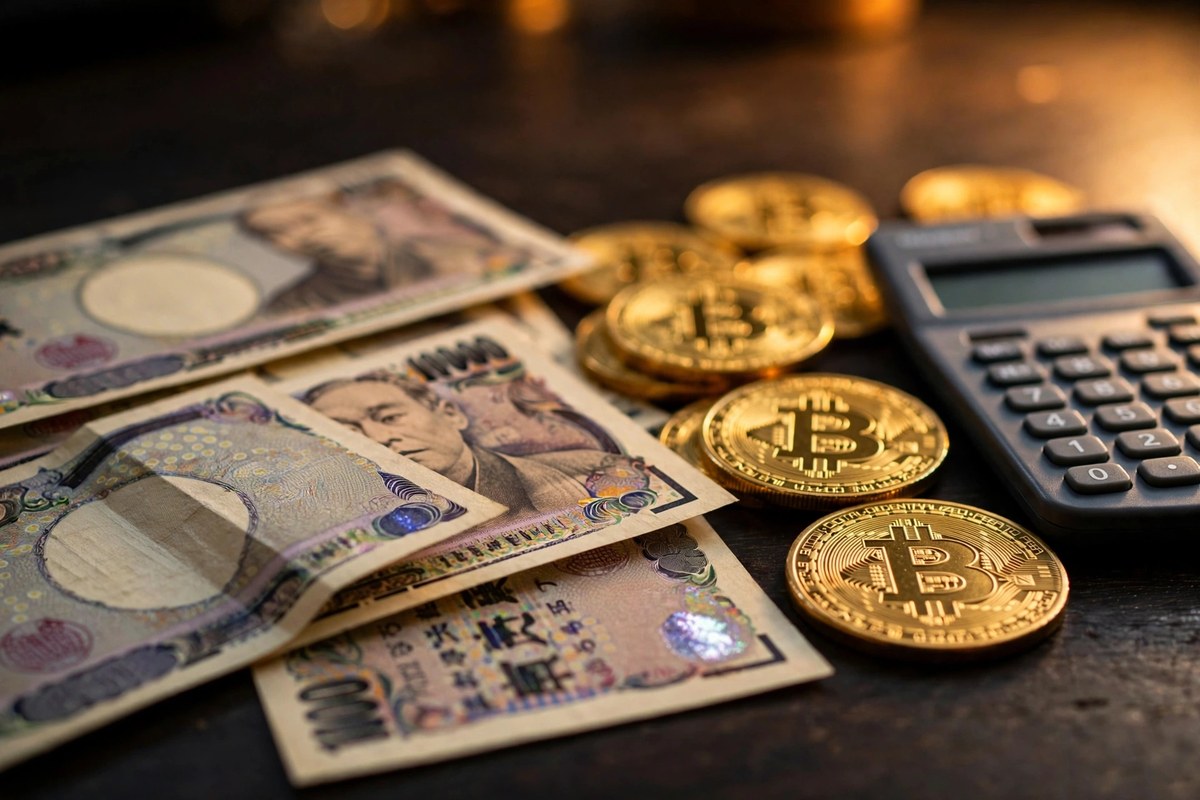
But the timing matters as much as the rate. The reclassification bill and the tax reform are separate tracks. The FIEA amendment is law; the tax change sits in the reform outline and needs its own legislative path. If separate taxation starts in January 2027, Japanese holders get relief a full year earlier than if it slips to 2028 — and the ETF timetable moves with it, because issuers want the tax question settled before they launch products aimed at retail buyers. Anyone planning around this should track the tax track separately from the ETF track, and should not assume the January 2027 date is locked in.
There is a second-order effect worth watching. A 20% flat rate plus loss carryforward makes Japan competitive with Singapore and Hong Kong for the first time — and Japan has something neither of them offers: a ¥1 trillion ETF pipeline sitting inside the world's third-largest stock market. If the tax cut lands on schedule, the capital that left Japan for friendlier jurisdictions has a reason to come home. For a global view of how tax rules are reshaping crypto in 2027, see our guide to crypto taxes in 2027, where the US 1099-DA reporting rules create a parallel deadline for American holders.
The ETF Race: SBI, Nomura and a ¥1 Trillion Market
Japan's ETF race started before the law passed. In January 2026, the Japan Crypto Asset Business Association submitted a full ETF framework proposal to the FSA, sketching a pilot programme that would let institutional-grade Bitcoin ETFs launch first, with retail access to follow. The same month, Nikkei reported that the FSA planned to allow crypto ETFs, that SBI Holdings and Nomura Holdings had expressed interest in offering them, and that asset managers estimated the market could reach ¥1 trillion — about $6.4 billion.
SBI and Nomura are not speculative names. They are Japan's two largest securities groups, and both already run crypto businesses: SBI operates an exchange and a digital-asset arm, while Nomura's Laser Digital unit trades crypto for institutions. Their interest tells you who the first products are for. The pilot design starts with qualified institutional investors, not retail — the same sequencing the US followed, where institutions came first and the retail flood followed. The Tokyo Stock Exchange must still approve each listing, and every product needs FSA sign-off under the amended investment-trust rules, which legal analyses expect to be in place around January 2028.
The first listings will almost certainly be Bitcoin. The FSA's reclassification covers 105 tokens, but issuers will start with the asset that has the deepest liquidity and the clearest disclosure record. Ethereum is the obvious second candidate, and XRP has a real claim too — it is one of the most actively traded coins in Japan, and it sits inside the FIEA's 105-token universe. The surprise contender is Shiba Inu: it earned a place on the Japan Virtual and Crypto Assets Exchange Association's Green List, the industry's whitelist for tokens that meet listing standards, and market sources have named it as a possible ETF candidate. That would have sounded absurd two years ago. In a market where the regulator has just reclassified 105 tokens as financial instruments, it is a serious conversation.

Context matters here. The global ETF story in late 2026 is one of outflows: US spot Bitcoin ETFs lost $95 million on November 10, their fourth straight day of selling, and more than $1.28 billion in the first week of November alone. Japan's opening arrives against that backdrop — not as a rescue for a hot market, but as a new buyer entering a cold one. That is arguably the better setup: the products are being built while prices are down, not while they are euphoric. For the global picture, read our future of crypto ETFs in 2027 analysis, which tracks the $94 billion at stake in Bitcoin funds worldwide.
Bull, Base and Bear: 3 Scenarios for Japan in 2027
Japan's crypto market splits into three scenarios, each labelled as a prediction and each turning on a different combination of the tax and ETF dates above.
| Scenario | What happens | Market outcome |
|---|---|---|
| Bull | 20% tax from January 2027; FSA ordinances land early in fiscal 2027; first ETF lists late 2027 | ¥1 trillion in ETF assets within the first year; Japan becomes Asia's second-largest crypto ETF market; BTC and ETH see sustained Japanese institutional inflows |
| Base | Tax reform lands in 2028; FSA rulemaking runs through fiscal 2027; first ETF lists in early 2028 | ¥300–500 billion in first-year ETF assets; steady institutional adoption; retail access expands through 2028 |
| Bear | Tax reform slips past 2028; FSA rulemaking drags; ETF listings delayed beyond 2028 | Under ¥100 billion in ETF assets; Japanese capital keeps flowing to overseas products; the 55% tax rate keeps retail on the sidelines |
The base case is the most likely on the published evidence: the law is enacted, the tax outline is public, SBI and Nomura are ready, and the only missing pieces are administrative. The bull case needs the tax track to move faster than the outline suggests. The bear case needs the FSA to stall — possible, but hard to square with a government that has now spent two years publicly committing to the opening. The number to watch is not a price. It is the FSA's first secondary ordinance: when it lands, the timetable stops being a forecast and starts being a schedule.
What Most People Get Wrong About Japan's Crypto Opening
Five misconceptions are already circulating. Each one costs someone money if believed.
- The "ETFs are already approved" mistake. They are not. The FIEA amendment makes ETFs possible; it does not approve any product. No crypto ETF can list until the FSA finishes its rulemaking and the Tokyo Stock Exchange approves the listing. Anyone selling "Japan ETF exposure" today is selling something else.
- The "tax cut is already law" mistake. The reclassification is law. The 20% tax rate is a proposal in the 2026 Tax Reform Outline. The two tracks share a timetable but not a statute, and the tax date could be January 2027 or 2028 depending on which analysis you read.
- The "all 105 tokens get ETFs" mistake. The FIEA covers 105 tokens for disclosure and trading rules. ETF issuers will start with Bitcoin, then Ethereum, then a small number of large, liquid names. Most of the 105 will never see an ETF.
- The "Japan will move Bitcoin's price" mistake. A ¥1 trillion market is large for Japan and small next to Bitcoin's roughly $1.5 trillion market value at current prices. Japan's opening is a structural story about access and legitimacy, not a price catalyst to trade on a single day.
- The "this only matters if you live in Japan" mistake. Japan is the test case for the world's third-largest economy treating crypto as a financial instrument. If its framework works, South Korea and other Asian regulators will borrow from it — and global issuers will treat the FIEA template as the model for the region.
What to Do Before It Happens: A Checklist
Japan's opening rewards preparation, not reaction.
- If you live in Japan, check your 2026 tax position now. The 55% rate still applies to 2026 gains. A three-year loss carryforward, if it arrives, changes how you harvest losses — talk to a tax adviser before year-end, not after the return is due.
- Watch the FSA's ordinance announcements, not the headlines. The first secondary ordinance is the real starting gun. It will settle staking, custody and derivatives treatment — the details that decide which products can actually launch.
- Compare Japanese exchanges before the rush. FSA-regulated platforms will be the on-ramps for the new regime. Our guide to buying Bitcoin in Japan compares five regulated exchanges on fees, yen deposits and the tax rules that apply today.
- Do not buy a token because it might get an ETF. The Green List and the 105-token universe are about eligibility, not selection. Bitcoin first, Ethereum second — everything else is speculation until an issuer files.
- If you invest globally, track Japan alongside the US. The US GENIUS Act takes effect on January 18, 2027 and the CLARITY Act dies with the 119th Congress on January 3, 2027. Japan's FIEA implementation lands in the same window. Read our crypto regulation in 2027 guide for the full calendar of deadlines that will shape the market next year.
- Keep position sizes sane while Bitcoin sits 41% below its peak. Japan's opening is a 2027–2028 story. The market in front of you is still a fear-driven one, with ETF outflows and a 90% chance of a Federal Reserve rate hike on December 9. Long-term structure and short-term price are different trades.
FAQs
When will Japan's first Bitcoin ETF launch?
The earliest realistic window is late 2027, with early 2028 more likely. The FIEA reclassification was enacted in July 2026 and takes effect in fiscal 2027, but crypto ETFs still need FSA secondary rulemaking and Tokyo Stock Exchange listing approval. Legal analyses expect ETFs to be formally permitted around January 2028. Nothing is guaranteed — the FSA has not set a date for its rulemaking.
What is the new crypto tax rate in Japan?
The 2026 Tax Reform Outline proposes a flat 20% rate on crypto gains, replacing the current progressive miscellaneous-income rate of up to 55%, plus a three-year loss carryforward. The proposal is not yet law, and published analyses differ on whether it takes effect in January 2027 or 2028.
Does the 20% rate apply to all crypto?
The outline proposes a uniform 20% rate aligned with stock taxation. The details — which transactions qualify, how the separate taxation interacts with the FIEA's 105-token list — will be settled in the tax legislation and FSA ordinances. Until then, the current 55% top rate still applies.
Can foreigners buy Japanese crypto ETFs?
Foreign investors will generally need access through a Japanese broker, and the first products are expected to target qualified institutional investors before retail. Overseas investors should also note that foreign crypto ETFs cannot currently be offered or distributed in Japan under the FSA's supervisory position — the opening runs in one direction first.
Which coins will be in Japan's first ETFs?
Bitcoin is the near-certain first listing, with Ethereum the likely second. XRP is a plausible candidate given its trading volumes in Japan. Shiba Inu has been named as a contender after earning a place on the JVCEA Green List, but no issuer has filed for it. Most of the 105 FIEA-covered tokens will never get an ETF.
Is crypto legal in Japan?
Yes. Japan was one of the first countries to regulate crypto, and the 2026 FIEA amendment strengthens that framework by treating crypto as a financial instrument. Exchanges are licensed by the FSA, and the new rules add disclosure, custody and insider-trading standards.
Conclusion
Japan's crypto opening is the rare story where the law is already passed, the dates are already published, and the only open question is speed. A 55% tax rate falls toward 20%. A market that legally could not have an ETF will have one — late 2027 at the earliest, early 2028 on the balance of the evidence. SBI and Nomura are ready, the Tokyo Stock Exchange is the venue, and the prize is a ¥1 trillion market in the world's third-largest economy.
The mistake would be to treat this as a trade for this week. Bitcoin is down 41% from its peak and US ETFs are seeing outflows. Japan does not change any of that tomorrow. What it changes is the structure of the market that emerges on the other side: a major economy where crypto is a regulated financial instrument, taxed like a stock, and available through an ETF on the national exchange. That is a 2027 story — and the five dates in this article are the ones that will tell you, quarter by quarter, whether it is arriving on schedule. For the wider outlook, see our future of crypto in 2028 predictions, where Japan's ETFs sit alongside the halving and the CLARITY verdict as one of the seven events that decide whether Bitcoin ends the decade at $100,000 or $60,000.