Future of Crypto in Africa in 2027: $101 Billion, 50 Million Users and Stablecoins That Beat Bitcoin — 5 Numbers That Decide What Happens Next
Sub-Saharan Africa's crypto economy hit $101 billion — the fastest growth on Earth — while stablecoin payments grew 6x and Bitcoin's P2P volume fell 60%. Here are the 5 numbers and 5 countries that decide what happens next in 2027.

Sub-Saharan Africa's crypto economy just hit $101 billion — and it is now the fastest-growing crypto region on the planet. While Bitcoin lost 41% from its peak and global markets obsessed over the Federal Reserve's December rate decision, African users quietly flipped the script: stablecoin payments received through peer-to-peer channels grew sixfold in four years, from $2.3 billion to $14.6 billion, while Bitcoin's peer-to-peer volume collapsed 60% over the same period. This is not a speculation story. It is a payments story — and 2027 is the year it either goes mainstream or hits a wall of new rules. Here are the five numbers and five countries that decide what happens next.
Chainalysis published the verdict on October 29, 2026: between July 1, 2025 and June 30, 2026, Sub-Saharan Africa's crypto economy grew 13.4% to $101 billion, the fastest growth rate of any region in the world — even as the global market fell into a bear market. The growth was not driven by traders chasing the next coin. It was driven by people paying for things, sending money home, and escaping currencies that lose value every year. In this article we break down the five numbers that decide Africa's crypto future in 2027, rank the five countries that matter most, and lay out the three risks — and the five moves — every holder should know before the new year.
The 5 Numbers That Decide Africa's Crypto Future in 2027
If you only remember five figures from this article, make them these. Each one is sourced, each one points in a different direction, and together they explain why Africa — not Wall Street — may be where crypto finally becomes everyday money.
| # | The Number | What It Means | Why It Decides 2027 |
|---|---|---|---|
| 1 | $101 billion | Sub-Saharan Africa's crypto economy, July 2025–June 2026 | Up 13.4% year over year — the fastest growth of any region on Earth, in a bear market |
| 2 | $39.3 billion | South Africa's crypto economy | Up 52% in one year; South Africa is now the continent's biggest crypto market |
| 3 | $14.6 billion | Stablecoins received via peer-to-peer channels in 2026 | Up more than 6x from $2.3 billion in 2022 — stablecoins, not Bitcoin, now move Africa's money |
| 4 | 32.3% | Share of regional value received by personal wallets | The highest self-custody share anywhere in the world — Africans hold their own keys |
| 5 | $492 million | Stablecoin remittance value in the region | More than doubled from $235 million a year earlier — remittances are the killer app |
The pattern is unmistakable. Africa's crypto economy is growing because crypto solves real problems there: remittances that cost 6.4% on average through traditional channels, according to the OECD's Africa Capital Markets Report 2026, currencies that depreciate against the dollar, and millions of people with a smartphone but no bank account. More than 50 million Africans now use digital assets, and stablecoins account for 43% of Sub-Saharan crypto volume, with 79% of the region's crypto users owning stablecoins. That is the backdrop for everything that follows.
South Africa: The $39.3 Billion Hub That Grew 52% in a Bear Market
South Africa is the story of 2026. Its crypto economy reached $39.3 billion in the Chainalysis reporting period, growing 52% year over year — while the global market fell. It is now the largest crypto economy in Sub-Saharan Africa, and together with Nigeria it accounts for more than three-quarters of all regional activity.
What makes South Africa different is institutions. It became the first major African country to regulate crypto properly when the Financial Sector Conduct Authority (FSCA) declared crypto assets a financial product and made CASP licences mandatory in 2023. That head start is now paying off: cross-border peer-to-peer stablecoin flows and institutional service flows both grew, and South Africa is reviewing a draft crypto asset manual for cross-border activity that could make it the continent's settlement hub in 2027.
The contrast with the rest of the world is stark. Bitcoin trades around $73,700 — 41% below its $126,080 all-time high — and U.S. spot Bitcoin ETFs have now seen four straight days of outflows totalling about $1.14 billion. South Africa grew anyway, because its crypto economy is built on payments and cross-border flows, not on ETF speculation. If you want to understand how crypto survives a bear market, watch Johannesburg, not Wall Street. For readers in the region, our guide to buying Bitcoin in South Africa covers the five main exchanges, fees, and the R40,000 tax rule.
Nigeria: $38.1 Billion, 25.9 Million Users — and a June 30, 2027 Deadline
Nigeria is Africa's undisputed crypto powerhouse and its biggest paradox. The country recorded $38.1 billion in crypto activity — nearly as much as South Africa — but that was a 3% decline year over year, as a 45% drop in decentralized exchange volume and a 17% fall in cross-border peer-to-peer flows offset growth elsewhere. Yet Nigeria still ranks third globally in Chainalysis's grassroots adoption index, and its 25.9 million digital asset users make it the continent's liquidity engine.
Here is the twist most coverage misses: Nigeria is the one African market where Bitcoin still dominates. Bitcoin accounted for 92% of Nigeria's domestic wallet transfers below $10,000, compared with just 2% in Kenya. Nigerians use Bitcoin as a store of value against naira depreciation, while Kenyans use stablecoins for payments. Same continent, opposite playbooks — and both are rational responses to local conditions.
What decides Nigeria's 2027 is regulation, and the dates are already set. In July 2026 the Nigerian president signed an executive order creating a cross-departmental committee to coordinate virtual asset regulation, with stablecoins explicitly in scope and a controlled sandbox for new products. On January 16, 2026 the Securities and Exchange Commission issued Circular 26-1, dramatically raising minimum capital requirements for Virtual Asset Service Providers — and the compliance deadline is June 30, 2027. The Central Bank has also set a minimum fine of ₦100 million for operators running regulated virtual asset activities without authorization, on top of the ₦15 billion stablecoin rule that already shapes the market.
That June 30 deadline is the single most important date in African crypto next year. Well-capitalized domestic exchanges — which already drove growth in the last period, with Nigerians sending $25.2 billion to crypto services — should survive and consolidate. Smaller platforms may shut down or merge. For users, the practical meaning is simple: check that your exchange is licensed and capitalized before June 2027, because the grace period ends then. Our guide to buying Bitcoin in Nigeria compares the five main exchanges and explains the CBN's ₦15 billion stablecoin rule.
Kenya: $5.7 Billion Where Bitcoin Is Only 2% of Transactions
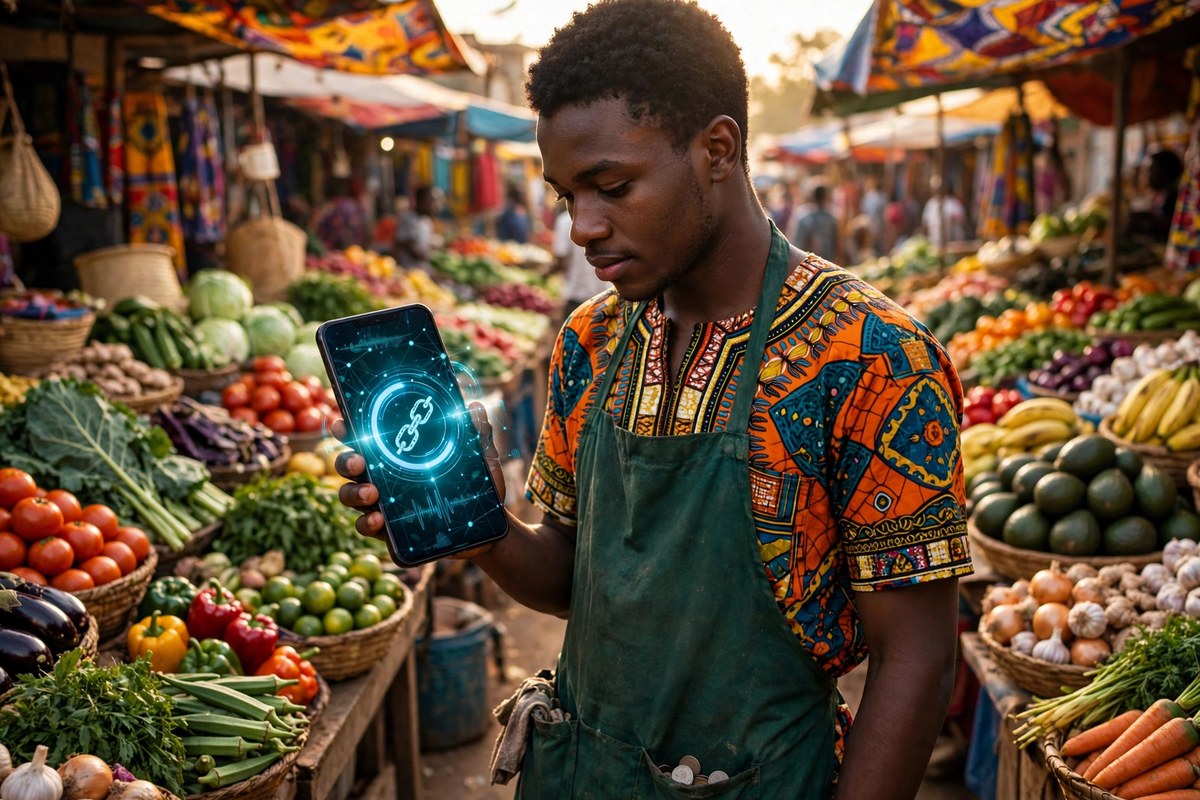
Kenya is the purest example of the stablecoin future. Its crypto market recorded KSh740 billion — about $5.7 billion — in the year to June 2026, up 38% and enough to make it Africa's third-largest crypto economy, ahead of Ethiopia. And here is the number that stops people: Bitcoin accounted for only 2% of Kenyan crypto transactions.
The reason is M-Pesa. Kenya's mobile money platform has more than 30 million users, and the country's fintech ecosystem has fused mobile money with crypto rails more deeply than anywhere else on Earth. Stablecoins settle cross-border payments, pay suppliers, and move remittances — while Bitcoin, volatile and slow for small payments, barely registers. Firms such as PawaPay and Kotani Pay are now building stablecoin payment infrastructure directly on top of these mobile money networks.
Kenya also passed new stablecoin rules last year, alongside Ghana, as regulators across the region moved from banning crypto to licensing it. The question for 2027 is whether Kenya's framework turns its mobile-money advantage into a regional payments hub — or whether slow rule-making lets South Africa take the institutional crown while Kenya keeps the retail one. Either way, Kenya proves the thesis: where payments work, stablecoins win. Our guide to buying Bitcoin in Kenya covers the five main exchanges, M-Pesa payments, and the VASP framework.
Ghana and Senegal: The Fastest Growers Nobody Is Watching
The headline numbers belong to South Africa and Nigeria, but the growth rates belong to the smaller markets. Ghana's crypto economy grew 80% to $5.1 billion, with both centralized and decentralized exchange trading rising. Senegal's transaction volume surged 215% to $2.3 billion. Ethiopia, by contrast, fell 8% to $3.7 billion — a reminder that growth is not automatic.
Ghana is the one to watch in 2027. The Bank of Ghana is actively evaluating cedi-backed stablecoins to settle off-hours commerce, and the country passed new stablecoin rules last year. A local-currency stablecoin — a digital cedi that moves 24/7 — would be a first for the region and a template for every other African central bank watching from the sidelines. Absa Corporate and Investment Banking has noted rising interest in local-currency fiat tokens across South Africa, Kenya, and Tanzania too, so Ghana's experiment will not stay local for long.
Senegal's 215% surge, from a small base, shows how fast a market can ignite when mobile money and stablecoins meet a young, connected population. Francophone Africa — including Senegal, Côte d'Ivoire, and Morocco — is the next frontier, and the infrastructure built in 2026 will decide who captures it in 2027. If you are new to the asset class behind all of this, start with our guide to what a stablecoin is — how USDT and USDC work, and whether they are safe.
What Most People Get Wrong About Crypto in Africa
The biggest misconception is that Africa's crypto boom is speculation. The data says the opposite. Cross-border peer-to-peer transfers account for 70.9% of the value received by personal wallets in Sub-Saharan Africa. Stablecoin remittances doubled in a year. And personal wallets — self-custody, not exchanges — captured 32.3% of all value received, the highest share in the world. People are not gambling on coins. They are moving money, and they are holding their own keys while they do it.
The second misconception is that Bitcoin is the story. It is not — not in Africa, not anymore. Between 2022 and 2026, stablecoins received through peer-to-peer channels grew from $2.3 billion to $14.6 billion, while Bitcoin received through the same channels fell 60%, from $36 billion to $14.6 billion. The two lines crossed. Stablecoins now do the job Bitcoin was supposed to do: fast, cheap, dollar-denominated payments. Bitcoin still matters — above all in Nigeria, where it is a hedge against naira depreciation — but the payments crown has changed hands.
The third misconception is that regulation will kill the market. The opposite is happening. South Africa licensed exchanges in 2023 and grew 52%. Nigeria is building a coordinated framework and a sandbox. Ghana and Kenya wrote stablecoin rules last year. The OECD's Africa Capital Markets Report 2026 explicitly says stablecoins can support trade flows and cut remittance costs — while warning that the benefits depend on each country's regulatory framework. Regulation is not the threat to African crypto in 2027. Unclear regulation is — and that fog is lifting, country by country.
The 3 Risks That Could Break the Story in 2027
None of this is guaranteed. Three risks could break the growth story, and all three have dates attached.
1. Nigeria's June 30, 2027 VASP deadline could shrink the market before it grows it. Higher capital requirements are good for trust and bad for small exchanges. If several domestic platforms fail to meet the new minimums, Nigerian users could lose access to the local services that drove growth in the last period — and the 17% fall in cross-border peer-to-peer flows could accelerate. Watch which exchanges publish their capital position in the first quarter of 2027.
2. Global stablecoin rules arrive in January 2027 — and Africa uses those stablecoins. The U.S. OCC finalized its GENIUS Act stablecoin issuer standards on October 21, and the rule takes effect on January 18, 2027. The EU's ESMA has given platforms until January 8, 2027 to drop non-MiCA stablecoins such as USDT. Africans hold USDT and USDC, not the regulatory frameworks — but if the world's two biggest markets force changes to how those coins are issued, redeemed, or listed, African users feel it within weeks. The Bitcoin beginner's guide is worth revisiting here: the asset you hold is only as portable as the rails that move it.
3. The macro backdrop is hostile. Bitcoin sits near $73,700 after hot U.S. inflation data pushed the odds of a Federal Reserve rate hike on December 9 to 90%, according to CME FedWatch, and U.S. spot Bitcoin ETFs have bled about $1.14 billion in four sessions. If the Fed hikes in December and again in early 2027, as Goldman Sachs now expects, risk assets stay under pressure and African crypto volumes — which grew in a bear market — will be tested in a deeper one. The region's growth is real, but it is not immune to global liquidity.
What to Do Before 2027: A 5-Step Checklist
Africa's crypto future will be decided by regulators, banks, and builders — but holders can prepare now. Here is the checklist:
- Check your exchange's licence before June 30, 2027. In Nigeria, confirm your platform meets the SEC's new VASP capital requirements. In South Africa, confirm FSCA CASP licensing. Unlicensed platforms are the first to disappear when deadlines hit.
- Move long-term holdings to self-custody. Africans already lead the world here — 32.3% of regional value sits in personal wallets. Follow the crowd: a hardware wallet beats an exchange balance, and our beginner's wallet guide compares hot and cold options.
- Know which stablecoin you actually hold. USDT and USDC face different rules in the U.S. and EU from January 2027. Understand the issuer, the reserves, and the redemption terms — and keep a backup rail, not a single coin.
- Watch Ghana's cedi stablecoin. If the Bank of Ghana launches a local-currency stablecoin, it becomes the template for the region. Early users of local-currency rails get the cheapest remittance costs; late users pay the old 6.4%.
- Separate payments from speculation. Use stablecoins for money you need to move and spend. Treat Bitcoin and altcoins as long-term positions, not payment tools — the data says the market already made that choice for you.
Frequently Asked Questions
How big is Africa's crypto market in 2027?
Sub-Saharan Africa's crypto economy reached $101 billion between July 2025 and June 2026, growing 13.4% year over year — the fastest growth of any region globally, according to Chainalysis's October 29, 2026 report. South Africa leads at $39.3 billion, followed by Nigeria at $38.1 billion and Kenya at $5.7 billion.
Why are stablecoins bigger than Bitcoin in Africa?
Because Africans mostly use crypto for payments, remittances, and hedging currency depreciation — jobs that need a stable dollar value. Stablecoins received through peer-to-peer channels grew sixfold from $2.3 billion in 2022 to $14.6 billion in 2026, while Bitcoin's peer-to-peer volume fell 60% over the same period. In Kenya, Bitcoin is only 2% of crypto transactions.
What is Nigeria's June 30, 2027 crypto deadline?
Nigeria's SEC issued Circular 26-1 on January 16, 2026, sharply raising minimum capital requirements for Virtual Asset Service Providers. The compliance deadline is June 30, 2027. Exchanges that cannot meet the new capital levels may have to shut down or merge, so users should verify their platform's status well before the deadline.
Is crypto legal in South Africa, Nigeria, and Kenya?
Yes, with licensing. South Africa has required FSCA CASP licences since 2023. Nigeria has an SEC licensing framework, a July 2026 executive order coordinating regulation, and a VASP sandbox. Kenya is developing its framework and passed new stablecoin rules last year. Rules differ by country, so always check the local regulator before using a platform.
What are the risks of using stablecoins in Africa?
Three main risks: regulatory change (the U.S. GENIUS rules take effect January 18, 2027 and the EU is forcing platforms to drop non-MiCA stablecoins by January 8, 2027), issuer risk (not all stablecoins are equally reserved or redeemable), and platform risk (unlicensed exchanges can freeze or lose funds). Self-custody and licensed platforms reduce all three.
Will Africa's crypto market keep growing in 2027?
The drivers are structural — expensive remittances, currency depreciation, and 50 million-plus users who already treat crypto as infrastructure — so the base case is continued growth. The risks are Nigeria's VASP deadline, global stablecoin rule changes in January 2027, and a hawkish Federal Reserve. If regulation lands cleanly, 2027 could be the year African crypto goes from fastest-growing to mainstream.
Conclusion: The Fastest-Growing Crypto Region Is Not Waiting for Permission
Sub-Saharan Africa grew its crypto economy 13.4% to $101 billion in a year when Bitcoin fell 41% from its peak and U.S. ETFs bled more than a billion dollars in a week. It did so without Wall Street's permission, without an ETF boom, and without a bull market — because crypto in Africa is infrastructure, not a trade. Stablecoins move the money, personal wallets hold it, and regulators from Pretoria to Abuja to Nairobi are writing the rules that will decide whether 2027 is the year this goes mainstream.
The five numbers tell the story: $101 billion, $39.3 billion, $14.6 billion, 32.3%, and $492 million. The five countries — South Africa, Nigeria, Kenya, Ghana, and Senegal — will write the next chapter. And the dates are already on the calendar: January 8 and January 18, 2027 for global stablecoin rules, and June 30, 2027 for Nigeria's great licensing reckoning. Africa's crypto future is not a prediction. It is a schedule. The only question is whether you are ready for it.
Sources: Chainalysis, "South Africa Leads Sub-Saharan Africa's Crypto Growth" (October 29, 2026); OECD Africa Capital Markets Report 2026; CoinDesk market coverage, November 11, 2026; CryptAfrica Kenya market report, November 4, 2026. This article is for information only and is not financial advice.