Future of Crypto in Latin America in 2027: $593.8 Billion Grew 9.8% While Bitcoin Crashed 41% — 5 Countries Ranked for What Happens Next
Latin America's crypto economy grew 9.8% to $593.8 billion while Bitcoin fell 41% from its peak — Brazil now ranks #1 in the world for grassroots adoption, and stablecoins overtook Bitcoin. Here are the 5 countries ranked for what happens next in 2027.
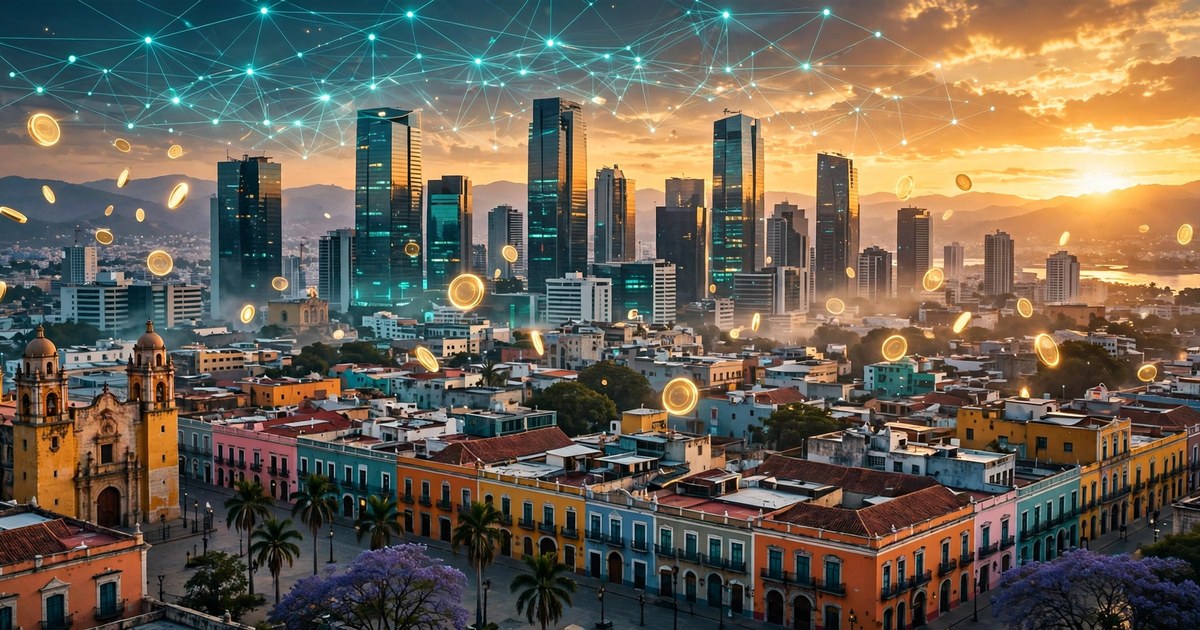
While Bitcoin crashed 41% from its all-time high and the global market lost half its value, Latin America did something almost nobody noticed: its crypto economy grew 9.8% to $593.8 billion. Brazil now ranks first in the world for grassroots adoption. Stablecoins have overtaken Bitcoin. And Venezuela's crypto economy more than doubled in a single year. This is not a story about speculation. It is about people using crypto because their money, their banks and their borders gave them no better option — and in 2027, that story gets much bigger. Here are the five countries ranked for what happens next.
According to Chainalysis' 2026 Geography of Cryptocurrency report, the region is now the world's sixth-largest crypto economy, and its growth is broadening: Mexico grew 25.5%, Argentina 15.3%, Colombia 13.8% and Venezuela 107.2%, more than enough to offset a small 1.6% contraction in Brazil, the region's giant.
The reason this matters for 2027 is simple. In most of the world, crypto is an investment. In Latin America, crypto is infrastructure — a way to hold dollars, send money home and pay a supplier across a border. That kind of demand does not disappear when prices fall.
The Number That Changes the Story: $593.8 Billion
Chainalysis measured $593.8 billion of crypto activity across Latin America between July 2025 and June 30, 2026 — service inflows, domestic peer-to-peer transfers and cross-border transfers combined. The firm calls it a lower bound. Growth of 9.8% in a year when Bitcoin fell from a $126,080 all-time high to around $73,700 is not a rounding error. It is a structural signal.
Compare that with the global picture: the global crypto economy contracted just 1.6% over the same twelve months even as market capitalisation collapsed by about half, according to Chainalysis data reported by The Block. Prices fell, but usage held. Latin America went further: usage actually grew. Monthly active users grew 18% in 2025 — three times faster than in the United States — and on-chain volume surged 60% to more than $730 billion, roughly 10% of all global activity.
The second number is the stablecoin share: of the $730 billion received in 2025, $324 billion moved through stablecoins — up 89% year over year. By June 2026, stablecoins were 32.1% of cross-border crypto value, 22.1% of domestic peer-to-peer activity and 17.6% of wallet balances. Bitso's regional market report shows dollar-backed stablecoins were 40% of all crypto purchases in 2025, overtaking Bitcoin (18%) for the first time. In Latin America, crypto's killer app is not trading. It is the dollar.
The five countries below are ranked by the size of their crypto economy, the speed of their growth, and how much their 2027 trajectory matters.
5 Latin American Crypto Markets Ranked for 2027
| Rank | Country | Crypto economy (12m to Jun 2026) | Growth | What decides 2027 |
|---|---|---|---|---|
| 1 | Brazil | $252.5 billion | -1.6% | VASP licensing and the Drex CBDC |
| 2 | Argentina | $88.5 billion | +15.3% | Stablecoin savings after currency controls eased |
| 3 | Mexico | $77.6 billion | +25.5% | The $1.8 billion-a-month remittance corridor |
| 4 | Venezuela | $39.1 billion | +107.2% | Survival economics and political upheaval |
| 5 | Colombia | $29.1 billion | +13.8% | Stablecoin cards and cross-border trade |
Together, these five countries account for more than 80% of the region's crypto economy. Here is what is happening inside each one.
1. Brazil: The $252.5 Billion Giant That Now Sets the Rules
Brazil is Latin America's crypto economy: $252.5 billion, 43.7% of all regional activity — nearly three times Argentina, the next-largest market. In Chainalysis' redesigned 2026 Global Crypto Adoption Index, Brazil ranks first in the world for grassroots adoption, ahead of the United States — without leading any single category.
The most striking Brazilian number is what the market is made of. Stablecoin activity jumped 495%, far outpacing the 89.4% gain in the rest of the region. More than 90% of all crypto flows in Brazil are now stablecoin-related, and 92% of the volume declared to Brazil's tax authority in the first half of 2026 involved stablecoins. This is not retail speculation. It is businesses using stablecoins for treasury, liquidity and cross-border payments.
That business use is why Brazil's 2027 story is a regulatory one. In February 2026, the central bank formally brought virtual asset service providers under its perimeter, with existing firms required to apply for authorisation by October 30, 2026. The Virtual Assets Law already covers asset segregation, VASP licensing, anti-money-laundering rules and capital standards. Meanwhile the central bank's Drex digital currency pilot continues, and Nubank — the world's largest neobank, with more than 100 million accounts — is the region's most powerful stablecoin distribution channel.
One caveat: domestic payments in Brazil are already excellent — Pix, the central bank's instant payment system, reaches 91% of the population and settles in seconds — so stablecoins play an international role there, moving money in and out rather than around. For 2027, the question is whether the new licensing regime brings institutional capital in at scale. Watch the first licensed VASP announcements and any Drex milestones: both will set the tone for the whole region.
2. Argentina: 1 in 5 People Already Use Crypto
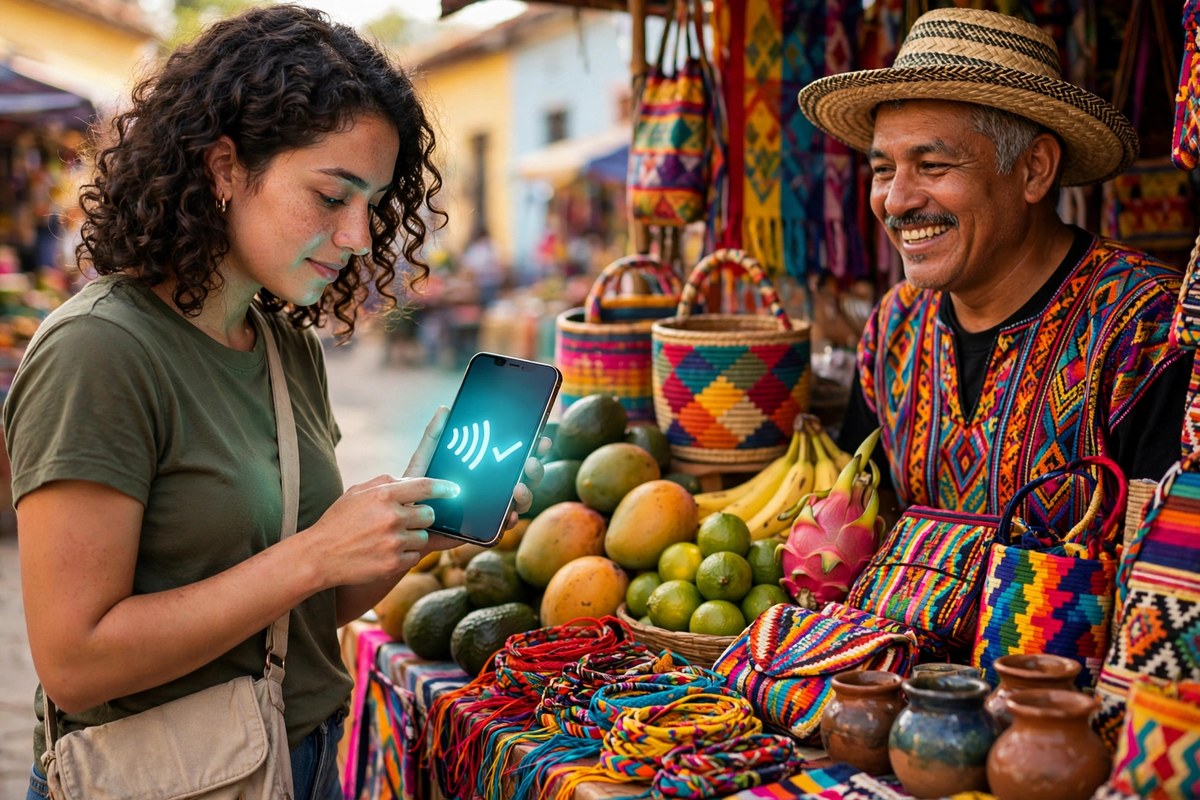
If Brazil is the region's engine, Argentina is its proof of concept. The crypto economy reached $88.5 billion, up 15.3% — and adoption runs deeper into everyday life than anywhere else in the region. A Visa paper from March 2026 found one in five Argentines now uses cryptocurrency, with nearly two-thirds of those transactions in stablecoins. Monthly active user penetration hit 12%, and Argentines downloaded 5.4 million crypto apps in 2025.
The driver is simple: Argentines need dollars, and their own currency has repeatedly failed them. Argentina leads the world in stablecoin adoption per capita, with 15% to 20% of the working-age population having used stablecoins in the past year and monthly volumes above $1.5 billion. Even after currency controls eased in April 2025, stablecoins were still 71% of crypto purchases on Bitso. In Argentina, the dollar is not an investment thesis. It is a savings account.
What happens next depends on whether that behaviour survives normalisation. If inflation stays contained, some urgency fades — but the habits are entrenched. Lemon Cash, Belo, Buenbit and Ripio have built real businesses on stablecoin savings, and Visa and Bridge launched stablecoin-linked cards in Argentina in April 2025. The 2027 test for Argentina is whether crypto graduates from a defensive savings tool into an everyday payments layer — salaries, bills, merchant acceptance — or whether it stays a dollar vault with an app attached.
3. Mexico: The $1.8 Billion-a-Month Corridor
Mexico is the third-largest crypto economy at $77.6 billion, growing faster than either country ahead of it — up 25.5%. Its strongest asset is the corridor no other country in the region can match: the United States–Mexico remittance lane, one of the largest in the world. Mexico ranks fifth in the world for cross-border crypto flows and eleventh overall in Chainalysis' grassroots adoption index.
Monthly stablecoin value on corridors touching Mexico reached $1.8 billion in June 2026 — roughly four times its early-2024 level — and service inflows hit $8.4 billion in the second quarter of 2026 alone. Bitso Business reported institutional stablecoin payment volumes up 81% year over year in the first half of 2026, with banks accounting for more than 60% of new institutional customers.
For 2027, Mexico is the country to watch if you care about stablecoins becoming plumbing rather than a product: a stablecoin transfer settles in seconds where a traditional wire takes days and costs far more. If Mexican banks keep onboarding — and Bitso's numbers suggest they are — the corridor becomes the template for the region. The risk is regulatory: any tightening by Mexico's CNBV around stablecoin settlement would hit this corridor first.
4. Venezuela: The Fastest-Growing Crypto Economy on Earth
Venezuela's crypto economy surged 107.2% to $39.1 billion — the fastest growth in the region. Smaller neighbours diverged sharply: Honduras rose 361.6% and Nicaragua 186.4%. But Venezuela's story is not a growth story in any normal sense. It is a survival story.
In Venezuela, crypto is what people use when the formal economy stops working. Chainalysis data showed outflows surging 891.7% in a single quarter after the arrest of Nicolás Maduro, as reported by Crowdfund Insider — a reminder that in a country where the currency and the banking system have both collapsed, crypto is not a portfolio allocation. It is an exit. Stablecoins in particular have become the way Venezuelans hold value, receive money from relatives abroad and transact outside a broken financial system.
The 2027 outlook is the most uncertain in the region. If the political situation stabilises, infrastructure built for survival could become the foundation of a rebuilt payments system. If not, crypto remains a lifeline — and volume will keep spiking on every headline. Either way, Venezuela proves the thesis of this article: where the local currency fails, crypto adoption needs no marketing. It needs only a phone.
5. Colombia: The Quiet Climber
Colombia rounds out the top five at $29.1 billion, up 13.8%. It rarely makes headlines, and that is the point: steady growth from cross-border trade, remittances and a young, mobile-first population. The country was in the first wave of Visa and Bridge's stablecoin card launch in April 2025, and stablecoin inflows have been climbing alongside Mexico's.
Colombia's 2027 upside is as a second corridor, with large diaspora communities sending money home and a growing fintech scene in Bogotá and Medellín. If Brazil writes the region's rules and Mexico builds its corridors, Colombia could quietly double by doing both at smaller scale. The number to watch is stablecoin card adoption: if the Visa-Bridge cards gain traction, Colombia becomes the test case for crypto as an everyday spending rail.
Why Stablecoins Won Latin America — and Bitcoin Didn't
The most important fact in this article sounds backwards: in Latin America, stablecoins beat Bitcoin. Bitso's data shows dollar-backed stablecoins were 40% of all crypto purchases in 2025, against 18% for Bitcoin. In Argentina the split is starker — over 70% — and in Brazil over 90% of crypto flows are stablecoin-related.
The explanation is practical, not ideological. Bitcoin is volatile — down 41% from its peak in a matter of months, trading around $73,700 as of November 11, with the Fear & Greed Index at 29, deep in "Fear" territory. A stablecoin is a dollar that moves at the speed of the internet. For a freelancer in Buenos Aires or a mother in Caracas receiving money from abroad, volatility is not a feature. It is a tax. Stablecoins remove it.
That is why the global stablecoin story now runs through Latin America. The region processed $324 billion in stablecoin transactions in 2025, up 89% year over year. Infrastructure is following demand: Visa's stablecoin cards, Bitso's institutional volumes up 81%, and Deutsche Börse's Crypto Finance Group expanding into the region in February 2026.
For the mechanics, our guide to what a stablecoin is and how USDT and USDC work explains the two biggest dollar tokens, and our Future of Stablecoins in 2027 piece maps the global numbers behind the trend.

What Most People Get Wrong About Crypto in Latin America
The region's crypto boom is widely misunderstood outside it. Here are two myths that keep getting repeated — and what the data actually says.
Myth 1: Adoption falls when prices fall. Wrong. The region's crypto economy grew 9.8% while Bitcoin fell 41% and global market capitalisation halved. Usage here is driven by necessity, not price charts.
Myth 2: Regulation will kill it. Wrong — so far, the opposite. Brazil's February 2026 VASP licensing regime is drawing institutional players in, not pushing them out. Clear rules are a magnet for the banks the region needs.
4 Things That Decide Latin America's Crypto Future in 2027
The ranking above is a snapshot. What happens next depends on four decisions and deadlines — some dated, some open-ended, all worth watching.
1. Brazil's licensing regime beds in. With VASP authorisation required since February 2026 and firms having applied by October 30, 2026, 2027 is the year the market learns whether the rules bring institutional money in.
2. The US GENIUS Act takes effect on January 18, 2027. America's stablecoin rules matter far beyond its borders, because the dollar tokens Latin America runs on — USDT and USDC — are issued under US law. How the Act treats offshore issuance and reserves will shape what is available in São Paulo and Buenos Aires. Our Future of Crypto in Europe in 2027 piece maps how MiCA is playing out in parallel.
3. The Fed's December 9 decision — and January 27, 2027. Markets price a roughly 90% chance of a quarter-point hike at the Fed's December 8–9 meeting, with the next meeting on January 27, 2027. For Latin America, the rate path matters twice: it moves the dollar the region saves in, and the Bitcoin it trades around.
4. Whether stablecoin cards go mainstream. Visa and Bridge launched stablecoin-linked cards in six Latin American countries in April 2025. If 2027 is the year those cards reach ordinary shoppers, crypto stops being a savings tool and becomes a payments system.
The Risks Nobody Should Ignore
A $593.8 billion market growing 9.8% in a bear market is a strong story, but not a safe one. Four risks deserve a clear-eyed look.
First, concentration. Five countries are more than 80% of the region's activity, and Brazil alone is 43.7%. A regulatory shock in Brasília would hit the whole region's numbers.
Second, currency risk cuts both ways. Stablecoins protect Latin Americans from local currency collapse, but they tie the region's savings to US monetary policy. If US rates stay high into 2027, dollar savings pay more while risk assets stay under pressure.
Third, the infrastructure is still young. The October 2026 Binance theft — about $6.4 billion according to Chainalysis, nearly twice all crypto hacks in 2025 combined — is a reminder that custody and exchange security remain the weak point. Millions of first-time users hold their savings in stablecoins, so a single big exchange failure would do real damage. Our guide to buying Bitcoin in 2027 covers the platform checks that matter before you trust an exchange with your money.
Fourth, politics. Venezuela's 891.7% quarterly outflow surge after a single political event shows how fast crypto flows respond to upheaval — a feature for people who need an exit, and volatility for anyone treating the region as a stable growth market.
FAQs: Crypto in Latin America in 2027
Which Latin American country uses crypto the most?
Brazil, by value: $252.5 billion of the region's $593.8 billion, and first in the world in Chainalysis' 2026 grassroots adoption index. By depth of use, Argentina leads — one in five Argentines uses crypto.
Why are stablecoins so big in Latin America?
Because they solve the region's oldest problem: access to stable money. Inflation, currency controls and weak banking made dollar savings hard to get and harder to keep. Stablecoins are dollars that move instantly on a phone.
Is crypto legal in Brazil, Argentina and Mexico?
Yes, in all three, with rules tightening. Brazil brought virtual asset service providers under central bank regulation in February 2026. Argentina eased currency controls in April 2025. Mexico regulates crypto through its CNBV framework, with stablecoin settlement expanding through licensed providers like Bitso.
How big is Latin America's crypto market compared with the rest of the world?
At $593.8 billion over twelve months, Latin America is the world's sixth-largest crypto economy. It grew 9.8% while the global crypto economy shrank 1.6%. The market is forecast to reach $442.6 billion by 2033, growing at 10.93% a year, according to IMARC Group.
Will Bitcoin's price affect Latin American adoption?
Less than you would think. Bitcoin trades around $73,700, 41% below its $126,080 all-time high, yet regional activity grew 9.8%. Adoption is driven by stablecoin savings, remittances and payments — uses that do not depend on Bitcoin's price.
Conclusion: The Region That Grew While Crypto Crashed
Latin America is the counter-argument to everything the 2026 bear market supposedly proved. Prices fell 50%, ETF outflows ran for four straight days, the Fear & Greed Index sat at 29 — and the region's crypto economy still grew 9.8% to $593.8 billion. Brazil became the world's top country for grassroots adoption, stablecoins overtook Bitcoin, and Venezuela's crypto economy doubled. None of that happened because of a bull market. It happened because crypto solves real problems: holding dollars, sending money home, paying suppliers, surviving.
That is why 2027 matters. The infrastructure is now arriving — licensed exchanges, stablecoin cards, institutional custody, a CBDC pilot — on top of demand that has already proven it does not need a bull market to grow. The question for 2027 is not whether Latin America adopts crypto. It already has. The question is whether the rest of the world notices in time. Brazil's licensing regime, the Drex pilot, the GENIUS Act and the Fed's rate path will decide how fast $593.8 billion becomes a trillion.
For the rest of the world, the lesson is simple: the future of crypto will not be decided only in New York, London or Singapore. It will be decided in São Paulo, Buenos Aires and Mexico City too — by people who never needed crypto to get rich, only to keep what they already had. That is the most durable kind of adoption there is.
Sources: Chainalysis, "2026 LATAM Crypto Adoption: Latin America Grew 9.8%" and 2026 Geography of Cryptocurrency report; The Block, September 23, 2026; Crowdfund Insider, September 27, 2026; Bitso regional market report via FinanceFeeds; Visa stablecoin paper, March 2026; QuickNode, "Crypto Adoption in Latin America: 2026 Data"; IMARC Group Latin America cryptocurrency market forecast; CoinDesk market data, November 11, 2026; Nexo Markets Today, November 11, 2026. Prices and market data as of November 11, 2026. This article is for information only and is not financial advice.