Crypto Tax in Singapore 2026: The 0% Rule, the 24% Trap — and 5 Mistakes That Cost Holders Money
Singapore charges 0% tax on your crypto gains — unless IRAS decides you're a trader, in which case it's up to 24%. And from January 1, 2027, your exchange reports you automatically. Here are the 5 mistakes that cost holders money.
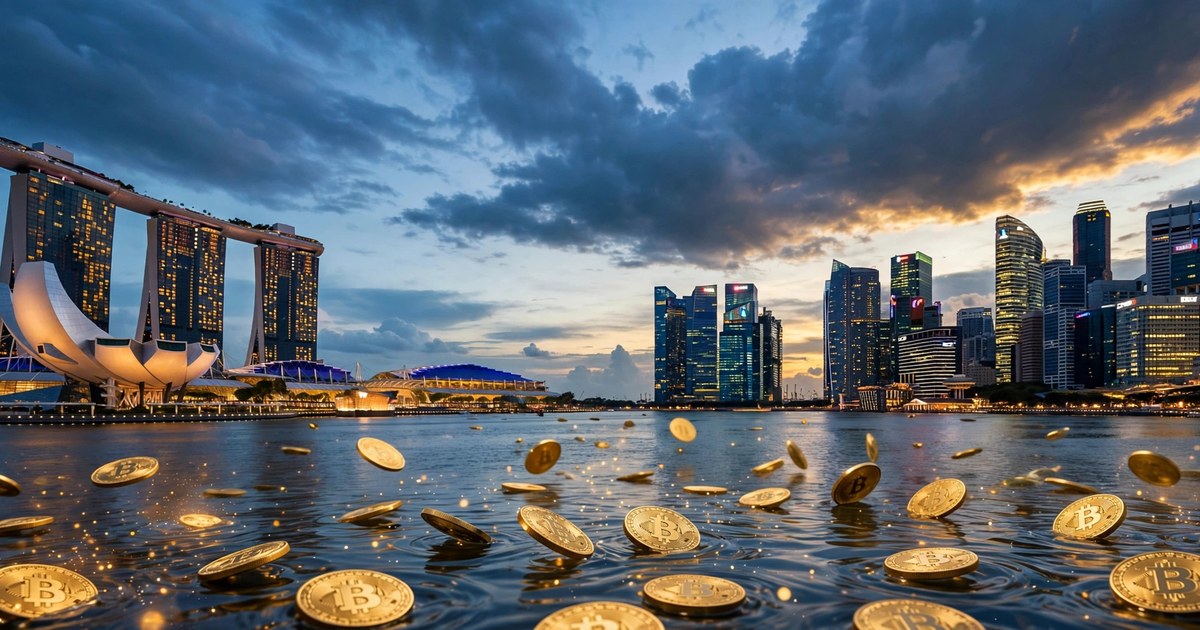
Singapore charges 0% tax on your crypto gains. That single fact has pulled thousands of traders and founders to the city-state — but it comes with a catch most newcomers miss: if Singapore's tax authority decides you are trading rather than investing, those same gains are taxed as income at up to 24%. And from January 1, 2027, the global Crypto-Asset Reporting Framework means your exchange will hand your details to the taxman automatically. This guide explains the 0% rule, the 24% trap, and the five mistakes that cost holders real money.
The 0% Rule: Why Singapore Is Famous for Crypto Tax
Singapore does not levy capital gains tax on individuals. If you buy Bitcoin as a personal, long-term investment and later sell it for a profit, that gain is generally not taxed at all. The Inland Revenue Authority of Singapore (IRAS) treats payment tokens such as Bitcoin and Ethereum as intangible property — not currency, not legal tender — and a personal investor's disposal of them is a capital transaction, not income.
That is the entire foundation of Singapore's reputation as a crypto tax haven. There are no special crypto rates, no crypto-specific tax form, and no allowance to track, because there is nothing to allow against. Compare that with Japan, where crypto gains are still taxed as miscellaneous income at up to 55% — a rate Japan's own parliament has voted to cut to a flat 20%, as we explain in our guide to Japan's crypto tax reform — or India, where a flat 30% applies to every gain.
The rule covers the everyday actions of a personal investor: buying crypto, holding it, and selling it later at a profit. It also covers swapping one token for another in most personal-investment cases. And since January 1, 2020, exchanging digital payment tokens for fiat currency or other tokens has been exempt from Goods and Services Tax (GST) — a detail that matters because Singapore's standard GST rate is now 9%.
But the 0% rule has a boundary, and it is drawn by IRAS, not by you. Cross it, and the same profits become taxable income.
The 24% Trap: When IRAS Decides You Are a Trader
Singapore's tax system draws a sharp line between capital gains and revenue. Capital gains are not taxed. Revenue — income from a trade or business — is taxed at the standard personal income tax rates, which run from 0% to 24% for residents (the top 24% rate applies to chargeable income above S$1 million, in force from the 2024 year of assessment). Companies pay a flat 17% on chargeable income.
IRAS decides which side of the line your crypto activity falls on using the "badges of trade" — a set of tests borrowed from decades of case law. There is no single threshold, no magic number of trades, and no form you can file to declare yourself an investor. IRAS looks at the whole picture:
- Frequency of transactions matters most. Buying and selling every week, scalping short-term moves, or running dozens of trades a month looks like a business. A single large sale of coins held for years looks like an investment.
- Your intention at purchase is tested. If you bought an asset to flip it quickly for profit, that points to trading. If you bought to hold for the long term, that points to investment — and IRAS will look at what you actually did, not just what you say.
- Holding period is strong evidence. Short holding periods suggest trading; long holding periods suggest investment. There is no official minimum, but months and years beat days and weeks.
- Leverage and borrowed money point to trading. Financing purchases with loans or margin is a classic badge of trade, because investors rarely borrow to buy a long-term holding.
- Organisation and systems count. Dedicated trading software, systematic strategies, and business-like record-keeping all push toward the trading side of the line.
The practical consequence is stark. Take two Singapore residents who each make S$200,000 of crypto gains in 2026. The long-term holder who bought Bitcoin three years ago and sold once pays nothing. The active trader who made the same S$200,000 across hundreds of short-term trades could owe income tax on the whole amount at marginal rates up to 24% — a bill of roughly S$30,000 or more. Same profit, same country, completely different outcome.
What Counts as Taxable Crypto Income in Singapore
Even for personal investors, not all crypto income is tax-free. The 0% rule protects gains on investment disposals. It does not protect income you earn. IRAS taxes crypto that you receive as income at its value when you receive it. For companies the maths is simpler: crypto income earned through a company is taxed at the flat 17% corporate rate, with a 50% rebate capped at S$40,000 for the 2026 year of assessment.
- Crypto received as payment is taxable revenue. If a client pays you in Bitcoin for goods or services, the value of that payment is income, taxed at your normal rates.
- Staking and mining rewards can be taxable. Rewards you earn from staking or mining are generally treated as income when received — although IRAS's e-Tax Guide on digital tokens, re-issued in January 2026, does not specifically address staking or crypto lending, leaving some grey area that advisers are still debating. Habitual, systematic mining run for profit is a taxable vocation; hobby mining is treated as capital.
- Airdrops and salary in crypto are income. Tokens paid to you as salary, or airdropped to you in connection with a service or business activity, are taxable on receipt.
- Losses on personal holdings are not deductible. This is the silent half of the 0% deal. If your investment gains are tax-free, your investment losses are equally invisible to IRAS. You cannot offset them against anything.
The honest summary: Singapore taxes crypto when you earn it or trade it like a business, and leaves it alone when you invest in it like an investor. The problem is that the line between the two is decided after the fact, by IRAS, using your actual behaviour.
Singapore vs the World: How the 0% Rule Compares
Singapore's position looks even stronger when you put it next to the countries most crypto holders actually live in. The table below uses the headline rates that apply to a typical individual investor in 2026:
| Country | Tax on crypto gains (individuals) | The catch |
|---|---|---|
| Singapore | 0% (investment gains) | Up to 24% if IRAS classes you as a trader |
| Japan | Up to 55% now; 20% flat expected from 2028 | Reform is law but not yet in force — no cabinet order yet |
| United States | 0%, 15% or 20% (long-term) | New IRS 1099-DA reporting from 2026 |
| United Kingdom | 24% capital gains rate | Only a £3,000 annual allowance |
| Germany | 0% after holding for one year | Short-term gains taxed at your income rate |
| India | Flat 30% plus 1% TDS on transfers | No loss offset allowed at all |
Two things stand out. First, Singapore and Germany are the only major jurisdictions where a patient holder can legally pay nothing — but Germany's zero requires a full year of holding, while Singapore's has no holding-period requirement at all. Second, Singapore's 0% is a capital-gains exemption, not a low rate: it is the absence of a tax, which is why the trader-vs-investor test matters so much. If you want the comparison in full, our Crypto Tax in the US 2026 guide covers the American side, including the new 1099-DA form that now reports your exchange activity to the IRS.
GST: The 9% Tax That Does Not Apply to Your Trades
Singapore's Goods and Services Tax is 9% in 2026, and it is easy to assume it applies to crypto transactions. It mostly does not. Since January 1, 2020, the supply of digital payment tokens — exchanging them for fiat currency, swapping one token for another, or lending them — has been an exempt supply under the GST Act. No GST is charged on the token side of the trade.
What is not exempt is the underlying purchase. If you pay for goods or services with Bitcoin, GST still applies to the goods or services you bought, exactly as if you had paid cash. And tokens that do not qualify as digital payment tokens — many NFTs, some security tokens, and utility tokens that fail the DPT definition — may still attract GST.
CARF Is Coming: Your Exchange Will Report You From 2027
The biggest change on the horizon for Singapore crypto holders is not a rate change — it is a reporting change. Singapore is implementing the OECD's Crypto-Asset Reporting Framework (CARF), and the regulations were enacted on August 11, 2026.
From January 1, 2027, licensed crypto platforms in Singapore must collect each user's tax identification number and tax residence. They must file annual reports with IRAS by May 31 of the following year, and Singapore intends to begin exchanging that data with partner countries in September 2028. In plain terms: from 2027, your exchange knows your tax residence, IRAS knows your exchange, and from 2028, your home country's tax authority may know too. This does not change what you owe — the 0% rule is untouched — but it ends the era in which Singapore crypto activity was practically invisible to tax authorities, and it makes record-keeping non-negotiable.
How to File: Dates, Thresholds, and the S$20,000 Question
Singapore taxes on a preceding-year basis: the Year of Assessment (YA) 2027 taxes income earned between January 1 and December 31, 2026. Individual filing runs from March 1 to April 18 of the YA, so income earned in 2026 must be filed by April 18, 2027.
For most personal investors, there is nothing to file on crypto at all — investment gains are not reported as capital gains, because there is no capital gains tax. You file only if you have taxable crypto income: trading profits, staking or mining income, or crypto received as payment. The first S$20,000 of a resident's chargeable income is taxed at 0%, so small amounts of taxable crypto income may still produce no bill — but the filing obligation itself can still apply.
Two administrative details are worth knowing. First, Singapore's tax year is the calendar year, January 1 to December 31. Second, IRAS's guidance is unusually accessible: the e-Tax Guide on the income tax treatment of digital tokens is a public document, re-issued on January 30, 2026 with editorial changes only.
5 Mistakes That Cost Singapore Crypto Holders Money
Most crypto tax damage in Singapore is self-inflicted. These are the five mistakes advisers see again and again:
- Assuming 0% means 0% for everything. The exemption covers investment gains. Trading profits, staking rewards, mining income, and crypto salary are all taxable. The most expensive sentence in Singapore crypto tax is "but Singapore has no capital gains tax" — said by someone whose activity was a business all along.
- Trading like a business while filing like an investor. Hundreds of short-term trades, leverage, and systematic strategies are badges of trade. If your behaviour looks like a trading business, file it as one. IRAS has your exchange data from 2027 onward.
- Ignoring the CARF deadline. January 1, 2027 is when platforms start collecting your tax residence and identification number. Holders who have never thought about their tax residence need to sort it out before the data starts flowing, not after.
- Keeping no records. Without records you cannot prove a holding period, an intention, or a cost basis. When IRAS asks, "investor or trader?" your transaction history is your only witness. Keep every trade, transfer, and wallet address for at least five years.
- Forgetting GST on the underlying purchase. Paying for goods with crypto does not make the purchase GST-free. And NFTs or utility tokens that are not digital payment tokens can attract GST on the token side too.
What Most People Get Wrong About Crypto Tax in Singapore
Myth one: "Singapore is a tax haven, so nothing is taxed." Singapore is a low-tax jurisdiction, not a no-tax one. Personal income tax reaches 24%, corporate tax is 17%, and GST is 9%. Crypto gets a 0% outcome only for investment gains.
Myth two: "If I hold for a year, I am safe." Singapore has no statutory holding period for crypto. A one-year hold is helpful evidence of investment intent, but IRAS weighs frequency, intention, leverage, and organisation together. A year of daily leveraged trading is still trading.
Myth three: "Staking rewards are tax-free because crypto is tax-free." Staking rewards are income, not capital gains, and IRAS taxes income. The e-Tax Guide does not yet address staking directly, which some holders read as a free pass. It is not a free pass — it is an unanswered question, and unanswered questions are resolved against the taxpayer who assumed the answer.
Who Should Consider Singapore — and Who Should Not
Singapore's 0% rule is genuinely valuable for one group: long-term personal investors who buy, hold for years, and sell occasionally. For them, Singapore is arguably the best major jurisdiction in the world to hold crypto — zero tax on gains, a regulated exchange ecosystem, and clear published guidance.
It is less valuable than it looks for two other groups. Active traders may find their profits taxed at up to 24% anyway, and from 2027 their exchange will report them. And anyone who moves to Singapore purely for the tax rate should know that changing tax residence is a legal process with real substance requirements, not a plane ticket. If you are planning a move, our guide to buying Bitcoin in Singapore covers the MAS-licensed exchanges you will actually use once you are there — and our storage guide explains how to store Bitcoin safely, because the cheapest tax bill in the world is worthless if your coins are stolen.
Founders and businesses face a different maths: a company pays 17% on crypto income, with a 50% rebate capped at S$40,000 for YA 2026. And MAS licensing for digital payment token services is demanding — since June 30, 2025, even Singapore-based firms serving only overseas customers need a licence, and MAS has said it will generally not issue one. Singapore rewards real businesses with real substance. It does not reward brass plates.
Frequently Asked Questions
Do I pay tax on Bitcoin gains in Singapore?
Not if you are a personal investor. Singapore has no capital gains tax, so gains on crypto bought and held as a long-term investment are generally not taxed. But if IRAS decides your activity is trading — based on frequency, intention, holding period, and leverage — the profits are taxed as income at 0% to 24%.
What is the crypto tax rate in Singapore in 2026?
There is no crypto-specific rate. Investment gains are taxed at 0%. Trading profits are taxed at the standard personal income tax rates of 0% to 24% (24% above S$1 million of chargeable income), or 17% if earned through a company. GST is 9%, but exchanges of digital payment tokens have been GST-exempt since January 1, 2020.
Are staking rewards taxed in Singapore?
Staking rewards are generally treated as income when received, and are taxable if the activity amounts to a business or income-earning activity. IRAS's e-Tax Guide, re-issued in January 2026, does not specifically address staking, so the treatment depends on the facts. Keep records either way.
When does CARF reporting start in Singapore?
January 1, 2027. From that date, licensed crypto platforms must collect users' tax identification numbers and tax residence, and file annual reports with IRAS by May 31 of the following year. Singapore intends to begin exchanging the data with partner countries in September 2028.
Do I need to file a tax return for crypto in Singapore?
Only if you have taxable crypto income — trading profits, staking or mining income, or crypto received as payment. Pure investment gains do not need to be reported. If you do need to file, the deadline for income earned in 2026 is April 18, 2027, and the first S$20,000 of chargeable income is taxed at 0%.
Is Singapore really 0% tax on crypto, or is it a myth?
It is real, but narrow. The 0% applies to capital gains on investment-held crypto for individuals. It does not cover trading income, staking rewards, mining income, or crypto salary — and from 2027, CARF reporting means IRAS will have the data to check which side of the line you fall on. Compared with Japan's 55% or the UK's 24%, it is still the best deal available to a genuine long-term holder.
Conclusion
Singapore's crypto tax deal is simple to state and easy to get wrong: 0% on investment gains, up to 24% if you are a trader, 17% through a company, and full reporting from January 1, 2027. The 0% headline is real — it is why Singapore remains one of the best places in the world to hold crypto long-term. But it is a capital-gains exemption, not a blanket exemption, and the difference between an investor and a trader is decided by your behaviour, not your intentions.
If you take one thing from this guide, take this: hold like an investor, keep records like a trader, and diarise January 1, 2027. The investors who do those three things will keep paying 0%. The ones who do not will discover the 24% rate the expensive way. And if you are comparing jurisdictions before deciding where to hold, the numbers speak for themselves: Singapore 0%, Germany 0% after a year, the US up to 20%, the UK 24%, India 30%, Japan 55% until its 20% reform arrives. For a long-term holder, there is still no better address.
General information only, not tax advice. Sources: IRAS e-Tax Guide on Digital Tokens; TokenTax; Taxxy; HQ Singapore Tax Guide; Datawallet.