Best Hardware Wallets in November 2026: 8 Ranked After the $6.3B Binance Hack — and the $70M Warning Nobody Read
$3.64B left exchanges in 9 hours after the $6.3B Binance hack — and hardware wallet sales logic changed overnight. We ranked 8 wallets on security, price and coin support, and flagged the 2026 flaw reports you must check before buying.
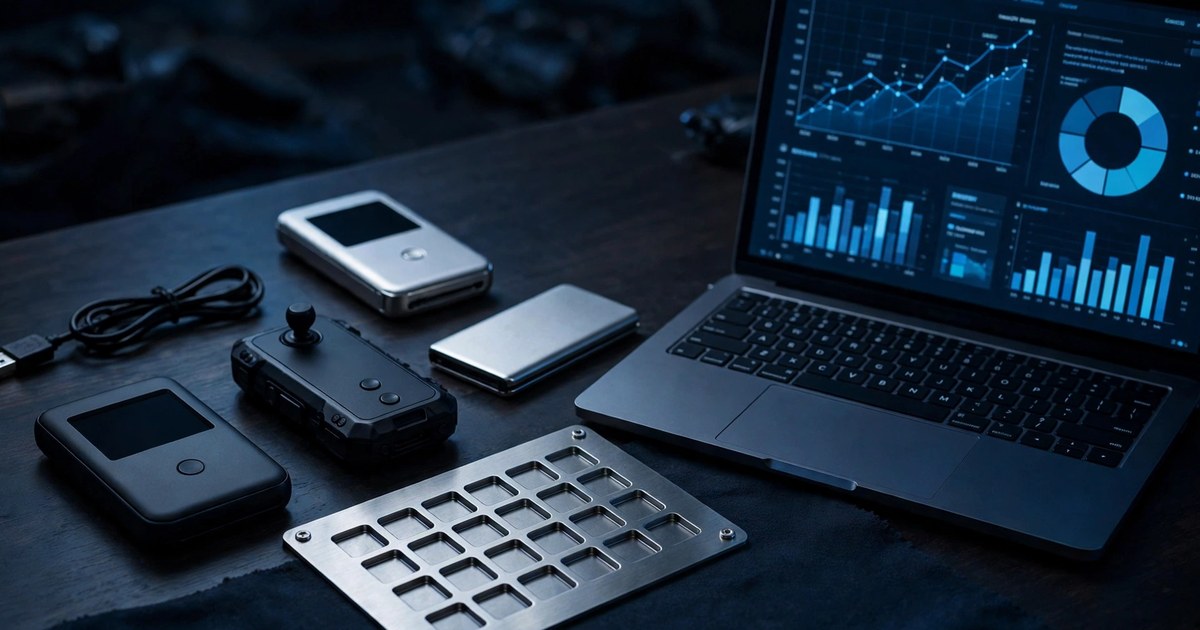
When Binance reopened withdrawals on Sunday, November 1, customers pulled $3.64 billion out in about nine hours — $4.65 billion withdrawn against just $1.01 billion deposited, according to the exchange's own figures reported by CoinDesk. That single number is why this ranking exists. After a $6.3 billion hack that the FBI attributed to North Korea's TraderTraitor group, millions of holders stopped asking whether self-custody matters and started asking which device to buy. This guide answers that question: eight hardware wallets ranked for November 2026, with prices, security certifications, coin support and the 2026 flaw reports you need to read before you spend a dollar. The verdict up front: most people should buy the Trezor Safe 5, Bitcoin-only holders should look at the COLDCARD Q, and nobody should buy any wallet from a reseller or a marketplace listing.
Hardware wallets are small offline devices that hold your private keys and sign transactions on the device itself, so malware on your phone or laptop never sees the key. That one property separates them from an exchange account, a browser extension and a phone app. It is also why the hardware wallet market, valued at $720 million in 2026 and projected to reach $2.25 billion by 2031 in one tested roundup, is suddenly the busiest corner of crypto retail. The catch is that 2026 has also been an uncomfortable year for cold storage: several brands disclosed security problems, researchers demonstrated lab attacks on widely used chips, and tampered units were reported in the supply chain. Every wallet below therefore carries its caveats next to its strengths.
Why the Binance hack changed the hardware wallet question
Before last week, the advice was abstract: "not your keys, not your coins." After last week, it is arithmetic. Binance said it has covered around 95% of the $6.3 billion stolen, yet $3.64 billion still left in a single day, about 2.1% of its assets. US spot Bitcoin ETFs lost $643 million on Friday, their largest daily outflow since June, per Farside Investors data cited by CoinDesk, and Fear and Greed sat at 37, in fear. You are not buying a gadget; you are choosing where the keys to your savings live.
There is a second reason timing matters. Bitcoin traded near $78,000 on November 2, below its 7-, 20- and 50-day moving averages, with the 200-day average near $76,463 acting as the line analysts are watching. When prices fall and fear rises, phishing spikes: fake "security alert" emails, fake wallet apps and fake support agents all multiply. Trezor and BitBox both warned about fake security alerts this autumn. Buying the right device and setting it up wrong — or buying the wrong device from the wrong seller — can cost more than holding on an exchange ever did.
The 7 best hardware wallets in November 2026, ranked
| Rank | Wallet | Best for | Price | Security chip | Air-gapped |
|---|---|---|---|---|---|
| 1 | Trezor Safe 5 | Most people | ~$129–$169 | EAL6+ secure element, open-source firmware | No |
| 2 | Trezor Safe 7 | Open-source security, new flagship | ~$249 | TROPIC01 plus EAL6+ chip | No |
| 3 | Ledger Flex | Multi-chain and DeFi users | ~$249 | EAL6+ secure element | No |
| 4 | Keystone 3 Pro | Air-gapped value | ~$149–$169 | Triple EAL5+ elements | Yes, QR codes |
| 5 | COLDCARD Q | Bitcoin-only power users | ~$249–$369 | Dual secure elements | Yes, QR and microSD |
| 6 | Tangem Wallet | Beginners and budget buyers | ~$55–$70 | EAL6+ chip, seedless backup | Yes, NFC cards |
| 7 | NGRAVE ZERO | Maximum isolation, premium budget | ~$398 | EAL7-certified operating system | Yes, QR only |
Prices are October–November 2026 list prices from the roundups cited below, and they move with promotions. Treat the ranking as a decision order.
1. Trezor Safe 5 — the best hardware wallet for most people
The Trezor Safe 5 is the easiest recommendation in this list because it removes the two usual trade-offs. Its firmware is open source, so anyone can audit the code running on the device, and its Infineon Optiga Trust M secure element carries an EAL6+ certification with no non-disclosure agreement blocking review — the entire security stack can be inspected. It has a colour touchscreen, supports thousands of coins through the Trezor Suite app and third-party wallets, and costs roughly $129 to $169 depending on the seller and promotion. If you hold Bitcoin, Ethereum and a handful of large altcoins and you want one device that simply works, this is the default pick.
The caveats are real but manageable. Touchscreens divide opinion, and Trezor has faced phishing risk after a shipping-provider breach exposed customer contact details in the past, which is why fake support emails impersonating Trezor keep circulating. The defence is procedural: buy only from Trezor directly, never follow a link in an email to "verify" your device, and never type your recovery phrase anywhere except on the device itself during setup. If you want the newer flagship with Bluetooth and the TROPIC01 chip, the Trezor Safe 7 at around $249 is the step up, and several November 2026 roundups name the Safe 7 and the Ledger Flex as the two strongest all-round picks.
2. Ledger Flex — the best wallet for multi-chain and DeFi users
If your portfolio spans many chains and you actually use decentralised finance, the Ledger Flex is hard to beat on convenience. It supports more than 500 assets directly in the Ledger Live app and thousands more through third-party wallets, has a polished touchscreen interface, and connects over USB-C, Bluetooth and NFC. At around $249 it sits in the same price band as the Trezor Safe 7, and the choice between them mostly comes down to philosophy: Ledger's firmware is only partially open source, so its security story ends with trusting the vendor, while Trezor's ends with code anyone can verify. Ledger has a strong hardware track record and a solid secure element — closed firmware is not automatically bad — but you should understand what you are trusting.
The 2026 warning for Ledger buyers is about the supply chain, not the chip. Tampered Ledger units were reported via a reseller channel this year. That dictates the buying rule for every wallet on this list: buy direct from the manufacturer, check the tamper-evident packaging, and never accept a device that arrives pre-initialised or with a recovery phrase already written down. A genuine device always generates its own phrase during your setup. If a phrase is already printed in the box, stop — the device is compromised or a scam, and no discount is worth it.
3. Keystone 3 Pro — the best air-gapped wallet for the money
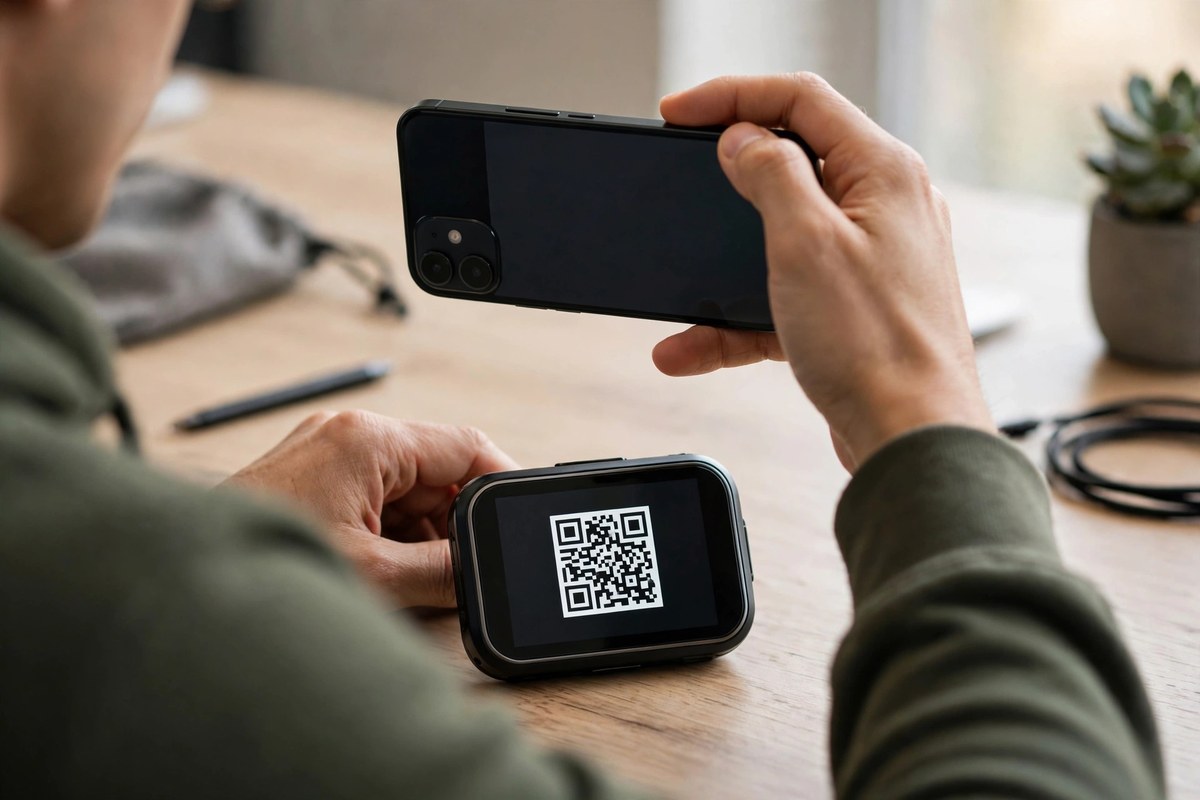
Air-gapped means the device never connects by cable, Bluetooth or Wi-Fi: it signs transactions by displaying QR codes that your phone scans. The Keystone 3 Pro does this for around $149 to $169, with three secure elements, open-source firmware and support for more than 5,500 assets, which makes it the best balance of isolation and transparency for most users who want full air-gapping without paying premium prices. It works well with MetaMask and DeFi workflows, and its touchscreen makes QR signing far less painful than the microSD shuffling of older air-gapped designs.
The trade-off is workflow friction. Every transaction takes an extra scan or two, and you will occasionally miss the one-tap convenience of a Bluetooth wallet. For a long-term holder who moves coins a few times a month, that friction is a feature: it forces a pause before every send. For an active trader, it will annoy you within a week — and an annoyed user starts cutting corners. Buy the Keystone if you hold and rarely trade; buy the Trezor Safe 5 or Ledger Flex if you trade weekly.
4. COLDCARD Q — the best wallet for Bitcoin-only holders
The COLDCARD Q is the paranoid option, and it earns that label honestly. It is Bitcoin-only, it signs fully air-gapped by QR code and microSD, it carries dual secure elements, and it offers the deepest set of advanced features in this ranking: multisig workflows, duress PINs, and a full keyboard for entering passphrases on the device. At roughly $249 to $369 depending on the configuration cited, it is not cheap, but Bitcoin maximalists consistently rate it as the device they trust with the largest stacks. If you hold only Bitcoin and you want the strongest device-level controls, nothing else here matches it.
Here is the warning you must read before buying one. A 2026 roundup reported that a firmware flaw in Coldcard's seed generation was linked to more than $70 million in stolen Bitcoin, and researchers also demonstrated lab attacks on chips used in several brands including Trezor and Tangem. These are reported claims from a roundup, not independently verified findings here, and lab attacks typically require physical possession plus specialist equipment. Still, update firmware only through the official app and treat any email urging an urgent firmware "migration" as phishing.
5. Tangem Wallet — the best budget and beginner wallet
Tangem takes a completely different approach: there is no screen and no seed phrase by design. The wallet is a set of NFC cards — two cards for about $55 to $60, three cards for about $70 — each carrying an EAL6+ certified chip, and you sign transactions by tapping a card on your phone. Backup means keeping a second card somewhere safe, not guarding 24 words on paper. For a beginner, that removes the single biggest failure mode in self-custody: up to 20% of all Bitcoin is lost forever, mostly through poor key management, according to figures cited in hardware wallet comparisons. Tangem's design attacks that statistic directly, and at this price it is the cheapest full-security option in the ranking.
The trade-offs are the mirror image of the benefits. There is no screen, so you verify transaction details on your phone screen rather than on the device itself. The seedless design means you cannot export a standard phrase to another brand's device, so you are more dependent on Tangem's ecosystem. And one 2026 roundup noted a lab attack on Tangem's chip that cannot be patched — again, a lab attack requiring physical possession, not a remote exploit, but worth knowing. Tangem is the right pick for a first wallet, a gift, or a smaller stack. It is not the right pick for a life-changing sum that deserves a screened device and a standard recovery phrase.
6. NGRAVE ZERO — maximum isolation for a premium budget
The NGRAVE ZERO holds the highest security certification of any consumer hardware wallet in this ranking: an EAL7-certified operating system, fully air-gapped QR-only signing, tamper sensors and biometric authentication, with a large touchscreen and graphene steel backup plates. At around $398 — closer to $498 with the backup bundle — it is the most expensive device here, and its firmware is only partially open source. You are paying for isolation and certification, not for coin breadth: it supports around 15 coins natively, far fewer than Ledger or Trezor.
7. BitBox02 — the quiet Swiss option worth knowing
The BitBox02, made in Switzerland by Shift Crypto, is the quiet third option that reviewers keep recommending: open-source firmware, an EAL6+ class secure element, a minimal design, and a Bitcoin-only edition for purists. It costs roughly €130 to €175, supports fewer coins than the big two, and has no Bluetooth — a deliberate choice that some users prefer. Its companion app is simpler than Ledger Live or Trezor Suite, which is either a virtue or a limitation depending on how much hand-holding you want.
What most people get wrong about hardware wallets
The most dangerous myth is that buying a device makes you safe. It does not — it moves the risk from an exchange's security team to your own habits. The 2026 disclosures prove the point from both directions: devices had flaws, and users lost money to phishing, tampered units and weak key handling even when the hardware worked. The second myth is that a higher EAL number automatically means a safer wallet for you. EAL ratings measure how thoroughly a chip's design was tested — EAL4 is standard banking-card level, EAL5+ is the historical wallet norm, EAL6+ adds semi-formal verification and independent penetration testing, and EAL7 is the top of the scale — but a lab-tested chip in a
device with a photographed seed phrase is worthless. The third myth is that your seed phrase is a password you can reset. It is not. Lose it and your coins are gone; expose it and your coins are gone. There is no support desk for self-
custody, which is exactly why it is powerful and exactly why it demands discipline.
The post-hack migration checklist: move off an exchange safely
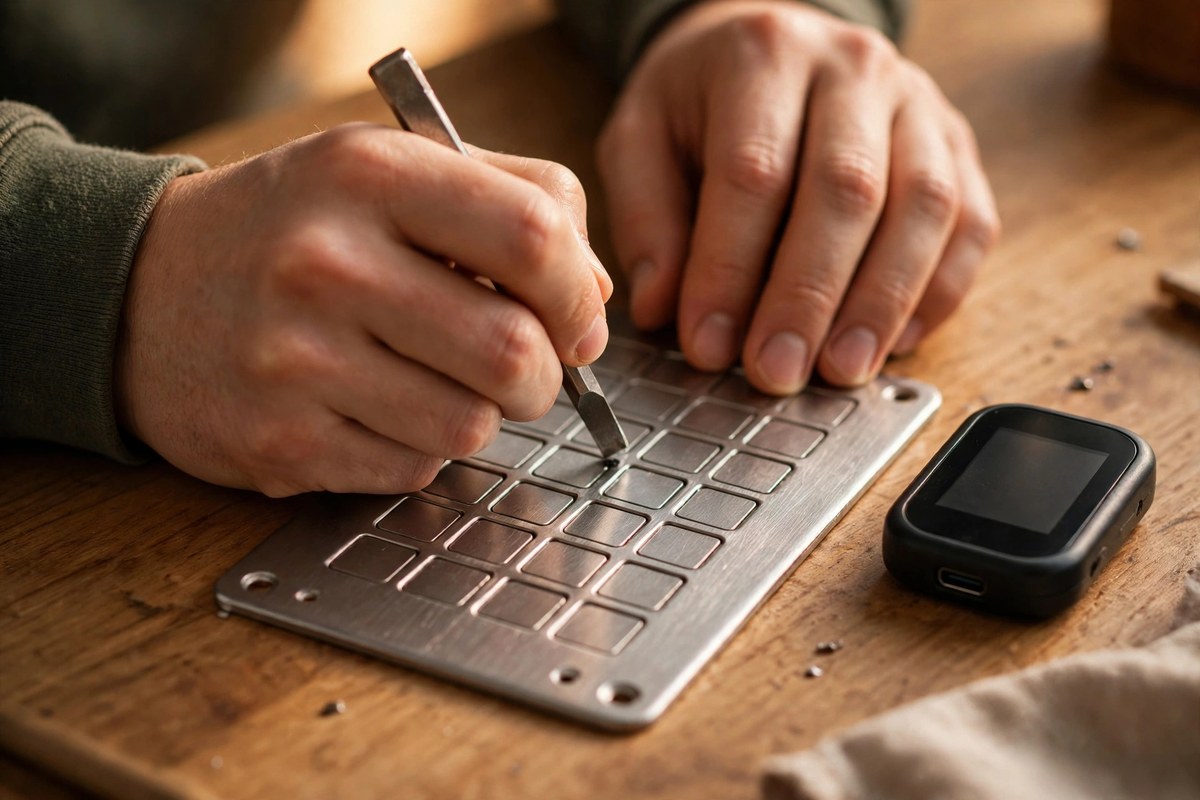
If the $3.64 billion exodus convinced you to move coins off an exchange, do it in this order. First, buy your device direct from the manufacturer — never from a marketplace, reseller or second-hand listing. Second, verify the packaging and reject any device that arrives pre-initialised or with a phrase already written down. Third, set the device up yourself, generate a fresh phrase, and write it on paper or steel — never photograph it, never type it into a phone or computer, and never store it in cloud notes or email. Fourth, update the firmware through the official app only, then send a small test transaction to the new wallet and back before moving the full balance. Fifth, store the backup in a separate location from the device, and tell one trusted person where it is without telling them the words. Sixth, keep a small trading balance on an exchange if you trade actively — self-custody is for savings, not for every trade — and use a decentralised exchange for swaps only after reading our guide to how DEXs work.
Which wallet should you actually buy?
Buy the Trezor Safe 5 for the best all-round wallet, the Safe 7 for the newest flagship, the Ledger Flex for DeFi and wide chain support, the Keystone 3 Pro for air-gapped value, the COLDCARD Q for Bitcoin-only holders (after checking firmware advisories), Tangem for beginners and budgets, and the NGRAVE ZERO for maximum certification. Whichever you buy, pair it with a steel backup: the device protects your keys from hackers, but only the backup protects them from fire, flood and forgetfulness.
Frequently asked questions
Are hardware wallets safe after the 2026 security disclosures?
Yes, with two conditions: buy direct from the manufacturer and keep firmware current through the official app. The 2026 disclosures included lab attacks that require physical possession and specialist equipment, plus supply-chain and phishing incidents that good buying hygiene prevents. No widely used hardware wallet suffered a confirmed remote mass exploit in the reports reviewed for this article, but that is a reason for discipline, not complacency.
Do I need a hardware wallet if I only hold a small amount?
Not necessarily. For a few hundred dollars, a reputable mobile wallet with a properly backed-up phrase may be enough, and a $55 Tangem set is the cheapest credible step up. Rule of thumb: if losing the amount would hurt, move it to cold storage; if it would ruin you, add a steel backup in a second location.
What happens if I lose my hardware wallet?
Nothing, if your recovery phrase is safe. Buy a new device from the same or a compatible brand, enter the phrase during setup, and your coins reappear — the coins live on the blockchain, not in the device. Lose both the device and the phrase, and the coins are unrecoverable. That is why the backup matters more than the device.
Can a hardware wallet be hacked remotely?
Not through its offline design: the keys never leave the device, and air-gapped models never connect at all. Remote theft happens through phishing, fake apps, malicious transaction approvals and exposed seed phrases — all attacks on the user, not the chip. Verify every address and amount on the device screen before approving.
Is open-source firmware really important?
It matters because it lets independent researchers verify the code instead of trusting the vendor's word. Trezor, Keystone and BitBox02 offer open-source firmware; Ledger and NGRAVE are partially closed but carry strong certifications and track records. Open source is a strong advantage, not an absolute requirement — a closed device with an EAL6+ chip and a clean record can still be a good wallet.
Should I keep any crypto on an exchange after the Binance hack?
Only what you actively trade. Exchanges are convenient for buying, selling and short-term trading, and Binance's rapid coverage of about 95% of the stolen funds shows large exchanges can absorb shocks. But an exchange account is an IOU, not ownership: if the platform freezes withdrawals, your trading stops whether or not your coins are safe. Savings belong in self-custody; trading balances belong on exchanges in amounts you can afford to have frozen.
Conclusion
The $6.3 billion Binance hack did not invent self-custody, but it priced it: $3.64 billion in outflows in nine hours is the market voting with its feet. The best hardware wallet for most people in November 2026 is the Trezor Safe 5, with the Safe 7, Ledger Flex, Keystone 3 Pro, COLDCARD Q, Tangem, NGRAVE ZERO and BitBox02 each winning a clear niche. Whatever you choose, buy it direct, back it up on steel, test with a small transaction, and never share your phrase. The device is the easy part. The discipline is the wallet. For more background, see our guides on best crypto wallets for beginners, how to buy Bitcoin safely after the Binance hack, what a DEX is and how decentralised trading works, Solana staking explained and whether Bitcoin is a good investment in 2026. External sources for this article include CoinDesk's November 2 markets report, Reuters via Kitco on the Binance aftermath, Tangem's hardware wallet comparison, MemeBurn's tested 2026 roundup, CryptoRadar's 2026 security roundup, NGRAVE's October 2026 comparison and Alcazar Security's 2026 hardware wallet guide. Prices and security claims change — verify the latest firmware advisories and list prices before you buy.