Best Crypto for Beginners in 2026: What to Buy First, How Much to Start With, and What to Avoid
New to crypto in 2026? This beginner's guide ranks the best cryptocurrencies to buy first — Bitcoin, Ethereum and large-cap picks — plus how much to start with, the safest way to buy and store crypto, and the 5 beginner traps to avoid.
Type "best crypto for beginners" into Google and you get chaos: influencers shouting about meme coins, exchange ads promising zero-fee trading, and Reddit threads arguing about whether a coin called after a dog is a legitimate investment. No wonder so many first-time buyers either freeze — or throw money at the loudest voice in the room.
This guide cuts through that noise. Below is a calm, practical ranking of the best cryptocurrencies for beginners in 2026: what to buy first, how much to start with, the safest way to actually buy and store your crypto, and — most importantly — the five traps that wipe out first-time investors. Nothing here is financial advice; it's an education in how the market works so you can make your own decisions.
The Three Golden Rules Before You Buy Anything
Before a single dollar leaves your bank account, internalize these rules. They matter more than any coin pick:
- Only invest what you can afford to lose completely. Crypto is volatile. Bitcoin has dropped 50% or more several times in its history and always recovered — but "always recovered" is not a guarantee. Never invest rent money, emergency savings, or anything you will need within a year.
- Start small and learn as you go. Your first purchase is tuition. A $50 or $100 starter position teaches you how exchanges, wallets, and price swings actually feel — lessons no article can replace.
- Time in the market beats timing the market. Beginners almost always buy at local tops and sell at local bottoms. The antidote is a plan you can stick to regardless of headlines, which we cover below.
1. Bitcoin (BTC) — The Default First Buy
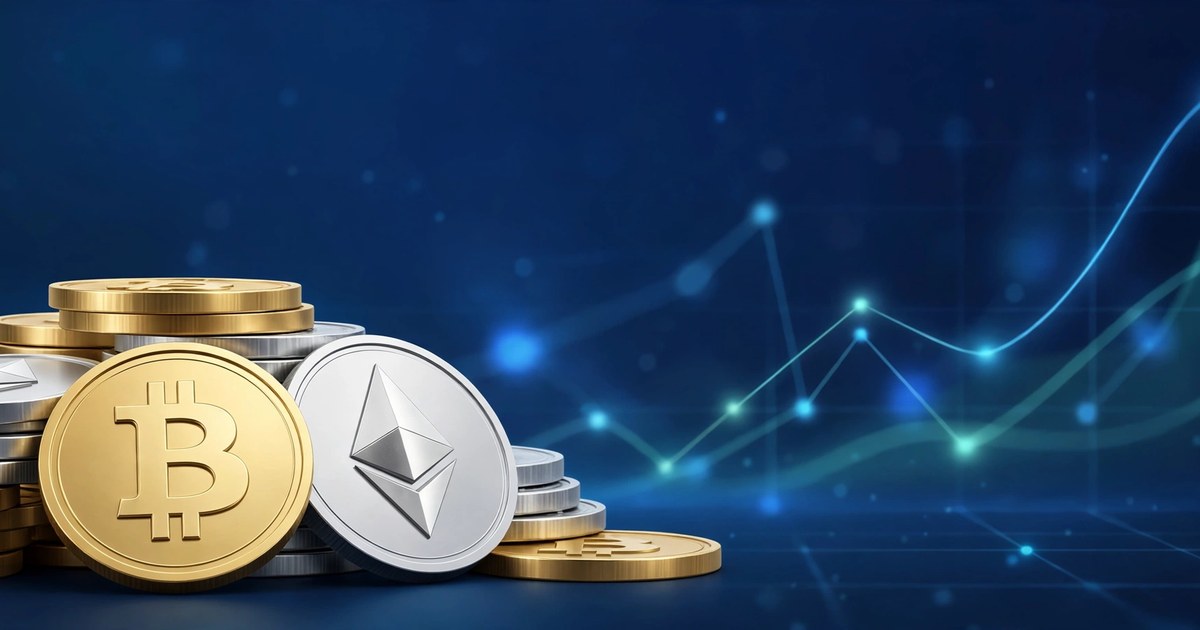
If you buy only one cryptocurrency as a beginner, it should be Bitcoin. This isn't tribalism — it's math and track record. Bitcoin is the largest cryptocurrency by market value, the most widely held, the most liquid, and the only one with a 17-year history of surviving every crash thrown at it. It trades around $81,000 as of late October 2026, with a market capitalization above $1.6 trillion.
Bitcoin's investment case is simple: fixed supply (21 million coins, ever), institutional adoption through US spot Bitcoin ETFs, and growing acceptance as a long-term store of value — CoinGecko data consistently ranks it the dominant asset in the market. US spot Bitcoin ETFs now hold tens of billions in assets, making BTC exposure available through ordinary brokerage accounts.
The downside is volatility: Bitcoin routinely moves 3–5% in a single day. But for a beginner building a long-term position, that volatility is the price of admission to the asset's long-run returns. For a deeper walkthrough of the buying process itself, see our complete beginner's guide to buying Bitcoin in 2026, and if you're still weighing whether BTC belongs in your portfolio at all, our honest breakdown of whether Bitcoin is a good investment in 2026 covers the bull and bear cases side by side.
2. Ethereum (ETH) — The Smart-Contract Bet
Ethereum is the second-largest cryptocurrency and the backbone of decentralized finance (DeFi), NFTs, and most stablecoin activity. Where Bitcoin is digital gold, Ethereum is programmable money — a global computer that thousands of applications run on. ETH trades near $2,400 in late October 2026.
For beginners, ETH is the natural second position after BTC. It has a longer, more battle-tested track record than any other altcoin, deep liquidity, and constant development — the network's Glamsterdam upgrade continues to cut costs and improve performance. ETH can also be staked for yield (typically a few percent per year), which turns a static holding into a small income stream. Our beginner's guide to crypto staking explains exactly how that works and what the risks are.
The trade-off: ETH is more volatile than BTC and faces real competition from faster chains like Solana. Treat it as a satellite position, not the core of your portfolio.
3. Large-Cap Altcoins: Solana, XRP, and BNB
Once you hold BTC and ETH, large-cap altcoins are where beginners sometimes add a small third or fourth position. "Large-cap" means coins with multi-billion-dollar market values and deep trading volume — they are still risky, but they are not the casino. Three stand out in 2026:
- Solana (SOL, ~$108): the fastest major blockchain, recently upgraded with the Alpenglow consensus overhaul that cut transaction finality to about 150 milliseconds. Huge developer activity, but a history of network outages keeps it below ETH in beginner-friendliness.
- XRP (~$1.35): the payments-focused token with deep banking partnerships and long-standing regulatory clarity in key markets. Less upside fireworks than SOL, but a calmer ride.
- BNB (~$745): the Binance ecosystem token — essentially a bet on the world's largest crypto exchange. Steady, but concentrated in one company's fortunes.
A sensible beginner allocation keeps these as a combined 10–20% of a crypto portfolio at most. Check live prices and market caps on CoinMarketCap before buying anything — never trust a price quoted in a social media post.
4. Stablecoins: Where Beginners Park Cash
Stablecoins like USDT and USDC are crypto tokens pegged to the US dollar. They don't go up — that's the point. Beginners use them as a parking spot between trades, a way to move money onto exchanges without bank delays, and (increasingly) a way to earn modest yield. After the US OCC's 2026 stablecoin ruling under the GENIUS Act, regulated stablecoin products are more mainstream than ever.
Stablecoins are also your training wheels for wallets: sending $10 of USDC to your own wallet teaches you how transfers, addresses, and fees work with near-zero risk. Just remember that stablecoins are not bank deposits — they carry issuer and smart-contract risk, and "stable" has failed before.

How Much Should a Beginner Invest? A Simple Framework
The honest answer: less than you think, and on a schedule, not all at once. Three rules of thumb from how experienced investors actually behave:
- The 1–5% rule: crypto should be 1–5% of your total investment portfolio as a beginner. If crypto went to zero tomorrow, your finances should barely notice. You can raise the allocation as your knowledge (and conviction) grows.
- Dollar-cost averaging (DCA): invest a fixed amount on a fixed schedule — say $100 every Friday — regardless of price. DCA removes the impossible task of timing the market and is the single strategy most correlated with beginner success.
- The sleep test: if a 20% overnight drop would keep you awake, your position is too big. Size down until volatility feels boring.
Never borrow to buy crypto, never use leverage as a beginner, and never "go all in" on a single coin — diversification across BTC, ETH, and a small altcoin slice is how beginners survive their first bear market.
The Safest Way to Buy Crypto as a Beginner
For first-time buyers in 2026, a large regulated exchange (Coinbase, Kraken, Binance, or your region's licensed equivalent) is the right starting point: real customer support, clear fee schedules, and regulatory oversight. The process is straightforward — create an account, complete identity verification, link a bank account or card, and place your first buy. Start with a market order for a small amount; you can learn limit orders later.
Two safety habits from day one: enable two-factor authentication (an authenticator app, not SMS) on your exchange account, and bookmark the real exchange URL — phishing sites that mimic exchanges are the number one way beginners lose money. Our step-by-step buying guide walks through the full process with screenshots of what to check at each step.
Where to Store Your Crypto: Don't Leave It All on the Exchange
"Not your keys, not your coins" is the oldest advice in crypto, and it's still the most important. An exchange account is convenient for buying, but for holding, a personal wallet gives you control. Beginners should know the two types:
- Hot wallets (phone/computer apps like MetaMask or Phantom): free, easy, good for small amounts you might trade or spend.
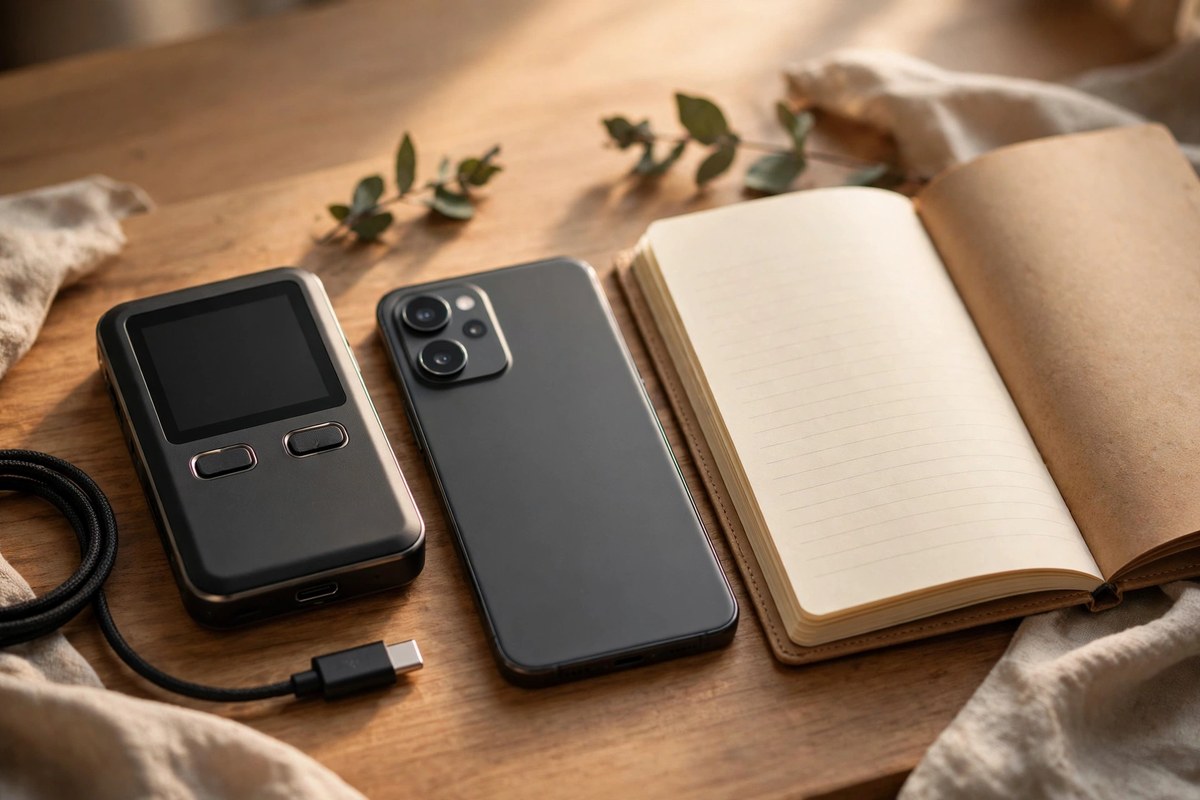
- Cold wallets (hardware devices like Ledger or Trezor): your private keys never touch the internet. The gold standard for anything you don't plan to touch for months.
A practical beginner setup: keep a small trading balance on the exchange, move the rest to a hot wallet while you're learning, and graduate to a hardware wallet once your holdings exceed what you'd be comfortable losing. Write your 12- or 24-word recovery phrase on paper, store it somewhere safe, and never photograph it or type it into any website. Our guides to what a crypto wallet actually is and the best crypto wallets for beginners in 2026 compare the options in detail.
5 Beginner Traps That Wipe Out First-Time Investors
Almost every beginner loss story involves one of these five mistakes. Learn them here instead of paying tuition to the market:
- Buying meme coins first. Dogecoin, Shiba Inu, and the thousand copycats that follow them can 10x — and usually go to near-zero. They are lottery tickets, not investments. Build your BTC/ETH base first; if you must speculate, use money you'd spend on entertainment.
- Using leverage. Exchanges will happily let you trade with 10x, 50x, even 125x leverage. A 2% move against you at 50x leverage wipes out your entire position. Spot buying only, until you deeply understand derivatives — and maybe never.
- Following influencer calls. "This coin is going to $10!" is marketing, usually for a coin the influencer already holds and plans to sell into the hype. Check every claim against primary sources: project documentation, CoinGecko tokenomics pages, and on-chain data.
- Ignoring security basics. No 2FA, seed phrases in phone notes, clicking links in DMs promising "double your crypto" — these are how beginners actually lose money, far more often than bad coin picks.
- Panic-selling the first dip. A 20–30% drawdown is a normal crypto event, not a signal. Beginners who sell every dip lock in losses; those with a DCA plan and a multi-year horizon buy the fear instead. Learning to read basic price charts helps you tell a normal pullback from a real trend break.
Your First-Week Action Plan
Knowledge without action is trivia. Here's a concrete first week:
- Day 1–2: Open an account on one major regulated exchange, enable authenticator-app 2FA, and complete verification.
- Day 3: Make your first small purchase — e.g., $50 of Bitcoin. Feel what a market order, a fee, and a price swing are like.
- Day 4–5: Install a reputable hot wallet, send a small amount of crypto to it, then send a tiny amount back. Practice until transfers feel routine.
- Day 6: Set up a recurring weekly buy (dollar-cost averaging) for an amount you won't miss.
- Day 7: Write down your plan — what you own, why, and under what conditions you'd sell. Future-you will thank present-you.
FAQs: Best Crypto for Beginners
What is the safest crypto for a beginner to buy?
Bitcoin, by a wide margin. It has the longest track record, the deepest liquidity, the most institutional adoption (including US spot ETFs), and a fixed supply. No crypto is "safe" — but BTC is the least risky way to get exposure to the asset class.
How much money do I need to start buying crypto?
Far less than most people think. Major exchanges let you buy fractions of a coin — you can start with $10 or $50. What matters is building the habits (secure accounts, DCA schedule, proper storage), not the starting amount.
Should a beginner buy Bitcoin or Ethereum first?
Bitcoin first. It's simpler to understand, less volatile, and the default institutional choice. Add Ethereum as a second position once you're comfortable — it offers exposure to the smart-contract ecosystem and staking yield, with higher volatility.
Are meme coins like Dogecoin good for beginners?
No. Meme coins are driven by social-media hype, not fundamentals, and most eventually collapse. Beginners should build a foundation in BTC and ETH before considering any speculative positions — and then only with money they can afford to lose entirely.
Is staking a good idea for beginners?
Staking ETH or stablecoins for modest yield can be reasonable once you understand the basics, but it's not step one. Learn to buy, store, and secure your crypto first; add staking later through reputable platforms after reading our staking guide.
Can I lose all my money in crypto?
Yes — through bad security (hacks, phishing, lost keys), leverage liquidations, or buying speculative tokens that go to zero. That's why the rules in this guide exist: small starting size, no leverage, real wallets, and a portfolio allocation (1–5%) that can't wreck your finances.
The Bottom Line
The best crypto for beginners in 2026 isn't a secret coin — it's a boring, disciplined approach: start with Bitcoin, add Ethereum, keep altcoins small, buy on a schedule, store your keys properly, and avoid leverage and hype. Crypto rewards patience and punishes impulse; the investors who thrive over a full market cycle are almost never the ones chasing the hottest tip of the week.
Start small this week, set up your recurring buy, and let time do the heavy lifting. Your future self — the one who didn't panic-sell the first dip — will be glad you did.