Can Banks Hold Your Bitcoin? Citi, BNY and Deutsche Bank's $94 Trillion Custody Race — 5 Checks Before You Trust One
BNY and Citi watch over $93.9 trillion — and both want to hold your Bitcoin. After the $6.3B Binance hack, here are the 5 checks before you trust a bank with your coins.
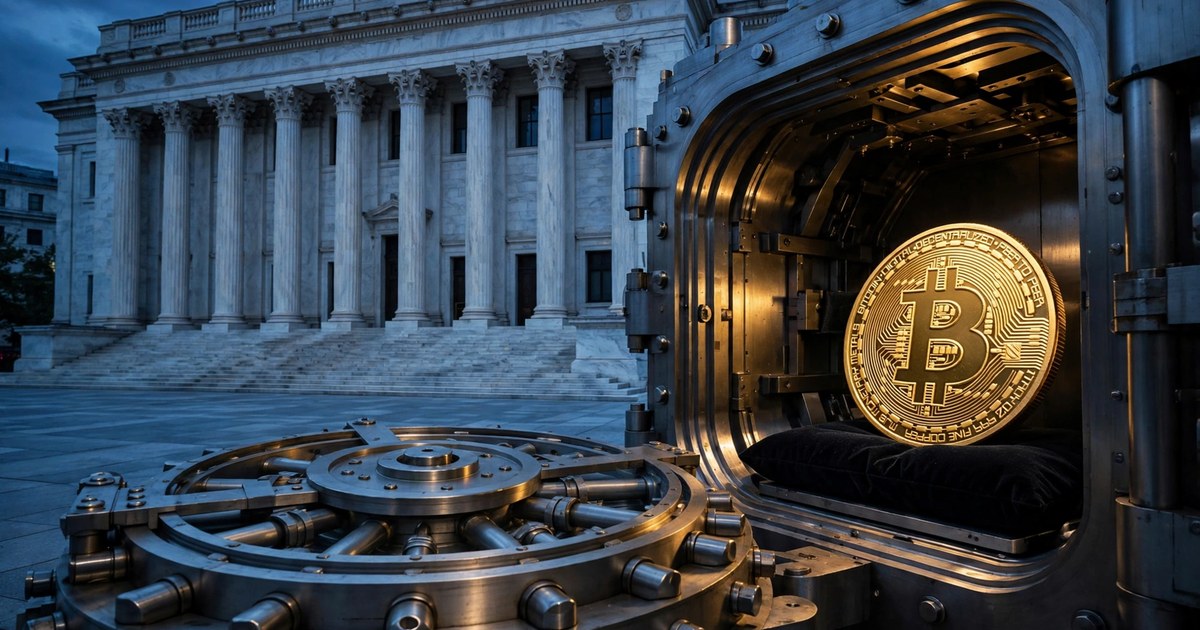
The world's two largest custody banks now watch over a combined $93.9 trillion in client assets — and both of them want to hold your Bitcoin next. Citi's Custody+ platform is targeting a live launch before the end of 2026, BNY already holds Bitcoin for ETF issuers and expanded into Abu Dhabi in May 2026, and Deutsche Bank is reportedly weeks away from launching its own service in Germany. After a $6.3 billion hack at Binance drove $4.72 billion in customer withdrawals, the question is no longer whether banks will enter crypto custody. It is whether trusting one with your coins is safer than holding them yourself — and the answer depends on five checks most investors never make.
This is not a distant Wall Street experiment. Citi alone reports $34.5 trillion in assets under custody and administration, while BNY — the world's largest custodian — reports $59.4 trillion. Together, that is roughly $94 trillion of safekeeping infrastructure now being pointed at an asset class that was invented to exist without banks at all. VanEck's head of digital asset research, Matthew Sigel, noted that Citi will become the sixth of 29 globally systemically important banks to launch or announce institutional Bitcoin custody, joining BNY, Standard Chartered, Société Générale, State Street and Deutsche Bank. The race is on, and retail investors will feel its effects even if the first products are built for institutions.
Why Banks Suddenly Want Your Bitcoin
For years, banks stayed away from holding crypto directly because the rules were unclear and the accounting was punishing. Two regulatory shifts changed that. The OCC's Interpretive Letter 1183, issued in March 2025, confirmed that national banks can hold crypto for customers without prior approval. Separately, the SEC's SAB 122 removed the accounting rule that had made custody costly for banks. A later OCC letter, 1184, confirmed that banks can execute trades for custody clients and use sub-custodians. In plain terms: the legal door is open, and the balance-sheet penalty is gone.
Congress, meanwhile, is stuck. The CLARITY Act — the market-structure bill that would divide crypto oversight between the SEC and the CFTC — passed the House 294–134 in July 2025, but a Senate procedural vote to begin debate failed 49–50 on September 15, 2026, well short of the 60 votes needed. With comprehensive legislation widely seen as unlikely before 2027, regulators are moving ahead without Congress: the SEC proposed Regulation Crypto Assets in August 2026 and launched an innovation exemption for tokenized securities venues in September, while the CFTC sent its crypto market rules to the White House for review. Banks are building on agency rules, not waiting for a statute — which also means a future administration could change the framework.
The commercial trigger was the Binance hack. On October 29, 2026, Binance disclosed a breach of its hot wallets that TRM Labs attributes to North Korea's TraderTraitor group — an attribution the FBI backed on October 31. Roughly $6.3 billion in digital assets were compromised, about $2.85 billion of it later frozen or intercepted, making it the largest crypto theft in history. Binance pledged to cover customer losses from its own reserves and resumed withdrawals in phases from November 1 — and customers still pulled a net $4.72 billion. That is about 2.1 percent of the exchange's assets under management walking out the door in days. Every bank that holds Bitcoin for a client is one less reason for that client to leave their wealth with an exchange. The timing is not a coincidence.
Who Is Actually Live, and Who Is Still Building
Not every bank announcement means the same thing. Some banks are live today, some are weeks away, and some are still assembling the pieces. Here is where the major names stand, based on current reporting:
BNY — live, and furthest along. The world's largest custodian, with $59.4 trillion in assets under custody, started holding Bitcoin and Ether for ETF issuers in 2022. In May 2026 it expanded custody to Abu Dhabi, its first direct crypto custody outside the US, and in August 2026 it added staking to its crypto custody service through a partnership. If any bank has a track record in crypto custody, it is BNY.
Citi — launching before year-end 2026. In February 2026, the executive leading Citi's digital asset custody buildout said the bank aimed to "make Bitcoin bankable": clients would hold Bitcoin in the same safekeeping accounts as their securities and cash, with shared reporting, tax workflows and cross-margining. On August 18, 2026, Citi announced Custody+, a modular suite with Bitcoin as the first supported asset, targeting a live launch before the end of 2026. Citi says it holds $34.5 trillion in assets under custody and administration. The open question is whether it meets its year-end date.
Deutsche Bank — reportedly weeks away. Germany's largest lender told Reuters on the sidelines of the IMF and World Bank meetings in Bangkok that its Bitcoin custody service for corporate clients is just weeks away. The service starts in Germany, covers large assets such as Bitcoin and Ether, and is planned to expand to Asia next year. Deutsche Bank announced the service on September 16, 2026, for European corporate and institutional clients, subject to regulatory approval.
State Street — live for tokenization, unclear for Bitcoin. Reports disagree: one guide says the bank was preparing a 2026 launch through its State Street Digital unit, working with Copper and Taurus, while other reporting says State Street already launched a Digital Asset Platform with Taurus in January 2026, covering wallet management, custody and settlement for tokenized funds, tokenized deposits and stablecoins. Until State Street clarifies, it is best seen as live for tokenization but not yet fully live for Bitcoin.
Standard Chartered — buying, not building. It launched custody in the UAE in September 2024 and, in May 2026, launched what it called Hong Kong's first institutional crypto custody service from a global systemically important bank.
JPMorgan — trading yes, custody no. JPMorgan confirmed it will let clients trade Bitcoin and other crypto, but custody is "not on the near-term horizon," according to Scott Lucas in a CNBC appearance, and the bank will lean on third-party custodians. It is instead piloting a USD deposit token (JPMD) on Base for 24/7 on-chain settlement. Morgan Stanley, meanwhile, applied to the OCC in February 2026 for a national trust bank charter for an entity offering custody, trading, staking and stablecoin services. U.S. Bank already offers Bitcoin custody to institutional managers through NYDIG as sub-custodian.
One pattern matters more than any single launch: crypto-native firms still dominate the plumbing. Coinbase reported $246 billion in assets on its custody platform in June 2026, and BitGo — listed on the NYSE since January 2026 — reported $65.2 billion across 5,833 clients in the second quarter. Banks are entering a market where specialists already hold hundreds of billions. Their edge is not technology; it is trust, regulation and distribution to clients who already bank
 with them.
Exchange vs Bank vs Self-Custody: The Honest Comparison
Most investors only ever face one custody question — exchange or wallet? Banks add a third option, and each choice trades one risk for another. This table is the core of the decision:
| Factor | Crypto Exchange | Bank Custody | Self-Custody (Hardware Wallet) |
|---|---|---|---|
| Who holds the keys | The exchange | The bank (or its sub-custodian) | You, and only you |
| If the provider is hacked | Your coins are in the blast radius (see: Binance, $6.3B) | Segregated client assets; bank balance sheet behind operations | Not affected — your keys never leave your device |
| If you lose access | Password reset, support ticket | Bank recovery processes, identity verification | No recovery — lost seed phrase means lost coins, permanently |
| Regulatory protection | Varies by jurisdiction; often none for crypto | Banking regulation, audits, capital rules | None — you are your own bank |
| Can your coins be frozen? | Yes, by the exchange or by court order | Yes, by court order or sanctions compliance | No — nobody can freeze a wallet you control |
| Trading convenience | Instant, 24/7 | Slower; built for safekeeping, not speed | Requires transfers to an exchange to sell |
| Typical cost | Trading fees; custody usually free | Custody fees (institutional pricing today) | One-time hardware cost (~$50–$150) |
| Available to retail today? | Yes | Mostly institutions for now | Yes |
The uncomfortable truth: there is no option with zero risk. Exchanges are convenient and hackable. Self-custody is sovereign and unforgiving. Bank custody is regulated and freezable. The right answer depends on how much you hold, how often you trade, and which failure mode scares you most. For a full breakdown of how to protect coins you hold today, read our guide on how to protect your crypto from hacks and scams.
What Most People Get Wrong About Bank Custody
The biggest misconception is that putting Bitcoin in a bank makes it "like money in the bank." It does not. Traditional bank deposits in many countries are covered by deposit insurance up to a limit — but crypto held in custody is not a deposit, and it is not covered by deposit insurance. What bank custody does offer is segregation: your assets are supposed to be held separately from the bank's own assets, so if the bank fails, your coins should not be swallowed by its creditors. That is a meaningful protection, and it is exactly what failed at some collapsed crypto firms, where customer assets were mixed with company funds. But segregation is a legal and operational promise, not a government guarantee — and its strength depends on the jurisdiction, the account structure and the fine print.
The second misconception is that bank custody ends self-custody risk. It transfers it. You swap the risk of losing your seed phrase for the risk of the bank's compliance department freezing your account, a court ordering seizure, or a sub-custodian failing. Banks also run anti-money-laundering and sanctions screening on every client: if your coins touched a sanctioned mixer three hops ago, a bank may refuse them or freeze them in ways a hardware wallet never would. That is the price of the regulated rails.
The third misconception is that this is only for billionaires. It starts that way — Citi, BNY and Deutsche Bank are launching for institutions — but the pattern from ETFs is instructive: institutional rails become retail products within a few years. Spot Bitcoin ETFs were institutional plumbing first; today anyone with a brokerage account can buy one. Bank custody will likely follow the same path, through wealth-management clients first, then broader retail. If you are building a long-term position now, the custody question will reach you sooner than you think. Our beginner's guide to buying, storing and growing crypto walks through the basics of sizing a position before you worry about where to store it.
The 5 Checks Before You Trust Any Custodian
Whether the custodian is a bank, an exchange or a specialist firm, run these five checks before moving coins:
1. Segregation, in writing. Ask whether your assets are held in segregated accounts, separate from the custodian's own assets, and get it in the account agreement — not in marketing. If the firm lends, rehypothecates or stakes your coins without your explicit instruction, that is a red flag, not a feature.
2. Who actually holds the keys. Many "bank custody" services use a sub-custodian — a specialist firm that holds the keys while the bank holds the relationship. U.S. Bank, for example, offers custody through NYDIG as sub-custodian. That is not a dealbreaker, but you should know whose vault your coins sit in, because that firm's security is your security.
3. Insurance — and what it actually covers. Ask for the crime-insurance limit, what perils it covers (hot-wallet theft vs. cold-storage theft vs. employee fraud), and whether the limit is per-incident or aggregate across all clients. A headline "insured" claim can hide a limit far below total client assets.
4. Withdrawal speed and freeze policy. How fast can you get your coins out, and under what circumstances can withdrawals be paused? The Binance episode showed that withdrawal timing matters most exactly when everyone wants out at once. A custodian that can freeze withdrawals for "security reviews" during a crisis is a custodian you cannot rely on in a crisis.
5. Proof of reserves and audits. Does the custodian publish attestations or undergo independent audits of client assets? After the collapses of 2022, proof-of-reserves reporting became a baseline expectation for exchanges; banks bring regulated audits, but you should still ask what is published and how often. If a custodian cannot show your coins exist, assume the worst.
For exchange users specifically, our post-hack checklist — 10 checks before you send a dollar after the Binance hack — covers the exchange-side version of these questions, and our ranking of the best crypto exchanges for fees, security and beginners shows how platforms compare today.

What This Means for Bitcoin's Price and Your Strategy
Bank custody is not a price catalyst by itself — the near-term effect on BTC trading is likely limited, because the first products serve institutions that already own Bitcoin through ETFs. The real effect is structural: every bank that can hold Bitcoin removes a reason for a pension fund, a corporate treasury or a wealth client to stay out. Spot Bitcoin ETFs already hold about $98.1 billion, and in Q3 2026 US spot ETFs added 79,800 BTC (about $6.2 billion) while treasury-company buying collapsed from $7.1 billion in Q2 to about $1 billion. ETFs replaced treasury companies as the market's largest identifiable buyer. Bank custody is the next layer of that same plumbing: ETFs gave institutions a way to own Bitcoin exposure; custody gives them a way to own the asset itself, in the same account as their stocks and bonds.
For individual investors, the practical takeaway is a custody plan, not a trade. Split holdings by purpose: keep trading funds on a reputable exchange, keep long-term holdings in self-custody or — once available to you — with a custodian that passes the five checks above, and never keep everything in one place. The Binance hack's lesson was not "exchanges are dead" — withdrawals resumed and the exchange covered losses. The lesson was concentration: any single custodian, bank or exchange, is a single point of failure, and $4.72 billion in withdrawals was the market pricing that lesson in real time.
Bitcoin traded near $77,000 in early November 2026, with US spot ETFs posting $643 million in outflows on October 30 and another $399 million on November 2 — the first net outflow month for Bitcoin ETFs since June. Short-term flows are choppy, and implied volatility on near-dated options jumped to about 51% around the midterm elections. None of that changes the custody story, which plays out over years, not weeks. But it does mean the custody decision you make now will be tested by volatility soon: if you cannot withdraw during a panic, your custody choice is your risk management.
FAQs
Can I put my Bitcoin in a bank today?
As a retail investor, generally not yet — Citi, BNY and Deutsche Bank's custody services are launching for institutional and corporate clients first. Retail access is expected to follow through wealth-management channels, but no broad retail launch has been announced. Today, retail investors choose between exchanges and self-custody.
Is Bitcoin in a bank insured like a bank deposit?
No. Crypto held in custody is not a deposit and is not covered by deposit insurance. Bank custody offers segregation of client assets and regulated audits, and custodians may carry crime insurance, but the coverage, limits and perils vary — always read the agreement.
Can a bank freeze my Bitcoin?
Yes. A bank custodian must comply with court orders, sanctions and anti-money-laundering rules, and can freeze or refuse assets that fail compliance screening. Self-custody is the only arrangement nobody can freeze.
What is the difference between bank custody and a Bitcoin ETF?
An ETF gives you exposure to Bitcoin's price through a fund share; you never own the underlying coins. Bank custody means the bank holds actual Bitcoin on your behalf, in your account. Custody is ownership with a custodian; an ETF is exposure without ownership.
Is self-custody still the safest option?
It is the most sovereign option, not automatically the safest. Self-custody eliminates counterparty risk but puts 100% of the risk on you: a lost seed phrase, a phishing attack or a faulty backup means permanent loss. For large holdings, many investors combine self-custody with a regulated custodian to split the risk.
When will Citi's Custody+ actually launch?
Citi announced on August 18, 2026, that Custody+ targets a live launch before the end of 2026, with Bitcoin as the first supported asset. The bank has not confirmed a specific date, and meeting the year-end target is the key thing to watch.
Conclusion
The $94 trillion custody race is the quietest revolution in crypto: the institutions that once dismissed Bitcoin are now competing to hold it. BNY is live, Citi is launching before year-end, Deutsche Bank is weeks away, and the regulatory door is open even while Congress is stalled. For investors, the opportunity is real but the homework is mandatory — segregation in writing, clarity on who holds the keys, real insurance limits, withdrawal speed and published audits. No custodian removes risk; each one moves it somewhere else. The investors who come out ahead will be the ones who chose their custodian the way they choose their investments: on evidence, not on the logo on the door.
Sources: Crypto Custody: Citi, BNY, State Street Lead Bank Push in 2026; Top Banks Offering Crypto Custody Services in 2026; VanEck executives on Citi's institutional Bitcoin custody plans; Wall Street's Bitcoin Flip: Citi Targets 2026 Crypto Custody; Deutsche Bank Says Its Bitcoin Custody Is Weeks Away; Bitcoin ETF Inflows Hit $6.2B in Q3.