What Is Toncoin (TON)? Telegram's Coin Is 87% Below Its $8.25 Peak — While $4.8B in USDT Moves on Its Network Every Month
Telegram's coin is down 87% from its $8.25 peak — yet $4.8 billion in USDT moved on its network last month and Telegram is rolling out its Gram Wallet to 1 billion users. Here's what Toncoin actually is, why it was renamed Gram, and whether the crash or the usage tells the truth.
Telegram's Coin Is Down 87% — While $4.8 Billion in USDT Moves on Its Network Every Month
Toncoin (TON) trades near $1.10 in early November 2026, 87% below its June 2024 all-time high of about $8.25. Yet in October 2026, $4.8 billion in USDT moved across its network in a single month — up 34% from September — and Telegram is now rolling out its self-custodial Gram Wallet to a user base of around 1 billion people. The price chart says Toncoin is dying. The usage data says the opposite. This guide explains what Toncoin actually is, why it was renamed Gram, and which of those two stories is closer to the truth.
Short version: TON is the native coin of The Open Network, a layer-1 blockchain built to put crypto inside Telegram. It pays for transactions, secures the network through staking, and powers Telegram's mini-apps, payments and services. In 2026 Telegram stopped being a distant supporter and became the network's main driver — founder Pavel Durov announced on May 4, 2026 that Telegram would replace the TON Foundation as the network's primary operator and become its largest validator. A month later the coin was renamed Gram. The token did not change and no swap was needed. What changed is who runs the show — and how fast real payment volume is growing underneath a collapsing price.
What Is Toncoin (TON)?
Toncoin is the native cryptocurrency of The Open Network (TON), a proof-of-stake layer-1 blockchain designed for speed and scale. The network was originally built by Telegram's team in 2018, blocked by the U.S. Securities and Exchange Commission in 2020, and then continued by an independent community as The Open Network. Telegram kept its distance for years — until 2026.
TON's design goal was always different from most blockchains: instead of asking users to download a new wallet, learn seed phrases and find an exchange, it meets them where they already are — inside Telegram, an app with around 1 billion users. Crypto on TON is meant to feel like sending a message, not operating a trading terminal. That distribution advantage is the entire investment case, and it is also the reason the coin's 87% drawdown looks so strange next to its rising usage.
The coin has three jobs. First, it pays transaction fees on the network — fees Durov said dropped roughly sixfold to near-zero levels in May 2026. Second, it is staked by validators to secure the chain, with holders earning staking rewards. Third, it is the money of Telegram's own economy: mini-app payments, Telegram services and in-app purchases all settle in TON or in USDT running on TON's rails.
As of early November 2026, about 2.85 billion TON are in circulation, the market capitalisation is roughly $3.1 billion, and the token ranks around 28th among all cryptocurrencies. The all-time high of about $8.25 was set on June 14, 2024. The price in early November sits near $1.10 — a level that has to be understood alongside everything else that happened this year.
Why the Coin Is Now Called Gram
In June 2026 the token long known as Toncoin was officially renamed Gram — the name Telegram used in its original 2018 plan for the network. Users did not need to swap anything, and nothing about the supply, the chain or their balances changed. It was a rebrand, not a new token.
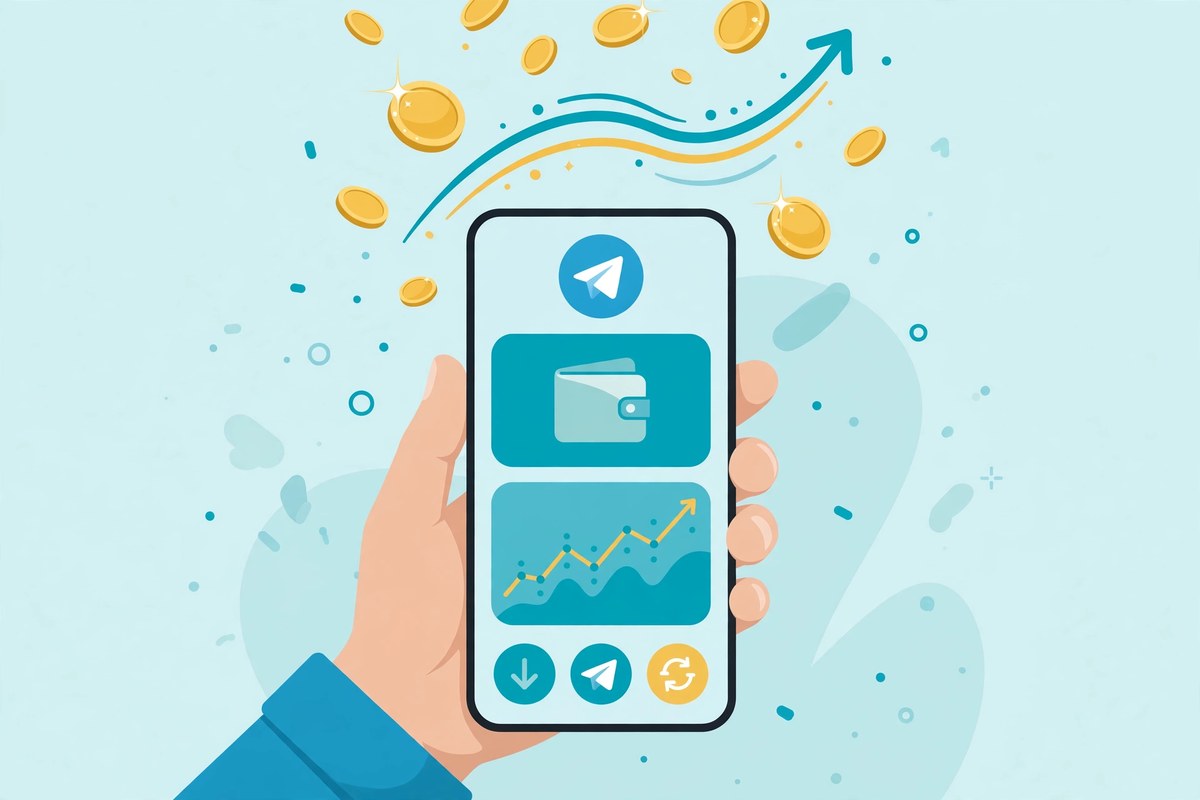
The rename has caused real confusion, and it is worth clearing up plainly. If you hold TON on an exchange, you hold Gram — they are the same asset. Most exchanges, data sites and wallets still display the old ticker, TON, which is why this article uses both names. The rebrand is spreading through the regulated products first: CoinShares and 21Shares have already renamed their Toncoin staking ETPs to Gram, and Telegram's own wallet products are following. Telegram began rolling out its self-custodial Gram Wallet to select users in late 2026, with plans to reach its full user base, while its existing Wallet product was rebranded to Walt and refocused on advanced trading across more than 300 assets.
The rename matters because it signals intent. Telegram is not treating TON as an experiment it can quietly drop. It is putting its own name on the money layer of the app — and building the wallet that 1 billion people will meet first.
The 2026 Timeline: From Telegram Takeover to the Wallet Rollout
TON's 2026 has been a whipsaw. The year began quietly, then Telegram's takeover announcement in May triggered a doubling in weeks, from about $1.30 to nearly $2.90. By autumn the token had given all of that back and more — then surged 60% in three days in late October to a local high of $2.215, before sliding again to near $1.10 in early November. The full sequence:
| Date | What happened | What it meant |
|---|---|---|
| May 4, 2026 | Durov announces Telegram will replace the TON Foundation as the network's main driver and become its largest validator; network fees drop ~6x | Telegram goes from supporter to operator |
| June 2026 | Toncoin officially renamed Gram; no swap required | The token gets Telegram's original name back |
| July–September 2026 | Price gives back the May rally; lending TVL drifts 12% below its July peak | Speculators leave; DeFi cools |
| October 2026 | Coinbase delays TON sends for a time (network stays up); TON jumps 22%, then 60% in three days to $2.215 | Volatility returns on Telegram-integration news |
| October 2026 | USDT volume hits $4.8B for the month, up 34%; daily active addresses reach 1.2 million | Real payment usage quietly accelerates |
| November 2026 | Gram Wallet rollout begins; CoinShares and 21Shares rebrand staking ETPs to Gram | Distribution and regulated access expand |
The pattern is the story. Every time the price rallied, it was on Telegram news. Every time it fell, the broader crypto market fell with it — Bitcoin itself is about 40% below its October 2025 peak near $126,080. TON's crash is real, but it is not a TON-specific collapse.
The Paradox: Price Down 87%, Usage Up
Here is the number that makes this article worth reading. In October 2026, TON processed $4.8 billion in on-chain USDT volume — up 34% from September. USDT balances on the network rose 18% to $1.9 billion. Daily active addresses climbed to 1.2 million, up from 980,000 in September. And 62% of that USDT volume came from wallets with a history of mini-app interactions — real people paying for things inside Telegram, not traders chasing a chart.
The economics of the network have shifted underneath the price. Fee revenue from mini-apps now exceeds 60% of TON's total on-chain fees. Mini-app developers generated an estimated $180 million in gross revenue in October, with TON capturing about $9 million of it. The median mini-app payment is just $3.40: small, high-frequency and recurring. Liquidity is rotating out of TON-based yield farms and into wallet and payment infrastructure.
Put plainly: the speculative DeFi summer that TON's yield farmers expected in early 2026 never came, and lending TVL is down 12% from its July peak. But the consumer-payments business that Telegram actually wanted — a billion people paying $3.40 at a time inside a chat app — is growing 34% a month. The token price reflects the first story; the usage data reflects the second.
The bull case writes itself, and it is worth stating honestly. If TON can monetise even 10% of Telegram's 1 billion users at $1 per month in on-chain fees, that is $1.2 billion in annual revenue at current fee rates. The bear case is equally real: regulatory scrutiny of Telegram-linked payments could slow or pause the funnel, and a token that has already fallen 87% can fall further if the wallet rollout stalls. Neither case is a prediction — both are the stakes.

How TON Works — In Plain English
TON is a proof-of-stake blockchain: validators lock up TON as collateral to secure the network and earn rewards, and holders who do not run a validator can delegate their stake. The network scales through sharding — splitting work across many chains so a surge in mini-app traffic does not clog the whole system.
For a normal user, none of that is visible. What is visible is the wallet. Telegram now has two wallet products, and the distinction matters. Gram Wallet is the new self-custodial wallet rolling out to users — "self-custodial" means you control the keys, so no exchange or company can freeze your funds. Walt, the rebranded version of Telegram's original Wallet, is aimed at more advanced trading across 300-plus assets. Gram Wallet is the one built for a billion first-time crypto users — the product that decides whether TON's distribution advantage turns into real adoption.
TON's other advantage is the one people underestimate: stablecoins. USDT on TON is the quiet workhorse — $4.8 billion a month and rising — because it lets Telegram's users hold dollars and pay merchants without ever touching a volatile token. TON the asset can fall 87% while USDT on TON keeps growing, because they serve different users. The asset is the investment; the rails are the business.
For readers comparing networks, the right frame is not "TON versus Ethereum" on technology — it is distribution. Ethereum and Solana win on developer ecosystems and liquidity. TON's edge is a single app with around 1 billion users that can put a wallet in front of every one of them. No other layer-1 has that.
TON: May 2026 vs November 2026
| Metric | May 2026 (Telegram takeover) | November 2026 (today) |
|---|---|---|
| Price | ~$1.30 before the announcement, ~$2.90 after | ~$1.10, about 87% below the $8.25 all-time high |
| Who runs the network | TON Foundation (independent) | Telegram is the main driver and largest validator |
| Token name | Toncoin (TON) | Gram — same token, rebranded in June 2026 |
| Monthly USDT volume | Growing, but DeFi-led | $4.8B in October, up 34% month-on-month |
| Daily active addresses | Under 1 million | 1.2 million in October |
| Main source of fees | Trading and DeFi | Mini-apps: over 60% of on-chain fee revenue |
| Wallet | Telegram Wallet (custodial) | Gram Wallet rolling out; Walt for advanced trading |
| Regulated access | Toncoin ETPs | ETPs rebranded to Gram by CoinShares and 21Shares |
What Most People Get Wrong About Toncoin
The "Telegram owns TON" myth. Telegram built the original network, was forced out by the SEC in 2020, and the chain was continued by an independent community. Telegram only became the main driver and largest validator in May 2026 — and even now it is the largest validator, not the owner. The network is still operated by a distributed validator set, and Durov himself argued that Telegram's role strengthens decentralisation rather than weakening it. That claim is debatable, but "Telegram owns TON" is simply wrong.
The "the rename means a new token" myth. Gram is Toncoin with a new name. No swap, no migration, no new supply. If an exchange, wallet or article tells you to "convert TON to Gram," treat it as a scam until proven otherwise — the rename is exactly the kind of confusion that fake "migration" scams exploit.
The "TON crashed because Telegram abandoned it" myth. The opposite happened. Telegram deepened its involvement at every step in 2026: takeover as operator, largest validator, the rename, the Gram Wallet rollout. TON fell because the entire crypto market fell — Bitcoin is 40% off its peak, Ethereum is below $2,150, and altcoins have been hit far harder than Bitcoin. Blaming Telegram for TON's price ignores the market it fell in.
The "TON is just a Telegram memecoin" myth. A memecoin does not process $4.8 billion a month in USDT, run a staking economy, or host a mini-app ecosystem generating $180 million a month in developer revenue. TON's price behaves like a speculative asset because it is one — but the network underneath is a payments business, and that business is growing while the price falls.
The "a cheap coin is a dead coin" myth. Price and usage have pointed in opposite directions all year. TON's daily active addresses rose 22% from September to October while the token slid. A coin can be down 87% and alive, just as a coin can be at all-time highs and hollow. The question is never the price alone — it is whether anyone uses the thing, and on TON, more people use it every month.
The Risks Nobody Should Skip
The honest version of this article includes the risks, because they are substantial. First, validator concentration: Telegram becoming the largest validator is a genuine decentralisation question, and critics are right to ask what happens if one actor controls that much stake. Second, regulatory risk: Telegram-linked payments are exactly the kind of thing regulators scrutinise, and the EU's MiCA regime has already forced Binance to close accounts in France, Spain, Italy and Poland in 2026. Third, exchange risk: Coinbase delayed TON sends for a time in October 2026, a reminder that your ability to move the token depends on intermediaries even when the network itself stays up. Fourth, volatility: a token that rallied 60% in three days and then gave it back is not a stable store of value. Fifth, the rename itself: two names for one asset is a permanent source of confusion, and confusion is where scams live.
None of those risks makes TON a bad project. All of them make it a project to understand before touching — and a reason to keep any holding on a wallet you control rather than an exchange account. Our guide to storing crypto safely covers the same self-custody principles that apply to TON: 3.7 million Bitcoin are already lost forever, mostly to lost keys and exchange failures, and the lesson transfers to every coin.
Who Should Care About Toncoin?
If you use Telegram every day, you should care, because TON is the payment layer being built into the app you already live in. The Gram Wallet rollout means crypto will arrive for a billion people not as a trading product but as a "send money" button — and that is a genuinely different adoption path from every other blockchain.
If you are an investor, the question is narrower: is a token down 87% with rising usage a bargain, or a falling knife with a good story? The usage data says the network is finding real product-market fit; the price says the market does not believe it yet. Both can be true for a long time. This article is not financial advice, and TON's volatility in 2026 is the reason why.
If you are a builder, TON's mini-app economy is worth watching regardless of the token price: $180 million a month in developer revenue, a median payment of $3.40, and distribution to a billion users without an app store.
For context on how other large networks are navigating the same brutal market, see our explainers on Sui, TRON and Uniswap — and if you are comparing exchanges to buy or move coins on, our ranking of the best MiCA-licensed exchanges in Europe is the practical companion to this guide.
Frequently Asked Questions
What is Toncoin (TON)?
Toncoin is the native cryptocurrency of The Open Network, a proof-of-stake layer-1 blockchain closely tied to Telegram. It pays transaction fees, secures the network through staking, and powers payments and services inside Telegram's mini-app ecosystem. In June 2026 it was renamed Gram, but it is the same token — no swap was needed.
Is Toncoin the same as Gram?
Yes. Gram is the new name for Toncoin, announced in June 2026 as a return to the name Telegram used in its original 2018 plan. Your TON balance is your Gram balance. Most exchanges still show the ticker TON, while newer products — including the CoinShares and 21Shares staking ETPs and Telegram's Gram Wallet — use the Gram name.
Why is Toncoin down so much?
TON trades near $1.10 in early November 2026, about 87% below its June 2024 all-time high of $8.25. The fall is mostly a market-wide move — Bitcoin is about 40% below its peak and altcoins have fallen further — not a TON-specific collapse. TON rallied to nearly $2.90 after Telegram's May 2026 announcement and spiked 60% in three days in late October, but each rally faded with the broader market.
How many people use TON?
TON averaged 1.2 million daily active addresses in October 2026, up from 980,000 in September. Telegram itself has around 1 billion users, and the Gram Wallet rollout aims to reach them all. Monthly USDT volume on the network reached $4.8 billion in October, up 34% from September.
Can I buy Toncoin in Europe?
Yes — TON is listed on major exchanges, but availability varies by country and the EU's MiCA licensing regime is reshaping which platforms can serve European customers. Check our ranking of the best MiCA-licensed exchanges in Europe for platforms that are authorised to operate in the EU, and always withdraw to a wallet you control.
Is Toncoin a good investment?
That depends on whether you believe rising usage eventually lifts the price. The network's payment volume, active addresses and mini-app revenue are all growing while the token sits 87% below its peak — a genuine divergence. But the risks are real: validator concentration, regulatory scrutiny of Telegram-linked payments, and extreme volatility. This article is educational, not financial advice — never invest money you cannot afford to lose.
Conclusion
Toncoin is the strangest story in crypto right now: a coin down 87% from its peak, attached to a network whose real usage is growing 34% a month. Telegram's takeover in May 2026, the Gram rename in June, and the Gram Wallet rollout now underway are not the actions of a company walking away — they are the actions of a company betting its billion-user app on this chain. Whether that bet pays off for holders is an open question: the price and the usage data disagree with each other. Watch the wallet rollout and the monthly USDT volume — not the daily chart — and you will know which one is winning.