What Is Shiba Inu (SHIB)? The $0.0000044 Meme Coin 95% Below Its Peak — and Why Its Burn Just Stopped
SHIB trades at $0.0000044 — 95% below its 2021 peak — and the burn that was supposed to make it scarce removed just $82 worth of tokens last week. Here is what SHIB actually is, what Shibarium does, and the 5 myths that cost holders money.
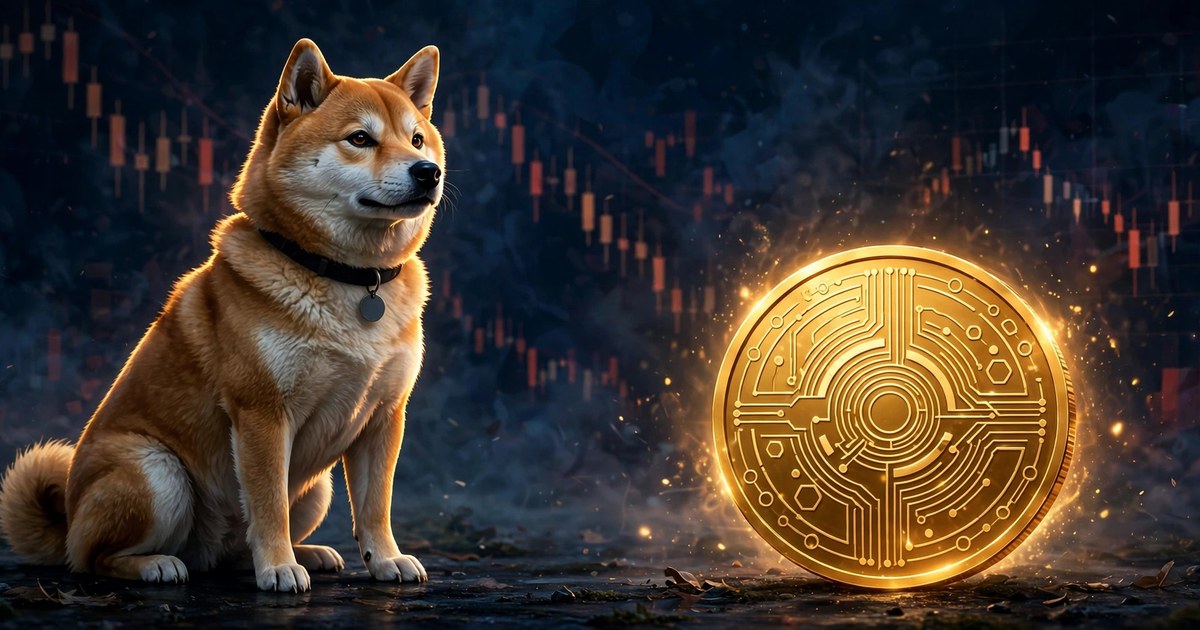
Shiba Inu (SHIB) trades at about $0.0000044 — roughly 95% below its October 2021 peak — and the token burn that was supposed to make it scarce removed just $82 worth of SHIB in an entire week. This guide explains what SHIB actually is, how its Shibarium network works, why the burn maths does not add up, and the five myths that keep costing holders money.
SHIB is the second-biggest meme coin in crypto, with a market capitalisation of about $2.6 billion. It has survived five years, a 95% crash, a bridge hack and the near-death of its own Layer 2 network. But survival is not the same as an investment case — and the numbers tell a very different story from the one on social media.
What Is Shiba Inu (SHIB)?
Shiba Inu launched in August 2020 as an experiment in decentralised community building. Its creator, known only by the pseudonym Ryoshi, issued one quadrillion SHIB tokens on the Ethereum blockchain as an ERC-20 token — then disappeared, leaving the project in the hands of its community. The branding was a joke with a point: SHIB called itself the "Dogecoin killer", a direct challenge to the original meme coin.
The joke worked better than anyone expected. In October 2021, at the peak of the last bull market, SHIB hit an all-time high of $0.00008616 and briefly became one of the ten largest cryptocurrencies in the world.
But the price has spent the five years since giving almost all of it back. As of November 9, 2026, SHIB trades at about $0.0000044, down 41.8% in 2026 alone and 56.6% over the past year, according to Finnhub market data. It is down roughly 95% from its record high. The market cap of about $2.6 billion puts it around 38th–48th among all cryptocurrencies — a long way from the top 10 it once occupied.
Unlike Bitcoin, SHIB has no capped issuance schedule, no halving, and no yield for holding it. Its value comes from exactly one thing: how many people want to buy it. That makes the supply story — and the famous "burn" — essential before anyone touches it.
SHIB Tokenomics: One Quadrillion Tokens, 589 Trillion Left
SHIB started with a fixed supply of one quadrillion tokens — 1,000,000,000,000,000. Nobody can mint more. That sounds scarce until you do the division: at today's price, a single dollar buys roughly 227,000 SHIB. The huge supply is why the price has so many zeros, and why "SHIB to $0.01" would require a market capitalisation larger than Bitcoin's.
| Supply fact | Number | Source |
|---|---|---|
| Original total supply | 1,000,000,000,000,000 SHIB (1 quadrillion) | Project design |
| Burned to date | ~410.8 trillion SHIB (41.08% of supply) | Shibburn tracker |
| Circulating supply now | ~589.2 trillion SHIB (99.96% of remaining supply) | Shibburn / CoinGecko |
| Biggest single burn | 410+ trillion SHIB by Vitalik Buterin, May 2021 | On-chain record |
| Weekly burn (week to Nov 1, 2026) | 17.4 million SHIB — worth about $82 | Shibburn via KuCoin |
| Daily burn, recent average | ~2.49 million SHIB per day | Shibburn via KuCoin |
The single most important fact in that table is the Vitalik Buterin burn. In May 2021, Ryoshi had sent half of the entire SHIB supply to Ethereum co-founder Vitalik Buterin. Buterin burned more than 410 trillion tokens — 90% of what he received — in a single transaction, and donated the rest to charity. That one act removed over 40% of all SHIB that will ever exist. Everything burned since then, across more than 21,000 transactions, adds up to a rounding error by comparison.
There are no token unlocks to worry about: all SHIB already exists, and 99.96% of the remaining supply is in circulation. But there is also no mechanism that reduces supply on its own. SHIB does not burn tokens automatically. A burn only happens when somebody voluntarily sends tokens to a "dead" wallet, or when Shibarium fees are converted into SHIB and destroyed. If nobody sends tokens and the network is quiet, nothing burns at all.
The Shiba Inu Ecosystem: BONE, LEASH, TREAT, ShibaSwap and Shibarium
Over the years, the Shiba Inu team built an ecosystem around the meme coin, trying to turn a joke token into a functioning network. Here is what each piece does:
- SHIB — the main token. Used for trading, speculation and payments where accepted. No yield, no governance power, no fee income for holders.
- BONE — the governance token (250 million supply) and the gas token of Shibarium. BONE holders vote on proposals, and BONE pays for transactions on the Layer 2 network.
- LEASH — a scarce token with a supply of about 107,647, originally an experimental rebase token, later repositioned as an exclusivity and rewards token.
- TREAT — the newest ecosystem token, intended for rewards and governance.
- ShibaSwap — the project's decentralised exchange, where users can swap tokens, stake and provide liquidity.
- Shibarium — the Layer 2 blockchain built on top of Ethereum, launched in August 2023 to make transactions cheaper and to burn SHIB with part of its fees.
On paper, that is a complete crypto ecosystem. In practice, the usage numbers tell a different story — and Shibarium is where the gap between pitch and reality is widest.
Shibarium in 2026: The Numbers Nobody Shares
Shibarium launched in August 2023 with a clear promise: cheap transactions on a dedicated Shiba Inu chain, with part of every fee converted into SHIB and burned. A busy Shibarium would mean a shrinking SHIB supply. The problem is that Shibarium is not busy — by several measures, it is barely alive.
Total value locked (TVL) — the capital deposited on the network — stood at about $41,104 on October 30, 2026, according to DefiLlama data cited in a recent Shiba Inu review. That is down 99.4% from its December 2024 peak of $6.44 million.
A separate reading on November 5 put TVL at around $130,000. Either way, the network holds less capital than a single family car costs. Daily transactions have collapsed too: Shibarium processed about 1,020 transactions a day in early November, down from 6,370 on October 31, and the official Shibarium account on X has been inactive since July 13, 2026.
Two events explain the decline. In September 2025, an attacker used a flash loan of about 4.6 million BONE to take control of validator signing keys and drain assets from the Shibarium bridge, with losses estimated at $2.4–3 million. Then in January 2026, K9 Finance — one of Shibarium's main applications — voted to shut down its Shibarium products permanently. The bridge hack also broke the main burn route, because the fee-to-burn mechanism runs through the bridge.
That is the direct link between Shibarium's collapse and the burn halt: Shibarium fees feed part of the burn, so a quiet chain means hardly any fees accrue — and nothing left to burn.
The Burn Myth, Busted With Maths
The most persistent SHIB myth is that burning will make the token scarce enough to send the price to $0.01 or even $1. The maths says otherwise — and the recent burn data proves it.
In the week to November 1, 2026, the Shibburn tracker recorded just 17.4 million SHIB burned — an average of 2.49 million tokens a day, worth about $82 for the whole week. On the Sunday itself, the tracker showed zero burns. The week before, a single day saw burn activity rise 100% — to 244,798 tokens. These are not numbers that move a 589-trillion-token supply. They are a rounding error: measured against circulating supply, the weekly burn is a share in the range of hundred-thousandths of a percent.
| Burn scenario | Tokens removed per year | Share of 589T supply |
|---|---|---|
| Actual recent pace (~2.5M/day) | ~0.9 billion | ~0.00015% |
| 1 billion SHIB burned every day | 365 billion | ~0.06% |
| 10 billion SHIB burned every day | 3.65 trillion | ~0.62% |
| What it would take to halve supply | ~295 trillion in one year | 50% — about 800 billion per day, every day |
Read that last row twice: to halve the circulating supply within a year, the community would need to burn roughly 800 billion SHIB every single day — more than 300,000 times the current pace. Even a billion tokens a day for a full year would remove just 0.06% of supply. Set against 589 trillion tokens, the ongoing burns are "a shovel of shavings in front of a blast furnace". The burn is a symbol for the community, not a lever for the price.
SHIB vs DOGE vs PEPE: The Meme-Coin Scoreboard
SHIB competes for the same speculative money as Dogecoin, the original meme coin, and Pepe, the newer challenger. Here is how the three compare in November 2026:
| Shiba Inu (SHIB) | Dogecoin (DOGE) | Pepe (PEPE) | |
|---|---|---|---|
| Price (Nov 9, 2026) | ~$0.0000044 | ~$0.071 | ~$0.0000059* |
| Market cap | ~$2.6 billion | ~$10.5 billion* | ~$2.5 billion* |
| Change in 2026 (YTD) | -41.8% | -53% (one-year) | Down sharply in Nov sell-off |
| Below all-time high | ~95% | ~90% | ~80%* |
| Supply model | Fixed 1 quadrillion, 589T left | Inflationary, ~5B new DOGE/yr | Fixed 420.69T, no burn |
| Own chain / L2 | Shibarium (TVL ~$41K) | Own chain, merge-mined w/ LTC | ERC-20, no chain |
| Real-world use | Mostly traded, not used | Payments, tipping, Tesla merch | Pure speculation |
*PEPE and DOGE figures are approximate November 2026 levels; check live prices before acting.
The comparison is unflattering for SHIB. Dogecoin, despite its own inflationary supply, is roughly four times larger and has genuine payment use, including Tesla merchandise. SHIB's answer was supposed to be Shibarium — a real network with real usage. With TVL at $41,000 and daily transactions in the low thousands, that answer has not materialised. What SHIB still has is brand recognition and a large, loyal community — the two assets that have kept it in the top 50 through a 95% drawdown.
5 Myths About Shiba Inu, Busted
Myth 1: "The burn will make SHIB hit $0.01." False. At ~2.5 million tokens a day, the burn removes 0.00015% of supply per year. SHIB at $0.01 would need a market cap of about $5.9 trillion — roughly four times Bitcoin's. The burn cannot get it there.
Myth 2: "Shibarium is a thriving Layer 2." False. TVL of about $41,000–$130,000, around 1,020 daily transactions and a silent official X account since July 2026 describe a network in rebuild mode, not a thriving one.
Myth 3: "SHIB is just like Dogecoin." False. Dogecoin has its own blockchain, is merge-mined with Litecoin, and is accepted for real payments. SHIB is an ERC-20 token whose ecosystem chain is nearly empty. They share a dog; they do not share fundamentals. See our Dogecoin vs Shiba Inu guide.
Myth 4: "Whales are accumulating SHIB." Mixed. CryptoQuant data showed top-10 SHIB wallets depositing 2.28 billion SHIB to exchanges over 24 hours in early November, while exchange net flows showed 20.07 billion SHIB leaving exchanges in the same window. Whale behaviour is contradictory — not a clean accumulation signal. Leveraged traders have also fled: SHIB's net futures flow crashed about 6,700% over three days to -$207,230 by November 8, according to Coinglass data.
Myth 5: "SHIB always bounces back — it did in 2021." Misleading. That rally happened in a bull market with a functioning hype cycle and a token freshly listed on every major exchange. In 2026, SHIB has lost the $0.00000480 support level, its Layer 2 is quiet, and the whole market is in its fifth straight losing week. Past recoveries are not a promise.
SHIB Price in November 2026: Where It Stands
SHIB has had a rough autumn, falling 20.5% over the past month and 8.25% over the past five days, according to CoinStats market data. On November 5 it hit $0.00000437 on Kraken, and on November 6 it fell 3.7% after a security warning about an iPhone exploit — dubbed DarkSword — affecting iOS versions 18.4 to 18.7 circulated among SHIB holders.
Technically, the chart is weak. SHIB has lost the $0.00000480 support level, and the next levels traders watch are the November lows around $0.00000437–$0.00000448. The broader market is not helping: Bitcoin is fighting to hold $75,000 in its fifth straight losing week, Ethereum has fallen to about $2,127, and traders now price a 76.8% chance of a Federal Reserve rate hike in December. Meme coins fall hardest when liquidity dries up, and SHIB is no exception.
There are a few glimmers. A November 8 review noted a T. Rowe Price-linked ETF filing among recent developments, and the US SEC's 2025 statement that meme coins are generally not securities removed one regulatory overhang. Exchange outflows of 20.07 billion SHIB in a day suggest some holders are moving tokens to self-custody rather than selling. But none of these change the core facts: the burn is negligible, Shibarium is quiet, and the price is 95% below its peak in a market where buyers are scarce. For wider context, see our Crypto Fear and Greed Index guide and our five-step Bitcoin investing plan.
Is SHIB a Good Investment in 2026? A Checklist Before You Buy
SHIB is a high-risk speculation, not an investment: it pays no yield, earns no fees for holders, and its price depends entirely on future buyers. Anyone considering it should be able to tick every box below — honestly.
- You can afford to lose all of it. SHIB is 95% below its peak and down 56.6% in a year. Meme coins can and do go to near-zero. Never use money you need for rent, bills or emergencies.
- You understand the burn maths. If you are buying because "the burn will make it scarce", re-read the table above: the burn removes 0.00015% of supply a year.
- You have checked Shibarium yourself. Look at the TVL and daily transactions before believing claims about a thriving ecosystem.
- You have a plan for the $0.01 fantasy. SHIB at one cent needs a ~$5.9 trillion market cap. Set realistic targets — the 2021 high is itself more than 19x away from today's price.
- Your wallet is secure. The November DarkSword iOS exploit warning is a reminder: keep your software updated, use a hardware wallet for meaningful amounts, and never share your seed phrase. Our best crypto wallets guide compares seven options.
- You know what Dogecoin is first. If you are new to meme coins, start with our What Is Dogecoin? beginner's guide and our ranked meme coins list before picking a single token.
If you cannot tick all six boxes, SHIB is not the right trade right now. The market will still be there tomorrow.
How to Buy SHIB Safely
SHIB is listed on every major exchange, including Binance, Coinbase and Kraken, so buying it is easy — which is part of the risk. The safe way is boring on purpose: buy on a regulated exchange, transfer meaningful amounts to a wallet you control, keep your seed phrase offline, and size the position as a speculation, not a core holding. Never buy SHIB from a link in a social-media DM, and never connect your wallet to a site promising free SHIB — those are the two most common ways holders lose their tokens.
FAQs About Shiba Inu (SHIB)
What is Shiba Inu (SHIB)?
Shiba Inu is a meme cryptocurrency launched in August 2020 on Ethereum. It started with one quadrillion tokens, calls itself the "Dogecoin killer", and has grown an ecosystem including BONE, LEASH, the ShibaSwap exchange and the Shibarium Layer 2 network. It has no yield, no minting and no backing — its price depends on demand.
How much SHIB has been burned?
About 410.8 trillion SHIB — 41.08% of the original one-quadrillion supply — has been burned, almost all of it in Vitalik Buterin's single May 2021 burn. Around 589.2 trillion SHIB remain in circulation. Recent weekly burns are tiny: 17.4 million SHIB, worth about $82, in the week to November 1, 2026.
Can SHIB reach $0.01?
Almost certainly not. At $0.01, SHIB's 589 trillion circulating tokens would be worth about $5.9 trillion — roughly four times Bitcoin's market capitalisation. The burn removes about 0.00015% of supply per year at the current pace, so scarcity cannot close that gap. Even returning to its 2021 high of $0.00008616 would be a 19x gain from today's price.
What is Shibarium?
Shibarium is Shiba Inu's Layer 2 blockchain on Ethereum, launched in August 2023. It uses BONE as its gas token and converts part of its fees into SHIB, which is then burned. In November 2026 its total value locked is roughly $41,000–$130,000 — down more than 99% from its December 2024 peak — with about 1,020 daily transactions.
Is Shiba Inu a good investment in 2026?
SHIB is a high-risk speculation, not a traditional investment. It pays no yield, its burn is negligible, its Layer 2 network is nearly empty, and it is down 95% from its peak and 56.6% over the past year. Anyone buying should treat it as money they can afford to lose. This article is educational, not financial advice.
Where can I buy SHIB?
SHIB is listed on all major exchanges, including Binance, Coinbase and Kraken. Buy on a regulated exchange, move larger amounts to a wallet you control, and never buy through links in social-media messages.
Conclusion
Shiba Inu is one of crypto's great survivor stories: a joke token from 2020 that reached the top 10, made millionaires and survived a 95% crash. But the 2026 numbers are brutally honest. The price is $0.0000044. The burn removed $82 worth of tokens in a week. Shibarium holds about $41,000 of capital. The token is down 41.8% this year and 56.6% over the past twelve months.
None of that means SHIB is finished — meme coins have recovered from worse, and the community that carried it this far is still there. But it does mean the story has changed. SHIB is no longer the token with a burn that will make everyone rich or a Layer 2 that will rival Ethereum's. It is a well-known brand with a huge supply, a quiet network and a price that depends entirely on the next wave of buyers showing up. Anyone who buys SHIB in November 2026 should buy that reality — not the myth.