What Is DePIN in Crypto? The $47 Billion Sector Where Most Hardware Operators Still Lose Money — 5 Projects Ranked
DePIN is pitched as crypto's $47 billion real-world revolution — yet Filecoin's on-chain payments run-rate was just $59,327 in August. Here are 5 projects ranked by real revenue, not hype, and the 7 checks to run before you buy any DePIN hardware.

DePIN is sold as crypto's $47 billion real-world revolution — yet Filecoin's on-chain payments service had an annualized run-rate of just $59,327 at the end of August 2026, up from $663 in January. That gap, between the sector's trillion-scale pitch and its still-tiny paid usage, is the whole story of decentralized physical infrastructure networks right now. Most people running the hardware are not making money yet, even as a handful of projects quietly sign real customers. This guide ranks five leading DePIN projects by real revenue and real usage, not token hype, so you can tell the difference before you buy a hotspot, a GPU rig, or a token.
DePIN stands for Decentralized Physical Infrastructure Networks. Instead of one company building cell towers, data centers, or mapping fleets, ordinary people supply the hardware — wireless hotspots, hard drives, graphics cards, dashcams — and a blockchain tracks who contributed what and pays them. The idea is genuinely appealing: infrastructure gets built faster and cheaper by a crowd, and the crowd shares the revenue instead of a telecom or cloud giant keeping it all. The hard question is whether anyone is actually paying for the service yet — or whether tokens are just paying operators while real customers stay away.
What Is DePIN in Crypto, in Plain English?
Think of DePIN as Airbnb or Uber, but for physical infrastructure. A traditional mobile carrier spends billions building towers, then charges you monthly for coverage. A DePIN wireless network flips that: you buy a small hotspot box, plug it in at home, and it provides coverage to nearby phones and sensors. You earn tokens for the coverage you provide. The same logic applies to storage (you rent out spare hard-drive space), computing (you rent out your graphics card when you are not gaming), and mapping (your car's dashcam collects street imagery while you drive).
Four ingredients make a project DePIN rather than just another crypto token. First, real hardware in the real world — a hotspot, a drive, a GPU, a camera. Second, a blockchain that records contributions and distributes rewards without a central administrator. Third, token rewards that incentivize people to deploy hardware before demand exists. And fourth — the ingredient most projects are still missing — paying customers who use the service because it is better or cheaper, not because they want the token.
That fourth ingredient is the test that matters in 2026. Early DePIN projects paid operators generously in newly minted tokens, which worked while token prices rose. When prices fell, the economics broke: operators earned tokens worth less than their electricity and hardware costs, and many switched off. The projects surviving today are changing how they pay — shifting from token emissions to real revenue, in some cases paying contributors in USDC instead of their own token. Remember this: a DePIN project is only as strong as its paying customers, and token price is a terrible proxy for customer demand.
Most leading DePIN projects run on Solana, chosen for fast, cheap transactions — a necessity when recording millions of tiny hardware contributions. If you are new to the underlying technology, our beginner's guide to how blockchain works explains the ledger behind it, and our crypto staking guide explains the reward mechanics DePIN adapts.
Why Everyone Is Talking About DePIN in November 2026
DePIN's moment has arrived for a specific reason: crypto investors are tired of tokens backed by nothing but promises. Bitcoin is trading around $77,000 in early November 2026, below $80,000 after the $6.3 billion Binance hack and a $643 million single-day outflow from spot Bitcoin ETFs. In a risk-off market, a sector that claims real revenue from real services sounds like exactly what portfolios need. One widely circulated industry write-up, citing Messari data, claims DePIN projects generated more than $47 billion in cumulative revenue through mid-2026, up from $8 billion at the start of 2025. Treat that headline with caution — it aggregates years of reported figures across hundreds of projects under different definitions of "revenue" — but the direction is real: the pitch has shifted from speculation to utility, and the Solana Foundation announced a $100 million DePIN fund in April 2026.
The 5 DePIN Projects Ranked by Real Revenue and Real Usage
The table below is the heart of this guide. It ranks five leading projects not by token price, but by the evidence that someone actually pays for what they built. Read it as a starting point, then dig into each project below.
| Rank | Project | What it sells | 2026 reality check |
|---|---|---|---|
| 1 | Render Network (RENDER) | GPU rendering and AI compute | 82M+ frames rendered, 5,600 nodes; expanding into AI compute with paying creative and AI customers |
| 2 | Helium (HNT) | Decentralized wireless coverage | Large hotspot network, but rewards model overhauled in 2026; mobile business sold; saturation is the risk |
| 3 | Filecoin (FIL) | Decentralized storage | World's largest decentralized storage network, but paid on-chain usage is still tiny: $59,327 run-rate |
| 4 | Bee Maps (formerly Hivemapper) | Street-level mapping imagery | 754M km mapped, 37% global road coverage; switched contributors to USDC pay in August 2026 |
| 5 | Bittensor (TAO) | Decentralized AI intelligence | Largest DePIN-adjacent market cap (~$2.9B), but "revenue" is mostly subnet incentives, not customer payments |
1. Render Network: The Closest Thing to Real Customers
Render started with a simple, sellable service: 3D artists and studios need enormous GPU power to render animations and visual effects, and most cannot afford their own render farms. Render connects them to GPU owners who do the work and get paid in RENDER. Its public stats page reports more than 82 million frames rendered and 5,600 nodes since launch, as of October 2026 — concrete output, not just wallet counts. In December 2025, Render launched Dispersed, expanding from rendering into general AI compute.
Why Render ranks first: it sells a service customers already buy from centralized providers, at a price that can undercut them, and its usage metric — frames rendered — is directly tied to work done rather than tokens held. The risk is competition: RENDER trades around $1.50 after a 21% monthly fall, and centralized cloud providers are cutting GPU prices aggressively. Still, if you want one DePIN project with a plausible path from token subsidies to customer revenue, Render is the strongest candidate here.
2. Helium: The Pioneer Facing a Saturation Reckoning
Helium is the project most people picture when they hear DePIN: small hotspot boxes in homes providing wireless coverage, earning HNT. At its peak, the network counted roughly 900,000 hotspots across 180 countries, built entirely by individuals. But growth created its own problem: too many hotspots in one neighborhood split the same rewards, so dense cities became oversupplied while rural gaps remained.
2026 brought structural change. Helium ended its Proof-of-Coverage reward system under proposal HIP-149, and its Helium Mobile consumer business was sold to Noble Mobile. Both moves point the same way: the project is trying to replace token-funded growth with a sustainable carrier business, where mobile operators pay for coverage they actually use. That transition is painful for early hotspot owners whose earnings fall, and it is the clearest example of the sector-wide shift from emissions to revenue. Helium's scale remains unmatched in wireless DePIN, but its investment case now depends on whether carriers sign paid deals at meaningful volume.

3. Filecoin: The Biggest Network With the Smallest Paid Usage
Filecoin calls itself the world's largest decentralized storage network, and by raw capacity it has a point: a vast fleet of storage providers offers disk space secured by cryptographic proofs. Its 2026 focus is converting that capacity into paid, useful storage rather than empty space farmed for block rewards. In March 2026, Filecoin launched its on-chain cloud storage service on mainnet — the product that is supposed to make that conversion happen.
Here is the number that should sober every Filecoin bull: ecosystem tracker FilecoinTLDR reported that the annualized run-rate of Filecoin Pay grew from $663 in January 2026 to $59,327 at the end of August 2026. That is real growth — roughly 90 times in eight months — from an almost comically small base. It means that even one of the sector's flagship networks, after years of operation, earns less in a year from its flagship payment product than a single mid-level employee costs. FIL is down about 41% year-to-date to around $0.87, reflecting that gap. The bull case is that storage demand from AI datasets and archives is enormous; the bear case is that centralized cloud storage keeps getting cheaper and enterprises still prefer a vendor they can sue.
4. Bee Maps: Mapping the World, Now Paid in Dollars
Bee Maps, formerly Hivemapper, turns an everyday act — driving with a dashcam — into a data product: fresh street-level imagery for maps and for training physical AI systems such as self-driving cars and robots. Its site reports 754 million total kilometers mapped and 37% global road coverage as of October 2026. Those are the kind of numbers a mapping customer can verify: either the imagery exists and is fresh, or it does not.
The most important Bee Maps decision of 2026 was quiet: from August 2026, contributors are paid in USDC by default, and HONEY token rewards are no longer supported in the app. That removes the token-price lottery from earnings and forces the business to fund payouts from customer revenue. It is the honest version of DePIN economics — and a stress test: if map-data sales cannot cover contributor pay, the network shrinks.
5. Bittensor: Huge Market Cap, Murkiest Revenue
Bittensor (TAO) tops DePIN market-cap rankings at roughly $2.9 billion, ahead of Render and Filecoin, and it is the project most often cited as proof that decentralized AI infrastructure has arrived. Its design is genuinely novel: independent "subnets" compete to provide AI services — text generation, prediction, data processing — and the best performers earn TAO. In theory, the market discovers the best AI models without a central lab.
In practice, Bittensor ranks last here because its "revenue" is the hardest to verify as customer spending. Most value flowing through subnets today is token incentives allocated by the protocol, not checks written by outside buyers of AI services. That does not make Bittensor worthless — its subnet marketplace is a real innovation — but it does mean its market cap reflects a bet on future AI demand rather than present sales.
The Profitability Reckoning: Why Most Operators Lose Money
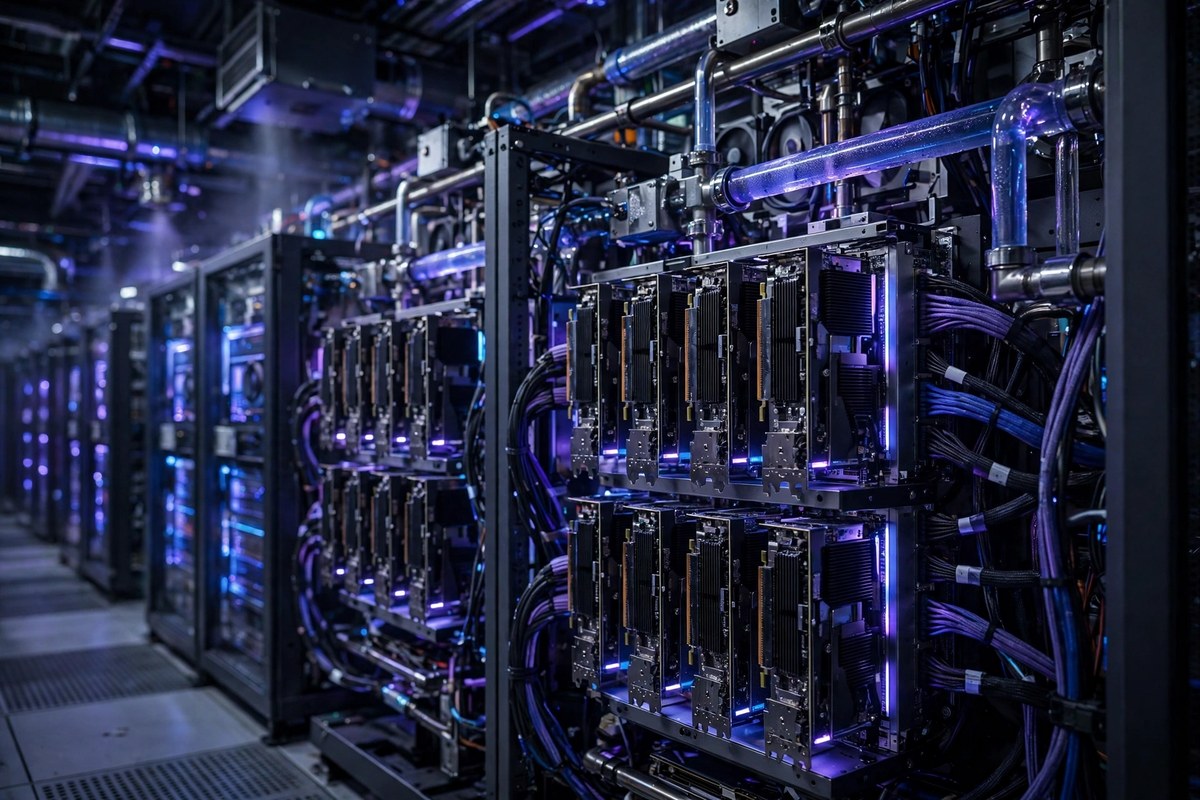
A research report on DePIN infrastructure economics puts the sector's aggregate market capitalization at $45–55 billion by mid-2026, yet concludes that most hardware operators across Helium, Render, and Grass Network remain structurally unprofitable. The reasons repeat across projects.
First, token inflation. Networks pay early operators in new tokens, which dilutes every holder and pushes prices down unless new buyers arrive. When token prices fall, operator earnings fall with them, but electricity bills and hardware loans do not. Second, geographic saturation. Rewards flow to where hardware already exists, not where demand is, so cities get oversupplied hotspots while underserved areas stay dark. Third, the gap between retail enthusiasm and enterprise revenue. Enterprises buy slowly, demand service guarantees, and negotiate hard on price; retail operators expect quick payback. Until enterprise contracts arrive at scale, most networks are funded by token buyers, not customers.
The projects adapting fastest share a pattern: they cut emissions, tie rewards to verified work, and pay in stablecoins where possible. Helium overhauled its reward system, Bee Maps moved to USDC, and DIMO — a vehicle-data network — voted to stop issuing new tokens as weekly driver rewards. The DePIN projects that survive the next two years will look less like token-printing machines and more like ordinary infrastructure businesses that happen to use a blockchain for accounting.
What Most People Get Wrong About DePIN
Myth 1: "A big market cap means a big business." Bittensor's $2.9 billion market cap is larger than many profitable software companies, but market cap measures what speculators will pay for tokens, not what customers pay for services. Filecoin's $59,327 payments run-rate is the antidote to this myth — always ask for the revenue number behind the valuation.
Myth 2: "More hotspots or nodes means more success." Helium's 900,000 hotspots are a distribution achievement, but oversupply in one neighborhood destroys per-operator earnings. Node counts measure supply; only paid usage measures demand. A network with 5,600 busy GPU nodes can be healthier than one with 900,000 idle hotspots.
Myth 3: "DePIN replaces telecoms and cloud giants." The realistic outcome is partnership, not replacement. Carriers buy Helium coverage where it fills gaps; studios buy Render capacity when it is cheaper. DePIN wins by being a flexible supplier to incumbents, not by bankrupting them.
Myth 4: "Token rewards are passive income." Running DePIN hardware is a small business: hardware costs, electricity, maintenance, network changes, and token volatility all eat returns. Our November staking guide makes the same point about headline yields — the number on the poster is rarely the number in your pocket once costs and inflation are counted.
DePIN Operator Checklist: 7 Checks Before You Buy Hardware
- Paid demand first: Can you name a paying customer or contract, not just a token incentive? If not, you are the product's subsidy, not its partner.
- Reward currency: Are you paid in a volatile token or in USDC? Stablecoin pay is a sign the business funds itself from revenue.
- Emission schedule: Is the token supply still inflating fast? High emissions mean your rewards dilute even if you do everything right.
- Local saturation: How many operators already serve your area? Check network maps before buying, not after.
- Real payback math: Hardware cost plus electricity, divided by actual recent earnings in your area — not the project's marketing examples.
- Demand geography: Does demand exist where you live? A mapping network needs drivers on unmapped roads; a wireless network needs underserved coverage zones.
- Exit plan: Can you resell the hardware, and does the token have liquid markets? Never lock money into hardware you cannot exit.
Should You Buy DePIN Tokens? Three Scenarios for 2027
Bull case: Enterprise contracts convert at scale — carriers buy Helium coverage, studios and AI labs expand Render usage, and mapping data becomes a must-have input for physical AI. Render and Bee Maps are the purest plays on this scenario.
Base case: Growth continues slowly. Paid usage doubles or triples from tiny bases, emissions keep diluting holders, and most projects trade sideways while a few compound. This is the most likely outcome for 2027.
Bear case: Enterprise buyers stay away, token prices keep falling, and operators switch off hardware faster than new ones arrive. This is what happens to projects that never find a paying customer.
None of this is financial advice. DePIN tokens are volatile, hardware purchases are illiquid, and a project can have great technology and still be a bad investment if its tokenomics do not work. Size any position as a speculation you can afford to lose, and verify the revenue numbers yourself before you believe a project's pitch.
Frequently Asked Questions
What does DePIN stand for?
DePIN stands for Decentralized Physical Infrastructure Networks: blockchain-coordinated networks where individuals supply real hardware — hotspots, storage, GPUs, sensors — and earn rewards for the service that hardware provides.
Is DePIN a good investment in 2026?
It depends on the project. The sector as a whole is not profitable for most operators yet, because token rewards still exceed customer revenue at most networks. Projects with verified paying customers, like Render and Bee Maps, have a stronger case than projects whose only "revenue" is token emissions.
How much money can you make running a Helium hotspot?
It varies enormously by location, hotspot density, and HNT's price, and earnings have fallen as the network matured and its reward system changed in 2026. Check current earnings for hotspots in your exact area and do the payback math before buying — do not trust national averages.
What is the difference between DePIN and cloud computing?
Traditional cloud computing is owned by a few large companies that build and operate data centers. DePIN distributes ownership: many small operators supply the hardware and a blockchain coordinates payments. Centralized clouds offer guarantees and support; DePIN offers potentially lower prices and no single point of control.
Which DePIN coin has the most real revenue?
By verifiable customer usage, Render leads this ranking thanks to its rendering and AI compute workloads, with Bee Maps' mapping data sales as the cleanest stablecoin-paid example. Filecoin has the largest storage capacity but tiny paid usage, and Bittensor's revenue is mostly protocol incentives.
Do I need to buy hardware to invest in DePIN?
No. You can buy the project's token on an exchange instead, but that is a different bet: you are betting on price, not earning operator rewards. Tokens carry inflation, volatility, and exchange risks — read our guide to what happens to your crypto if an exchange goes bankrupt before leaving significant funds on any platform.
Conclusion: Buy the Revenue, Not the Revolution
DePIN's pitch is the best story crypto has told in years: ordinary people building the infrastructure of the future and getting paid for it. The numbers say the story is half true. Networks like Render and Bee Maps are doing real work for real customers, and the sector's shift toward stablecoin payments and verified usage is genuinely encouraging. But the $47 billion headline hides a much smaller paid reality — Filecoin's $59,327 run-rate is the number that keeps this sector honest — and most hardware operators are still subsidized by token buyers rather than funded by customers.
Approach DePIN in late 2026 as a stock-picker, not a sector believer. Rank projects by paying customers, verify usage numbers, run the payback math, and let revenue — not the revolution — decide where your money goes.
Sources: Orochi Network's 2026 DePIN project guide, ValueWalk's best DePIN tokens by market cap, Blockchain Academics' DePIN infrastructure economics report, and CoinDesk's November 2 crypto markets report.