US Midterms 2026: Crypto Votes Today — 49–50 Killed the CLARITY Act, and 60 Votes Still Decide Everything
Americans vote today, but no result can change the Senate's 60-vote rule — the CLARITY Act failed 49–50, 11 votes short. Here are the 5 dates and 4 scenarios that decide crypto law in 2027.

Americans are voting today, 3 November 2026, and crypto's biggest law is not on the ballot — it is stuck 11 votes short. On 15 September 2026 the Senate failed to advance the CLARITY Act by 49 votes to 50, eleven short of the 60 needed to end debate, and no election result tonight can change that 60-vote rule. What tonight does decide is who chairs the committees that write the next crypto bill, whether the lame-duck Congress tries again before 3 January 2027, and how fast the Securities and Exchange Commission (SEC) and Commodity Futures Trading Commission (CFTC) keep writing crypto rules on their own. For anyone holding Bitcoin, Ethereum, XRP or stablecoins, that is the real stake: not a new law tomorrow, but the shape of the law that arrives in 2027.
Bitcoin trades around $76,900 as voters head to the polls, down from its $126,156 high, after spot Bitcoin ETFs lost $399 million on Monday. The market is not waiting for a midterm miracle. It is waiting for clarity on a much simpler question: which regulator is in charge of which token, and what counts as a security? Until Congress answers that, every token launch, exchange listing and staking product lives under staff guidance, proposed rules and enforcement risk. This guide explains what is on the ballot for crypto, why the CLARITY Act stalled, what each outcome changes, and the five dates that decide what happens next.
What Is Actually on the Ballot for Crypto?
All 435 seats in the House of Representatives and 35 of the 100 Senate seats are up for election today: the 33 regular seats in this cycle plus special elections in Florida and Ohio. But for crypto law the mechanics matter more than the headlines. A new law needs three things: a House majority, a Senate willing to spend floor time, and 60 Senate votes to break a filibuster. No party is projected to win 60 Senate seats tonight. Republicans currently hold 53 Senate seats, Democrats and independents who caucus with them hold 47, and analysts at 21Shares note that Republicans would need a net gain of seven seats and Democrats thirteen to reach 60. Neither is on the table.
That is why the honest answer to "will the midterms change crypto regulation?" is: not by themselves, and not immediately. As 21Shares put it, the midterms will not themselves significantly change the digital asset regulatory framework. What they change is procedure: who chairs the four committees with jurisdiction over crypto legislation — House Financial Services, House Agriculture, Senate Banking and Senate Agriculture — and therefore which bills get hearings, markups and floor time. A committee chair decides what gets taken up and when. That power, exercised over months, is how a stalled bill becomes a live one, or stays dead.
It is also worth separating what is already law from what is still a proposal. The GENIUS Act, the federal payment stablecoin law, was signed in July 2025 and cannot be undone by an election. The market structure question — who regulates spot trading in tokens that are not securities — is the open one, and it is the question the CLARITY Act was supposed to settle. If you are new to how these products reach the market, our guide to how spot Bitcoin ETFs work explains why the regulator split matters even for products that are already trading.
Why the CLARITY Act Failed 49–50
The Digital Asset Market Clarity Act, formally H.R. 3633, passed the House in July 2025. It would move day-to-day oversight of most digital commodity trading — tokens treated more like gold or oil than like shares in a company — to the CFTC, while digital securities and certain primary market transactions would stay with the SEC. On 15 September 2026 the Senate tried to take it up. The procedural vote to end debate, known as cloture, failed 49 to 50, short of the 60 votes required. The vote was not a straight party-line split: all 49 yes votes came from Republicans, while every Democrat and independent who voted said no, along with Republicans Susan Collins, Josh Hawley, Jerry Moran and Thom Tillis. Democrat Chris Coons did not vote.
The bill did not founder on the technology. It foundered on two issues that had little to do with blockchains. The first was ethics provisions limiting senior officials' crypto business ties. The second was stablecoin rewards: regional banks argued that letting crypto firms pay rewards on stablecoins would speed the movement of customer deposits out of banks, while crypto firms argued that banning rewards would hand banks a protected advantage. Those two fights, not a disagreement about Bitcoin itself, cost the bill its 60 votes. Senator Tillis then filed a motion to reconsider, which keeps the bill technically alive on the Senate calendar, but 21Shares concluded it is best treated as dead until the new Congress convenes in January 2027.
There is a second, less reported complication. The Senate Banking Committee advanced one version of market structure legislation, while the Senate Agriculture Committee advanced a separate version by 12 votes to 11 in January 2026, and the two versions still have to be reconciled. The SEC-CFTC split maps onto what each committee oversees, so reconciliation is not a formality: it decides which agency gets which tokens, which intermediaries it supervises, and how spot markets are policed. That work has to happen regardless of tonight's result.
The 60-Vote Rule Is the Whole Story
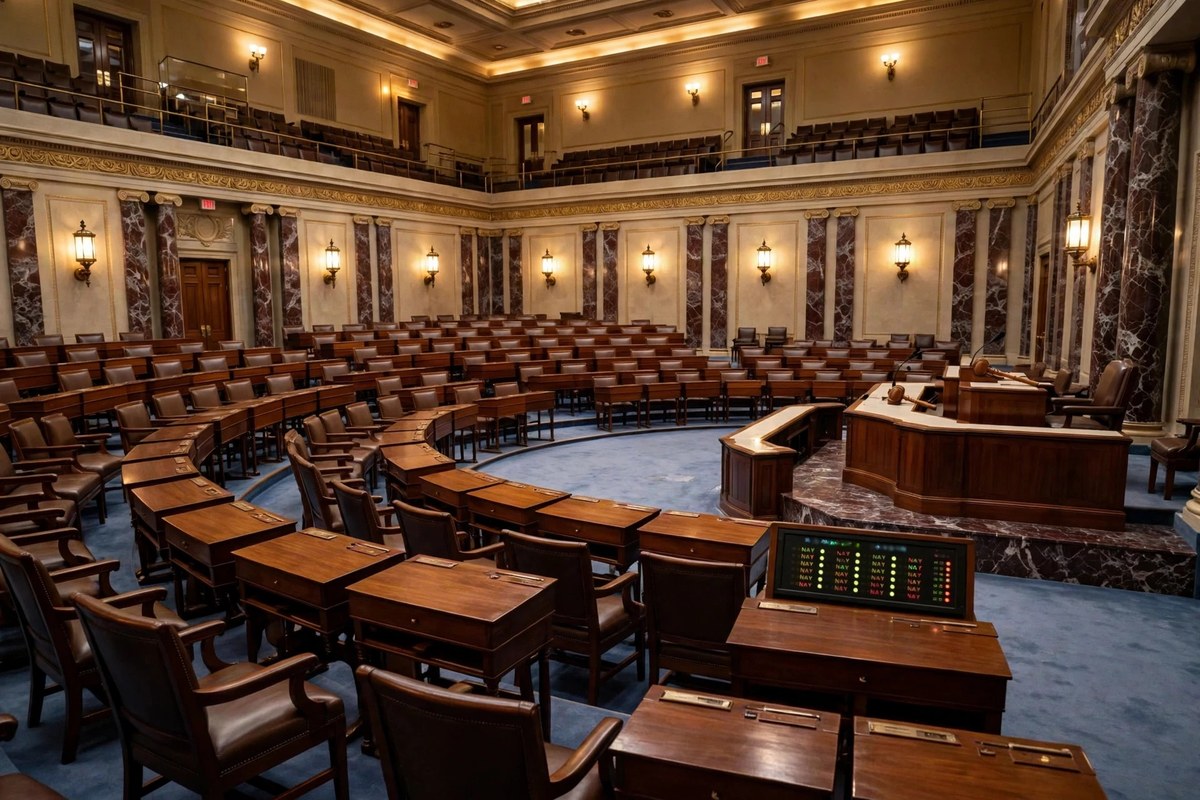
If you remember one number from this article, make it 60. In the Senate, most legislation needs 60 votes to end debate before it can pass with a simple majority. Crypto market structure legislation is no exception. That rule survives every election, because changing it would itself require a Senate majority willing to rewrite its own rules, and neither party has shown appetite for that on crypto. So even a party that wins the House and holds the Senate tonight still needs at least seven senators from the other side to move a market structure bill — or a bill rewritten enough to win them.
This is why the two most likely post-election paths look so different from the campaign rhetoric. A Republican sweep of both chambers would remove friction: fewer oversight hearings, a faster path to a bill that looks like the House version, and less pressure to add consumer protection and conflict-of-interest provisions. A Democratic House, by contrast, would likely add stronger consumer protection, conflict-of-interest and decentralised finance (DeFi) disclosure provisions to any bill, and hold more oversight hearings — which 21Shares says would further delay approval. Neither path removes the 60-vote threshold. Both paths run through the same Senate arithmetic.
There is one scenario that could matter more than the House result: the Senate Banking chair. If Democrats were to win the Senate, Senator Elizabeth Warren could become chair, according to reporting cited by Rebatly, which would change the tone and pace of banking committee crypto work entirely. If Republicans hold the Senate, they keep the chair. That single chairmanship, more than any single House race, shapes what a 2027 bill looks like.
What Happens Next: 5 Dates That Decide Crypto Law
Election night changes nothing by itself. New laws need a new Congress, committee work and 60 Senate votes. Here is the calendar that actually matters, in order:
- Tonight, 3 November 2026: polls close and counting begins. Close races can take days, and control of the House may not be clear on election night itself.
- November to December 2026: the lame-duck session. The current Congress keeps working until 3 January 2027. Some voices, including OKX board director Andrew Cuomo, have said they would not expect anything to happen on the CLARITY Act in this window, while Senator Angela Alsobrooks has said it could still happen. Expect noise, not a law.
- 3 January 2027: any bill not enacted by this date dies with the current Congress and must be reintroduced from scratch in the 120th Congress. That deadline is the real forcing function.
- January 2027: the new Congress takes office and committees get new chairs. The first meaningful signal is not who won, but whether the Senate puts the CLARITY Act procedural vote back on the calendar.
- Through 2027: regulators keep writing rules under existing powers. The SEC has proposed Regulation Crypto Assets, the CFTC has proposed a structure for trading crypto on regulated exchanges, and the SEC's Division of Corporation Finance keeps issuing staff FAQs — including the three new answers on token voting and central-party control added on 2 November, which we covered in our guide to the SEC's November 2 FAQ.
The practical takeaway is that the next two years of crypto regulation will be written mostly by agencies, not by Congress, whichever party wins tonight. CoinDesk's opinion pages made the same point on 2 November: for the next two years, the SEC, CFTC and other agencies will carry most of the crypto agenda. That is not a reason to ignore Congress — a future bill can override agency rules — but it is a reason to watch agency rulemaking, comment deadlines and enforcement choices as closely as vote counts.
Scenario Table: What Each Outcome Means for Your Crypto
The table below is a prediction aid, not a forecast of who will win. It maps each plausible outcome to what it most likely means for regulation, markets and holders.
| Outcome | Market structure bill | Agency rulemaking | What holders should watch |
|---|---|---|---|
| Republicans hold House and Senate | Fastest path; bill closer to the House version, fewer added protections | Continues in the current direction; less oversight friction | Whether 60 Senate votes can be assembled, and whether stablecoin rewards survive |
| Democrats win the House, Republicans hold the Senate | Slower; stronger consumer protection and disclosure provisions added | More oversight hearings; agencies still lead | Committee chairs, hearing schedules, and any DeFi disclosure language |
| Democrats win House and Senate | Rewritten bill with tougher ethics and consumer rules; still needs 60 votes | New chairs could slow or redirect agency work | Senate Banking chair and whether a bipartisan compromise emerges |
| Split control, narrow majorities | Most likely outcome for delay; compromise bill or nothing until late 2027 | Agencies dominate by default | SEC final vote on Regulation Crypto Assets and CFTC exchange rules |
Notice what does not change in any row: the GENIUS Act stays law, stablecoin issuers keep operating under it, and no election result makes a token a security or a commodity overnight. Classification still turns on the SEC's March 2026 framework and its staff guidance, including the question of whether a network has a central party with operational, economic or voting control. That framework, not tonight's vote count, is what decides whether a token launch is treated as a commodity offering or a securities offering.
What Most People Get Wrong About Midterms and Crypto
The biggest misconception is that a "pro-crypto Congress" means higher prices. Prices are driven first by liquidity, ETF flows, rates and risk appetite — the same forces that pushed Bitcoin to around $76,900 this week while ETFs bled $399 million on Monday and the Nasdaq fell into correction. Regulation sets the long-term rules of the game; it rarely sets this week's price. A second misconception is that the election settles the stablecoin rewards fight. It does not: that fight moves to the next bill's text, to agency rules implementing the GENIUS Act, and to bank lobbying in both parties. A third misconception is that a stalled bill means nothing is happening. In fact, the opposite is true: when Congress stalls, agencies fill the gap, and agency rules can be harder to reverse than a bill that never passed.
There is also a practical misconception worth correcting for holders. Your coins do not become illegal, taxable in a new way, or frozen because of an election result. Tax rules, reporting obligations and custody arrangements change through legislation and agency rulemaking with notice periods, not overnight. If tax is on your mind, our complete 2026 crypto tax guide covers filing, Form 1099-DA and how to legally pay less under the rules as they stand today. And if you are thinking about buying through the volatility, our beginner's guide to buying Bitcoin walks through exchanges, fees and custody choices step by step.

Checklist: 5 Things to Watch After the Votes Are Counted
- Check the Senate Banking chair first: the chair's identity tells you more about the 2027 bill than the House margin does.
- Watch for a new cloture vote date: the first real signal is whether the Senate puts the CLARITY Act procedural vote back on the calendar, not who gave a victory speech.
- Track the lame-duck session honestly: expect hearings and positioning in November and December, but treat any claim of a lame-duck crypto law as a rumour until a vote is actually scheduled.
- Follow the agency calendar in parallel: the SEC's Regulation Crypto Assets final vote and the CFTC's exchange structure proposal will move markets and compliance duties even if Congress does nothing.
- Ignore price predictions tied to election night: any analyst claiming tonight's result alone sends Bitcoin to a specific price is selling a narrative, not a model. Watch ETF flows, rates and the December Fed decision instead.
What This Means for Bitcoin, Ethereum and Altcoins
For Bitcoin, the midterm outcome matters least in the short term and most in the long term. Bitcoin's status as a digital commodity is the least contested part of the framework, and its price this week is being driven by ETF outflows, the Binance hack fallout and macro data — not by committee chairs. For Ethereum, the stakes are higher: staking, DeFi and token classification questions sit closer to the SEC-CFTC boundary, so the eventual bill's wording matters more. For smaller altcoins, the stakes are highest of all: a bill that draws a clear commodity line could open regulated spot markets to tokens that are currently in limbo, while a bill that draws it narrowly could leave many tokens dependent on agency exemptions.
For stablecoin holders, the GENIUS Act settled the payment stablecoin framework, but the rewards question remains open and will be fought in the next bill and in agency implementation. Circle's October comment letter asking for cash treatment for qualifying stablecoins is a request, not a decision.
None of this is a reason to trade on election night. The sensible posture is the same in every scenario: know which regulator claims your tokens, keep custody you understand, and do not let one night's headlines override a two-year plan.
FAQs
Do the 2026 midterms change crypto rules immediately?
No. Nothing changes on election night. New laws need a new Congress, committee work and 60 Senate votes, and regulators keep their current powers whoever wins. The new Congress takes office in January 2027, and any bill not enacted by 3 January 2027 dies and must be reintroduced.
What is the CLARITY Act?
The Digital Asset Market Clarity Act (H.R. 3633) is the US crypto market structure bill. It would split oversight between the CFTC, which would supervise most digital commodity trading and spot markets, and the SEC, which would keep digital securities and certain primary market transactions. The House passed it in July 2025; the Senate failed to advance it 49–50 on 15 September 2026.
Why did the CLARITY Act fail in the Senate?
The cloture vote needed 60 votes and got 49. The sticking points were ethics rules for senior officials' crypto holdings and stablecoin rewards, which regional banks argued would drain deposits. The opposition was not purely partisan: three Republicans joined all Democrats and independents in voting no.
Can the CLARITY Act still pass in 2026?
Technically, yes: Senator Tillis's motion to reconsider keeps it on the Senate calendar, and the lame-duck session runs until 3 January 2027. Practically, most analysts treat it as dead until the new Congress, and no new vote is currently scheduled. Watch for a cloture vote date, not for commentary.
Does the election affect stablecoins or the GENIUS Act?
No. The GENIUS Act is already law and an election cannot undo an enacted statute. What remains open is market structure and the stablecoin rewards question, which will be fought in the next bill and in agency rules implementing the GENIUS Act.
Should I buy or sell crypto based on the midterm result?
Not on the result alone. Short-term prices are driven by ETF flows, interest rates, liquidations and risk appetite. Use the checklist above — committee chairs, a new cloture date, agency rulemaking — as your guide, and base any buy or sell decision on your own plan and risk tolerance, not on election-night headlines. This article is not financial advice.
Conclusion
Tonight's vote will not rewrite crypto law, and anyone telling you otherwise is overselling a single night. The number that matters is 60, the date that matters is 3 January 2027, and the work that matters most over the next two years will happen in committee rooms and agency rulemakings as much as on the campaign trail. The CLARITY Act failed 49–50 because of ethics rules and a bank-versus-crypto fight over stablecoin rewards — not because Congress rejected crypto. The next Congress will have to settle those same two fights, plus reconcile two competing Senate committee versions, before any bill can pass.
For holders, the smart move is boring and effective: watch the chairs, watch the calendar, watch the agencies, and ignore anyone who turns a midterm into a price target. Bitcoin at around $76,900, ETF outflows of $399 million in a day, and a three-month low in sentiment are the market's real signals this week. The election decides who writes the next chapter of crypto law. It does not write it tonight — and knowing that difference is, itself, an edge. Sources: 21Shares on what the midterms change, MEXC on the 2026 midterms, Rebatly's midterm guide, BlockchainReporter on the CLARITY Act, CoinDesk on crypto's Washington playbook, and CoinDesk on Bitcoin and the midterms.