OpenSea Mobile App Launches to Everyone: Social Trading, Signals and Referral Rewards Explained
OpenSea opened its mobile app to all iOS and Android users on October 20, 2026, adding social trading, OpenSea Signals and a 25% referral reward. Here's what the launch means for traders and the NFT market.
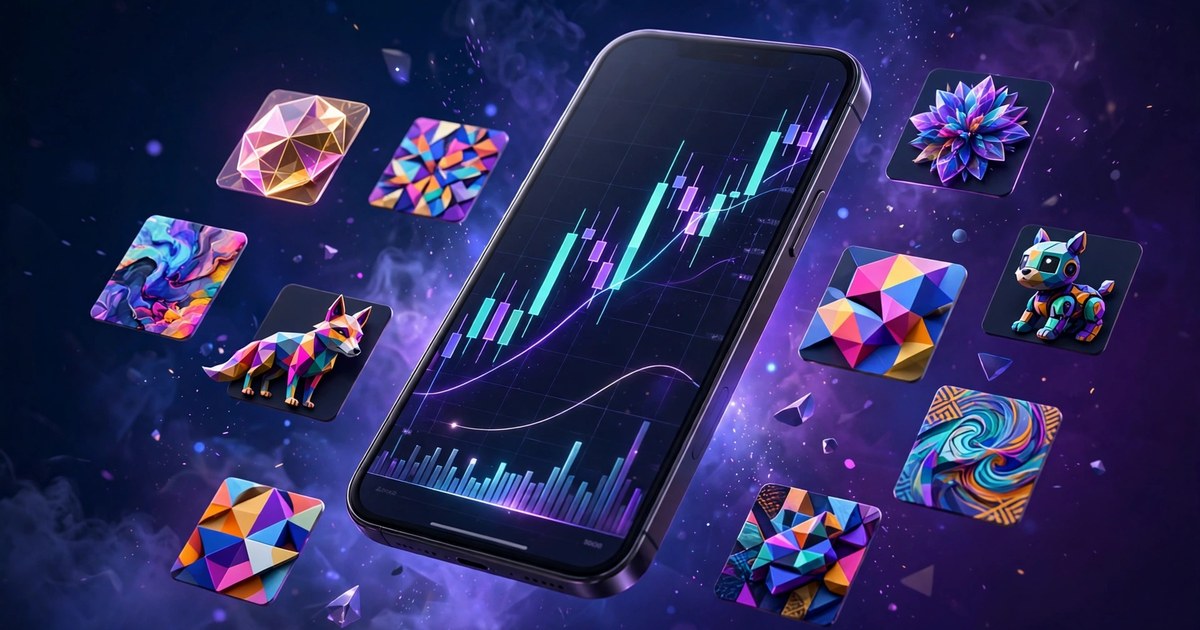
OpenSea, the world's best-known NFT marketplace, has opened its mobile app to everyone. After a waitlist rollout, OpenSea Mobile left beta on October 20, 2026, and is now available to all iOS and Android users — and it looks nothing like the OpenSea most people remember.
The new app is not just an NFT marketplace shrunk onto a phone screen. It is a multi-chain trading terminal that combines tokens, perpetual futures and NFTs in one interface, a social trading feed that tracks trades across the entire crypto ecosystem, and a feature called OpenSea Signals that lets traders attach their reasoning to every purchase. Add a referral program that pays 25% of trading fees to referrers, and OpenSea's mobile launch becomes one of the most aggressive user-acquisition plays the crypto industry has seen in 2026.
Here is everything the launch includes, how the economics work, and what it means for traders, NFT collectors and OpenSea's rivals.
What OpenSea Mobile Actually Is
At its core, OpenSea Mobile is a consolidation play. Crypto traders in 2026 typically juggle a wallet app, a token-trading app, an NFT marketplace, a portfolio tracker and several blockchains — and bridging assets between chains is slow, expensive and error-prone. OpenSea's pitch is that all of that happens in one app.
The headline features, according to OpenSea's launch announcement:
- More than 25 supported blockchains. Users can trade assets on one chain using tokens from another, with OpenSea handling the bridging automatically. There is no manual bridge interaction, no wallet switching and no separate transactions.
- Over 12 integrated wallets. The app pulls holdings from multiple wallets into a single portfolio view, so everything a user owns appears in one place.
- Tokens, perpetual futures and NFTs in one interface. OpenSea is no longer an NFT-only platform. Users can buy, sell and swap ERC-20 tokens alongside collectibles.
- Frictionless onboarding. New users can sign up with an email address and pay with Apple Pay. The app automatically creates a self-custodial wallet with no seed phrase required — and, importantly, OpenSea does not hold users' assets.
The setup process, per the company, takes under a minute. That is a deliberate shot at the industry's biggest weakness: onboarding. Exchanges like Coinbase built empires on exactly this kind of simplification, and OpenSea is betting that 'download an app, tap Apple Pay, start trading' can do for multi-chain crypto what it did for stock trading.
OpenSea Signals: Social Trading That Sees Beyond OpenSea
The most unusual design choice in the app is its social layer. Most trading apps can only show activity from their own users. OpenSea's social feed goes further: it aggregates trading activity from across other crypto apps and platforms, so users can follow friends and top traders and see their moves no matter where those trades happen.
Research into the launch names Pump.fun, FOMO and Farcaster among the platforms feeding into the social layer. In practice, that means a memecoin trader's Pump.fun buys, a Farcaster influencer's token swaps and an OpenSea collector's NFT purchases can all appear in one scrollable feed.
Sitting on top of that feed is OpenSea Signals. Anyone can attach a note to a purchase explaining their reasoning, and that note travels with the trade to everyone who follows them. Followers see not just what someone bought, but why.
The concept is social trading taken to its logical conclusion. Copy-trading platforms have existed for years, but they have always been confined to a single venue — you copy traders on the platform you trade on. OpenSea is trying to make the feed itself the platform, with the trading venue almost incidental. If it works, the company with the best data aggregation wins, regardless of where orders are routed.
The obvious risk is the one every copy-trading service carries: followers can lose money copying a trader whose reasoning turns out to be wrong, and a public note explaining a purchase is not financial advice, no matter how confident it reads. Traders should treat Signals as entertainment and idea generation, not as a strategy to follow blindly.
The Referral Play: 25% of Fees, Ongoing
The launch's most eye-catching number is not a feature at all — it is a financial incentive. OpenSea's referral program rewards both sides of every referral, and the terms are unusually generous:
- Referrers earn 25% of the trading fees their referrals generate, ongoing. A quarter of a 0.5% token-trade fee is 0.125% of the referred trade's value, flowing back to whoever made the introduction, trade after trade.
- Newcomers get a permanent 10% discount on trading fees when they join through a referral code.
Fee context matters here. OpenSea's OS2 platform overhaul — announced in February 2025 and fully out of beta in May 2025 — slashed the legacy marketplace fee from 2.5% to 0.5%, then raised it to 1% on collectible purchases in September 2025. Token trades carry a 0.5% fee. That 25% referral cut comes off real revenue, which is what makes the program expensive to sustain — and potentially very effective at buying growth.
The beta numbers suggest the product has momentum. OpenSea said the mobile beta drew more than 56,000 sign-ups, of which 76% were active. For a category where most apps struggle to keep users past day seven, a 76% activity rate is the kind of figure that makes competitors nervous.
How to Get Started With OpenSea Mobile
For anyone curious enough to try it, the onboarding flow is designed to be the fastest in crypto:
- Download the app. OpenSea Mobile is available on the iOS App Store and Google Play, open to everyone since the October 20 public launch.
- Sign up with an email address. No seed phrase to write down, no browser extension to install. The app creates a self-custodial wallet automatically.
- Fund the wallet. New users can pay with Apple Pay; existing crypto holders can connect one of the 12-plus supported wallets and import their holdings into the unified portfolio view.
- Explore the feed. The social trading feed shows activity aggregated across apps. Following traders before placing trades is the closest thing the app has to a tutorial.
- Trade across chains. Buy a token or collectible on any supported blockchain using whatever assets are in the wallet — the app handles bridging behind the scenes.
Self-custody is worth underlining. In an era when exchange collapses and frozen accounts are still fresh memories, an app that never takes possession of user funds removes an entire category of counterparty risk. Users remain responsible for their own security, of course — which is why understanding how crypto wallets work is still essential, and why comparing the best wallets for beginners before committing serious funds remains good practice.
The OS2 Pivot Behind the App
The mobile launch only makes sense in the context of OS2, the ground-up rebuild that replaced the legacy OpenSea experience. OS2 was OpenSea's admission that the NFT-only marketplace era was over — and the numbers back the pivot up. By October 2025, more than 90% of OpenSea's $2.6 billion monthly volume came from token trading, not NFTs.
That transformation is why the app can credibly sell itself as a trading terminal rather than an NFT gallery. OS2 introduced token trading alongside NFTs, cross-chain execution, 22 supported blockchains, and two interface modes — Collector Mode for casual discovery and Pro Mode for analytics, order books and portfolio management. The mobile app is the natural endpoint of that strategy: every asset class, every chain, every wallet, in the pocket.
The pivot also explains the fee structure. OpenSea charges no fee of its own on token swaps, which is how it competes with zero-fee aggregators on the trading side, while the 1% collectible fee monetizes the NFT side where it still has brand strength. The 25% referral payout is, in effect, OpenSea spending its token-trading fee revenue to buy market share in a market where attention is the scarcest asset.
Timing the Launch: Blur's Shutdown Changes the Map
OpenSea picked its moment well. Blur, the zero-fee NFT marketplace that once dethroned OpenSea, is shutting down on November 12, 2026 — less than a month after the mobile launch. Blur's aggressive fee model forced OpenSea into the OS2 rebuild in the first place; with Blur exiting, OpenSea has a clear window to recapture NFT traders while simultaneously converting them into multi-asset app users.
The competitive landscape is not standing still, though. Magic Eden has been expanding across chains, Solana's ecosystem has its own native marketplaces, and mainstream apps like Robinhood and Coinbase are pushing deeper into crypto trading with the distribution advantage of tens of millions of existing users. OpenSea's bet is that a social layer nobody else has — a feed that sees every app — is a moat that distribution alone cannot cross.
For NFT collectors specifically, the launch is a reminder that the asset class has not gone away — it has just stopped being the whole story. Anyone returning to NFTs after a break should start with a refresher on what NFTs actually are and how they work in 2026 before trading, because the market's mechanics, fees and risks have changed substantially since the 2021–2022 boom.
Risks and Criticisms Traders Should Know
An aggressive launch deserves a clear-eyed read of the downsides:
- Social trading can amplify losses. A feed of winning trades creates survivorship bias — the losers never post. Copying influencer wallets without independent research is one of the fastest ways to lose money in crypto.
- Cross-app aggregation raises privacy questions. A feed that shows everyone's trades is powerful, but traders may not realize how visible their on-chain activity has become. Wallet hygiene — separating trading wallets from long-term holdings — matters more than ever.
- The referral economics may not last. Paying out 25% of fee revenue indefinitely is a customer-acquisition cost that only works at scale. If growth stalls, referral terms are the first thing companies renegotiate.
- Fees are competitive, not the cheapest. The 0.5% token-trade fee and 1% collectible fee undercut OpenSea's old 2.5%, but zero-fee and low-fee alternatives still exist for price-sensitive traders.
- Self-custody means self-responsibility. No seed phrase to lose is convenient, but users must still understand the recovery model of the wallet the app creates — if the email account behind it is compromised, the assets are at risk.
None of these are reasons to avoid the app outright. They are reasons to treat it as a tool — a fast, social, multi-chain one — rather than as financial advice with a download button.
What Comes Next: SEA Token and the Super-App Race
OpenSea's broader roadmap suggests the mobile app is a chapter, not the book. Industry reviews of the OS2 era reference an SEA token tied to the platform's rewards program, and the September 2025 fee change was framed as part of the final phase of that program — the kind of sequencing that usually precedes a token event. A mobile app with tens of thousands of active beta users and a referral flywheel would be the ideal distribution vehicle for one. Anyone positioning for a potential token drop should review how to claim crypto airdrops safely in 2026, since fake 'SEA token' scams are already a predictable phishing vector.
The larger trend is the super-app race. Crypto's future winners will likely look less like exchanges and more like operating systems for digital assets: portfolio, trading, social and identity in one place. OpenSea is betting that mobile is where that battle is fought, that social data is the weapon, and that the company that owned the first NFT boom can own the second, bigger wave.
'We helped millions of people take their first step into digital ownership, and we built this app to help millions more,' said OpenSea co-founder and CEO Devin Finzer at the launch. 'Everything you own in one place, your friends and favorite traders right there with you, set up in under a minute.'
Whether the bet pays off depends on the one metric OpenSea cannot referral-bonus its way around: retention. The beta's 76% activity rate is a strong start. Turning curious downloaders into daily traders — in a market where Bitcoin is fighting to hold $81,000 and attention is scarce — is the real test.
Frequently Asked Questions
When did the OpenSea mobile app launch?
OpenSea Mobile came out of beta and launched publicly on October 20, 2026. It is available to everyone on iOS and Android, with no waitlist.
Is the OpenSea app free to use?
Downloading the app and creating a wallet is free. Trading carries fees: token trades cost 0.5% and collectible (NFT) purchases cost 1%, plus network (gas) fees. Joining through a referral code gives a permanent 10% discount on trading fees.
What is OpenSea Signals?
OpenSea Signals is a social trading feature that lets anyone attach a written note to a purchase explaining their reasoning. The note travels with the trade to everyone who follows that trader, so followers see both the trade and the thinking behind it.
Do I need a seed phrase for the OpenSea mobile wallet?
No. New users sign up with an email address and the app automatically creates a self-custodial wallet — no seed phrase required. OpenSea does not hold users' assets, but users remain responsible for securing the accounts tied to their wallet.
Which blockchains does OpenSea Mobile support?
More than 25 blockchains, including Ethereum, Solana, Polygon, Arbitrum, Base, Optimism, Avalanche and others. The app handles bridging automatically, so users can trade across chains without manual bridge transactions.
How does the OpenSea referral program work?
Anyone who brings in a new trader earns 25% of the trading fees that trader generates, on an ongoing basis. The newcomer receives a permanent 10% discount on trading fees. Both sides benefit from every referral.
Conclusion
OpenSea Mobile is the company's most ambitious move since OS2: a public, mobile-first, multi-chain trading app with a social layer that sees across the entire crypto ecosystem and a referral program generous enough to buy serious growth. The timing — weeks before rival Blur shuts down — is no accident.
For traders, the app is worth a look as a consolidation tool and an idea-discovery feed, with the usual caveats about copy-trading risk and fee math. For the industry, it is another signal that the NFT marketplaces of 2021 have evolved into something much bigger: super-apps competing to be the single home for everything users own in crypto. OpenSea just made its strongest bid yet.
Disclaimer: This article is for informational purposes only and does not constitute financial advice. Cryptocurrency trading involves substantial risk of loss. Always do your own research before using any trading platform.