India Crypto Cards Under RBI Scrutiny: Visa's $25 Billion Stablecoin Spending Boom Meets a Crackdown — What Holders Must Do Now
RBI and FIU are scrutinising offshore crypto cards in India as Visa reports 225 stablecoin card programmes and a $25 billion settlement run-rate — some cards have already stopped working. Here is what holders must check today.

Some crypto cards in India have already stopped working, according to user reports cited on November 2, 2026 — just as Visa disclosed that stablecoin-linked card programmes have grown more than 70% in a year to over 225 programmes, with a settlement run-rate above $25 billion a year. That collision — a spending boom going mainstream while one of the world's largest markets examines whether the cards behind it are even legal — is the story every crypto card holder needs to understand today, whether you live in India or not.
India's central bank, the Reserve Bank of India (RBI), and its Financial Intelligence Unit (FIU-IND) are examining offshore prepaid crypto cards, according to a report in The Economic Times on November 2, 2026. The report, based on two unnamed people familiar with the matter, says the authorities are in touch with Visa and Mastercard and are assessing whether the arrangements violate payment system regulations and the Foreign Exchange Management Act (FEMA), India's law governing foreign exchange and cross-border transactions. Neither the RBI nor the FIU-IND had issued a public statement at the time of the report, and the report says neither the regulators nor the payment networks responded to its queries. That gap matters: nothing has been banned yet, but cards can stop working long before any formal order is published.
This article explains what is actually happening, how these cards work, why regulators are worried, what the $25 billion Visa number really means, and — most importantly — the seven checks Indian card holders should run today. It also separates confirmed facts from merely reported claims.
What Happened on November 2: The India Crypto Card Scrutiny Explained
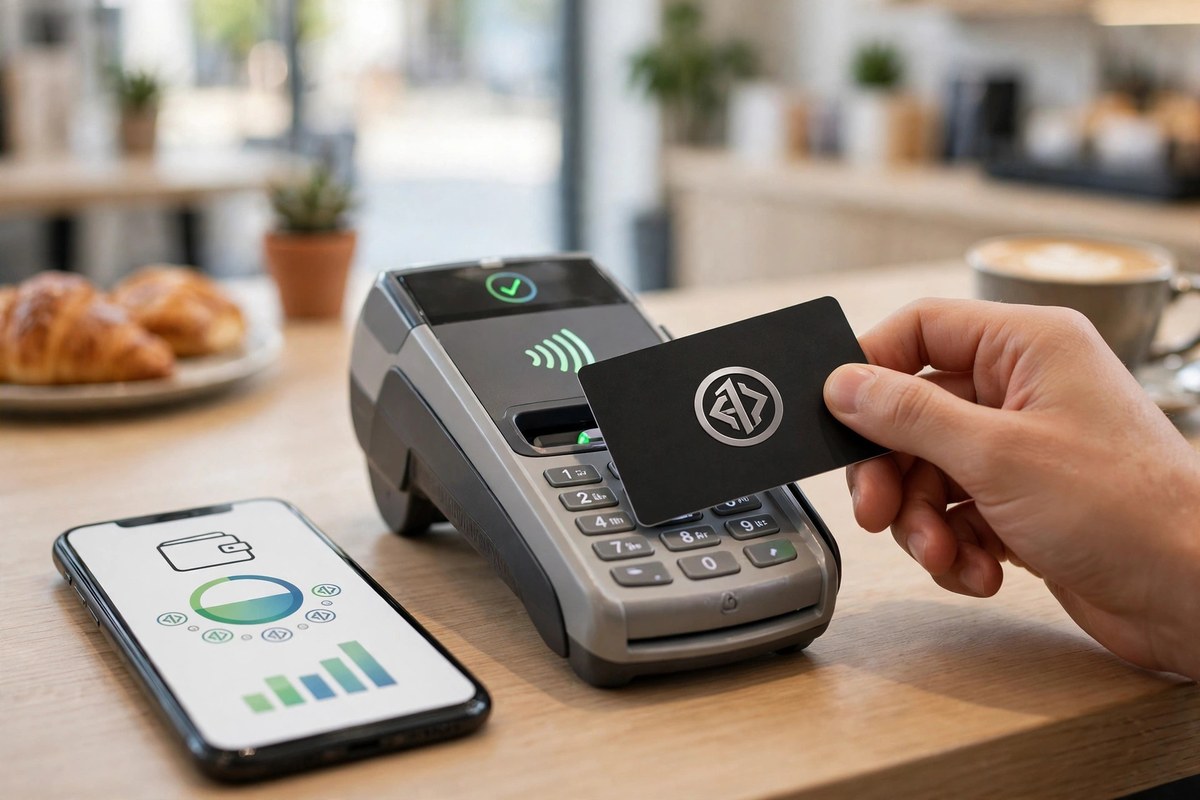
Offshore prepaid crypto cards let Indian residents spend stablecoins and other digital assets as rupees at local merchants, online stores and ATMs. The cards are typically issued by international fintech platforms — RedotPay is named in the November 2 reporting — and run on the Visa and Mastercard networks. When a holder pays, the crypto in an offshore wallet is converted into rupees in the background, so the merchant receives ordinary fiat currency and never touches crypto directly.
According to the November 2 reporting, that structure is now under the microscope. The RBI and FIU-IND are understood to be assessing whether the arrangement breaches payment system rules and FEMA. The issue was flagged by Digital South Trust, a non-profit blockchain research and policy organisation, the reporting says. Several users have reported that their cards stopped working in recent days, and some provider websites have reportedly been blocked for Indian users.
Three cautions belong in the same paragraph as those claims. First, the scrutiny itself is reported, not announced: until the RBI or FIU-IND publishes something, the examination remains an unnamed-source report. Second, cards stopping for individual users can have many causes — a provider's own compliance decision, a banking partner pulling back, a network review — and a stopped card is not proof of a ban. Third, the reporting does not say that any provider has been fined, ordered to shut down, or given a deadline. Holders should therefore act on risk, not on panic: protect funds and keep records, but do not assume every card in India is dead.
How Offshore Crypto Cards Actually Work — and Where the Legal Friction Sits
Understanding the scrutiny requires understanding the plumbing. A typical offshore crypto card journey has five steps, and the legal friction can sit at any of them:
- Funding the wallet happens offshore: the user holds stablecoins or other crypto in a wallet controlled by an overseas platform, not an Indian bank account.
- Spending triggers a conversion: at the point of sale, the platform sells or swaps the crypto and settles rupees to the merchant through the card network.
- Settlement crosses a border: the card network moves value between an overseas issuer and an Indian merchant acquirer, which is where foreign-exchange rules start to matter.
- Identity checks vary by issuer: offshore issuers run their own know-your-customer checks, which may not match the standards Indian regulators expect from domestic payment instruments.
- Complaints and refunds are offshore too: if a transaction fails or funds freeze, the holder's recourse runs through a foreign company, not an Indian bank or ombudsman.
Regulators examining this model typically ask three questions. Is the card a prepaid payment instrument that should be licensed in India? Does converting crypto to rupees at the till amount to a cross-border foreign-exchange transaction that needs authorisation under FEMA? And can the FIU trace the funds — source, destination and purpose — well enough to satisfy anti-money-laundering rules? If the answer to any of those is "not clearly, and not by an Indian-licensed entity," the product sits in a grey zone that can close quickly when a regulator, a bank partner or a card network decides to act first and clarify later.
That is why the reported involvement of Visa and Mastercard matters: networks can tighten programme rules or pause a programme while a review runs, and for holders the effect is identical to a ban even if no law has changed.
 The $25 Billion Number That Changes the Story
It would be easy to read the India story as a local crackdown on a niche product. The Visa numbers reported alongside it say otherwise. On Visa's fiscal fourth-quarter 2026 earnings call on October 27, 2026, chief executive Ryan McInerney said the network has more than 225 stablecoin-linked card programmes, up over 70% year over year. Visa's stablecoin settlement run-rate has crossed $25 billion in annualised volume, up tenfold from a year earlier, according to the November 2 coverage.
Put those two facts together and the stakes become clear. Stablecoin spending is no longer an experiment: hundreds of programmes, tens of billions in annualised settlement, and growth of 70% in a single year. At the same time, stablecoins themselves are becoming more systemically supervised, not less. USDC, the second-largest stablecoin, was classified as the European Union's first "significant" e-money token under the Markets in Crypto-Assets Regulation (MiCA), and from November 12, 2026 the European Banking Authority will directly supervise Circle's own-funds requirements, reserve assets, liquidity rules and recovery and redemption plans. Circle says USDC is redeemable 1:1 for US dollars and backed by highly liquid cash and cash-equivalent assets, and reported 71.0 billion USDC in circulation as of October 26, 2026. In the United States, Circle has separately asked the Securities and Exchange Commission to clarify cash treatment for qualifying payment stablecoins, including a request to cut a proposed broker-dealer haircut from 2% to zero — a request, not a decision, and a sign of how much plumbing still has to be agreed before stablecoins sit neatly inside traditional finance.
The contrast is the point. In Europe and the US, the regulatory conversation is about how to supervise stablecoins and fit them into existing financial plumbing. In India, the reported conversation is about whether an existing consumer product — the offshore card — fits the law at all. Both conversations will shape the same market, and holders caught between them need to plan for the stricter outcome, not the friendlier one.
For context, Bitcoin was trading around $78,300 on November 2 after rebounding from a post-hack low near $76,100, with US spot Bitcoin ETFs recording $643 million in net outflows on Friday.
What Most People Get Wrong About Crypto Cards
The India scrutiny has already produced a wave of confident claims online. Most of them are wrong, or at least unproven. Here is the myth-busting version:
- Myth: India has banned crypto cards. No public ban, order or deadline has been reported. What is reported is an examination by the RBI and FIU-IND. A ban may follow, or it may not; treating a reported examination as a ban overstates the facts and can push holders into rushed, costly moves.
- Myth: Visa and Mastercard have pulled out of India. The reporting says the authorities are in touch with the networks, not that the networks have withdrawn. Programme-level pauses by individual issuers are not the same as a network exit.
- Myth: Your crypto is gone if your card stops. A stopped card usually freezes spending, not ownership. The crypto typically remains in the platform wallet until the holder withdraws it by another route — which is exactly why the checklist below starts with withdrawals, not complaints.
- Myth: Stablecoins are risk-free because they track the dollar. A stablecoin's peg is a promise backed by reserves and redemption mechanics, not a law of nature. Pegs have broken before, and a card that converts stablecoins at the till adds issuer risk, conversion spreads and network risk on top of peg risk.
- Myth: This only matters if you live in India. Every major market is now writing rules for stablecoin payments, prepaid instruments and foreign-exchange touchpoints. India's examination is a preview of questions regulators elsewhere will ask next — and card programmes that cannot answer them in one country may not survive in others.
Spending Routes Compared: Cards, Exchanges, Banks and Self-Custody
For someone who wants to spend crypto or turn it into spendable fiat, the card is only one route. Each route trades convenience for control, and the India story is a reminder that convenience can be withdrawn overnight.
| Route | Convenience | Control over funds | Key risk right now |
|---|---|---|---|
| Offshore crypto card | Highest — spend anywhere cards are accepted | Low — issuer holds the crypto | Regulatory or network pause can freeze spending without warning |
| Licensed local exchange | High — sell to fiat, withdraw to a bank | Medium — exchange holds funds until withdrawal | Licensing, banking and withdrawal limits vary by country |
| Bank or broker crypto service | Medium — familiar rails, slower crypto features | Medium — regulated custodian | Product range is narrow and fees can be higher |
| Self-custody wallet | Lowest for spending — extra steps to convert | Highest — you hold the keys | Losing a seed phrase means losing the funds permanently |
The lesson is not that one route is always best. It is that no single route should hold all of a holder's funds. The card is a spending tool, not a savings account — and after the Binance hack week, when $3.64 billion left exchanges and custody became the market's loudest question, that distinction matters more than ever. For a deeper comparison of custody options, see our ranked guide to where crypto is safe after the Binance hack.
The 7-Point Checklist: What Indian Crypto Card Holders Should Do Today
If you hold an offshore crypto card in India, or you are considering getting one, run through this checklist before you spend another rupee through it:
- Check whether your card still works with a small test: try a tiny purchase before relying on the card for anything essential, and do not assume a card that worked yesterday works today.
- Reduce the balance on the card platform: move funds you do not need for imminent spending to a wallet or exchange you control, so a programme pause does not trap a large balance.
- Withdraw by an alternative route while you can: confirm that withdrawals to a personal wallet or a licensed exchange work, and test them with a small amount first.
- Save every record now: screenshot balances, transactions, card terms and any messages from the provider — if a dispute follows, contemporaneous records are your evidence.
- Do not top up a card that is already glitching: if payments are failing or the provider's site is unreachable, adding funds increases exposure without improving your position.
- Verify the issuer, not just the brand: find out which licensed entity actually issues your card and in which jurisdiction, because that determines who regulates it and where complaints go.
- Keep a backup spending route ready: a licensed local exchange account or a bank-linked route means a card pause is an inconvenience, not a cash-flow crisis.
None of this is legal advice. But the pattern from every previous crypto crackdown is consistent: holders who act early, in small steps, with records kept, fare far better than those who wait for an announcement that may arrive after the exits have narrowed.
 What Happens Next: Three Scenarios
Three paths are plausible from here, and holders should be ready for all three rather than betting on one:
- Scenario 1 — Quiet compliance fix: issuers tighten know-your-customer checks, add Indian reporting, or partner with licensed Indian entities, and cards keep working with more friction. This is the best case, and it is also the slowest: partnerships and licences take months, not days.
- Scenario 2 — Programme pauses spread: more issuers or banking partners pause Indian cards while reviews run, even without a formal ban. Spending becomes unreliable, and holders who kept large balances on card platforms face withdrawal queues. This is the scenario the checklist above is built for.
- Scenario 3 — Formal rules arrive: the RBI or another authority publishes rules for crypto-linked prepaid instruments, FEMA treatment, or both. That would bring clarity, but clarity can still mean higher costs, lower limits, or the exit of issuers unwilling to comply. Formal rules help the long term and hurt the short term for unprepared holders.
Watch for four triggers: an RBI or FIU-IND statement, a Visa or Mastercard statement, an issuer pause or partnership, or any issuer deadline. Until one appears, treat social-media claims as unverified.
What This Means Outside India
Even if you never spend a rupee, the India examination is a useful stress test for the whole stablecoin-card boom. The questions Indian regulators are reportedly asking — who issues the instrument, who supervises the reserves, how are foreign-exchange rules satisfied, and can flows be traced — are the same questions the EU answered with MiCA's significant-token designation and the US is working through with the GENIUS Act and the SEC's crypto-asset proposals. Markets that answer them with licences and supervision get durable products; markets that leave them unanswered get sudden pauses.
For the stablecoin industry, the $25 billion Visa run-rate cuts both ways. It proves demand for spending stablecoins through familiar card rails, which strengthens the case for clear rules. It also raises the stakes of getting those rules wrong: a $25 billion annualised flow cannot hide in a grey zone forever, and the first regulator to force the question in a large market sets a template others will copy. India's examination may be that template, or it may be a warning that templates take time. Either way, the era of offshore cards operating quietly in the background is ending.
For individual holders everywhere, the practical takeaway is boring and therefore valuable: use cards for spending, not storage; keep most funds in self-custody or with a licensed custodian you trust; keep records; and never let a single product become the only way you can access your money. That advice survived every exchange collapse, hack and crackdown of the last decade.
Frequently Asked Questions
Has India banned crypto cards?
No public ban has been reported. The RBI and FIU-IND are reported to be examining offshore prepaid crypto cards, and some users report cards stopping, but neither regulator had issued a public statement at the time of the November 2 reporting.
Which cards are affected?
The November 2 reporting names offshore prepaid crypto cards issued by international fintech platforms such as RedotPay and running on Visa and Mastercard networks. It does not list every affected provider, and experiences appear to vary by issuer.
Is my crypto lost if my card stops working?
Usually not: a stopped card normally blocks spending, not ownership. The crypto generally remains in the platform wallet, which is why testing an alternative withdrawal route early matters more than filing a complaint later.
What is FEMA and why does it matter here?
FEMA is India's Foreign Exchange Management Act, the law governing foreign exchange and cross-border transactions. Regulators are reportedly assessing whether converting crypto to rupees at the point of sale amounts to a cross-border transaction that needs authorisation.
Are stablecoin cards still growing globally?
Yes, on Visa's numbers: more than 225 stablecoin-linked card programmes, up over 70% year over year, with a settlement run-rate above $25 billion annualised, up tenfold from a year earlier, as disclosed on Visa's October 27, 2026 earnings call.
Should I get a crypto card now?
Only after checking whether the issuer is licensed in your jurisdiction, what happens to funds if the programme pauses, and what fees and spreads apply on conversion. In India specifically, wait for clarity before committing a large balance to an offshore card, and keep a licensed local route as backup.
Conclusion
India's reported crypto card scrutiny and Visa's $25 billion stablecoin spending boom are the same story told from opposite ends: demand for spending crypto through ordinary cards is exploding, while regulators in large markets are only now deciding whether the products meeting that demand are legal, supervised and traceable. Holders do not need to predict which regulator moves next. They need to do the unglamorous things that work in every scenario: keep card balances small, test withdrawals early, save records, verify the issuer, and keep a backup route ready.
The cards that survive will be the ones that can answer regulators' questions with licences, reporting and transparent reserves. If you hold an offshore crypto card in India, run the checklist today — before the next headline, not after it. For background on how stablecoins work, see our complete stablecoin guide; for how to keep funds outside any single platform, see our cold-storage and seed-phrase guide; for a comparison of card options, see our best crypto debit cards compared; and for custody rankings after the Binance hack, see where crypto is safe after the Binance hack. External reporting for this article: CryptoTimes on the RBI/FIU scrutiny, USDC and EBA oversight, Circle's SEC letter on stablecoins, KuCoin's November 2 market report, and Bitcoin's rebound above $78,000. Also relevant: USDC as Europe's first significant stablecoin.