Stablecoins as Cash? Circle's 2%-to-Zero SEC Ask and Treasury's New GENIUS Rule — 6 Dates That Decide USDC and USDT in the US
Circle wants the SEC to cut the broker-dealer haircut on qualifying stablecoins from 2% to zero — and Treasury's Nov 2 GENIUS rule sets a $1M-per-violation perimeter with a July 2028 cutoff. 6 dates that decide USDC and USDT in the US.
Two moves in Washington on the same day could change what a stablecoin counts as in the United States — and what it costs a broker to hold one. Circle, the issuer of USDC, has asked the Securities and Exchange Commission to treat qualifying payment stablecoins as cash for key regulatory calculations, cutting a broker-dealer haircut from 2% to zero. On November 2, the Treasury Department separately proposed the rule that decides who is even allowed to issue, offer or sell a payment stablecoin in America. Neither move is a done deal yet, but together they set the plumbing for the dollar stablecoin market in 2027 — and they matter for anyone holding USDC or USDT, trading on a US platform, or earning anything on a stablecoin balance.
This article explains what Circle actually asked for, what Treasury actually proposed, the six dates that decide the outcome, and what to check before assuming your stablecoin is treated like cash. Nothing here is a done rule: Circle's letter is a policy request, and Treasury's document is a proposed rule.
What Circle asked the SEC — and why the 2% number matters
Circle submitted a comment letter on October 20, summarised publicly on October 28, asking the SEC to align its proposed Regulation Crypto Assets framework with the payment stablecoin rules in the GENIUS Act. The headline request is cash treatment under proposed Rule 302(b): qualifying payment stablecoins would be treated as cash equivalents in settlement and reserve calculations, provided appropriate safeguards are applied. In plain terms, a dollar stablecoin that meets the qualifying standard would stop being counted as a risky asset that needs a capital cushion, and start being counted like the dollars it is supposed to represent.
The second request is just as concrete. Circle asked for the standard broker-dealer haircut on qualifying stablecoins to fall from 2% to zero, again subject to defined safeguards. A haircut is the discount a broker-dealer must apply to an asset when calculating its net capital: a 2% haircut on $100 million of stablecoins means $2 million is effectively set aside and cannot be used elsewhere. Cutting that to zero frees up capital, lowers the cost of holding and settling in stablecoins, and removes a friction that currently makes stablecoins slightly more expensive to handle than cash itself. For a market maker settling millions of dollars a day, that difference compounds fast — and it is why a seemingly technical accounting change is actually a competitive question for every trading firm that touches stablecoins.
Circle also asked the SEC to clarify how qualifying payment stablecoins can be used as consideration and settlement assets in tokenised transactions. That matters because the next wave of markets — tokenised stocks, bonds and funds settling around the clock — needs a settlement asset that regulators will accept without a penalty. If a stablecoin counts as cash for settlement, tokenised trades can settle in stablecoins without an extra capital charge. If it does not, firms will keep settling in bank money during banking hours, and the 24/7 promise of tokenisation stalls. Circle's argument, in its own words, is that payment stablecoins should be considered cash equivalents in settlement and reserve calculations, provided appropriate safeguards are applied.
It is important to be precise about what has not happened. The SEC has not adopted Circle's proposed changes. The eventual regulatory text could differ materially from what Circle requested, and the Commission could reject the cash-treatment idea outright, grant it only for a narrower set of stablecoins, or attach safeguards that change the economics. News coverage on November 2 was careful on exactly this point: Circle's position is a policy request, not a regulatory outcome. Anyone telling you stablecoins already enjoy zero-haircut or cash treatment under the SEC proposal is going beyond the evidence.

What Treasury proposed on November 2: who can issue a stablecoin in America
While Circle was lobbying the SEC on accounting treatment, the Treasury Department proposed a rule implementing Section 3 of the GENIUS Act — the part of the law that determines who may issue, offer or sell payment stablecoins in the United States. The Section 3 notice of proposed rulemaking, published November 2, is the gatekeeper rule: it shapes the permitted payment stablecoin marketplace itself, rather than how an already-permitted coin is counted on a balance sheet.
The rule has three core prohibitions. First, only a permitted payment stablecoin issuer — a PPSI — may issue a payment stablecoin in the United States. Knowing participation in a violation can be punished by a fine of up to $1 million per violation, imprisonment of up to five years, or both. Second, a digital asset service provider — a DASP, which in practice means exchanges, brokers and wallet providers — may not offer or sell a non-PPSI-issued payment stablecoin to a person in the United States beginning July 18, 2028. Third, a DASP may not offer a stablecoin issued by a foreign payment stablecoin issuer — an FPSI — in the United States once the Act is effective on January 18, 2027, unless that foreign issuer has the technological capability to comply, and will comply, with lawful orders and reciprocal arrangements.
Alongside the prohibitions, Treasury proposed the paths that keep the market open rather than closed. A direct United States issuance path for qualifying foreign issuers would let a foreign stablecoin issuer come inside the American perimeter instead of being shut out of it. Location-based safe harbours would protect limited activity that does not really touch the US market. And digital asset service providers become gatekeepers for foreign-issued stablecoins: the exchange or broker that lists a coin carries the responsibility for checking that the issuer is permitted. The Treasury Secretary also holds authority to issue limited safe harbours, including for a de minimis volume of transactions and in unusual and exigent circumstances. Separately, primary federal payment stablecoin regulators can waive GENIUS Act requirements for up to 12 months for subsidiaries of insured depository institutions and federal qualified issuers with a pending application on the Act's effective date.
The six dates that decide USDC and USDT in the United States
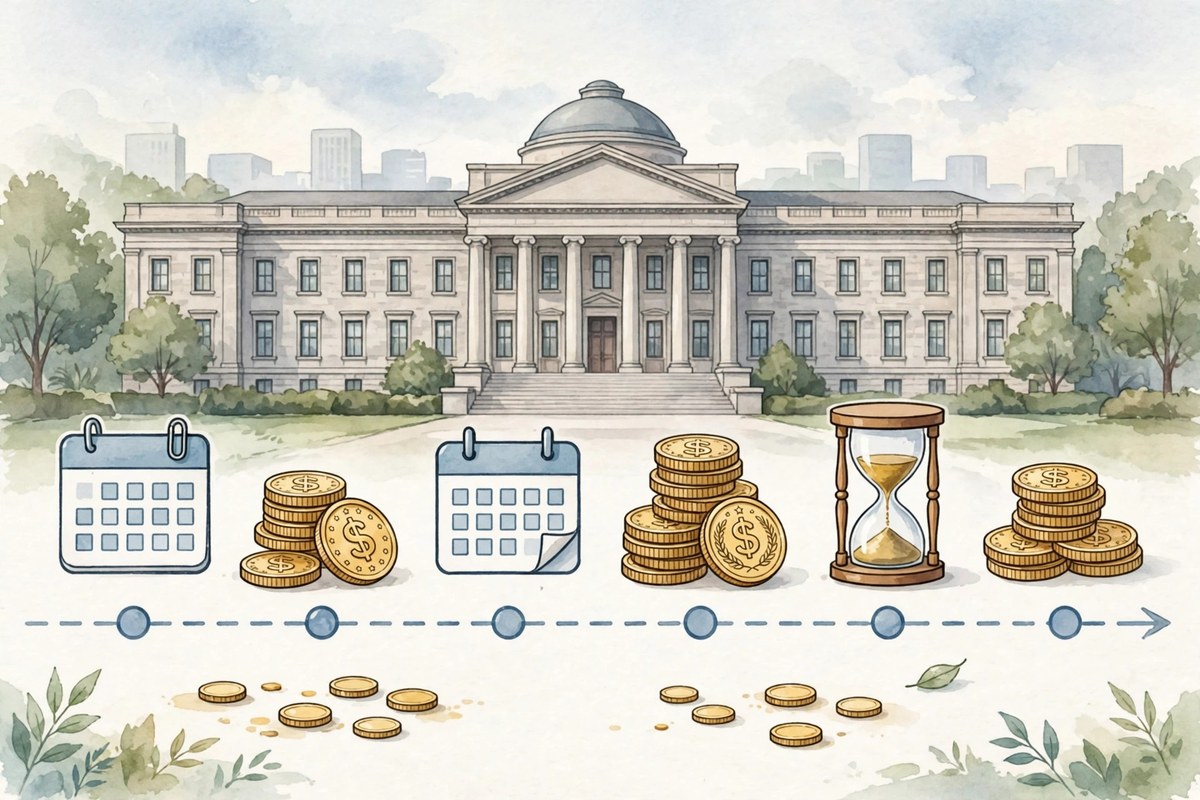
Six dates, spread from October 2026 to July 2028, decide whether your stablecoin is treated as cash, whether your exchange can keep listing it, and whether a foreign issuer can stay in the American market.
| Date | What happens | Why it matters for holders |
|---|---|---|
| October 20, 2026 | Circle submits its SEC comment letter | The cash-treatment and zero-haircut requests enter the formal record. |
| October 28, 2026 | Circle publishes its summary of the letter | The market learns the specifics: Rule 302(b), the 2% haircut, and settlement-asset status. |
| November 2, 2026 | Treasury proposes the Section 3 GENIUS rule | The issuance perimeter opens for comment: who may issue, and who must gatekeep. |
| January 18, 2027 | GENIUS Act takes effect | Foreign-issuer restrictions for DASPs begin; the 12-month waiver window opens for pending applicants. |
| July 18, 2028 | DASP ban on non-PPSI stablecoins begins | US platforms may no longer offer or sell a stablecoin whose issuer is not permitted. |
| 2027–2028 comment and final-rule window | SEC and Treasury finalise their texts | Final wording — not the proposals — decides cash treatment, haircuts and safe harbours. |
What changes for holders, traders, exchanges and issuers
For ordinary holders, the honest answer is: not much yet, and potentially a lot later. Your USDC or USDT does not change value because Circle wrote a letter or Treasury published a proposal. What could change, once final rules land, is which coins your American exchange or broker is allowed to offer, how easily a platform can settle your trades in stablecoins, and whether the stablecoin you hold is issued by a permitted issuer or a foreign issuer that had to take the direct US issuance path. The risk to watch is not price — stablecoins are designed to hold a dollar peg — it is availability: a coin that cannot be offered by US platforms after July 2028 becomes much harder to use in the American market, whatever its peg.
For traders and market makers, Circle's request is the more immediate prize. Zero haircut treatment would cut the capital cost of holding stablecoin inventory and settling trades, which should — over time — narrow spreads and deepen liquidity in stablecoin pairs. Cash treatment for settlement would let tokenised trades settle in stablecoins without a capital penalty, which is the missing piece for 24/7 tokenised stock and bond markets. Neither benefit arrives until the SEC acts, and both depend on the safeguards the SEC attaches. A zero haircut with strict reserve and redemption safeguards is a different market from a zero haircut with loose ones, and traders should read the final safeguards, not just the headline number.
For exchanges and brokers, the Treasury proposal is the bigger shift. DASPs become gatekeepers: listing a foreign-issued stablecoin means verifying that the issuer can and will comply with lawful orders and reciprocal arrangements, and offering a non-permitted coin after July 2028 is off the table. Expect delisting reviews and, for some smaller coins, quiet removals long before the 2028 deadline.
For issuers, the two moves point in the same direction: come inside the perimeter. A foreign issuer that wants American users after January 2027 needs the technological capability to comply with lawful orders and a reciprocal arrangement, or it needs the direct US issuance path. A US issuer that wants the SEC's cash treatment needs to qualify under the safeguards the SEC eventually sets. Issuers that do neither face a shrinking American market. That is why Circle's letter and Treasury's rule, though aimed at different agencies, reinforce each other: one rewards permitted, well-reserved stablecoins with cheaper capital treatment, the other punishes unpermitted issuance with exclusion.
What most people get wrong about this story
The first misconception is that stablecoins are now cash in America. They are not. Circle asked for cash treatment for qualifying payment stablecoins under one proposed SEC rule. The SEC has not granted it, the proposal is not final, and even if granted, the treatment would apply to qualifying coins under defined safeguards — not to every token that calls itself a stablecoin.
The second misconception is that the Treasury rule bans USDT or any named coin. It does not name coins at all. It bans issuance by anyone other than a permitted issuer, and bans DASPs from offering non-permitted coins after July 2028. Whether a particular coin survives in the US market depends on whether its issuer becomes permitted, takes the foreign-issuer path, or qualifies for a safe harbour — facts that will be decided issuer by issuer over the next two years, not by a single headline.
The third misconception is that the GENIUS Act is one rule. It is a framework with many implementing rules: the OCC's final stablecoin rules, the SEC's proposed Regulation Crypto Assets, and now Treasury's Section 3 proposal, each covering a different slice. Readers who followed our earlier coverage of the OCC finalising GENIUS Act stablecoin rules will recognise the pattern: each agency writes its own piece, and the pieces only make sense together. The same caution applies to Europe, where USDC's new status as the continent's first significant stablecoin, covered in our USDC Europe significant-stablecoin article, comes with its own 60% reserve rule and November 12 changes — a reminder that a coin can be regulated differently on each side of the Atlantic.
The fourth misconception is that this is only a story for lawyers. The haircut question decides how much capital a broker must set aside to hold your stablecoin, which decides how cheaply it can offer you stablecoin trading and settlement. The gatekeeper question decides which coins your exchange can list, which decides what you can actually hold and trade. Plumbing sounds boring until the pipe you rely on gets shut off — and that is exactly what a July 2028 offering ban would do to a non-permitted coin.
Checklist: 7 checks before you assume your stablecoin is safe
- Confirm the issuer: is your coin issued by a permitted payment stablecoin issuer, or by a foreign issuer that must take the US path?
- Check your platform's listing: has your exchange said anything about the coin's GENIUS Act status, or is it silent?
- Separate peg from permission: a coin can hold its dollar peg perfectly and still become unofferable on US platforms after July 2028.
- Watch the final SEC text: cash treatment and the zero haircut are requests, not rules, until the SEC finalises Regulation Crypto Assets.
- Watch the final Treasury text: safe harbours, the de minimis exception and the waiver window could all change between proposal and final rule.
- Keep a second rail: holding a permitted alternative alongside your main stablecoin costs little and protects you if one coin's status changes.
- Review yield claims separately: interest, rewards and yield on stablecoins are governed by different rules from issuance and cash treatment — do not assume one approval covers the other.
A ten-minute check now beats a forced conversion later.
What happens next — three scenarios to watch
In the first scenario, the SEC grants cash treatment with strong safeguards and Treasury finalises a workable foreign-issuer path. Permitted stablecoins become cheaper for brokers to hold, tokenised settlement accelerates, and the major coins — USDC and USDT, if their issuers qualify — keep their American market with clearer rules. This is the outcome Circle is arguing for, and it is the best case for holders who want stability without disruption.
In the second scenario, the SEC grants only partial treatment — cash treatment for settlement but not for reserve calculations, or a haircut cut to 1% rather than zero — and Treasury finalises a strict gatekeeper rule with narrow safe harbours. The market still works, but smaller foreign issuers exit the US market, platforms consolidate around a handful of permitted coins, and spreads on the survivors widen slightly as compliance costs rise. Holders are fine if they hold a permitted coin; holders of niche coins face delistings.
In the third scenario, the SEC rejects cash treatment and Treasury finalises a hard perimeter with no practical foreign path before January 2027. Brokers keep paying the 2% haircut, tokenised settlement stays expensive, and foreign-issued coins lose American distribution faster than expected. Which scenario arrives depends on comments, final texts and the new Congress after the November 3 midterm elections.
Why this matters beyond stablecoins
Stablecoins are now the settlement layer of crypto: nearly $299 billion in stablecoin supply underpins trading, lending and tokenised markets. A rule that changes how stablecoins are counted changes the cost of everything built on them; a rule that changes who can issue them changes which dollars can enter the system at all.
For background: our complete beginner's guide to USDC explains how Circle's coin is reserved and redeemed, and our complete beginner's guide to USDT covers the world's biggest stablecoin and how it differs from USDC. Those explainers, plus our RLUSD federal bank charter article, give the context for why a federally chartered reserve model is now the template other issuers are measured against.
Frequently asked questions
Are stablecoins now treated as cash in the United States?
No. Circle has asked the SEC to grant cash treatment to qualifying payment stablecoins under proposed Rule 302(b). The SEC has not adopted the request, and any final treatment would apply only to qualifying coins under defined safeguards.
What is the broker-dealer haircut Circle wants cut to zero?
A haircut is the discount applied to an asset when a broker-dealer calculates its net capital. Circle wants the standard 2% haircut on qualifying stablecoins reduced to zero, which would free up capital and lower the cost of holding and settling in stablecoins.
Does Treasury's new rule ban USDT or USDC?
No, it names no coins. It prohibits issuance by anyone other than a permitted payment stablecoin issuer, and bars digital asset service providers from offering non-permitted coins to US persons after July 18, 2028. A coin's fate depends on its issuer's status, not on a ban list.
What is a permitted payment stablecoin issuer (PPSI)?
A PPSI is an issuer permitted under the GENIUS Act framework to issue payment stablecoins in the United States. Only PPSIs may issue in the US, and knowing participation in a violation can draw a fine of up to $1 million per violation or up to five years in prison, or both.
When do the new stablecoin rules actually bite?
The GENIUS Act takes effect on January 18, 2027, when foreign-issuer restrictions for digital asset service providers begin. The ban on offering non-PPSI stablecoins to US persons begins July 18, 2028. Final SEC and Treasury texts, not the current proposals, will set the exact obligations.
Should I move my stablecoins because of these proposals?
There is no reason to panic-sell a stablecoin because a proposal was published. The sensible steps are the checklist above: confirm your issuer's status, check your platform's statements, keep a permitted alternative as a second rail, and revisit the question when final rules are published. This article is not financial advice.
Conclusion
Circle's 2%-to-zero ask and Treasury's November 2 issuance rule are two halves of the same bet: that dollar stablecoins should be treated as regulated money, not as risky crypto assets, and that only permitted issuers should supply that money in America. If both halves land, stablecoins get cheaper to hold, easier to settle with, and clearer to list — the plumbing upgrade the tokenised market has been waiting for. If either half stalls, the market keeps its discount and its uncertainty, and holders of non-permitted coins face a slow squeeze toward July 2028. The proposals are public and the dates are set. The worst strategy is to ignore them until a final rule forces a decision you could have made calmly today. Sources for the key facts in this article include Circle's SEC cash-treatment request, NewsBTC's report on Circle's letter, and Davis Polk's analysis of Treasury's Section 3 proposal.