How to Buy Bitcoin in Turkey in 2026: 5 Exchanges Compared — Fees, FAST Transfers and the ₺3.79M Price Tag as the Lira Hits the Floor
1 BTC now costs ₺3,790,870 in Turkey — the lira has lost 86% of its purchasing power in five years. 5 SPK-listed exchanges compared: fees from 0.1%, FAST funding, the 48-hour withdrawal rule and the tax question nobody can answer yet.
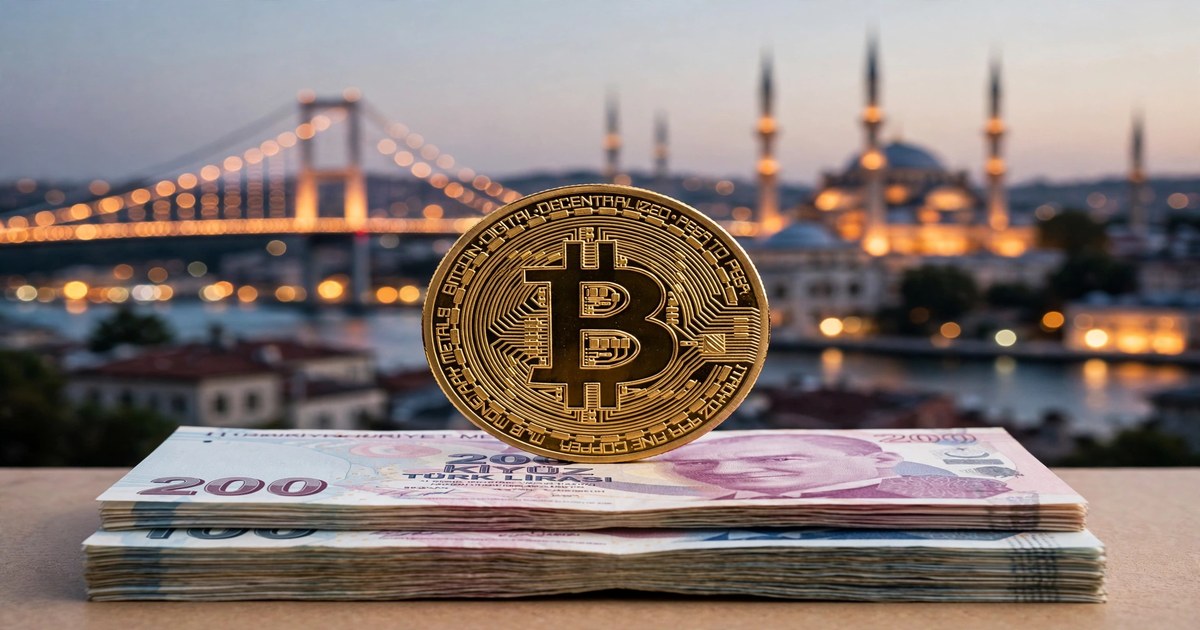
One Bitcoin now costs ₺3,790,870 in Turkey. Five years ago a saver needed fewer than nine lira to buy a US dollar — today that dollar costs nearly ₺49, and the lira has lost roughly 86% of its purchasing power in half a decade. That is why Turkey ranks 14th in the world for crypto adoption and moves roughly $200 billion in crypto volume a year: for millions of Turks, Bitcoin is not speculation, it is a lifeboat. This guide compares the 5 exchanges that work with lira in 2026, walks through the buying steps, and explains the two rules that catch every beginner — the 48-hour withdrawal hold and a tax question nobody in Ankara has settled.
Why Turks Are Buying Bitcoin in 2026
Start with the numbers. Official inflation was 31.51% in August 2026 — the independent ENAG group, which many Turks trust more, calculated 49.03%. Housing and utilities were 39.77% more expensive than a year earlier, food up 33.79%, transport 35.08%. The central bank's 37% policy rate looks less extraordinary against those figures: holding lira guarantees a loss of purchasing power, year after year.
Against that backdrop, Bitcoin's own volatility looks different. Yes, BTC fell about 6% on November 5–6, 2026, to around $75,561, after the Nasdaq dropped 5.5% and more than $1 billion in leveraged positions were liquidated. But priced in lira, one Bitcoin still buys ₺3,790,870 — a seven-digit price tag that is mostly the story of a currency falling, not a coin rising. When the lira loses roughly 18% against the dollar in a single year, a 6% Bitcoin dip barely registers. That is why Turkey led the Middle East and North Africa in crypto volume, at roughly $200 billion a year, and ranked 14th worldwide on Chainalysis' 2025 Global Crypto Adoption Index.
Is Bitcoin Legal in Turkey?
Yes — buying, holding and trading Bitcoin is legal in Turkey. What is not legal is using crypto to pay for goods and services: a central bank regulation in force since April 30, 2021 bans crypto as a means of payment and bars payment firms from routing money to crypto platforms. You can fund a regulated platform with lira, buy Bitcoin or USDT, and convert back — just not buy lunch with it.
The regulatory turning point was Law No. 7518, in force on July 2, 2024, which amended the Capital Markets Law and placed crypto asset service providers under the Capital Markets Board (CMB, known locally as SPK). The board's transitional list of October 1, 2026 named 43 trading platforms and 9 custody applicants; 56 firms landed on its liquidation list. Two things matter. First, no trading platform held a final operating permit by early October 2026 — the list records who filed, not who has been approved, so treat it as a minimum check. Second, the first custody permits went to Akbank, Garanti BBVA and Yapı Kredi in June 2026, bringing the big banks into crypto custody.
Enforcement is real. In September 2026 the CMB barred Bitexen — one of the best-known local exchanges — from taking new customers or listing new tokens, and foreign exchanges serving Turks without a licence get blocked. MASAK added travel-rule duties in February 2025, followed by the withdrawal rules below. Use a platform on the SPK transitional list, and check it yourself before you deposit — it changes.
5 Bitcoin Exchanges in Turkey Compared
The platforms worth using in Turkey are almost all domestic. Binance.com no longer offers lira trading — its separate Turkish entity, Binance TR, is the only Binance that handles it. Here is how they compare on the numbers that decide what you actually pay.
| Exchange | Trading fee (TRY pairs) | TRY funding | SPK transitional list | What to know |
|---|---|---|---|---|
| Binance TR | 0.1% maker | Free bank transfer (Havale / EFT / FAST) | Yes | Cheapest on lira pairs; Binance's separate Turkish company |
| BtcTurk | 0.12–0.2% | Bank transfer / FAST | Yes | Turkey's oldest exchange; two hot-wallet breaches in 14 months |
| Paribu | Varies by pair — check the fee page | Bank transfer / FAST | Yes | One of the largest local platforms |
| Bitexen | Varies — check before trading | Bank transfer | Yes — but no new customers since Sept 2026 | No new accounts until the CMB lifts the restriction |
| Global exchanges (Binance.com, Coinbase, Kraken) | No TRY pairs | No lira deposits | No — unlicensed for Turkey | Only with crypto you already own |
Two details deserve emphasis. First, the fee gap is small: on a ₺100,000 purchase, 0.1% costs ₺100 and 0.2% costs ₺200 — the spread on instant-buy buttons, several times the headline fee, is what actually hurts beginners. Always use the spot market, never the one-tap "Buy" button. Second, funding is where Turkish platforms win: FAST transfers land in minutes, free, while a card deposit on a global exchange can cost 2–4% before you trade.
On security: BtcTurk was breached twice through its hot wallets in fourteen months. That does not make it unusable — it makes it a place to buy, not a place to store. The same logic applies everywhere after the $6.3 billion Binance hot-wallet hack in late October 2026: Coinbase says more than 99% of customer assets sit in offline cold storage, Upbit reports 99.17% cold, OKX more than 95% and Gate 88.26%. If your exchange will not publish a cold-storage figure, that silence is itself an answer. Our full comparison is here: Best Crypto Exchanges After the Binance Hack: OKX Overtakes Binance as 9 Platforms Ranked. Whichever exchange you pick, move meaningful holdings to your own wallet — our guide to the options is Best Crypto Wallets in 2026: 7 Compared After the $6.3B Binance Hack.
How to Buy Bitcoin in Turkey, Step by Step
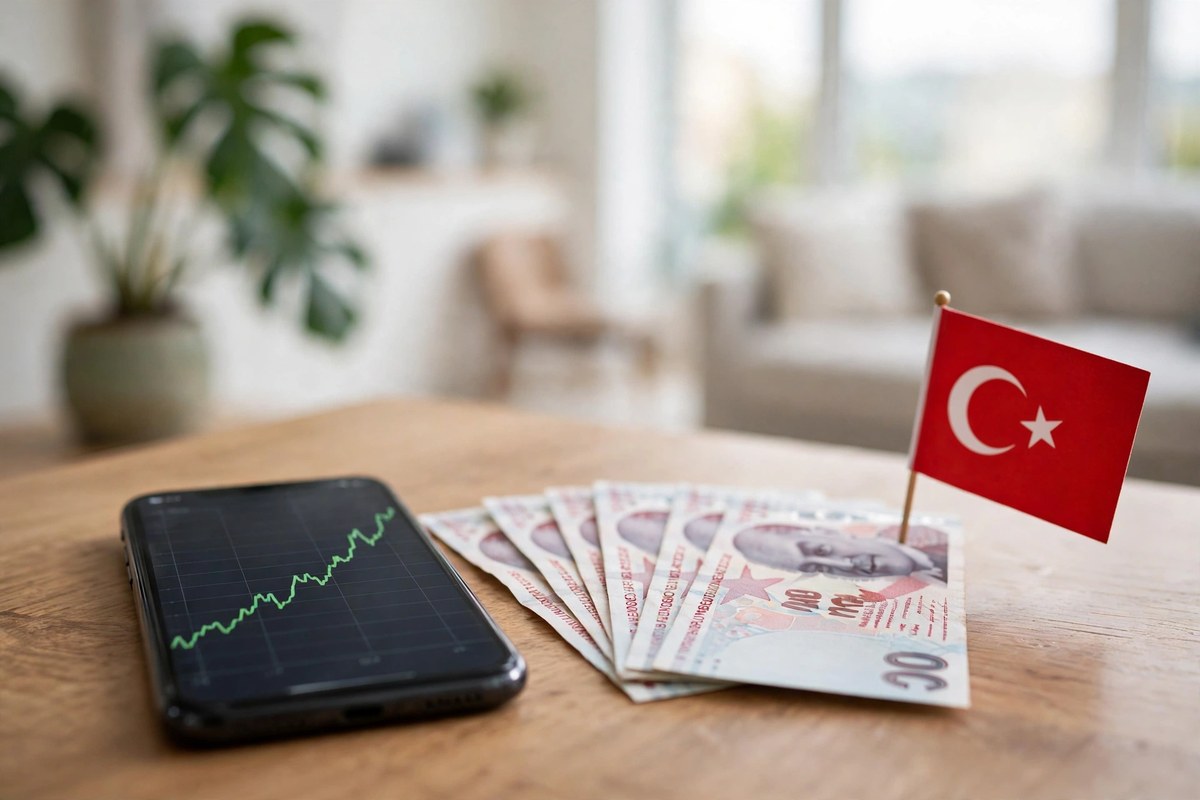
Buying your first Bitcoin in Turkey takes about 20 minutes once your documents are ready. The steps are the same on every SPK-listed platform.
- Pick a platform on the SPK transitional list. Start with Binance TR for the lowest lira fees or BtcTurk for the longest track record, and confirm the name on the board's published list before you register. Off the list, your money has no regulatory protection at all.
- Open the account and complete identity verification. You will need your Turkish ID (or residence permit), a phone number and usually a selfie. Verification is mandatory under MASAK rules.
- Deposit lira by FAST instant transfer from your own Turkish bank account — the account name must match your exchange account exactly, or the deposit bounces. Transfers are free on Binance TR and most local platforms; card deposits are the expensive route.
- Buy on the spot market, not the instant-buy button. Go to the BTC/TRY pair, place a limit or market order, and check the fee before confirming. On a ₺100,000 order at 0.1% the fee is ₺100 — more means you are on the wrong screen.
- Wait out the withdrawal hold. MASAK rules impose a 48-hour hold before crypto bought or deposited can be withdrawn (72 hours on a first withdrawal). If you need the coins in your own wallet this week, buy two days earlier than you think.
- Move larger amounts to your own wallet. Leaving a month's salary on any exchange is a risk you do not need. A hardware wallet costs less than one bad trade — see our beginner walkthrough: How to Buy Bitcoin in 2026: A Complete Beginner's Guide to Your First BTC Purchase.
The 48-Hour Rule and the $3,000 Stablecoin Cap
The rule that surprises every new Turkish buyer is the withdrawal hold. Since June 2025, a MASAK communique requires a 48-hour hold before crypto can leave an exchange after purchase or deposit — 72 hours on a first withdrawal. Transfers need a description of at least 20 characters, and stablecoin transfers are capped at $3,000 a day and $50,000 a month. These are not negotiable platform policies; they apply to every licensed platform in the country.
The caps bite in two situations. First, if you buy USDT to move to another exchange or a DeFi wallet, a $3,000 daily cap turns a $15,000 transfer into a five-day job. Second, the 48-hour hold means coins bought today cannot leave the exchange for two days — you can still sell on the platform and withdraw lira, but you cannot move the coins themselves. Know which you need before you buy.
There is a quieter consequence too: with foreign exchanges blocked and coin movements throttled, most Turkish traders keep their stack on one or two local platforms. That concentration is why the cold-storage numbers above matter — and why it is worth asking which coins hold up best when markets fall: Safest Crypto in a Crash: 7 Coins Ranked After Bitcoin Fell to $75,000.
Crypto Tax in Turkey in 2026: What You Actually Owe
Here is the honest answer: nobody can give you a final number yet, because the tax is still unsettled. In March 2026 the government proposed a 0.03% transaction tax and a 10% withholding tax on gains through licensed platforms, with higher rates for foreign platforms. That proposal was dropped from the bill the same month, according to regulation tracker 4Pillars — and as of November 2026 no crypto-specific tax has replaced it. Any article quoting a fixed Turkish crypto tax rate for 2026 describes a proposal that never became law.
What applies today is the existing Income Tax Code: crypto is capital gains (Değer Artış Kazancı) under Article 80, while staking rewards and airdrops count as occasional income (Arızi Kazanç), as detailed in this breakdown of Türkiye's crypto taxation framework. Traders must report to the Revenue Administration (GİB) once profit exceeds ₺120,000 (roughly €2,265); personal income tax is progressive, 15% to 40%, with very limited deductions. Residents — or anyone staying more than six months — must declare all crypto income, and enforcement is tightening: CARF took effect in 2026, letting Turkish authorities automatically exchange transaction data with more than 100 countries.
Three practical rules follow. First, keep records of every trade — date, lira value and fees — because the exchange will not do your tax return and the ₺120,000 threshold is lower than most people think. Second, the president can set a withholding rate of 0–20% for different tokens and holding periods, so the rules can change by decree; check the current position before a large sale. Third, trading as a business means the flat 25% corporate rate. This is general information, not tax advice — for a large position, a Turkish tax adviser costs far less than a wrong filing.
5 Mistakes That Cost Beginners Money in Turkey
Most of the money Turkish beginners lose is not lost to the market — it is lost to avoidable errors. Check this list before your first trade.
- Buying on binance.com instead of Binance TR. The global site no longer offers lira trading. Lira deposits sent there either bounce or strand your money in an unwanted conversion. Use the Turkish entity.
- Using the instant-buy button. The spread on one-tap buying can cost several times the advertised 0.1% fee. Use the BTC/TRY spot market and check the fee line before confirming.
- Ignoring the 48-hour hold. Buying on Friday and expecting the coins in your own wallet the same day is how beginners learn about MASAK the expensive way. Buy two days early.
- Leaving everything on the exchange. BtcTurk's two hot-wallet breaches and the $6.3 billion Binance hack are the same lesson: exchanges get attacked, and your own wallet is the only storage nobody else controls.
- Assuming the tax is settled. The March 2026 proposals were dropped, the reporting threshold is only ₺120,000 of profit, and CARF means the tax office can now see your trades automatically. Keep records from day one.
What Most People Get Wrong About Bitcoin in Turkey
Myth: "Bitcoin is banned in Turkey." Wrong. Buying, holding and trading are legal; only paying for goods and services with crypto has been banned since April 2021 — a payments ban, not an ownership ban. The 2024 law brought platforms under SPK licensing precisely because trading is legal and regulated.
Myth: "The lira price of Bitcoin means Bitcoin is up." Wrong, and this one costs people money. When 1 BTC costs ₺3,790,870, most of that number is the lira falling — Bitcoin's dollar price actually fell about 6% on November 5–6 to around $75,561, and sits roughly 40% below its peak near $126,000. Judge your investment in dollars, not in a currency losing a fifth of its value a year.
Myth: "A platform on the SPK list is fully licensed." Not yet. The October 2026 list is transitional: it records who filed, and no trading platform held a final operating permit by early October 2026. Being on the list is the minimum, not a finished licence.
Myth: "USDT is a safe way to hold dollars in Turkey." Partly true, partly dangerous. USDT tracks the dollar, but moving it is capped at $3,000 a day and $50,000 a month, and stablecoins carry issuer and depeg risks. It is a tool for moving value, not a savings account.
Myth: "Gold is the only hedge Turks trust." Gold is popular — and so is Bitcoin. Both sit in Turkish portfolios for the same reason: a way out of a currency that has lost 86% of its purchasing power in five years. Our head-to-head is here: Bitcoin vs Gold in November 2026: Both Are the Year's Worst Assets — 5 Numbers That Decide Which Recovers First.
Bitcoin at ₺3.79 Million: 3 Scenarios for What Happens Next
The lira price of Bitcoin is two bets at once — on Bitcoin and on the lira — so the scenarios split them apart. Context today: Bitcoin is at $75,561, down 6% in 24 hours after the Nasdaq's worst day since April 2025, with $1.24 billion in liquidations and the US jobs report due at 8:30 AM ET (consensus 59,000–65,000 jobs, 4.2% unemployment).
| Scenario | Bitcoin (USD) | Lira per USD | 1 BTC in lira | What would cause it |
|---|---|---|---|---|
| Bull: lira stabilises, BTC recovers | $85,000 | ₺48 | ≈ ₺4.08 million | Strong jobs report cools rate-hike fears; ETF outflows reverse; inflation keeps falling from 31.5% |
| Base: choppy, lira drifts weaker | $75,000–$80,000 | ₺50–₺52 | ≈ ₺3.75–4.16 million | Bitcoin holds the $75,000 support; the lira's slow slide continues at its 2026 pace |
| Bear: BTC breaks $75,000, lira slides faster | $70,000 | ₺55 | ≈ ₺3.85 million | Weak jobs data or another tech sell-off; even a Bitcoin fall can leave the lira price flat because the currency falls too |
Notice the twist in the bear row: if Bitcoin fell to $70,000 while the lira slid to ₺55, one Bitcoin would still cost about ₺3.85 million — more than today. That is the trap in reading the lira price as a Bitcoin price. For a Turkish buyer the decision is two decisions: do you want Bitcoin exposure, and do you want to keep savings in lira? The first is a market call; the second, at 31.5% inflation, most Turks have already answered. For a market with a stable currency, compare the US picture: How to Buy Bitcoin in the USA in 2026: 7 Platforms Compared, Fees, and the 3 Mistakes That Cost Beginners Money. And under MiCA in Europe, see How to Buy Bitcoin in Europe After the $6.3B Binance Hack: 4 MiCA-Licensed Exchanges Compared.
FAQs
Is it legal to buy Bitcoin in Turkey in 2026?
Yes — buying, holding and trading are legal; only paying for goods and services with crypto is banned (since April 2021). Platforms need a Capital Markets Board (SPK) licence under Law No. 7518 (July 2024).
Which is the best exchange to buy Bitcoin in Turkey?
Binance TR — 0.1% maker fees on TRY pairs and free FAST bank transfers — or BtcTurk, the oldest local exchange at 0.12–0.2%. Both are on the SPK transitional list. Bitexen is off limits for new accounts: the CMB barred it from taking new customers in September 2026.
How much is 1 Bitcoin in Turkish lira today?
About ₺3,790,870 on November 6, 2026 (Binance BTC/TRY), with Bitcoin at roughly $75,561. The lira figure moves with both the Bitcoin price and the exchange rate.
Can I buy Bitcoin with lira by bank transfer?
Yes — FAST transfers from your own Turkish bank account are free on most local platforms and land in minutes. The account name must match; card deposits cost far more.
Why can't I withdraw my Bitcoin immediately after buying?
MASAK rules require a 48-hour hold before crypto can be withdrawn after purchase or deposit (72 hours on a first withdrawal). Stablecoin transfers are capped at $3,000 a day and $50,000 a month. The hold applies on every licensed platform in Turkey.
Do I pay tax on Bitcoin in Turkey?
Unsettled. Proposals for a 0.03% transaction tax and 10% withholding were dropped in March 2026 and no crypto-specific tax replaced them. Under the Income Tax Code, gains are capital gains (Article 80), reportable to the GİB once profit exceeds ₺120,000; income tax runs 15–40%. Keep full records.
Conclusion
Turkey is one of the few countries where the case for Bitcoin needs no sales pitch — the lira makes it. At ₺3,790,870 per coin, with official inflation at 31.51% and the currency down 86% in purchasing power over five years, the question is not whether to own Bitcoin but how to buy it safely. The answer in 2026: use an SPK-listed platform such as Binance TR or BtcTurk, fund it free by FAST transfer, buy on the spot market at 0.1–0.2% instead of the instant-buy button, respect the 48-hour withdrawal hold, move meaningful holdings to your own wallet, and keep records — the tax rules are unwritten and the reporting threshold is only ₺120,000 of profit. Do those six things and the lira's slow collapse becomes a problem you have already stepped outside of.