How to Buy Bitcoin in Estonia in 2026: 5 MiCA-Licensed Exchanges Compared — Fees, Euro SEPA Payments and the 22% Tax Rule
Estonia cancelled 1,000+ crypto licences in 2022 — but buying Bitcoin there in 2026 is fully legal under MiCA. Compare the 5 exchanges that survived, the cheapest euro SEPA route, and the 22% tax rule that taxes every crypto-to-crypto swap.
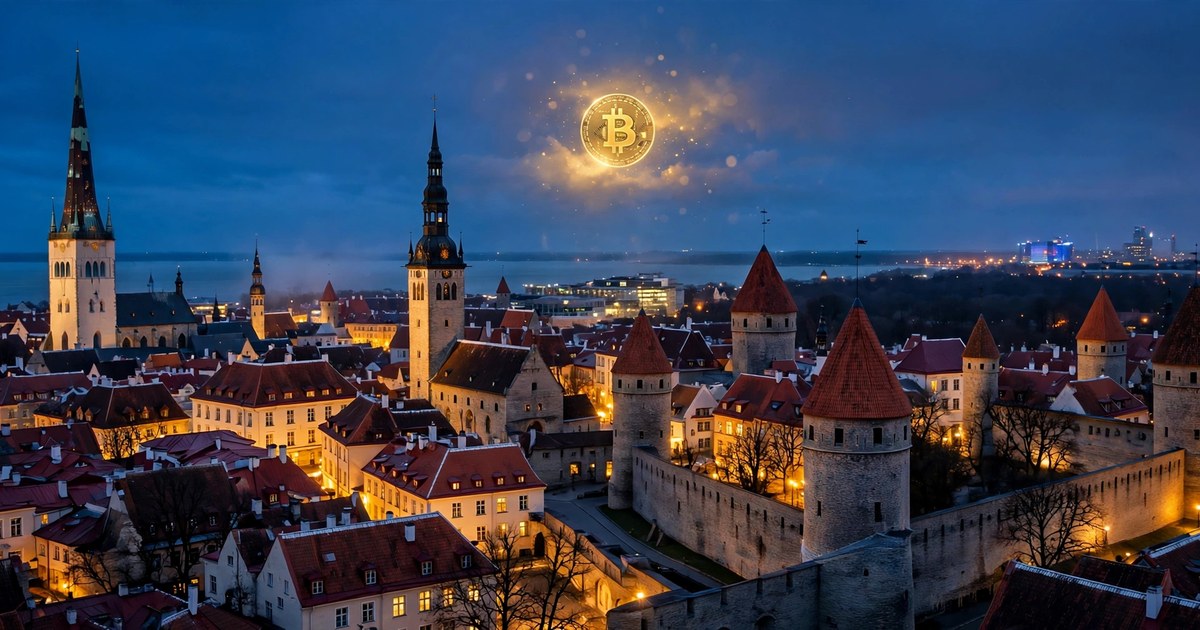
Estonia cancelled more than 1,000 crypto licences in a single clean-up, yet buying Bitcoin there in 2026 is fully legal, fast and — if you pick the right route — cheap. The catch is the tax bill: Estonia taxes every profitable Bitcoin sale at a flat 22%, including crypto-to-crypto swaps, and from the 2026 tax year your exchange reports your trades to the tax authority automatically. This guide compares the five exchanges that survived the MiCA shake-out, shows the cheapest way to pay in euros, and walks through the 22% rule so you keep every cent you are owed.
Bitcoin trades near $75,800 on 8 November 2026, about 40% below its October 2025 peak. For a buyer in Estonia the market backdrop matters less than the mechanics: the country runs on euros, SEPA transfers are near-instant and often free, and every major exchange accepts Estonian residents under MiCA. The hard part is buying on a properly licensed platform, paying the lowest fee, and not handing the tax office a surprise in April.
Why Estonia Is Different From Every Other EU Country
Estonia was the first EU country to write dedicated crypto rules, introducing its virtual-currency service-provider regime back in 2017. At one point it had issued more crypto licences than almost anywhere in Europe — then, in 2022, it took most of them away. A sweeping overhaul cancelled over 1,000 licences for non-compliance, leaving only firms that could prove real capital, staff and anti-money-laundering controls.
That purge is good news for buyers. The platforms still serving Estonia in 2026 operate under the EU's Markets in Crypto-Assets Regulation (MiCA), implemented in Estonian law through the Crypto-Assets Market Act, in force since 1 July 2024. The supervisor is Finantsinspektsioon, the Estonian Financial Supervision and Resolution Authority, which grants and supervises crypto-asset service provider (CASP) authorisations.
Estonia adds two features no other EU country offers together. Its e-Residency programme lets anyone get a government-issued digital ID and run an Estonian company remotely — though it changes nothing about your personal tax. And Estonia charges 0% corporate tax on retained and reinvested profits, with tax due only on distribution, which makes it unusually attractive for running a crypto business as well as buying coins.
None of this makes Bitcoin legal tender in Estonia. The euro is the only official currency, no business is obliged to accept crypto, and the central bank, Eesti Pank, stays out of retail crypto entirely. Bitcoin is legal to own, buy, sell, hold and transfer — and the tax office treats it as property, which is where the 22% rule comes in.
Is Bitcoin Legal in Estonia in 2026?
Yes. Owning, buying, selling and using Bitcoin is legal in Estonia, regulated under MiCA and the national Crypto-Assets Market Act. You must buy through a MiCA-authorised crypto-asset service provider (CASP), and any platform offering exchange, custody or transfer services to Estonian customers must hold that authorisation from Finantsinspektsioon — or passport one in from another EU state under MiCA.
What is not legal is the old grey area. Unlicensed platforms cannot legally serve Estonian residents, and Estonian banks — LHV and SEB among them — accept crypto clients only after due diligence. If a platform cannot show you a MiCA authorisation, do not send it money.
For most buyers the check is simple: stick to the large, well-known exchanges below, all of which operate in the EU under MiCA, and verify the authorisation on the regulator's register (fi.ee) before your first deposit. For the wider Baltic picture, our guide to buying Bitcoin in Lithuania covers a neighbour that completed its own MiCA transition in 2025.
5 Exchanges Compared: Fees, Euro Payments and the Cheapest Route
The five platforms below are the ones Estonian buyers actually use in 2026. Fees are typical spot-trading rates — exchanges change them often, so confirm the live fee schedule before you trade. The pattern is consistent: SEPA bank transfer is the cheapest way in, card payments cost several times more, and the "simple buy" button is the most expensive option of all.
| Exchange | Typical spot fee | Euro SEPA deposit | Card buy fee | Best for |
|---|---|---|---|---|
| Binance | ~0.10% | Free SEPA in | ~2%+ | Lowest fees, widest coin choice |
| Kraken (Pro) | ~0.25% taker | Free SEPA in | ~3.5%+ | Security record, euro rails |
| Coinbase Advanced | ~0.60% taker | Free SEPA in | ~3.99% | Beginners, cleanest app |
| Bitstamp | ~0.30–0.40% | Free SEPA in | ~4% | EU-regulated, long track record |
| Crypto.com Exchange | ~0.40% taker | Free SEPA in | ~2.99% | Card rewards, all-in-one app |
The fee gap is bigger than it looks. Buying €1,000 of Bitcoin costs about €1 in trading fees on Binance's spot market, about €2.50 on Kraken Pro and about €6 on Coinbase Advanced — before spreads. A €1,000 card purchase can carry a fee of €20–€40, and some banks treat crypto card purchases as cash advances, adding interest from day one. Our guide to buying Bitcoin with a credit card breaks down the 3.99% fee and the cash-advance trap — the short version is that SEPA wins every time.
Binance takes the top spot on price alone: a 0.10% spot fee is roughly a sixth of what Coinbase Advanced charges, and its euro SEPA rails are well established. Kraken is the pick if security is your priority — it has never been hacked, and its euro funding is among the smoothest in the EU. Coinbase is the easiest first buy in the business, and for a first-timer the extra few euros may be worth the lack of confusion. Bitstamp, founded in 2011 and long EU-regulated, is the steady option for larger, less frequent buys.
Whatever you choose, use the exchange's advanced or "pro" trading screen, not the one-tap buy button. The simple buy flow on every platform hides a spread of 1% or more on top of the stated fee — on a €1,000 order that is €10 or more for the privilege of one fewer tap. If you are still choosing an app, our ranking of the 7 best crypto apps in 2026 compares the same platforms on fees and security side by side.
How to Buy Bitcoin in Estonia: 5 Steps
From zero to your first satoshis takes under an hour if your documents are ready.
- Pick a MiCA-authorised exchange and verify it. Choose one of the five above and check its authorisation on the Finantsinspektsioon register. Never buy from a platform that cannot show a licence.
- Create your account and complete identity verification. You will need a passport or Estonian ID-card, proof of address, and usually a selfie or video check. Verification typically takes minutes to a few hours. E-residents can use their digital ID for the company side, but personal exchange accounts still need standard KYC documents.
- Deposit euros by SEPA transfer. From your Estonian bank (Swedbank, SEB, LHV or an EU fintech account), send euros to the exchange's SEPA details. SEPA transfers inside the euro area usually arrive within hours and are free or cost under €1. Do not deposit by card unless you accept the 2–4% fee.
- Buy Bitcoin on the spot or pro market. Open the advanced trading screen, select the BTC/EUR pair, and place a limit or market order. A limit order lets you set your price; a market order buys instantly at the current price. Avoid the instant-buy button — its spread is the most expensive way to purchase.
- Move your Bitcoin to your own wallet. Leaving coins on an exchange is convenient but it is not ownership in the strongest sense — exchanges can freeze accounts, and history is full of failures. For any amount you cannot afford to lose, withdraw to a hardware wallet and store your recovery phrase offline, on paper or metal, never in a photo or cloud note.
If you plan to spend Bitcoin rather than hold it, the Lightning Network now moves roughly $1 billion a month in near-instant, near-free payments — worth understanding before you pay a merchant on-chain.
How to Pay: SEPA vs Card vs Cash
Estonia's euro banking makes SEPA the obvious default. A SEPA transfer from Swedbank, SEB or LHV to a major exchange typically lands the same day, costs nothing or a few cents, and carries no percentage fee. That is why every exchange above lists "free SEPA in" — the rails are commoditised, and the exchange wants your deposit.
Card payments are the fast alternative and the expensive one. Expect 2–4% on top of the trading fee, and check with your bank first: some Estonian banks treat crypto purchases as cash advances, so interest accrues immediately with no grace period. A €1,000 card buy can easily cost €30–€50 all-in, against about €1–€2 by SEPA. The only good reason to use a card is urgency.
Cash and peer-to-peer deals are the third option, and the riskiest. Meeting a stranger to buy Bitcoin with cash removes every protection MiCA gives you: no receipt, no recourse, and a real risk of counterfeit notes or worse. Regulated P2P platforms with escrow exist, but for most buyers the SEPA route is cheaper, faster and safer. Never buy Bitcoin through a random Telegram or WhatsApp seller promising a discount — that is the most common scam pattern targeting new buyers in the Baltics.
Estonia Crypto Tax 2026: the 22% Rule, Explained
Estonia has no separate capital gains tax. The Tax and Customs Board (EMTA) treats cryptocurrency as property, and gains from selling it are taxed as ordinary income at the flat personal rate — 22% in 2026. The rate rose from 20% to 22% on 1 January 2025. A further rise to 24% had been planned for 2026, together with a security tax, but the whole package was cancelled in July 2025, so 22% is the rate that applies.
Three features of the Estonian system catch new buyers by surprise. First, every profitable disposal is taxable — not just cashing out to euros. Swapping Bitcoin for Ethereum, or spending Bitcoin on goods, is a taxable disposal measured at the euro value of what you receive. Second, only profitable transactions must be declared, and your gain is the sale price minus the purchase price including fees. Third, losses are generally not deductible for ordinary crypto trades — a losing trade does not cancel a winning one in the same year, except within the investment-account rules below.
Take the standard example: buy 1 BTC for €30,000, sell it for €42,000, and your €12,000 gain costs €2,640 in tax at 22%. With Bitcoin near $75,800 in November 2026 — about 40% below its peak — many recent buyers are sitting on losses, not gains. Those losses do not create a refund, but they do not create a bill either.
There is one legal way to defer the bill. Since 1 January 2025, qualifying crypto-assets bought through a MiCA-authorised provider can be held through an investment account, which defers tax until money is taken out — the same treatment long available for stocks. Transfers between your own wallets are not taxable, and buying, donating or gifting crypto create no tax event on their own.
The deadline matters. The e-MTA portal opens on 15 February and the individual return is due by 30 April. And from the 2026 tax year, Estonian and EU crypto providers must report your transactions to EMTA under the EU's DAC8 rules, with the first reports due in early 2027 — so the figures you declare need to match what your exchange sends. Keep a ledger from day one, ideally with crypto tax software that produces an EMTA-ready schedule.
Estonia vs Latvia vs Lithuania: the Baltic Tax Comparison
The three Baltic states look similar on a map and tax crypto very differently — if you live near a border, the gap is worth real money.
| Estonia | Latvia | Lithuania | |
|---|---|---|---|
| Tax on personal crypto gains | 22% flat income tax | 25.5% capital gains (from 2025) | 15% above a €2,500 annual exemption |
| Crypto-to-crypto swap taxable? | Yes, every profitable swap | Usually at conversion to fiat/goods | Yes, on disposal |
| Losses deductible? | Generally no, except investment account | Within the same tax year rules | Within the same tax year rules |
| Regulator | Finantsinspektsioon | Bank of Latvia / FCMC | Bank of Lithuania |
| MiCA status | Crypto-Assets Market Act, Jul 2024 | MiCA-aligned | Full CASP regime, 2025 |
Estonia sits in the middle: cheaper than Latvia's 25.5% since 2025, more expensive than Lithuania's 15% rate with its €2,500 annual exemption. The full comparison, including our Lithuania walkthrough, is in our How to Buy Bitcoin in Lithuania in 2026 guide. Do not move country for a tax rate alone — residency rules decide what you owe, and getting that wrong costs far more than the rate difference saves.
5 Mistakes Estonian Buyers Make — Checklist
Run through this checklist before your first order.
- Buying with a card instead of SEPA. Card fees of 2–4% plus a possible cash-advance charge can cost €30–€50 per €1,000. SEPA costs cents. Use the bank transfer.
- Using the instant-buy button. The one-tap buy hides a spread of 1% or more over the spot price. The advanced trading screen on the same exchange charges the published fee instead.
- Forgetting that swaps are taxable. Trading Bitcoin for another coin is a taxable disposal in Estonia even though no euros touch your bank account. Track every swap, not just cash-outs.
- Leaving large sums on an exchange. Exchanges are convenient, not vaults. Move holdings you cannot afford to lose to a hardware wallet, keep the recovery phrase offline, and never store it in a photo or email.
- Trusting an unlicensed platform or a "discount" seller. Estonia cancelled 1,000+ licences for a reason. If a platform cannot show a MiCA authorisation, or a stranger offers Bitcoin below market price, walk away.
What Most People Get Wrong About Estonia and Crypto
The myths around Estonia are almost as old as its crypto scene. The biggest is that e-Residency is a tax trick — it is not. E-Residency is a digital ID for running an EU company remotely; it does not change your personal tax residence or the 22% rate on your gains. A second myth is that Estonia is a zero-tax crypto haven. It is not: personal gains are taxed at 22%, and the 0% corporate rate applies only to retained profits, with tax due on distribution.
A third myth is that the 2022 licence purge means crypto is banned or dying in Estonia. The opposite is true: the purge removed the shell firms and left a smaller, supervised market operating under MiCA. And a fourth myth is that you need to be an Estonian citizen or resident to buy. You do not — any EU resident can use a MiCA-authorised exchange.
The honest picture is narrower and better: Estonia is a normal, well-regulated EU country for buying Bitcoin, with excellent banking, a flat 22% tax that is simple to calculate, and a regulator that has already done the hard work of throwing out the bad actors. That is worth more than any "haven" promise.
FAQs
Is it legal to buy Bitcoin in Estonia in 2026?
Yes. Bitcoin is legal to own, buy, sell and hold in Estonia, regulated under the EU's MiCA framework and the national Crypto-Assets Market Act. Buy through a MiCA-authorised provider supervised by Finantsinspektsioon, and keep records for tax.
How much tax do I pay on Bitcoin in Estonia?
Personal gains are taxed at the flat 22% income tax rate in 2026. There is no separate capital gains tax and no annual exemption for individuals. Crypto-to-crypto swaps count as taxable disposals, and the return is due by 30 April. Qualifying assets held through an investment account can defer tax until withdrawal.
What is the cheapest way to buy Bitcoin in Estonia?
Deposit euros by SEPA bank transfer (usually free) and buy on an exchange's advanced or pro spot market. Binance's ~0.10% spot fee is the cheapest of the five compared here. Avoid card payments (2–4%) and the one-tap instant-buy button (hidden spread of ~1%+).
Do I need e-Residency to buy Bitcoin in Estonia?
No. E-Residency is a digital ID for running an Estonian company remotely — it is not needed to buy Bitcoin personally, and it does not change your personal tax rate. Any EU resident can open an account on a MiCA-authorised exchange and buy with euros.
Which exchanges are licensed in Estonia?
Exchanges serving Estonia must hold a MiCA crypto-asset service provider (CASP) authorisation from Finantsinspektsioon or passport one in from another EU state. The large platforms compared in this guide — Binance, Kraken, Coinbase, Bitstamp and Crypto.com — operate in the EU under MiCA. Verify any platform on the regulator's register before depositing.
Can I buy Bitcoin with cash in Estonia?
Technically yes through peer-to-peer deals, but it is the riskiest route: no receipt, no recourse, and a well-known scam pattern. A SEPA transfer to a licensed exchange is cheaper, faster and protected by MiCA rules. Avoid strangers offering Bitcoin below market price.
Conclusion
Estonia is one of the cleanest places in Europe to buy Bitcoin in 2026 — not because it is a tax haven, but because it already went through the painful clean-up other countries are still facing. More than 1,000 licences were cancelled, MiCA now sets the rules, and the platforms left standing are supervised, euro-friendly and cheap to use by SEPA. The deal is simple: pay about 0.10% to trade, pay nothing to deposit by bank transfer, and pay a flat 22% on your gains when you sell — including swaps.
Start small, use the advanced trading screen, move holdings to your wallet, and keep a ledger from the first trade. And if the market's current fear is making you hesitate, run the decision through our five tests for whether now is a good time to buy crypto — Bitcoin is 40% below its peak and fear is at 25, which is exactly when a plan matters more than a prediction. This article is general information, not financial or tax advice. Confirm the current rules with EMTA or a qualified adviser before acting.