How to Buy Bitcoin in Denmark in 2026: 5 MiCA-Licensed Exchanges Compared — Fees, DKK Payments and the 42% Tax Rule
Bitcoin is legal in Denmark — but only MiCA-licensed exchanges can serve you, and from 2026 Denmark taxes even unrealized crypto gains at 42%. Here are the 5 best exchanges compared, the cheapest way to pay in kroner, and the tax rules every Danish buyer must know.
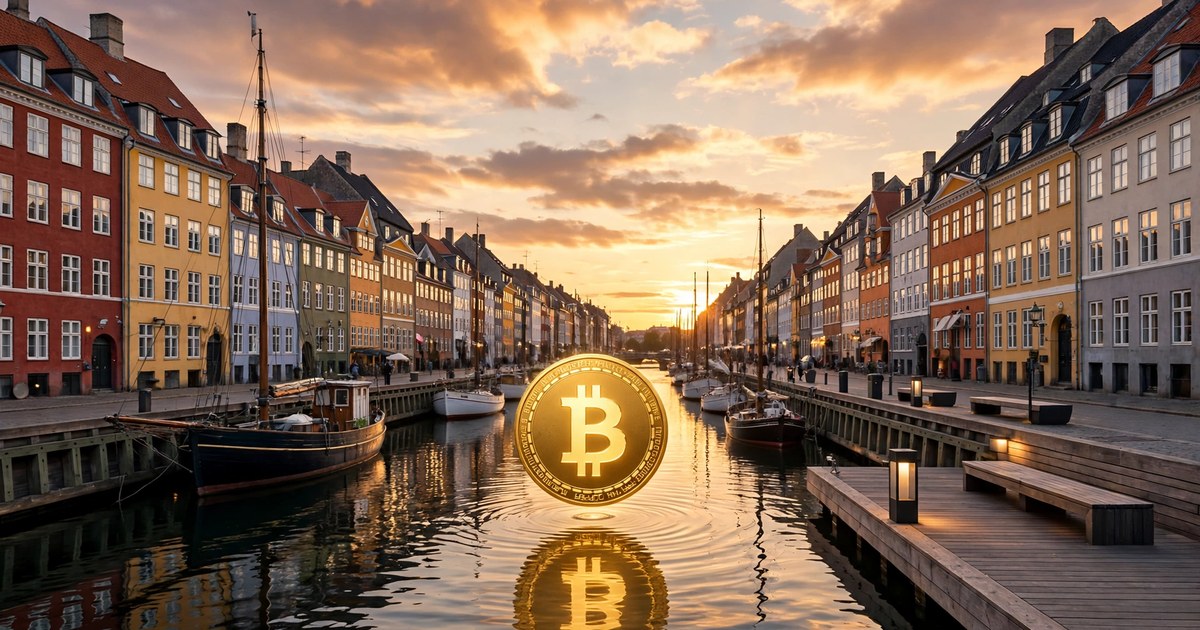
Bitcoin is legal in Denmark, but buying it the wrong way can cost you twice: once in fees and currency conversion, and again at tax time. Since 1 July 2026 only MiCA-licensed exchanges may serve Danish customers, and Denmark is moving to tax even unrealized crypto gains at 42% from 2026 — the first country in the world to do so. This guide compares the five best MiCA-licensed exchanges for Danish buyers, shows the cheapest way to pay in Danish kroner, and explains the tax rules you cannot afford to ignore.
If you are new to Bitcoin itself, start with our complete beginner's guide to how BTC works before you spend a single krone. The rest of this guide assumes you know what Bitcoin is and want to buy it safely, legally and cheaply from Denmark.
Is Bitcoin Legal in Denmark in 2026?
Yes. Buying, holding and selling Bitcoin is fully legal in Denmark. Crypto is not legal tender — you cannot pay your taxes in BTC — but there is no ban on owning or trading it, and Danish banks do not block payments to licensed exchanges.
What changed in 2026 is who is allowed to sell it to you. The EU's Markets in Crypto-Assets Regulation (MiCA) is now fully in force, and the transition period for national licences ended on 1 July 2026. Since then, only platforms holding crypto-asset service provider (CASP) authorisation — from Denmark's own regulator, the Danish Financial Supervisory Authority (Finanstilsynet), or passported in from another EU regulator — may serve Danish customers. An exchange without a MiCA licence is not supervised by any EU regulator, which means MiCA's investor protections do not apply if something goes wrong with your money.
That single rule is the most important filter in this guide: every exchange below holds a MiCA licence. Platforms without one were excluded, no matter how low their fees looked.
The 5 Best Exchanges to Buy Bitcoin in Denmark Compared
These are the five MiCA-licensed platforms that work best for Danish buyers in November 2026, ranked by the combination of fees, kroner funding and ease of use. Fees are the published spot-trading rates; card purchases and spreads cost more on every platform.
| Exchange | MiCA licence | Spot fee | DKK funding | Best for |
|---|---|---|---|---|
| Bybit EU | Austria (FMA) | 0.10% | Card / SEPA in EUR | Lowest fees overall |
| OKX EU | Malta (MFSA) | 0.08% maker / 0.10% taker | Card / SEPA in EUR | Active traders |
| Kraken | Ireland (Central Bank) | 0.40% maker / 0.80% taker (Pro) | SEPA in EUR | Security and clean tax records |
| Coinbase | Luxembourg (CSSF) | 0.25% maker / 0.50% taker (Advanced) | SEPA in EUR, cards | Absolute beginners |
| Bitpanda | Austria (FMA) | ~1.49% spread | DKK bank transfer | Paying directly in kroner |
1. Bybit EU — the cheapest all-rounder
Bybit EU is the best overall choice for most Danish buyers. Its European entity is authorised as a CASP under MiCA by Austria's Financial Market Authority, it charges a flat 0.10% spot trading fee — the lowest simple rate on this list — and SEPA euro deposits are free. It lists more than 2,000 coins, so you will not need a second exchange if you later branch out beyond Bitcoin. The catch is currency: there is no direct krone bank-transfer channel, so you fund in euros and your bank converts kroner at its own rate. The krone is pegged to the euro at roughly 7.46, so the conversion cost is small and predictable, but it is still an extra cost to count. Datawallet's Denmark comparison rates Bybit as the top pick for Danish investors for the same reasons.
2. OKX EU — the cost leader for active traders
OKX EU runs under a MiCA licence supervised by Malta's MFSA and undercuts even Bybit on maker fees at 0.08%, with taker fees at 0.10%. Spot and leveraged futures sit on one account, though futures require a short appropriateness test first. For a buy-and-hold Bitcoin buyer the difference from Bybit is a few kroner per trade; for someone trading weekly, it adds up. Like Bybit, funding is in euros via SEPA or card, with no direct DKK channel.
3. Kraken — the security-first choice
Kraken has operated since 2011 without a major breach, publishes proof-of-reserves attestations confirming client balances are fully backed, and holds a MiCA licence from the Central Bank of Ireland that passports across the EEA. Its Kraken Pro fees (0.40% maker / 0.80% taker at the entry tier) are higher than Bybit or OKX, but many Danish buyers accept that premium for the custody record and the clean tax-export tools, which matter a lot in a country where the tax agency expects detailed records. If you plan to hold for years and sleep well, Kraken is the conservative pick.
4. Coinbase — the easiest first purchase
Coinbase is a Nasdaq-listed public company, holds a MiCA licence through Luxembourg's CSSF, and has the shortest onboarding of any platform here. Its Advanced tier charges 0.25% maker and 0.50% taker, but simple one-tap buys in the main app cost considerably more through the spread plus a transaction fee — so always buy through Coinbase Advanced, not the simple buy button. Free euro bank transfers take one to three business days. Coinbase is the right answer if you want the simplest possible first purchase and are willing to pay a little extra for it.
5. Bitpanda — the only one that takes kroner directly
Bitpanda is the only exchange on this list with a Danish krone account: you can deposit DKK by bank transfer and skip the euro conversion entirely. It is licensed under MiCA by Austria's FMA and lists around 600 coins alongside stocks, ETFs and precious metals. The trade-off is price — a spread of roughly 1.49% on Bitcoin buys, far above the 0.10% available elsewhere. On a 10,000 DKK purchase that spread costs about 149 DKK versus roughly 10 DKK in trading fees on Bybit, so Bitpanda only wins if your bank's euro conversion charge is worse than that gap. For most Danish bank customers it is not, which is why Bitpanda ranks fifth despite its unique DKK funding. Akka's Europe buying guide makes the same point: currency conversion is the hidden cost Nordic buyers most often forget.
How to Buy Bitcoin in Denmark: Step by Step
Buying your first Bitcoin from Denmark takes about 20 minutes once you have your ID ready. The steps are the same on every licensed exchange:
- Choose a MiCA-licensed exchange from the table above. For most people that means Bybit EU for low fees, Kraken for maximum security, or Coinbase for the easiest start.
- Create and verify your account. You will need a passport or driving licence and proof of address. EU anti-money-laundering rules require this identity check (KYC) before you can deposit — there is no legal way to buy Bitcoin in Denmark without it.
- Deposit kroner or euros. A SEPA euro transfer is free on all five platforms but takes one to three business days, and your Danish bank converts the kroner at its rate (the peg keeps it near 7.46 DKK per euro). A card deposit is instant but costs 1–2% extra. Bitpanda is the exception: it accepts a direct DKK bank transfer.
- Place a limit order, not a market buy. On the exchange's advanced or pro trading screen, set the price you are willing to pay. Market orders on the simple buy screen quietly add a spread that can cost several times the headline trading fee.
- Check the total cost before confirming. Add the trading fee, the spread and your bank's conversion charge. On a 10,000 DKK buy through Bybit EU the trading fee is about 10 DKK; through a simple-buy screen elsewhere the all-in cost can exceed 200 DKK.
- Move your Bitcoin to your own wallet. Leaving coins on an exchange means trusting the exchange's security forever. For any amount you would miss losing, withdraw to a hardware wallet and keep the recovery phrase offline, on paper, in a safe place.
Paying in Danish Kroner: SEPA, Cards and Danske Bank
Denmark uses the krone, not the euro, and that shapes every purchase. Almost no international exchange accepts DKK bank transfers — Bitpanda is the notable exception — so most Danish buyers fund in euros. Your bank converts kroner to euros at its listed rate, and because the krone is pegged to the euro, the rate barely moves; the cost is the bank's conversion margin, typically well under 1%.
Danske Bank, Denmark's largest bank, has never blocked payments to exchanges. Its published position keeps card payments and bank transfers to crypto platforms available, and since February 2026 it has listed three crypto ETPs from BlackRock and WisdomTree that track Bitcoin and Ethereum, available through Danske eBanking and the mobile bank after a suitability questionnaire. Those ETPs are a different product from owning Bitcoin — you cannot withdraw the coins — but they show how far Danish mainstream banking has moved: the country's biggest bank now sells Bitcoin exposure directly.
MobilePay, Denmark's dominant payment app, does not fund crypto purchases directly. If you see a seller offering Bitcoin via MobilePay, that is a peer-to-peer deal with no buyer protection — the exact kind of transaction the Finanstilsynet warnings and the MiCA rules exist to steer you away from.
Denmark Crypto Tax in 2026: The 42% Rule Every Buyer Must Know
Denmark has some of the highest crypto tax rates in the world, and 2026 made them stricter. Here is what applies to a Danish resident buying Bitcoin this year:
- Gains on Bitcoin are taxed as personal income, up to 52.06%. The Danish Tax Agency (Skattestyrelsen) assumes almost all crypto activity is speculative, so profits are taxed at your personal income rate rather than a lower capital-gains rate. Losses can only offset gains on the same type of coin, and are deductible at up to 26% of their value.
- Stablecoin gains are taxed at 42% as capital income. Stablecoins are classified as financial contracts in Denmark, so swapping Bitcoin into USDT or USDC can itself be a taxable event at the 42% capital-income rate.
- Unrealized gains face a 42% tax from 2026. Denmark's Tax Law Council recommended taxing unrealized crypto gains — profits on coins you still hold and have never sold — at 42% starting 1 January 2026, and the government backed the plan, making Denmark the first country in the world to tax paper crypto profits. Cointelegraph's reporting on the proposal notes the council recommended inventory-style taxation of the whole portfolio each year, regardless of sales.
- Exchanges now report you automatically. The EU's DAC8 directive took effect on 1 January 2026, obliging every EU-based exchange to report user and transaction data directly to the Danish tax authorities. The old assumption that the tax agency would never see your trades is gone.
- Report in the right boxes. Bitcoin and altcoin profits go in Box 20 (losses in Box 58); stablecoin gains go in Box 346 (losses in Box 85). Keep every trade record — date, price in DKK, fees — because Skattestyrelsen can ask for them years later.
This is general information, not tax advice. Denmark's rules are unusually complex and the 2026 unrealized-gains regime is new; if you hold a meaningful amount, a Danish tax adviser pays for itself many times over. For comparison, our Netherlands crypto tax guide shows how a neighbouring country handles the same problem very differently.
What Most People Get Wrong About Buying Bitcoin in Denmark
Five mistakes catch Danish buyers again and again:
- Assuming any big-name exchange is legal here. After 1 July 2026, a platform without a MiCA licence cannot lawfully serve you in Denmark. Big global brands that never obtained EU authorisation are off-limits, whatever their advertising says.
- Paying the simple-buy spread. The one-tap buy button is the most expensive way to purchase on every exchange. The advanced trading screen with a limit order regularly saves 1% or more per purchase.
- Forgetting the krone conversion. A 0.10% trading fee means nothing if your bank takes 1.5% converting DKK to EUR. Compare the all-in cost, not the headline fee.
- Thinking tax only applies when you sell. From 2026, Denmark taxes unrealized gains too. Holding through a bull run now creates a tax bill even if you never cash out — plan for it before the year ends.
- Leaving coins on the exchange. The $6.3 billion Binance hack in October 2026 was a reminder that even the largest platforms can be breached. Our guide to whether your crypto is safe on an exchange explains the five checks to run before trusting any platform with your coins — and why a hardware wallet is the default for long-term holders.
Storing Your Bitcoin Safely After You Buy
Buying is the easy half; storing is where most losses happen. The rule is simple: exchanges are for buying, not for storing. Withdraw your Bitcoin to a wallet you control — a hardware wallet for larger amounts, a reputable mobile wallet for small spending money — and write the 12- or 24-word recovery phrase on paper, stored somewhere no one else can find it. Never photograph it, never store it in cloud notes, and never share it with anyone, including someone claiming to be exchange support. No legitimate support agent will ever ask for it.
If you want exposure without custody at all, the Danske Bank crypto ETPs mentioned above — or a spot Bitcoin ETF through your broker — hold the Bitcoin for you. You pay an annual management fee and you cannot withdraw the coins, but you also cannot lose them to a phishing attack.
Bitcoin in Denmark: Costs Worked Example
What does a 10,000 DKK Bitcoin purchase actually cost on each route? These are November 2026 estimates for a limit order funded by SEPA, including a typical Danish bank conversion margin of about 0.5%:
| Route | Trading fee | Conversion (approx.) | Total cost (approx.) |
|---|---|---|---|
| Bybit EU (limit order, SEPA) | ~10 DKK | ~50 DKK | ~60 DKK |
| OKX EU (limit order, SEPA) | ~8–10 DKK | ~50 DKK | ~58–60 DKK |
| Kraken Pro (limit order, SEPA) | ~40–80 DKK | ~50 DKK | ~90–130 DKK |
| Coinbase Advanced (limit order) | ~25–50 DKK | ~50 DKK | ~75–100 DKK |
| Bitpanda (DKK transfer, spread) | ~149 DKK | 0 DKK | ~149 DKK |
| Any simple-buy button (card) | ~150–250 DKK | ~50–100 DKK | ~200–350 DKK |
The pattern is clear: the cheapest route is a limit order on a low-fee MiCA exchange funded by SEPA, and the most expensive is a one-tap card buy. The difference on a single 10,000 DKK purchase can exceed 250 DKK — and it compounds with every purchase you make.
FAQs: Buying Bitcoin in Denmark
Is it legal to buy Bitcoin in Denmark?
Yes. Buying, holding and selling Bitcoin is legal in Denmark. Since 1 July 2026, only exchanges holding a MiCA licence — from Finanstilsynet or passported from another EU regulator — may serve Danish customers.
Which is the best exchange for buying Bitcoin in Denmark?
Bybit EU is the best all-rounder: MiCA-licensed in Austria, a flat 0.10% spot fee and free SEPA deposits. OKX EU is marginally cheaper for active traders, Kraken is the safest choice for long-term holding, Coinbase is the easiest first purchase, and Bitpanda is the only option that accepts direct DKK bank transfers.
Can I pay with Danish kroner (DKK)?
Directly, only on Bitpanda, which holds a DKK account. On every other licensed exchange you fund in euros via SEPA and your Danish bank converts the kroner — the peg keeps the rate near 7.46 DKK per euro, so the conversion cost is small but real.
How much tax do I pay on Bitcoin in Denmark?
Bitcoin gains are taxed as personal income at up to 52.06%, and stablecoin gains at 42% as capital income. From 2026, Denmark also taxes unrealized crypto gains at 42% — the first such regime in the world. Exchanges report your activity to Skattestyrelsen automatically under DAC8, so keep full records of every trade.
Can I buy Bitcoin with Danske Bank?
Yes. Danske Bank does not block payments to licensed exchanges, and since February 2026 it lists three crypto ETPs from BlackRock and WisdomTree tracking Bitcoin and Ethereum. To own actual coins you can withdraw to your own wallet, fund a MiCA-licensed exchange from your Danske account instead.
What is the minimum amount of Bitcoin I can buy in Denmark?
Most exchanges allow purchases from €1 or the equivalent — roughly 7–8 DKK. There is no meaningful minimum; the real question is whether the fees on a tiny purchase are worth it. On a 100 DKK buy, a 1.49% spread costs under 2 DKK, so small test purchases are cheap — but always use a limit order on the advanced screen rather than the simple-buy button.
Conclusion
Denmark is one of the best-regulated places in Europe to buy Bitcoin — and one of the most heavily taxed. The winning formula in 2026 is straightforward: pick a MiCA-licensed exchange, pay by SEPA with a limit order, keep the all-in cost under 1%, move your coins to your own wallet, and keep meticulous records for a tax system that now taxes even gains you have not realised. Do that, and the 42% tax rule becomes a planning problem rather than a nasty surprise. Skip any of it, and the cheapest part of buying Bitcoin in Denmark will be the Bitcoin itself. For a wider view of the Nordic market, our Sweden buying guide and Finland buying guide cover the same MiCA rules with different local payment rails — and if you are still weighing whether Bitcoin belongs in your portfolio at all, our analysis of whether Bitcoin is a good investment in 2026 is the place to start.