Is Your Crypto Safe on an Exchange? 3 Platforms Froze Accounts This Week — 5 Checks Before Your Money Gets Stuck
GOPAX froze all withdrawals after one threatening email, Binance France starts charging 10 USDC a month from November 29, and Indian regulators raided two exchanges this week. Here are the 5 checks that decide whether your coins are actually yours.
One threatening email froze an entire crypto exchange on Friday. In France, the world's biggest exchange starts charging customers for the privilege of leaving their money behind on November 29. And in India, regulators raided two major exchanges this week. Your crypto is only yours if you can withdraw it — and this week, thousands of people learned that the hard way.
Bitcoin is trading near $75,880 on November 7, down about 40% from its $126,156 all-time high, with the Crypto Fear & Greed Index at 25 — Extreme Fear. But the week's most important story is not the price. It is access. Three separate events in three countries all delivered the same lesson: the coins sitting on an exchange are an IOU, not a balance, and that IOU can be frozen, taxed, or seized with almost no warning. This article breaks down exactly what happened, what most people get wrong about exchange safety, and the five checks that decide whether your money is actually yours.
Three Freezes in One Week: What Actually Happened
The three incidents look unrelated — a hacking threat in Seoul, a licensing failure in Paris, and a law-enforcement raid in Mumbai. Together they form a pattern: regulators and security teams are moving faster than users, and the gap between "my account shows a balance" and "I can take my money out" is wider than most holders realise.
| Event | When | What froze | Who is affected |
|---|---|---|---|
| GOPAX halt (South Korea) | November 6, 2026 | Deposits, withdrawals, trading | All GOPAX users; withdrawals only via manual support requests |
| Binance France wind-down | Fees from November 29; closure December 31 | Deposits and trading already stopped; accounts close | Binance France account holders; 10 USDC minimum monthly fee |
| India ED raids (CoinDCX, Delta Exchange) | November 2026 | Offices raided; alleged offshore USDT redirection probed | Users of the two exchanges; investigation ongoing |
None of these three events involved a confirmed theft at the moment they hit the news. That is precisely the point. You do not need a hacker to lose access to your crypto. A threat, a licence, or a raid is enough.
GOPAX: One Email Froze an Entire Exchange
On Friday, November 6, South Korean exchange GOPAX received an email from a group claiming to have hacked the platform. The exchange has not verified whether the threat was genuine. No hack or attempted theft had taken place at the time of the announcement, and no customer losses have been reported. It froze everything anyway.
The timeline was fast. Deposits and standard withdrawals stopped at 2:55 p.m. local time (05:55 UTC). Trading stopped at 3:53 p.m. (06:53 UTC), and every outstanding order was cancelled. The exchange said it would move most assets held in internet-connected hot wallets into offline cold wallets, following recommendations from South Korean financial regulators. Customers who want their money now must apply through the support centre, where each request is checked and approved by hand — a process GOPAX itself warned could take longer than usual. At the time of writing, no reopening date has been announced.
Here is the number that explains why a single email was enough to shut the exchange down: at the end of September, GOPAX held just 80.54% of customer assets offline. South Korea's Virtual Asset User Protection Act requires at least 80%. GOPAX cleared the legal minimum by 0.54 percentage points. By comparison, Upbit — the country's largest exchange — held about 99.17% of customer assets offline, leaving only around 0.83% in hot wallets. GOPAX left roughly 19.46% of customer funds in internet-connected wallets, about 23 times Upbit's share.
The context matters. On October 29, about $6.3 billion in coins was stolen in the hack of Binance, the world's largest exchange. On November 2, South Korea's Financial Services Commission held an emergency meeting with major exchanges and urged them to keep more customer assets offline. Four days later, GOPAX got its threatening email — and with nearly a fifth of customer funds sitting in hot wallets, it had no room to gamble. The freeze was precautionary, but for users trying to sell into a falling market or simply get their money out, precautionary feels identical to frozen. For the full timeline of where the stolen Binance funds went, see our tracking of where the $6.43B Binance hack money is now.
Binance France: The Slow Freeze With a Fee Attached
Binance France is not being hacked. It is being closed — slowly, politely, and at a price. The French arm of the world's largest exchange told customers by email in early November that all accounts will close on December 31, 2026, after it failed to obtain authorisation under the European Union's Markets in Crypto-Assets (MiCA) framework. France's regulator, the AMF, had already struck Binance France from its PSAN register on July 2, 2026. MiCA's transition period ended on June 30, 2026, making authorisation mandatory for crypto service providers across the EU.
The part most users will miss is the fee schedule, because it starts a full month before the closure. From November 29, any Binance France account that still holds a balance pays a monthly management fee of 0.025% of the balance — or 10 USDC, whichever is higher. The first deduction lands within three days of November 29, and a second is expected after December 24. Deposits are already blocked and trading for French residents has already ended; withdrawals are the only service left. Customers who empty their accounts before November 29 avoid the charges entirely.
Do the maths on the minimum fee and the picture gets worse for small holders. On a 500 USDC balance, the 10 USDC minimum works out to just over 2% per month. On 1,000 USDC it is still 1% a month. On a 100 USDC balance it is 10% a month. Only above roughly 40,000 USDC does the 0.025% percentage fee become larger than the 10 USDC minimum. A small balance left behind does not sit quietly — it bleeds. And the email reportedly warns that assets remaining after December 31 may be treated as inactive under Binance's terms of use, potentially resulting in their conversion, transfer, or other handling.
To be clear, this affects accounts held with the French legal entity, not Binance's global platform and not every Binance user who happens to live in France. But the lesson travels: a licence decision in one country can end your access to an exchange you have used for years, and the exit can come with a bill attached.
India Raids and the Week's Other Warnings
The third freeze arrived with badges, not emails. India's Directorate of Enforcement (ED) raided multiple locations linked to Neblio Technologies, the parent company of CoinDCX, and Excelium Technologies, which operates Delta Exchange India. The probe concerns alleged trade redirection through Binance and offshore USDT flows under the Foreign Exchange Management Act (FEMA). CoinDCX is one of India's largest exchanges, and the raids landed in the same week as the GOPAX freeze and the Binance France notice.
Coinbase added its own warning this week, publishing a November delisting schedule and flagging certain newly created Solana-based tokens. Separately, the US Treasury's FinCEN order cutting MEXC Global off from US banks remains in force, and US spot Bitcoin ETFs recorded $411.9 million in net outflows on November 6 alone, with the Fear & Greed Index sitting at 25. The market backdrop is fragile — Bitcoin is 39.72% below its all-time high — and fragile markets are when access problems hurt most, because that is exactly when people want to move.
What Most People Get Wrong About Exchange Safety
Four myths keep repeating every time an exchange freezes, and each one cost someone money this week.
Myth 1: "My exchange is too big to freeze." Binance is the largest exchange on earth. Its French arm is closing anyway, because a licence — not size — decides whether it can operate. GOPAX is small, but the mechanism is identical: one email, one decision, zero withdrawals. Size protects against bankruptcy risk; it does not protect against a regulator, a security team, or a prosecutor.
Myth 2: "Cold storage means my coins are safe." GOPAX is moving everything to cold wallets right now, and that is exactly why users cannot withdraw. Cold storage protects coins from hackers. It does not make them available to you. When an exchange moves assets offline in an emergency, your balance becomes a claim you must file by email and wait for a human to approve. Safety from theft and access for owners are two different things, and this week they pointed in opposite directions.
Myth 3: "I can always withdraw in minutes." Standard withdrawals are instant only while the exchange allows them. GOPAX's website and app withdrawal buttons are disabled; only manual support requests work, one at a time, with verification. Binance France users have until November 29 before fees start — but only withdrawals remain, and after December 31 the account itself closes. "Instant withdrawal" is a feature of normal operations, not a property right.
Myth 4: "Regulators protect my balance." Regulators protect the system, and sometimes that means freezing you out of it. The 80% cold-storage rule that forced GOPAX's hand exists to protect users — and its immediate effect was that users could not touch their money. MiCA exists to protect European consumers — and its immediate effect is that Binance France customers must leave or pay. Regulation reduces some risks and creates others. Neither is the same as your coins being in your own wallet.
The 5-Check Exchange Safety Checklist
Use this checklist on every exchange where you hold funds. If an exchange fails two or more checks, reduce your balance there this weekend — not next month.
Check 1: Can you withdraw right now, in full, without asking anyone? Test it with a small amount before you need it. A withdrawal button that works today is the only proof that matters. If withdrawals require manual approval, a support ticket, or a waiting period, your money is already partly frozen.
Check 2: What percentage of customer funds sits in cold storage? In South Korea the legal minimum is 80%, and GOPAX sat at 80.54% — the thinnest possible margin. Prefer exchanges that publish proof of reserves and keep 90% or more offline. If an exchange does not disclose its cold-storage ratio, treat that as a failed check. Our guide to the best crypto wallets in 2026 explains how to move funds off exchanges entirely.
Check 3: Does the exchange hold a licence in your country — and is it at risk? Binance France lost its AMF registration on July 2 and its MiCA application failed. Check your exchange's registration status with your national regulator today, not after the closure email arrives. A licence under review is a warning, not a detail.
Check 4: How much of your total crypto sits on any single exchange? Never keep more on one platform than you can afford to lose access to for 30 days. Spread across two exchanges and, for anything you do not trade weekly, a hardware wallet. For beginners, our comparison of the best crypto wallets for beginners covers hot versus cold storage in plain language.
Check 5: Do you hold your own seed phrase anywhere? If every coin you own exists only as a balance inside an exchange account, you own an IOU. A hardware wallet with a seed phrase stored offline is the only arrangement where no email, licence, or raid can freeze your withdrawal. It is also the only arrangement where losing the seed phrase loses the coins — write it down, store it offline, and never photograph it.
Hot Wallets vs Cold Wallets vs Exchanges: Where Should Your Coins Live?
| Storage | Withdrawal speed | Can it be frozen? | Best for |
|---|---|---|---|
| Exchange account | Instant — until it is not | Yes: hacks, threats, licences, raids | Active trading only; small balances |
| Hot wallet (phone/app) | Minutes | No, but hackable online | Daily spending; small amounts |
| Cold wallet (hardware) | Minutes once connected | No — you hold the keys | Long-term holdings; large balances |
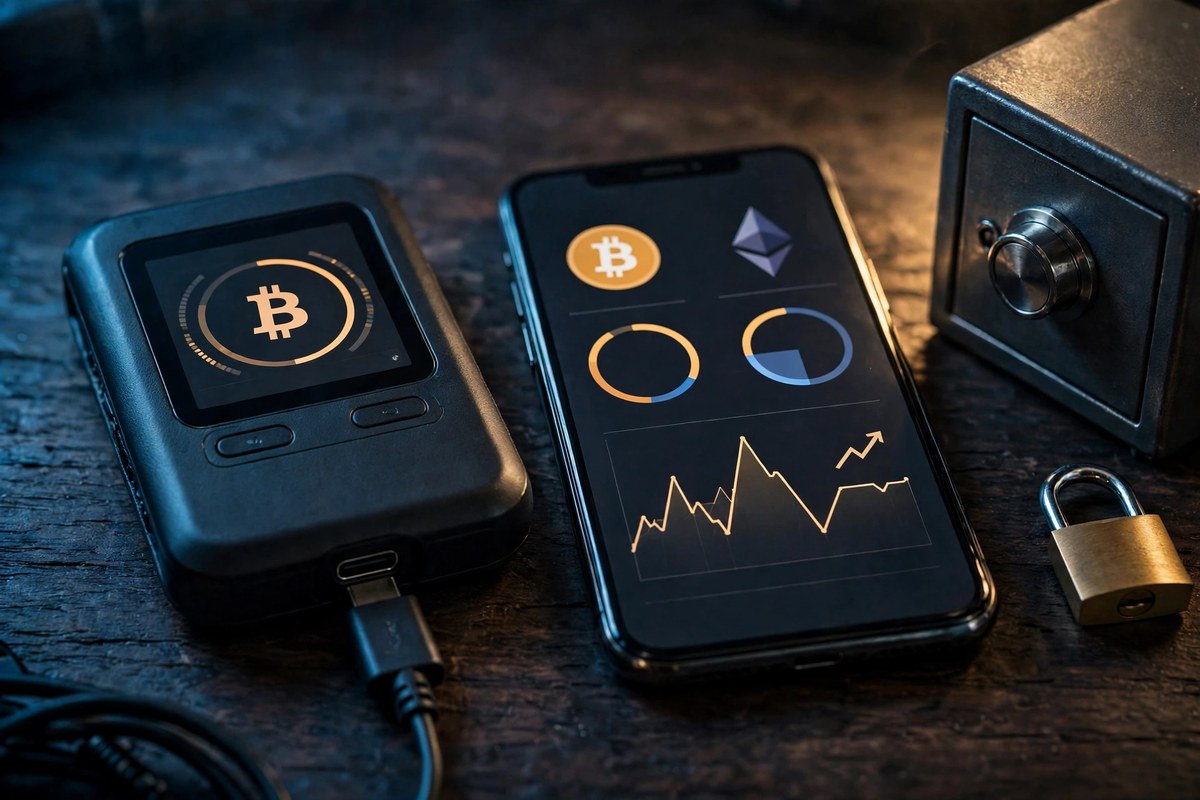
The right answer for most people is a split, not a single choice: trading money on an exchange, spending money in a hot wallet, and savings in cold storage. The wrong answer is everything in one place — especially a place that can be frozen by a single email. The $6.3 billion Binance hack in October showed what happens when hot wallets are targeted at scale; this week showed what happens when the response to that risk lands on users instead. Read our breakdown of the Mercado Bitcoin hack for a second case study in how fast exchange funds can move — and what to check first when they do.

What to Do This Weekend
If you hold funds on Binance France, withdraw everything before November 29 to avoid the monthly fee, and before December 31 because the account closes. If you use GOPAX, file a manual withdrawal request through support now — the queue will only get longer, and no reopening date exists. If you use CoinDCX or Delta Exchange, watch the ED probe and avoid adding fresh deposits until the picture clears. Everywhere else, run the five checks above, move long-term holdings to cold storage, and confirm that your seed phrase is backed up offline. The work takes an afternoon. The alternative is discovering a freeze the day you need your money.
What Happens Next
Three dates decide the next chapter. First, GOPAX's reopening: the exchange has given no timeline, and every day of manual-only withdrawals adds to a backlog that will take time to clear even after trading resumes. Second, November 29: the first Binance France fee deduction lands within three days, and the accounts that pay it will be the ones whose owners did not act. Third, December 31: Binance France accounts close, and whatever remains may be treated as inactive. Beyond those dates, watch South Korea's FSC — after the November 2 emergency meeting, tighter cold-storage expectations for every Korean exchange look likely — and watch whether India's ED probe widens to other platforms. The pattern of this week is that access risk now arrives as often as price risk, and it arrives faster. The investors who treat exchange access as part of their risk management, not an afterthought, are the ones who will still be able to act when the next freeze lands.
Frequently Asked Questions
Is my crypto safe on an exchange?
It is as safe as the exchange's security, licensing, and legal standing — and all three can change in a day. GOPAX froze withdrawals after an unverified email threat. Binance France is closing over a failed licence. Use exchanges for trading, keep long-term holdings in a wallet you control, and never keep more on one exchange than you can afford to lose access to for 30 days.
Can an exchange freeze my withdrawals without a hack?
Yes. GOPAX froze all withdrawals on November 6, 2026, after a threatening email, with no hack confirmed and no losses reported. Exchanges can also freeze withdrawals during security incidents, regulatory action, or law-enforcement investigations. Your account balance is a claim on the exchange, not coins in your pocket.
What happens to my money if Binance France closes my account?
Binance France accounts close on December 31, 2026. From November 29, remaining balances incur a monthly fee of 0.025% or 10 USDC, whichever is higher. Assets left after December 31 may be treated as inactive under Binance's terms. Withdraw everything before November 29 to avoid all fees.
What is the difference between a hot wallet and a cold wallet?
A hot wallet is connected to the internet and can send funds instantly, but it can be hacked remotely. A cold wallet, such as a hardware wallet, stores your private keys offline, making remote theft far harder — but you must keep the seed phrase safe yourself. GOPAX held 80.54% of customer assets in cold storage; Upbit held about 99.17%.
How do I know if my exchange is about to freeze withdrawals?
Warning signs include a cold-storage ratio near the legal minimum, a licence under review or recently lost, withdrawal delays or manual-only processing, and regulatory investigations. Run the five-check list in this article, and test a small withdrawal before you need a large one.
Should I move all my crypto to a hardware wallet?
For funds you do not trade weekly, yes — a hardware wallet removes freeze risk entirely. Keep a small trading balance on a reputable, licensed exchange and a small spending balance in a hot wallet. The key is the split: no single freeze, hack, or closure should ever lock up everything you own.
Conclusion
This week, a single email froze a Korean exchange, a failed licence started the clock on a French one, and a raid hit two Indian ones. Nobody's coins were stolen in the GOPAX incident — and yet its users cannot trade, cannot withdraw normally, and have no reopening date. That is the lesson: in crypto, access is the asset. Prices recover; frozen accounts do not unfreeze on your schedule. Run the five checks, move what you do not trade into a wallet you control, and do it before the next email, the next licence decision, or the next raid — because this week proved that any of the three can arrive on an ordinary Friday afternoon.
Sources: Cointelegraph — GOPAX halts trading and withdrawals; Crypto Briefing — Binance France account closure and fees; Bitcoin.com — Binance France closes accounts December 31; CoinJuice — What happened in Bitcoin today; The Bit Journal — Crypto news today roundup. This article is for information only and is not investment advice.