How to Buy Bitcoin in Bangladesh in 2026: 5 Ways Compared — bKash P2P, Fees and the Ban Nobody Follows
Bangladesh Bank re-banned crypto on 29 October 2026 — yet Bangladesh ranks 13th in the world for crypto adoption, with around 3.5 million users buying Bitcoin through bKash P2P. Here are the 5 ways to buy, the real fees on ৳10,000, and the ৳50,000 mistake that freezes accounts.
On 29 October 2026, Bangladesh Bank told every commercial bank in the country to hunt down cryptocurrency transactions for another full year. Nine days later, Bangladesh still ranks 13th in the world for crypto adoption — ahead of 138 other countries — and an estimated 3.5 million Bangladeshis keep buying Bitcoin anyway, mostly through bKash and Nagad on peer-to-peer marketplaces. This guide explains how it works: the five ways to buy Bitcoin in Bangladesh, what each costs on ৳10,000, the account-freezing mistakes, and what happens next.
This article is information, not legal or financial advice. Bitcoin is not legal tender in Bangladesh and Bangladesh Bank has not authorised dealing in it. What follows describes the rules and what people actually do — including the risks.
Is Bitcoin legal in Bangladesh in 2026?
Short answer: no. Bitcoin is not legal tender in Bangladesh, no crypto exchange is licensed, and no bank, mobile financial service or payment provider is allowed to help you buy it. That has been Bangladesh Bank's position for more than a decade, and it was reconfirmed on 29 October 2026, when the Foreign Exchange Policy Department issued a fresh circular instructing all banks and financial institutions to exercise heightened vigilance and strengthen monitoring of customer accounts to block crypto-related transactions. The directive stays active for one year.
There is no dedicated crypto law in Bangladesh. Instead, the central bank leans on two old laws: the Foreign Exchange Regulation Act of 1947 (FERA) and the Money Laundering Prevention Act of 2012. Neither mentions cryptocurrency. Bangladesh Bank's argument is that buying crypto with taka is an unapproved foreign-exchange transaction, and that untraceable value transfer invites money-laundering and terror-financing charges. The instrument that carries the ban today is FE Circular No. 24, dated 15 September 2022, which says virtual currencies are not recognised as "currency" under FERA, that any transaction to obtain virtual assets is not permitted, and that banks, non-bank financial institutions and mobile financial services such as bKash and Nagad may not facilitate crypto exchange, transfer or trading. A detailed comparison of what the law says versus what people actually do reaches the same conclusion, and a 2026 guide to crypto regulation in Bangladesh confirms that as of August 2026 there is still no licensed exchange and no compliant local on-ramp.
In January 2026, Bangladesh Bank spokesperson Arif Hossain Khan told the Dhaka Tribune the regulator was "not thinking positively about cryptocurrency at this moment", while leaving the door open to change. The January 2026 National Blockchain Policy from the ICT Division points the same way: it backs blockchain for land records, identity and procurement, but leaves crypto trading and exchange licensing squarely with Bangladesh Bank — and creates no licensing route for either.
Here is the nuance most coverage misses: owning Bitcoin is not explicitly criminalised. What the rules prohibit is the transaction — converting taka into crypto. Enforcement is inconsistent. In 2022, authorities arrested 17 traders in Dhaka under Section 411 of the Penal Code, treating their crypto holdings as "possessing stolen property". Most users, however, trade for years without contact from the authorities. That gap between the written rule and daily reality is exactly why this guide exists — and why the risks below matter more than the rules themselves. For the basics of what you would actually be buying, see our complete beginner's guide to how Bitcoin works.
The 5 ways to buy Bitcoin in Bangladesh, compared
Because no local exchange is licensed and no bank card can buy crypto, every route runs through international platforms or informal channels. Here are the five realistic options.
| Method | How you pay | Typical cost | Speed | Main risk |
|---|---|---|---|---|
| Binance P2P | bKash, Nagad, bank transfer | 1.2%–3.5% spread over market price | 5–30 minutes | Payment-account freeze; scam sellers |
| Bybit P2P | bKash, Nagad, bank transfer | 1%–3% spread | 5–30 minutes | Smaller seller pool than Binance |
| OKX P2P | bKash, bank transfer | 1.5%–3.5% spread | 10–40 minutes | Fewer BDT listings |
| Paxful / NoOnes P2P | bKash, Nagad, gift cards | 3%–8% spread | 10–60 minutes | Highest prices; more fraud attempts |
| Family abroad / remittance route | Relative buys overseas, sends BTC to your wallet | Exchange spread + network fee | Hours to a day | Trust; the relative holds the keys first |
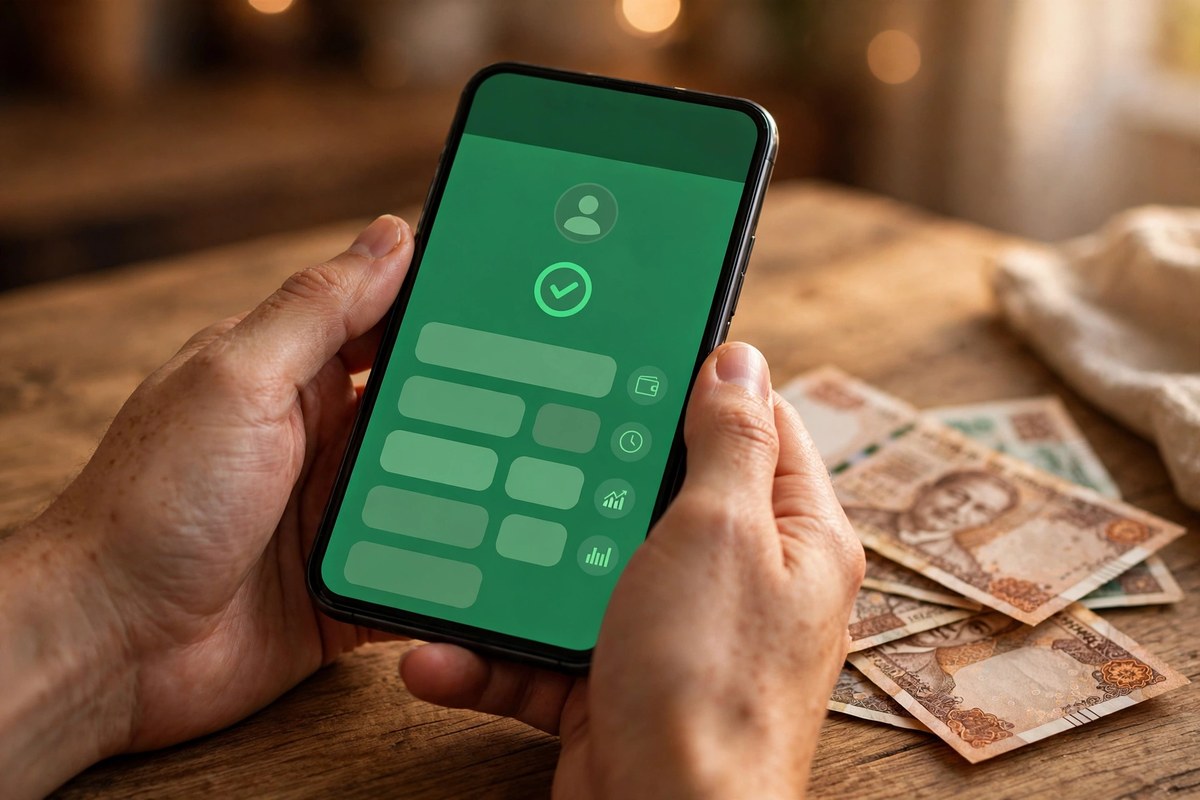
Binance P2P dominates for a simple reason: liquidity. It has the most Bangladeshi sellers, the most bKash and Nagad payment options, and an escrow system that holds the seller's crypto until you confirm payment. Industry estimates put bKash at roughly 61% of all P2P transactions in Bangladesh, with Nagad second and Rocket also used — see this breakdown of P2P trading methods and risks in Bangladesh. Bybit is the credible second choice, with a similar escrow model and slightly fewer sellers. OKX works but has thinner taka listings. Paxful and NoOnes exist, but their spreads are the widest and their fraud rate the highest — use them only if the big three cannot serve you. The family-abroad route is the safest legally grey option for larger amounts, because no taka ever touches a crypto platform, but it depends entirely on trusting the person buying for you.
Notice what is missing: no "buy with a Bangladeshi debit card" row. Banks and mobile financial services are barred from facilitating crypto purchases, so card on-ramps to offshore exchanges are closed — which is why P2P, a person-to-person sale settled in taka, is the market. Before choosing a platform, read our comparison of the best crypto exchanges for beginners so you know what to check beyond the price.
How to buy Bitcoin on Binance P2P with bKash — step by step
Binance P2P is where most Bangladeshi buyers start; the same logic applies on Bybit and OKX.
- Create and verify your Binance account first: sign up with an email and phone number, then complete identity verification with your NID or passport. Unverified accounts face low P2P limits or none at all.
- Open the P2P section and set your filters: choose Buy, select BTC, set the currency to BDT, and pick bKash as the payment method. Sort sellers by completion rate, not by price alone.
- Pick a seller with a 98%+ completion rate and hundreds of trades: a seller offering a price 5% below everyone else is usually a trap, not a bargain. Check the number of completed orders and the "30-day completion rate" before you tap anything.
- Enter the amount in taka and start the order: the crypto goes into Binance escrow the moment the order opens. Do not send money before the order exists — payment without an open escrow order has no protection.
- Pay exactly the amount shown, from your own bKash account: use the seller's bKash number shown inside the order chat. Never write "Bitcoin", "crypto", "BTC" or "USDT" in the payment reference — a plain reference, or none at all, is the norm.
- Confirm payment in the app and wait for the release: tap "Transferred, notify seller" only after the money has actually left your account. The seller then releases the Bitcoin from escrow to your Binance wallet.
- Move the Bitcoin off the exchange the same day: leaving coins on any exchange is the single biggest avoidable risk in crypto. Withdraw to a wallet you control — see the storage section below.
One warning that belongs in bold: never release escrow, never confirm payment, and never send money outside the platform's order window. Every common P2P scam in Bangladesh works the same way — the seller talks you out of escrow and into a "direct" deal, and then the money is gone. If a seller asks you to pay before opening an order, cancel and report them.
What it actually costs: a ৳10,000 worked example
P2P prices look cheap until you add the spread, and the spread is where Bangladeshi buyers lose the most money. The table below uses Bitcoin at roughly $75,900 — where it traded on 7 November 2026, about 40% below its all-time high near $126,000 — and an indicative rate of ৳122 per US dollar.
| Cost item | On ৳10,000 | Notes |
|---|---|---|
| Bitcoin at market price | ৳10,000 buys ~0.00108 BTC | $75,900 per BTC at ৳122 per dollar |
| P2P seller spread (2%) | ~৳200 lost to the spread | Typical Binance P2P spread is 1.2%–3.5% |
| bKash send-money fee | ৳0–৳185 | Free for send-money under the limit; cash-out costs far more, so never cash out to pay |
| Binance P2P trading fee | ৳0 | Binance charges buyers no P2P fee |
| Withdrawal to your own wallet | ~৳100–৳300 | Bitcoin network fee, varies with congestion |
| Total cost to hold your own Bitcoin | ~৳300–৳685 (3%–7%) | Spread is the biggest cost — always compare it |
Two lessons fall out of that table. First, the spread matters more than any fee: a seller at 3.5% costs you nearly three times as much as a seller at 1.2% on the same ৳10,000. Second, small purchases are expensive in percentage terms, because the network withdrawal fee is fixed — on ৳2,000, a ৳200 withdrawal fee alone is 10%. If you are starting small, it is usually cheaper to accumulate two or three P2P buys on the exchange and withdraw once, rather than withdrawing after every purchase. And if you are wondering whether Bitcoin is worth buying at all at current prices, our honest guide to whether Bitcoin is a good investment in 2026 walks through the risks without the hype.
5 mistakes that get Bangladeshi accounts frozen
- Sending more than ৳50,000 in a single crypto payment: bKash and Nagad run anti-fraud algorithms, and transactions above ৳50,000 frequently trigger automatic freezes. Split large buys into smaller orders across different days — and remember that splitting to dodge a limit is itself a red flag if the pattern is obvious.
- Writing "Bitcoin" or "crypto" in the payment reference: payment providers scan references, and a crypto keyword in the note is the fastest way to get a transaction flagged and an account reviewed. Keep references blank or neutral.
- Receiving money from strangers into your personal bKash: selling Bitcoin P2P means strangers send you taka. A sudden run of large incoming transfers from unknown numbers looks exactly like the money-laundering pattern banks are told to report.
- Using one account for everything, every day: running daily P2P trades through the same bKash you use for family expenses mixes your financial life with your trading life. Traders who separate the two — and keep records of every trade — have far fewer problems when questions are asked.
- Leaving coins on the exchange after buying: exchanges freeze accounts too, and a frozen exchange account with your Bitcoin inside it is worse than a frozen bKash account, because the money is harder to recover. Withdraw to your own wallet the same day, every time.
If your bKash or bank account is frozen, contact the provider first and ask what documentation they need — usually a source-of-funds explanation and transaction records. Do not open a second account to route around a freeze; that turns a compliance headache into a second offence. For a broader safety checklist that applies on any exchange, see is your crypto safe on an exchange? 5 checks.
How to store your Bitcoin safely once you have it
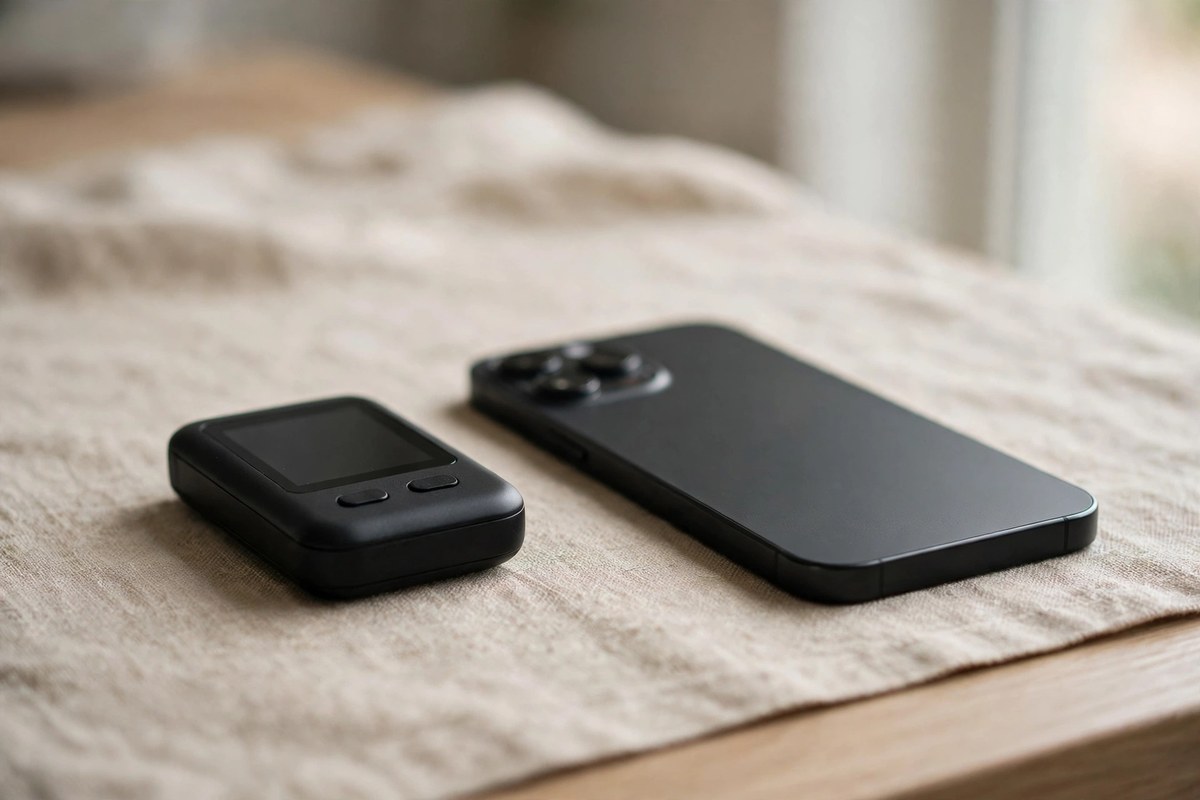
Buying is the easy part. Keeping the Bitcoin is where most beginners lose money — not to hackers, but to their own setup. The rule is simple: if you do not control the private keys, you do not own the Bitcoin. An exchange balance is an IOU from a company, and that company can freeze it, be hacked, or go bankrupt.
For small amounts, a reputable mobile wallet with a written-down seed phrase is enough. For anything you cannot afford to lose, a hardware wallet — a small offline device that never exposes your keys to the internet — is the standard. Our best crypto wallets for beginners in 2026 guide compares hot and cold wallets in detail, and our guide to storing crypto safely covers seed phrases and cold storage step by step. Three rules cover 90% of storage safety: write your seed phrase on paper and store it offline, never photograph it or type it into a website, and never share it with anyone who contacts you first.
What most people get wrong about crypto in Bangladesh
Myth: "Bitcoin is legal now because so many people use it." Wrong. Popularity is not legality. Bangladesh Bank reconfirmed the ban on 29 October 2026, and the 2022 circular is still in force. Millions of users and a ban can coexist — that is precisely what the Chainalysis ranking shows.
Myth: "The ban means nobody can buy it." Also wrong. The ban closes the front door — licensed exchanges, bank cards, official on-ramps — but P2P marketplaces are the back door, and roughly 3.5 million users walk through it. The ban raises the cost and the risk; it has not stopped the activity.
Myth: "bKash is safe because everyone uses it." bKash handles about 61% of P2P trades — and is also the method most likely to freeze your money, because Bangladesh Bank told mobile financial services not to facilitate crypto. Widely used and safe are different things.
Myth: "If I buy through P2P, the government cannot see it." Wrong in both directions. P2P trades are visible to the platform, to the payment provider, and to the bank behind it. What P2P gives you is no licensed exchange reporting your trades — not invisibility.
Myth: "Regulation is coming soon, so the risk will disappear." Maybe, but slowly. A 12-member Crypto Asset Task Force was formed in February 2025 to submit recommendations by December 2025, and Bangladesh Bank is piloting a central bank digital currency — but the central bank's own spokesperson said in January 2026 that it is "not thinking positively about cryptocurrency at this moment". Hope is not a plan: buy as if the ban stays.
What happens next: 3 scenarios for 2027
Nobody can predict Bangladeshi crypto policy, but the realistic paths are narrow. Here is how they look from where things stand in November 2026.
| Scenario | What happens | What it means for buyers |
|---|---|---|
| Ban continues (most likely) | The October 2026 circular runs its year, enforcement stays patchy, P2P keeps growing quietly | Same risks as today: freezes, no legal protection, spreads stay wide |
| Regulated licensing arrives | The task force recommendations become a licensing framework for exchanges and custodians | Legal on-ramps, lower spreads, card payments — and taxes on gains |
| Crackdown tightens | Banks get stricter monitoring tools; more accounts frozen; P2P sellers prosecuted | Spreads spike, sellers vanish, self-custody becomes even more important |
The base case is the first row: more of the same. Bangladesh ranks 13th of 151 countries in the Chainalysis 2025 adoption index — up from 17th a year earlier and second only to India in South Asia — and that adoption was built entirely outside the legal system. A government that wanted to erase crypto would have to fight its own young population's remittance and savings habits; one that wanted to legalise it would have to reverse a decade of central-bank warnings. Inertia wins most of the time, which means P2P stays the market in 2027 — and the five mistakes above stay the risks that matter.
Frequently asked questions
Is it legal to buy Bitcoin in Bangladesh?
No. Bitcoin is not legal tender, no exchange is licensed, and Bangladesh Bank's circulars — most recently on 29 October 2026 — prohibit banks and mobile financial services from facilitating crypto transactions. Owning Bitcoin is not explicitly criminalised, but buying it with taka breaches the central bank's rules under the Foreign Exchange Regulation Act 1947 and the Money Laundering Prevention Act 2012.
What is the easiest way to buy Bitcoin in Bangladesh?
Binance P2P with bKash or Nagad is the most used route: pick a seller with a 98%+ completion rate, pay in taka inside an escrow order, and receive BTC in your Binance wallet. Bybit P2P is the main alternative. Never pay outside an escrow order.
Can I buy Bitcoin with bKash?
Yes, in practice — bKash is the payment method for roughly 61% of P2P crypto trades in Bangladesh. But bKash is officially barred from facilitating crypto, and transactions above ৳50,000 often trigger automatic freezes. Never mention crypto in the payment reference.
How much does it cost to buy Bitcoin in Bangladesh?
Expect 3%–7% all-in on a ৳10,000 purchase: a 1.2%–3.5% P2P spread, plus the Bitcoin network fee when you withdraw to your own wallet. Small purchases cost more in percentage terms, so compare sellers on spread, not on headline price.
Is there a Bitcoin ATM in Bangladesh?
No. There is no officially supported Bitcoin ATM network in Bangladesh, no licensed exchange, and no compliant local on-ramp. P2P marketplaces and the family-abroad route are the only realistic options.
Will Bangladesh legalise crypto in 2027?
Probably not soon. A Crypto Asset Task Force was formed in February 2025 and Bangladesh Bank is piloting a digital currency, but the central bank reconfirmed the ban in October 2026 and said in January 2026 it is "not thinking positively about cryptocurrency at this moment". The most likely outcome is that the ban continues and P2P keeps growing quietly.
Conclusion
Bangladesh is the world's great crypto contradiction in 2026: buying Bitcoin is banned, the central bank just renewed that ban for another year — and 13th-place global adoption, roughly 3.5 million users and a thriving bKash P2P market say the ban is not the end of the story. If you decide to buy, do it with your eyes open: use escrow on a major P2P platform, compare the spread before the price, keep payments small and references neutral, and move your Bitcoin to a wallet you control the same day. The cheapest Bitcoin in Bangladesh is not the one with the lowest advertised price — it is the one you still own, in your own wallet, a year from now.
This article is general information, not legal, tax or financial advice. Rules change — confirm the current position with Bangladesh Bank and a qualified Bangladeshi professional before acting.