How Does Bitcoin Mining Work in 2026? The Complete Guide to Hashrate, Difficulty and Miner Economics
Bitcoin mining difficulty jumped 5.92% this week as hashrate climbed back above 1 zettahash per second. This 2026 guide explains how Bitcoin mining works step by step — hashrate, difficulty, miner economics, the AI pivot — and why it matters for BTC investors.
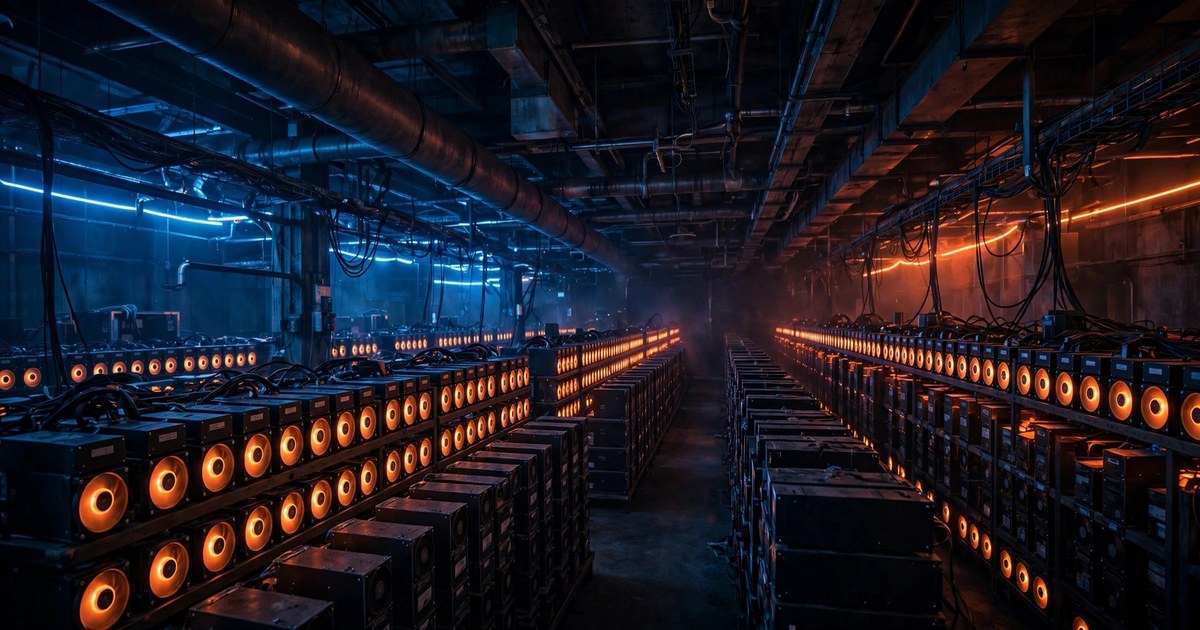
On October 16, 2026, Bitcoin got roughly 6% harder to mine. At block 971,712, mining difficulty jumped 5.92% to 140.58 trillion — the highest since March — as miners pushed computing power back above 1 zettahash per second for the first time in seven months. The adjustment around October 28 could be even bigger.
That single line of protocol code is the beating heart of Bitcoin. Mining is how new bitcoins are created, how transactions are confirmed, and how the network defends itself against attack without a single bank or government involved. In 2026, the business of mining is going through its biggest transformation since the 2024 halving: revenue just hit its best month since January — even as the biggest miners pivot their power to artificial intelligence.
Whether you hold BTC, trade it, or just want to understand the machine under the money, here is the complete 2026 guide: the step-by-step process, what hashrate and difficulty actually measure, what it costs to mine a bitcoin today, and why all of this matters for the BTC price on your screen.
What Is Bitcoin Mining, Exactly?
Bitcoin mining is the process by which the network confirms transactions and releases new bitcoins — and it is nothing like digging in the ground. There are no picks or shovels. "Mining" is a metaphor borrowed from gold: like gold miners expend effort to pull a scarce resource from the earth, Bitcoin miners expend computing effort to earn newly minted coins.
At its core, mining is a competition. Thousands of specialized computers race roughly every ten minutes to solve an enormously difficult mathematical puzzle. The winner adds the next "block" of verified transactions to the blockchain and collects the block reward: currently 3.125 BTC per block, plus the block's transaction fees.
That reward is the only way new bitcoins enter the world. About 450 new BTC are created every day — 144 blocks a day at 10 minutes each, times 3.125 BTC. The reward was cut from 6.25 to 3.125 in the April 2024 halving and halves again to 1.5625 BTC in the 2028 halving. There will never be more than 21 million bitcoins, and mining enforces that scarcity.
Mining serves two jobs at once: issuance (releasing new coins on schedule) and security. The puzzle-solving makes it extraordinarily expensive to rewrite transaction history, which keeps the ledger trustworthy with no central authority. Every exahash pointed at the network is another brick in the wall protecting every bitcoin in existence.
How Bitcoin Mining Works, Step by Step
Here is what actually happens during a single ten-minute block, from your transaction to its permanent place in the blockchain:
Step 1: Transactions enter the mempool. When you send bitcoin, your transaction is broadcast to the network and waits in the mempool. It sits there until a miner picks it up — higher fees get picked up faster.
Step 2: Miners assemble a candidate block. Each miner selects a batch of pending transactions (up to roughly 1–4 MB) and bundles them into a candidate block, including a special transaction paying itself the 3.125 BTC reward it hopes to earn.
Step 3: The hashing race begins. The miner repeatedly runs the block's data through Bitcoin's SHA-256 hash function, changing a small number called the nonce each time. Each attempt produces a random-looking 256-bit number, and the protocol demands it fall below a certain target — like rolling dice until you get a number under a threshold.
Step 4: Someone finds a valid hash. The odds on any single attempt are astronomical, so miners make trillions of attempts per second. The machine that finally produces a hash below the target broadcasts the winning block.
Step 5: The network verifies and extends the chain. Other nodes check every transaction and confirm the hash meets the target — verification takes a fraction of a second. If it checks out, the block joins the blockchain and the race for the next block starts instantly.
Step 6: The reward matures. The winner receives 3.125 BTC plus the block's fees, spendable after 100 more blocks are mined on top of it.
The elegance of this design: producing a block is enormously expensive, while verifying it is nearly free. Anyone can check the work, but nobody can fake it. To learn who designed this system, see our guide on who Satoshi Nakamoto is.
Hashrate Explained: What 1 Zettahash Per Second Really Means
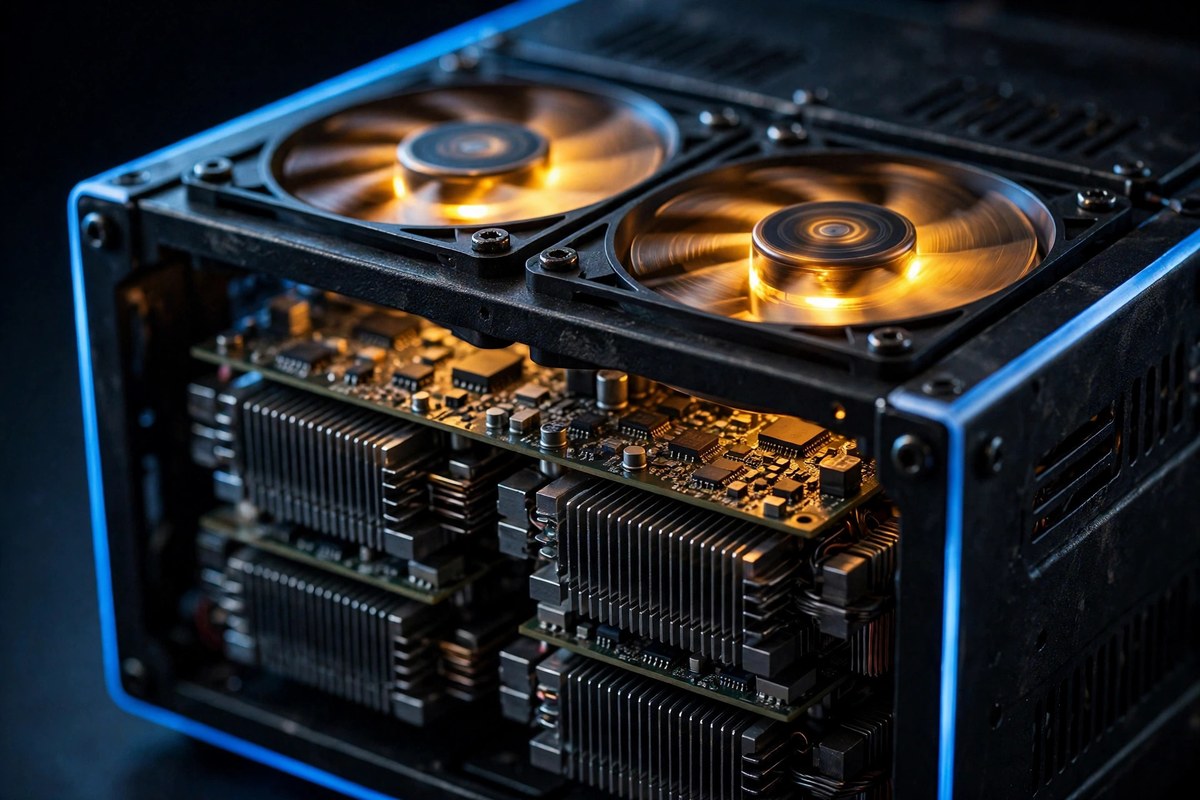
Hashrate is the total computing power all Bitcoin miners are directing at the network, measured in hashes per second. One exahash (EH) is one quintillion hashes per second. One zettahash (ZH) is 1,000 exahashes — one sextillion attempts every second.
In October 2026, Bitcoin's seven-day average hashrate climbed back above 1,000 EH/s (1 ZH/s), its highest level since March, according to BlocksBridge Consulting's Miner Weekly. As Altcoin Buzz reported, the network hit that milestone even as several of the largest listed miners keep moving capacity to AI data centers.
That number is staggering in context. The all-time peak was roughly 1,110 EH/s in November 2025. Hashrate then slid through the first half of 2026 as weaker economics pushed older machines offline — Q2 averaged around 940 EH/s — before recovering past 983 EH/s in early October and breaking back above 1 ZH/s. The full statistical picture is tracked by CoinCentral's Bitcoin mining statistics.
Why does hashrate matter if you aren't a miner? It is the most direct measure of Bitcoin's security budget. An attacker wanting to rewrite recent blocks would need to out-compute the entire honest network — at 1 ZH/s, that means assembling more computing power than the rest of the world combined. High and rising hashrate means the ledger backing your bitcoin is harder to attack than ever. It is also a rough proxy for miner confidence: miners don't plug in expensive machines unless they believe the bitcoin those machines earn will be worth the power.
Mining Difficulty: Bitcoin's Self-Balancing Act
If hashrate is the network's muscle, difficulty is its thermostat. Bitcoin's protocol targets a new block every 10 minutes, no matter how many miners join or leave. It enforces that schedule by adjusting the mining difficulty every 2,016 blocks — roughly every two weeks.
The mechanism is beautifully simple: if miners find blocks faster than 10 minutes on average (because more hashrate joined), the protocol raises the difficulty, making the puzzle harder. If blocks come slower (because miners left), it lowers the difficulty. The October 16 retarget is a textbook example — blocks had been arriving roughly every 8 minutes 45 seconds, so the protocol raised difficulty 5.92%, from 132.72 trillion to 140.58 trillion, the third-largest increase of 2026 and the highest reading since March 5. The adjustment was recorded at block 971,712 at 12:37 UTC, as detailed by Coinburn's difficulty report.
Here is the part that matters right now: blocks are still arriving fast, and early estimates suggest the next adjustment around October 28 could add roughly another 14%. For every miner, that means the same machine earns less bitcoin for the same electricity. As BlocksBridge put it: "That's hardly the breathing room remaining miners might have expected from the AI migration."
Difficulty is also why Bitcoin is immune to the death spiral critics once feared. If the price crashes and miners shut down, difficulty drops and the remaining miners become profitable again. The system self-heals — the 2026 hashrate recovery from the Q2 lows back above 1 ZH/s is the mechanism working exactly as designed.
The Economics of Bitcoin Mining in 2026
Mining is a business, and in 2026 it is a business with unusually thin margins and unusually interesting dynamics. The key numbers:
Miner revenue just had its best month since January. Total miner revenue reached approximately $1.12 billion in September 2026, up 11% from August, according to MillionMiner's October 2026 mining update. With bitcoin trading in the low $80,000s and difficulty still below its 2025 peak, the revenue side of the equation has improved substantially since the brutal first half of the year.
Hashprice — revenue per unit of computing power — recovered, then slipped again. Hashprice topped $41 per PH/day twice in the month after September 16, its best level since May, before falling back to $36.75 as the difficulty jump and hashrate surge diluted each machine's share of rewards. That is still a recovery from June's record low of $27.70, but it is not a return to how the business looked a year ago.
It costs serious money to produce a bitcoin. CoinShares estimates the weighted average ex-tax cash cost of producing one bitcoin across the listed mining sector was about $75,500 in Q2 2026 — and bitcoin closed that quarter at just $58,400, pushing the listed sector below cash breakeven in aggregate. The price recovery since then has restored breathing room, but the margin for error remains thin.
Transaction fees are a rounding error — for now. Fees contributed only about 0.69% of miner revenue recently. That matters because the block subsidy keeps halving: by 2028 it drops to 1.5625 BTC, and eventually fees must carry the security budget almost alone — one of the most important open questions in Bitcoin.
The hardware generation gap decides who survives. This is where the business gets brutal. The old S19-series workhorses (2020–2022) burn roughly 21–30 joules per terahash; the S21 series (2023–2025) runs at 11–17.5 J/TH; and the new 3nm S23 series is the first to break below 10 J/TH, at roughly 9.5–11 J/TH. Each generation roughly halves the power needed for the same work. At an 8¢/kWh power price, AntPool data from early 2026 showed S19-class machines needed bitcoin above $86,000 just to break even, while the S23 Hydro stayed profitable above roughly $44,000. Power cost and machine efficiency now decide everything — which is exactly why the difficulty increases hit older fleets hardest.
The Great AI Pivot: Why Miners Are Becoming Data Centers
Perhaps the strangest plot twist of 2026 is that the best month for mining revenue in ages coincides with the biggest miners walking away from mining. Listed operators are converting electricity contracts and data-center buildings into AI hosting — leasing to the same hyperscalers driving the AI boom — because AI compute rents currently pay better than hashing.
The irony is that the AI migration has barely thinned the competition. Better revenue pulled idle machines back online faster than the big players left, pushing hashrate above 1 ZH/s anyway. The network doesn't care who runs the machines — only that someone does.
For investors, the pivot is a double-edged signal. It shows mining companies are rational capital allocators — a healthy sign. But it concentrates mining among operators who mine because they believe in bitcoin's future, not just its current price, and it raises a long-term question: if AI keeps outbidding mining for electricity, who secures the network in 2030? The market has always sorted this out before — higher prices, cheaper machines, more efficient operations — and the difficulty mechanism guarantees the economics rebalance either way.
Who Mines Bitcoin Today? Countries, Energy and the Sustainability Number
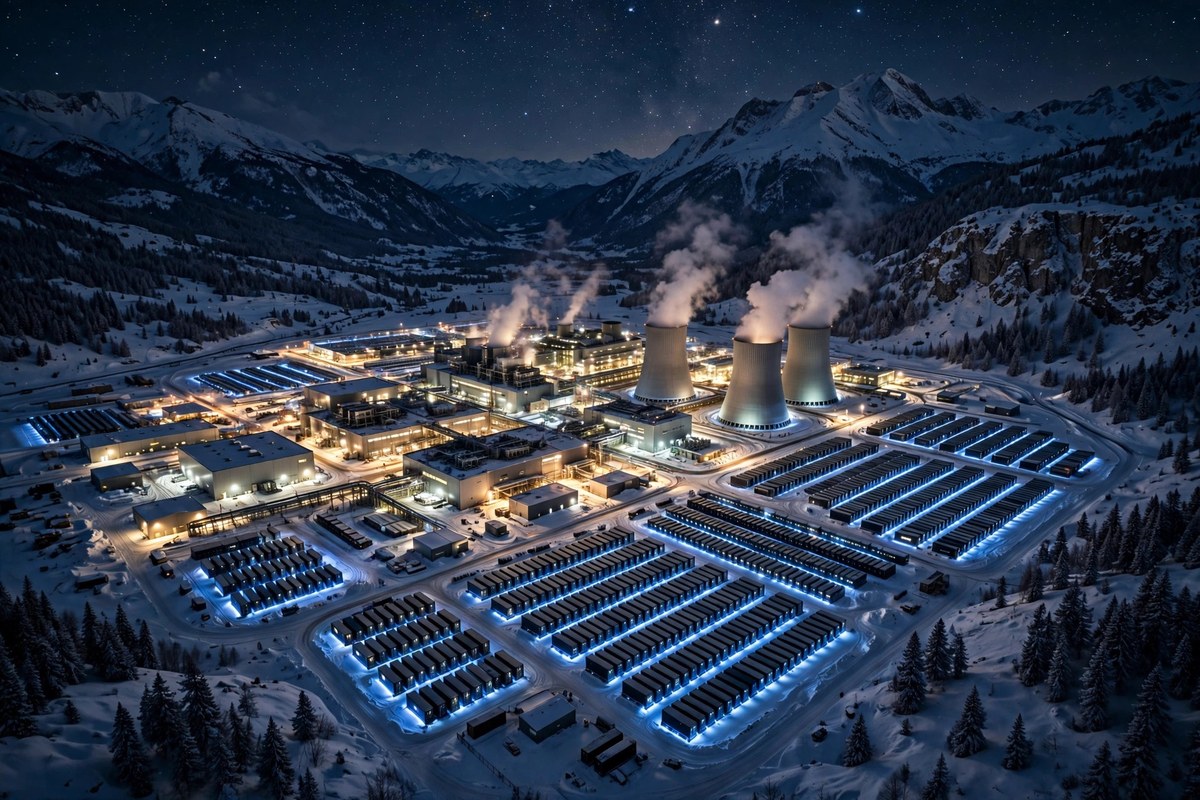
Bitcoin mining is a global industry, but it is heavily concentrated. The United States holds roughly 35.6% of estimated global hashrate, and the top three countries — the US, Russia, and one other — control about two-thirds of the network between them, according to recent tracking. That concentration is worth watching: a single jurisdiction's regulatory mood swing can move global hashrate, as the 2021 China ban proved.
On energy, the network consumes an estimated 138 terawatt-hours per year — about 0.54% of global electricity, far less than gold mining, banking, or data centers. And the mix keeps improving: an estimated 52.4% of mining power now comes from sustainable sources, as miners chase the cheapest electricity on earth — remote hydro, wind, solar, and stranded natural gas that would otherwise be flared.
That last point is the structural story the energy debate misses: miners are buyers of last resort for electricity nobody else wants, and they can shut down in seconds when the grid needs power back — which is why grid operators in Texas and elsewhere now treat them as demand-response partners.
Why Bitcoin Mining Matters for BTC Investors
You don't need to own a single mining machine for mining to affect your portfolio. Here is how the mining layer connects to the bitcoin price:
Hashrate is a security premium. Every exahash makes Bitcoin harder to attack and more credible as a store of value. Institutional allocators do due diligence on network security — a network above 1 ZH/s with difficulty at record highs is simply a more defensible asset.
Miner capitulation is a classic bottom signal. When price falls below production costs, the weakest miners shut down and often sell their bitcoin treasuries — adding selling pressure at the worst moment. But that capitulation marks maximum pain: difficulty adjusts down, the remaining miners return to profitability, and the forced selling ends. The Q2 2026 episode — the sector below cash breakeven at $58,400 — followed by the recovery, is a near-perfect recent example.
The halving clock keeps ticking. The 2028 halving cuts the subsidy to 1.5625 BTC, dropping daily new supply from ~450 to ~225 BTC. Every halving has eventually been followed by a supply-shock repricing, and miners are already positioning for it: operators surviving today's difficulty squeeze with sub-10 J/TH hardware will be the ones still standing. See our Bitcoin halving 2028 guide for the full timeline.
Difficulty is a sentiment thermometer. Rising difficulty means miners are deploying capital — buying machines, signing power contracts — betting real money that future bitcoin prices justify the investment. It is one of the few on-chain metrics reflecting forward-looking business confidence. The October difficulty surge, with another big jump likely on October 28, is miners voting with their electricity bills.
If you're considering buying bitcoin itself rather than mining it, start with our beginner's guide to buying Bitcoin in 2026 and the honest assessment in Is Bitcoin a Good Investment in 2026?
Can You Still Mine Bitcoin at Home in 2026?
The short answer is no — not profitably, and not on a normal electricity bill. At current hashprice, new S23-class machines can cover power up to about 16¢/kWh, but older S19-class units need roughly 5–7¢/kWh — which rules out almost every residential connection. A single modern ASIC draws 3,000+ watts continuously, sounds like a jet engine, and produces serious heat.
What about alternatives? Hosted mining — buying a machine that a company hosts in a low-power-cost facility — is the only realistic path for individuals, with some operators advertising power from around 3.6¢/kWh. But the risks are real: bitcoin price risk, difficulty risk (difficulty just jumped 6% and may jump 14% more), hardware depreciation, and counterparty risk with the host. Mining pools let small miners combine hashrate for steadier payouts, but they don't change the underlying economics.
For the overwhelming majority of people, buying and holding bitcoin — or gaining exposure through a spot ETF — is a far better risk-adjusted proposition than mining. Mining is a competitive industrial business with industrial-scale risks. Treat it as one.
Bitcoin Mining FAQs
How much Bitcoin is mined per day?
About 450 BTC per day. The network produces a block roughly every 10 minutes (144 blocks per day), and each block currently pays a 3.125 BTC subsidy plus transaction fees. That issuance rate will drop to ~225 BTC per day at the 2028 halving.
How long does it take to mine 1 Bitcoin?
For the entire network, about 3 minutes — 3.125 BTC is issued per 10-minute block. For an individual miner, it depends on hashrate share: a single modern ASIC (~200 TH/s) is roughly 0.00002% of the 1 ZH/s network, so solo-mining a full bitcoin would take decades. This is why miners join pools that split rewards proportionally.
What is Bitcoin mining difficulty?
Difficulty measures how hard it is to find a valid block hash. It adjusts every 2,016 blocks (~two weeks) to keep block times at 10 minutes. As of October 16, 2026, difficulty stands at 140.58 trillion, with another increase estimated around October 28.
Is Bitcoin mining profitable in 2026?
It depends on your power cost and hardware. With hashprice around $36–41 per PH/day and efficient S23-class machines, miners paying under ~10¢/kWh can be profitable; older S19-class rigs need 5–7¢/kWh or cheaper. At an 8¢/kWh power price, S19 machines needed bitcoin above $86,000 to break even in early 2026, while S23 machines stayed profitable above ~$44,000.
How much energy does Bitcoin mining use?
An estimated 138 TWh per year — about 0.54% of global electricity consumption. Roughly 52.4% of that power comes from sustainable sources, and miners disproportionately use stranded or curtailed energy (remote hydro, flared gas) that has few other buyers.
When is the next Bitcoin halving?
The next halving is expected in 2028, cutting the block subsidy from 3.125 to 1.5625 BTC. See our Bitcoin halving 2028 countdown guide for the full timeline and historical price impact.
The Bottom Line
Bitcoin mining in October 2026 is a study in contrasts: difficulty at its highest since March, hashrate back above a zettahash, miners earning $1.12 billion in a month — and the biggest operators simultaneously pivoting to AI. The network keeps doing what it has always done: adjusting, self-balancing, and converting electricity into the hardest money ever created, no matter who runs the machines.
For investors, the mining layer is the foundation under the price chart. Rising hashrate and difficulty mean a more secure network and miners betting real capital on higher future prices. The October 28 difficulty adjustment will show whether that bet is accelerating or cooling — either way, the blocks will keep coming every ten minutes and the 2028 halving will arrive right on schedule. That predictability, enforced by miners competing across the globe, is precisely what makes bitcoin different from every asset that came before it.