Future of Bitcoin Mining in 2027: Hashprice at $32.86, Hashrate's Longest Slump Ever — 5 Numbers That Decide Who Survives the 2028 Halving
Hashprice just fell to $32.86 and mining difficulty has sat below its record for longer than ever in Bitcoin's history — while the biggest miners quietly sell their coins and rebuild as AI landlords. Here are the 5 numbers that decide who is still mining when the 2028 halving cuts the reward to 1.5625 BTC.
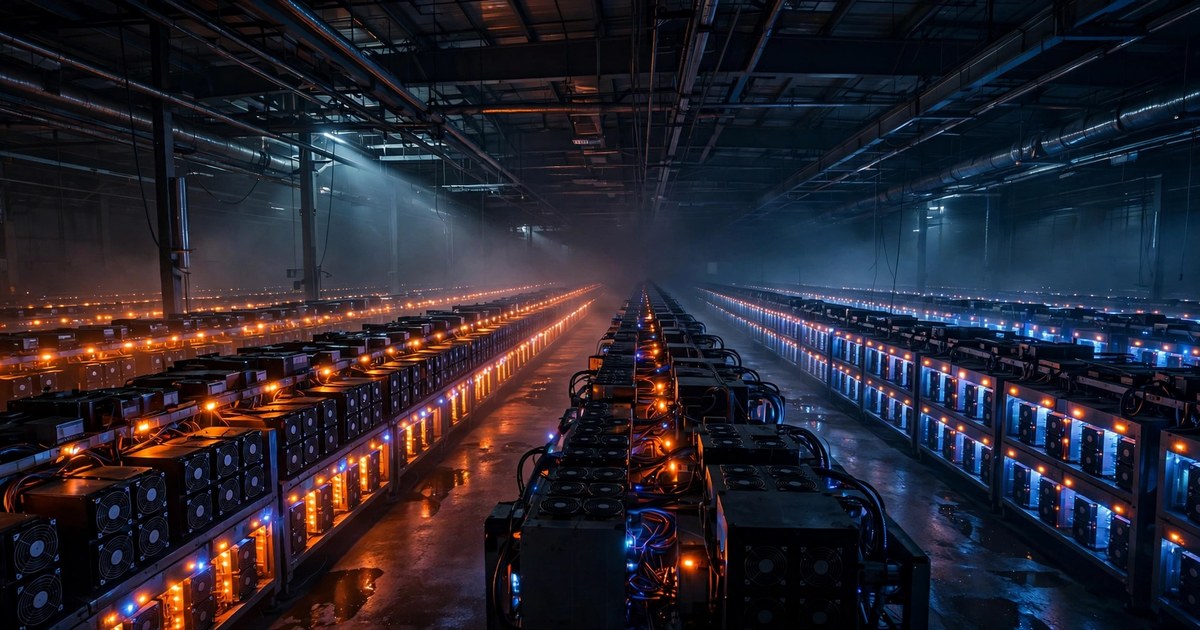
Bitcoin mining just posted its strangest year on record. Hashprice — the money a miner earns per unit of computing power — fell to $32.86 per petahash per day on November 2, down 8.7% in a single week, and mining difficulty has now sat below its all-time high for longer than at any point in Bitcoin's 17-year history. At the same time, the biggest public miners are quietly selling their Bitcoin and rebuilding themselves as AI landlords. The question for 2027 is not whether Bitcoin survives — it is whether Bitcoin mining survives in anything like its current form, before the April 2028 halving cuts the block reward in half again.
Bitcoin is trading near $74,500 on November 10, 2026 — about 41% below its $126,156 all-time high — and the miners who secure the network are caught between a falling coin price, record competition, and an AI boom that pays roughly three times more per megawatt than mining does. Below are the five numbers that decide who is still mining when the halving arrives, three scenarios for 2027, and the checklist that separates survivors from exits.
The 5 Numbers That Decide Mining's Future in 2027
Everything else in this article is commentary on these five figures. If you remember nothing else, remember this table.
| Number | What it is | Why it decides 2027 |
|---|---|---|
| $32.86 | Hashprice per PH/s per day, November 2, 2026 — down 8.7% in a week | The revenue line for every miner on Earth; it is 49% below its July 2025 peak near $63 |
| 148.36 trillion | Bitcoin mining difficulty — still 5% below its October 2025 record | The longest stretch below a difficulty record in Bitcoin's history; competition has not eased for over a year |
| 48,900 BTC | Bitcoin sold by US-listed miners in the first half of 2026 — a record | Miners are funding their AI pivot by selling the asset they used to hoard |
| $1.5M vs $0.5M | Annual revenue per megawatt: AI hosting vs Bitcoin mining (CoinShares) | The 3-to-1 gap is why miners are leaving mining at all |
| 1.5625 BTC | The block reward after the April 2028 halving (block 1,050,000) | Daily new supply falls from ~448 BTC to ~224 BTC — the deadline every miner is planning around |
What Happened: The Year Mining Broke
To understand 2027, start with what already happened. In October 2025, network hashrate peaked near 1,160 exahashes per second. By February 2026 it had fallen to about 850 EH/s — the first six-month hashrate decline since China's mining ban in 2021. It has bounced since, steadying near 920 EH/s by mid-August and reaching a seven-day average near 1,069 EH/s in early November, but the damage to the industry's economics was already done.
Hashprice tells the story in one line. The revenue a miner earns per petahash per day hit an all-time low of $27.70 in June 2026, according to CoinShares' Q2 mining report. It recovered to around $38 by mid-August as Bitcoin climbed back into the high $70,000s, then slid again — $35.99 to $32.86 in the week to November 2, an 8.7% drop. A typical modern rig, Bitmain's Antminer S21 XP at 270 TH/s, now grosses about $8.68 a day, down 17.2% from $10.49 in mid-October — and at 9 cents per kilowatt-hour it nets just $0.63 a day.
Then there is the difficulty record that will not fall. Mining difficulty hit an all-time high of almost 156 trillion on October 29, 2025, and as of early November 2026 it stood at just over 148 trillion — still about 5% below that peak, the longest stretch below a record in Bitcoin's history. The previous longest lasted roughly 364 days, in 2011–12, when Bitcoin's price collapsed by roughly 94–95%; the 2021 stretch followed China's mining ban. This time, as Bitcoin Standard author Saifedean Ammous noted, the slowdown has happened without anything remotely comparable — no ban, no 94% crash. The pressure is structural, not an accident.

The Great Pivot: Miners Are Becoming AI Landlords
The most important number in mining today is not a mining number at all. CoinShares estimates that AI hosting earns roughly $1.5 million per megawatt per year, against about $0.5 million for Bitcoin mining — a three-to-one gap that explains everything that has happened to the public miners in 2026.
Core Scientific is the clearest example. The company paid $41.9 million to cancel an order for about 15 EH/s of next-generation Proto hardware — some of the most efficient mining chips ever built — because it would rather use its power for something else. It has already cut its mining fleet by almost half, and it plans to fully exit Bitcoin mining by the end of 2026 and enter 2027 as a dedicated AI and high-performance-computing colocation provider. Its colocation revenue jumped 58% quarter on quarter to $215.4 million in the third quarter, up from $15 million a year earlier. The pivot is not a plan; it is already paying.
It is not alone. Keel Infrastructure, formerly Bitfarms, shut down mining on June 29 and will report zero mining revenue in the third quarter — the first listed miner to get there. IREN says its move from mining to AI will be substantially done by the end of this year, and its AI cloud revenue has already passed its mining revenue. Cipher says it will not spend more on mining and expects to be out by the end of 2027. CoinShares expects at least 35 EH/s to leave the listed mining cohort. The hashrate is not vanishing — it is moving, to the United States and to Paraguay, Ethiopia and Oman, which have joined the global top ten.
There is a catch the pivoters discovered the hard way. The WGMI index, which tracks the mining-turned-AI sector, surged 72% in 2025 on the AI boom — then fell 23% in 2026 as the AI trade itself sold off. As Keel CEO Ben Gagnon put it: "We thought leaving Bitcoin would lead us to a more stable market, but we ended up discovering that this market is even more volatile than Bitcoin — we learned that firsthand." For a full explainer of how the mining business actually works, see our guide to how Bitcoin mining works in 2026.
The Selling: 48,900 Bitcoin Sold in Six Months
The pivot needs cash, and the cash is coming from miners' own treasuries. According to Needham analyst John Todaro, US-listed mining companies sold a total of 48,900 bitcoins in the first half of 2026 — a record for the second half of the cycle. He expects them to keep selling through the second half of this year and into early 2027 to fund new facilities, and warns that financing for AI computing projects is getting harder, so companies still holding Bitcoin on their balance sheets are likely to sell more to cover capital expenditure.
MARA, the largest public miner, is the headline case. It sold 13,597 Bitcoin for $1.1 billion — and plans to sell more. The company that once defined the "hold everything" miner strategy is now its biggest seller. The old rule — miners hoard, and their treasuries are a leveraged bet on Bitcoin — is being rewritten in real time.
For Bitcoin holders, this selling matters twice. First, it is real supply hitting the market while US spot Bitcoin ETFs are also seeing outflows — $1.28 billion in the first week of November alone, plus another $201 million on November 9, led by BlackRock's IBIT. Second, it changes what a "miner" is: when the companies that secure the network sell their coins to build AI data centers, the link between mining stocks and Bitcoin's price weakens — and investors buying miners as a Bitcoin proxy need to check what business they are actually buying. Our guide to whether Bitcoin mining is profitable in 2026 breaks down the rig-level math behind these decisions.
The Math: What Bitcoin Must Do for Mining to Survive
Ammous put the core problem in one sentence: because the block subsidy drops by 50% roughly every four years, Bitcoin's price must rise fast enough to compensate miners. He estimates mining economics require the cryptocurrency to appreciate by almost 19% a year over four years — before accounting for dollar devaluation and the growing opportunity cost of AI infrastructure.
The break-even table makes it concrete. Using current difficulty and a modern 270 TH/s rig, mining breaks even at about $38,795 Bitcoin at 5 cents per kWh, $46,554 at 6 cents, $69,831 at 9 cents — and $93,108 at 12 cents. Bitcoin at $74,500 is profitable for cheap-power miners and marginal or loss-making for everyone else. Luxor's hashprice contracts set the November 2026 to April 2027 average at just $33.04 per PH/s per day, essentially level with spot — the market is pricing no recovery at all for the next six months.
And yet October was, by one measure, a good month: total miner revenue was $1.215 billion, the best month since November 2025, averaging roughly $39.2 million a day — though the run rate has already fallen back to roughly $35.4 million. The industry is not collapsing. It is bifurcating: cheap-power, efficient operators earn real money, while everyone else is squeezed between a $74,500 coin, a 148-trillion difficulty, and an AI industry offering three times the revenue per megawatt. If you are new to Bitcoin itself, start with our beginner's guide to what Bitcoin is and how it works.
Three Scenarios for Bitcoin Mining in 2027
Nobody can predict 2027. But the numbers above narrow it to three paths — and each one has a clear trigger you can watch.
| Scenario | Trigger | What happens to miners | What happens to Bitcoin |
|---|---|---|---|
| Bull: The halving trade arrives early | Bitcoin reclaims $90,000+ and holds it into spring 2027 | Hashprice recovers toward $45–50; the AI pivot pauses; hashrate pushes past 1,200 EH/s ahead of the halving | ETF outflows reverse; miner selling slows as treasuries rebuild |
| Base: The grind continues | Bitcoin trades $65,000–$85,000 through 2027 | Hashprice stays $30–38; more mid-tier miners exit or pivot; hashrate flat near 1,000–1,100 EH/s; consolidation accelerates | Daily issuance stays ~448 BTC until April 2028; the halving becomes the year's main catalyst |
| Bear: The capitulation | Bitcoin breaks below $65,000 and stays there | Hashprice falls back toward the $27.70 June low; inefficient miners shut off; hashrate drops 20%+; difficulty falls for the first time in years | Miner capitulation selling adds supply; the 2028 halving arrives with a smaller, leaner network |
CoinShares' own read leans toward the base case with a bullish tail: it compares the current phase to the post-halving troughs of earlier cycles, when hashrate also sank to around half of its long-term trend, and expects hashrate expansion to return ahead of the next halving.
What Most People Get Wrong About Mining in 2027
Myth 1: "Miners leaving means Bitcoin is dying." Wrong. Hashrate is moving, not vanishing. The United States gained share last quarter, and new hubs in Paraguay, Ethiopia and Oman are absorbing capacity. The network has survived a 94% price collapse and a Chinese ban; a corporate pivot to AI is a smaller shock than either.
Myth 2: "The AI pivot means mining stocks are now AI stocks." Only partly. The pivot is real — Core Scientific's colocation revenue proves it — but the AI trade is itself volatile, down 23% in 2026 after a 72% surge. A miner that swaps Bitcoin volatility for AI volatility has changed its risk, not removed it.
Myth 3: "The 2028 halving will automatically push Bitcoin higher." History says halvings precede bull runs, but each halving cuts the supply shock in half — the 2028 cut removes only ~224 BTC a day from issuance, against daily ETF and miner flows in the thousands. The halving is a tailwind, not a guarantee. For the bigger picture on where the coin itself is heading, read our future of Bitcoin in 2027 outlook.

Checklist: 7 Signs a Miner Survives 2027
Whether you hold mining stocks or just want to know if the network is healthy, these are the seven signals to watch.
- Power cost below 6 cents per kWh. At 5–6 cents, break-even Bitcoin is $38,795–$46,554 — comfortable at $74,500. Above 9 cents, the miner is one bad month from the red.
- Hardware efficiency under 15 J/TH. Sub-15 joule-per-terahash machines are the new survival line as cancelled orders flood the second-hand market and rig prices soften.
- Hashprice holding above $33. The Luxor forward curve's $33.04 average is the market's own survival threshold. A sustained break below $30 means capitulation is near.
- A treasury policy, not a fire sale. Miners selling on a plan (like MARA's stated program) are funding a strategy. Miners selling at a loss to fund buildings for AI tenants are funding an exit.
- AI revenue that actually arrives. Colocation deals must convert to cash — Core Scientific's $215.4 million quarter is the benchmark.
- Difficulty trending sideways, not spiking. Luxor expects competition to grow little through December. A flat difficulty is breathing room for every surviving miner.
- No debt maturing before the halving. The April 2028 halving is 17 months away. Any miner with major debt due before block 1,050,000 is racing a clock it may not beat.
What Happens Next: The Dates That Decide Mining's 2027
The calendar now matters more than the headlines. The next Bitcoin halving is projected for around April 13–14, 2028, at block 1,050,000, when the reward drops from 3.125 BTC to 1.5625 BTC and annual inflation falls from about 0.83% to roughly 0.4%. Around 95% of all Bitcoin that will ever exist has already been mined.
Before that, watch these markers: Core Scientific completes its exit from mining by the end of 2026 and enters 2027 as an AI provider — the first test of whether the pivot pays. IREN's transition is due to be substantially done by the end of this year; Cipher has set its own exit for the end of 2027. The Federal Reserve's December 9 meeting — where traders are pricing a 25-basis-point rate hike — will set the macro tone for risk assets into 2027. And the next difficulty adjustments will show whether the year-long stall below the record finally breaks — or deepens.
FAQs
Is Bitcoin mining still profitable in 2027?
For efficient miners with power below 6 cents per kWh, yes — break-even Bitcoin is roughly $39,000–$47,000 at those rates, well below the current $74,500 price. For miners paying 9 cents or more, margins are razor-thin or negative. Profitability in 2027 depends almost entirely on power cost and hardware efficiency, not on Bitcoin's price alone. If you are considering buying Bitcoin instead of mining it, our beginner's guide to buying Bitcoin covers the simpler route.
When is the next Bitcoin halving?
The next halving is projected for around April 13–14, 2028, at block height 1,050,000, when the block reward drops from 3.125 BTC to 1.5625 BTC. The exact date shifts by days depending on how fast blocks are mined. Daily new supply will fall from about 448 BTC to about 224 BTC, and Bitcoin's annual inflation will drop from roughly 0.83% to roughly 0.4%.
Why are Bitcoin miners switching to AI?
Money. CoinShares estimates AI hosting earns about $1.5 million per megawatt per year versus about $0.5 million for mining — a three-to-one gap. With hashprice near multi-year lows and the 2028 halving approaching, listed miners including Core Scientific, IREN, Cipher and Keel are redirecting power and capital to AI data centers.
What is hashprice and why does it matter?
Hashprice is the daily revenue a miner earns per unit of computing power, measured in dollars per petahash per second per day. It stood at $32.86 on November 2, 2026, down 8.7% in a week and 49% below its July 2025 peak near $63. When hashprice falls, inefficient miners shut off; when it rises, hashrate follows.
Will the 2028 halving kill small miners?
It will squeeze them hard. The halving cuts the block subsidy from 3.125 to 1.5625 BTC, so a miner's revenue per block roughly halves overnight unless Bitcoin's price or transaction fees compensate. History shows each halving triggers a wave of shutdowns among inefficient operators, followed by consolidation — the survivors are the ones with the cheapest power and the newest machines.
Is falling hashrate bad for Bitcoin's price?
Not directly. Hashrate follows price far more than price follows hashrate: miners shut off when mining stops paying, which happens when Bitcoin falls. The current stall is a symptom of the $74,500 price and the AI pivot, not a cause of it. The real price signal is miners' selling — 48,900 BTC in the first half of 2026 — because that is actual supply reaching the market.
Conclusion: Mining Isn't Dying — It's Splitting in Two
Bitcoin mining in 2027 will not look like Bitcoin mining in 2025. One half of the industry — efficient operators with cheap power, sub-15 J/TH machines and no debt before the halving — will keep mining, earn real money at $74,500 Bitcoin, and position for the April 2028 supply cut. The other half is already gone: Core Scientific out by the end of 2026, Keel already at zero mining revenue, Cipher out by the end of 2027.
The five numbers to watch are simple: hashprice at $32.86, difficulty at 148.36 trillion, 48,900 BTC sold in six months, $1.5 million versus $0.5 million per megawatt, and 1.5625 BTC — the reward waiting at block 1,050,000. If hashprice recovers and Bitcoin reclaims $90,000, the pivot pauses and the halving trade arrives early. If it grinds sideways, consolidation decides the winners. If Bitcoin breaks $65,000, the capitulation the forward market is not pricing arrives all at once.
For holders, the takeaway is narrower than the headlines suggest. The network is not at risk — at ~1,000 EH/s it remains enormously expensive to attack. What is at risk is the old idea that miners are a leveraged bet on Bitcoin: the biggest ones are now selling their coins to become AI landlords. Watch the five numbers, check the seven signs, and you will know which miners are still miners when the halving arrives — and which ones already left.
This article is for general information only and does not constitute financial or investment advice. Hashprice, hashrate and difficulty figures are estimates based on network conditions at the time of writing and change continuously.