Crypto Tax in Australia 2026: The 50% Discount Ends July 1, 2027 — and 5 Mistakes That Cost Australian Holders Money
Australia's 50% crypto capital gains discount ends on 1 July 2027 — replaced by CPI indexation and a 30% minimum tax. The ATO already receives your exchange data. Here are the 5 mistakes that cost Australian holders the most, and the 1 July 2027 valuation every holder must record.

Australia's 50% capital gains tax discount on crypto ends on 1 July 2027 — and the law that kills it is already on the books. From that date, the discount is replaced by CPI indexation and a 30% minimum tax on gains, and every Australian holder needs one thing above all: a dated record of what each coin was worth on 1 July 2027. This guide explains the ATO rules as they stand in November 2026, the exact reform coming, and the five mistakes that cost Australian holders the most money.
The urgency is real. The reform was announced in the 2026–27 Federal Budget on 12 May 2026, passed both houses of Parliament on 25 June 2026, and received Royal Assent on 26 June 2026 as the Treasury Laws Amendment (Tax Reform No. 1) Act 2026. It is not a proposal. It is law — only the start date is in the future. And with the 2025–26 self-lodgment deadline having just passed on 2 November 2026, the ATO's attention is squarely on crypto this season.
How the ATO Taxes Crypto in 2026
The foundation of Australian crypto tax is one ATO position, restated in the tax office's updated guidance published on 19 August 2026: for tax purposes, cryptocurrency is not money. It is property — a capital gains tax (CGT) asset, treated the same way as shares or real estate. That single classification drives everything else.
When you dispose of crypto, a CGT event happens. The ATO counts all of the following as disposals: selling crypto for Australian dollars, swapping one cryptocurrency for another, spending crypto on goods or services, and gifting crypto to someone else. The crypto-to-crypto swap is the one most people miss — trading Bitcoin for Ethereum is a taxable event even though no dollars ever touched your bank account, and the gain is calculated in Australian dollars at the time of the swap.
Your net capital gain is added to your other assessable income and taxed at your marginal rate. For resident individuals in 2025–26, rates run from 0% below the $18,200 tax-free threshold up to 45% for the top bracket, plus the 2% Medicare levy. Capital losses can offset capital gains and can be carried forward indefinitely, but they cannot offset ordinary income such as your salary.
There is one more thing the ATO wants you to know: it can see your trading. The ATO's crypto assets data-matching program has run since the 2014–15 income year, and it receives data directly from AUSTRAC-registered Australian exchanges. If you bought Bitcoin on an Australian exchange, the ATO almost certainly has a record of it. The idea that crypto is invisible to the tax office has not been true for a decade. If you are new to the asset itself, our complete beginner's guide to how Bitcoin works explains what you actually own when you buy it.

The 50% CGT Discount — and the Law That Ends It
Today, the most valuable concession in Australian crypto tax is the 50% CGT discount. Hold a crypto asset for more than 12 continuous months before disposing of it, and only half of your capital gain is included in your taxable income. The other half is simply disregarded. The discount applies to individuals and to complying superannuation funds (at 33.3% for super). It does not apply to companies.
A simple example shows why it matters. You buy 1 BTC for A$30,000 and sell it for A$80,000 more than a year later. Your gross gain is A$50,000. After the 50% discount, only A$25,000 is added to your assessable income. At the top marginal rate of 45% plus the 2% Medicare levy, that is the difference between roughly A$23,500 of tax and roughly A$11,750 — a saving of nearly A$12,000 on a single trade.
From 1 July 2027, that deal is gone for gains that build up after that date. Two mechanisms replace it:
- Cost base indexation replaces the discount: instead of halving the gain, your cost base is increased in line with the Consumer Price Index, so you pay tax only on the gain above inflation.
- A 30% minimum tax applies: resident individuals pay at least 30% on capital gains that accrue from 1 July 2027, even if their usual marginal rate is lower.
The change applies to individuals, trusts and partnerships. Companies and complying super funds are unaffected. The table below summarises the switch.
| Rule | Until 30 June 2027 | From 1 July 2027 |
|---|---|---|
| Assets held 12+ months | 50% of the gain is disregarded | Cost base adjusted for CPI inflation; gain above that taxed in full |
| Assets held under 12 months | Full gain taxed | Full gain taxed (no change) |
| Minimum tax on gains | None | 30% for resident individuals |
| Gains built up before the change | 50% discount treatment | Kept under transitional rules — see below |
| Who is affected | All investors | Individuals, trusts, partnerships — not companies or super funds |
The transitional rule is the most important detail for current holders. Crypto you still hold at 30 June 2027 is treated as if it were sold and immediately bought back at its market value on 1 July 2027. No tax is payable at that point — the gain to that date is deferred until you actually dispose of the asset — but the pre-July portion keeps the old 50% discount treatment. Only the growth after 1 July 2027 falls under the new rules.
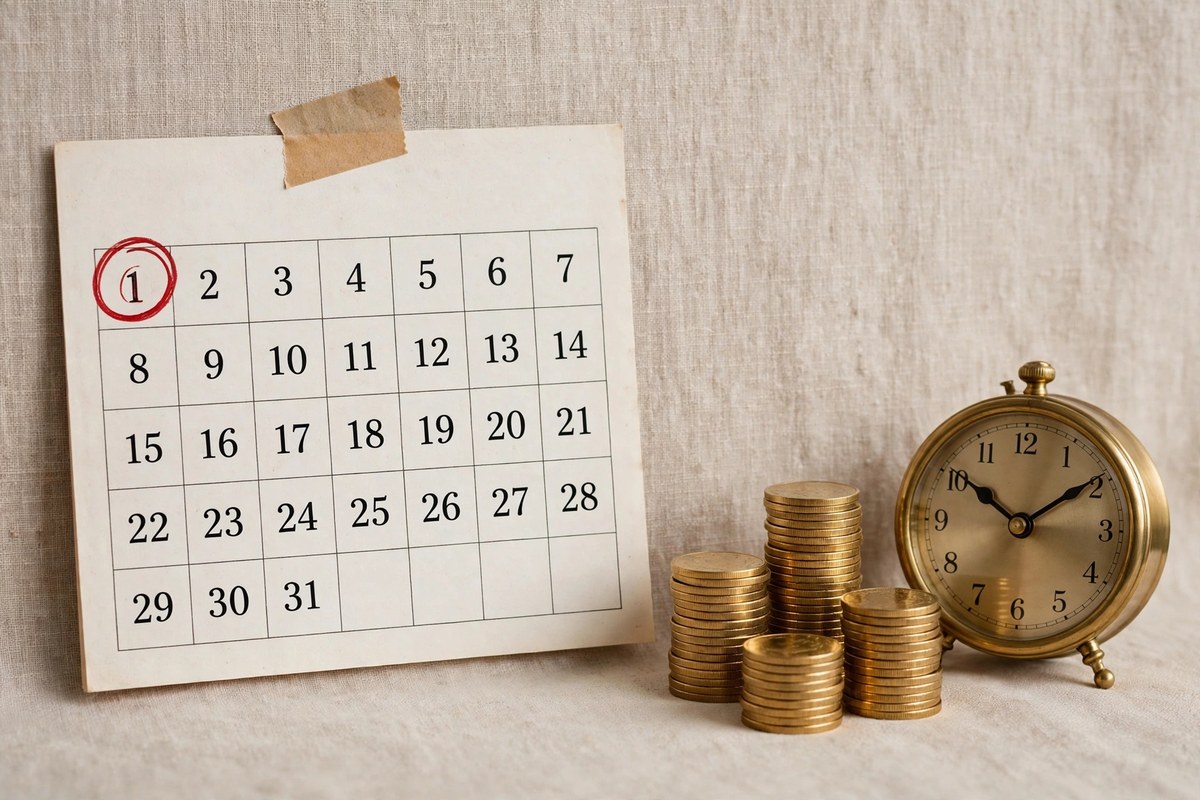
That is why the single most valuable document an Australian crypto holder can create in the next eight months is a market valuation of every asset they hold at 1 July 2027. Without it, you cannot prove how much of your gain accrued under the old rules. Record the Australian dollar value of every coin, every wallet and every exchange account on that date, and keep the screenshots. For practical help getting set up on a compliant platform, see our guide to buying Bitcoin in Australia on AUSTRAC-registered exchanges.
A Worked Example: A $100,000 Gain, Old Rules vs New Rules
Numbers make the reform concrete. Take an Australian resident in the top tax bracket who bought Bitcoin for A$50,000, held it for three years, and sells it for A$150,000 — a A$100,000 gain. The figures below are illustrative, using 3% annual inflation for the indexation example, and they assume the entire gain accrued after 1 July 2027 for the new-rules column.
| Scenario | Old rules (50% discount) | New rules (indexation + 30% minimum) |
|---|---|---|
| Gross gain | A$100,000 | A$100,000 |
| Relief applied | 50% discount — A$50,000 disregarded | CPI indexation over 3 years lifts the cost base to about A$54,600 — roughly A$4,600 of the gain is inflation |
| Taxable gain | A$50,000 | About A$95,400 |
| Tax at 45% + 2% Medicare levy | About A$23,500 | About A$44,800 (minimum 30% also applies) |
| Effective tax on the gain | 23.5% | About 44.8% |
On the same A$100,000 gain, the new rules roughly double the tax bill for a top-rate taxpayer. For a lower-rate taxpayer the picture is different but still worse: under the old rules someone in the 30% bracket paid 15% effective on a discounted gain; under the new rules the 30% minimum tax means they can never pay less than 30% on post-July gains, whatever their marginal rate. The reform hits hardest exactly where the old discount helped most — long-term holders of fast-growing assets. That is also why the transitional rule matters so much: growth banked before 1 July 2027 keeps the old treatment, so the 1 July 2027 valuation is worth real money.
Note that Bitcoin's scarcity is part of why these gains exist at all: only 21 million BTC will ever be mined, and just 892,175 remain to be mined in 2026. Long holding periods and large gains are the norm for this asset — which is precisely why the discount change matters.
Staking, Airdrops and Mining Are Taxed Differently
Not all crypto income is a capital gain. Rewards you receive — staking rewards, mining rewards and airdrops of established tokens — are generally taxed as ordinary income in the year you receive them, at their Australian dollar value on the day of receipt. There is no 50% discount on this income, and no 12-month holding rule to soften it.
This creates a double-tax trap that catches many holders. You receive staking rewards worth A$5,000 during the year: that A$5,000 is ordinary income, taxed at your marginal rate. When you later sell those same reward tokens, the A$5,000 becomes your cost base, and any further gain from that point is a capital gain. If you never report the receipt, your cost base is wrong, your capital gain is overstated, and the ATO's data-matching can still show the exchange paid you the rewards. Keep a log of every reward, its date and its AUD value. Our guide to how crypto staking works and what it pays explains which networks pay rewards and how they are distributed.
There is also a genuine exemption worth knowing about. Crypto used as a personal use asset — spent on goods or services for personal consumption, where the cost base is A$10,000 or less — can be exempt from CGT. Buying a coffee with Bitcoin is not the same as selling an investment. But the exemption is narrow: it does not cover crypto held as an investment, and it does not apply if the asset cost more than A$10,000. Do not stretch it.
One more distinction matters. If you trade frequently, with the intention of profiting from short-term price movements, the ATO may treat you as carrying on a business. In that case your profits are ordinary income, not capital gains, and the 50% discount does not apply at all. The line between investor and trader depends on the volume, frequency and organisation of your activity — and it is a question to settle with a registered tax agent before you lodge, not after the ATO asks.
5 Mistakes That Cost Australian Crypto Holders Money
The rules above are manageable. The mistakes below are where the money is lost — in extra tax, in penalties, or in discounts given away for no reason.
- Treating crypto-to-crypto swaps as tax-free: swapping Bitcoin for Ethereum, or any coin for a stablecoin, is a CGT event. Every swap needs a date, an AUD value and a gain or loss calculation. Holders who only record their cash-in and cash-out dates routinely under-report hundreds of taxable events.
- Forgetting that staking and airdrop income exists: rewards are ordinary income when received, with no discount. Many holders discover this only when the ATO's data-matching flags exchange reward payments they never declared — and then the tax comes with interest and penalties attached.
- Having no valuation for 1 July 2027: the transitional rule that preserves the 50% discount on pre-July gains depends on knowing the market value of every asset on that date. If you cannot prove it, you cannot claim it. Set a calendar reminder now, and screenshot every wallet and exchange balance on 30 June 2027.
- Keeping no records, or the wrong records: the ATO requires records of every transaction — dates, AUD values, the purpose of each transaction, and exchange statements — kept for five years. Exchange CSV exports, wallet histories and a tax software report together are the standard. "The exchange closed" is not a defence; exchanges have failed before, and your records are your responsibility.
- Missing the lodgment deadline: the Australian tax year runs 1 July to 30 June, and self-lodgers must lodge by 31 October — for the 2025–26 return, that deadline fell on Monday 2 November 2026 because 31 October was a Saturday. Late lodgment draws penalties and interest, and late lodgers are more likely to be reviewed. Registered tax agents have later deadlines, but the obligation is yours either way.
What to Do Before 1 July 2027: A Checklist
- Consolidate your transaction history now: export CSVs from every exchange you have ever used, including closed accounts, and pull wallet histories while the data is still available.
- Decide your cost-base method: the ATO allows specific identification or FIFO in most cases — pick one, document it, and use it consistently. Switching methods to manufacture a better outcome is not permitted.
- Harvest losses before 30 June 2027: capital losses can offset gains, and they carry forward indefinitely. Realising a loss on a losing position before year-end can reduce the tax on a winning one — but wash-sale style behaviour, selling and immediately rebuying the same asset purely for tax, attracts ATO scrutiny.
- Record the 1 July 2027 valuation: on 30 June 2027, screenshot the AUD value of every holding. Store it with your tax records. This is the single most valuable five minutes of the year for an Australian crypto holder.
- Talk to a registered tax agent: the interaction between the transitional rules, indexation and the 30% minimum tax is genuinely complex, and the ATO had not released final guidance on the new framework at the time of writing. A one-hour consultation before July 2027 is cheap insurance.
- Check your exchange is compliant: Australia's expanded AML/CTF regime commenced on 1 July 2026, and a new licensing framework for digital-asset platforms passed Parliament in April 2026 and commences in April 2027. Using a compliant, AUSTRAC-registered exchange keeps your records clean and your data with the ATO consistent.
What Most People Get Wrong About Australian Crypto Tax
Three myths survive despite years of ATO guidance. First, that crypto is tax-free in Australia — it is not, and never has been. Second, that tax only applies when you cash out to dollars — it applies to swaps, spending and gifts too. Third, that the 50% discount is disappearing entirely — it is not: gains accrued before 1 July 2027 keep the old treatment under the transitional rules, which is exactly why the valuation date matters. A fourth myth is newer: that the April 2027 digital-asset licensing framework changes your tax. It does not — the Corporations Amendment (Digital Assets Framework) Act 2026 sits in corporations law, not tax law.
The honest position is this: Australian crypto tax is getting more expensive for long-term holders, but the next eight months contain a genuine planning window. The discount still applies to every disposal until 30 June 2027, and to the pre-July portion of gains on assets you still hold after that date. Use the window deliberately — record, value, plan — and the reform costs you far less than it costs the holder who first hears about it in July 2027.
FAQs
Is cryptocurrency taxed in Australia?
Yes. The ATO treats crypto as a CGT asset. Selling, swapping, spending or gifting it is generally a CGT event, and the gain is added to your assessable income and taxed at your marginal rate, from 0% to 45% plus the 2% Medicare levy.
Does the 50% CGT discount still apply to crypto?
Yes, for disposals up to 30 June 2027 where you held the asset for more than 12 months. From 1 July 2027 it is replaced by CPI indexation of the cost base and a 30% minimum tax on gains. Gains accrued before 1 July 2027 keep the 50% treatment under transitional rules, provided you can evidence the 1 July 2027 market value.
Do I pay tax on crypto-to-crypto swaps?
Yes. Swapping one cryptocurrency for another is a CGT event, even if no Australian dollars are involved. The gain or loss is calculated in AUD at the time of the swap.
How are staking rewards taxed in Australia?
Staking rewards, mining rewards and airdrops of established tokens are generally ordinary income when received, at their AUD value on the day of receipt. They do not qualify for the 50% CGT discount. When you later sell those tokens, the value at receipt becomes your cost base.
What records does the ATO require for crypto?
Dates and AUD values of every transaction, the purpose of each transaction, exchange statements, wallet addresses and records of fees. Records must be kept for five years. The ATO receives data directly from AUSTRAC-registered exchanges through its data-matching program.
When is the Australian crypto tax deadline?
The tax year runs 1 July to 30 June. Self-lodgers must lodge by 31 October — for the 2025–26 return the deadline was Monday 2 November 2026, because 31 October fell on a Saturday. Registered tax agents generally have later lodgment deadlines.
Conclusion
Australia's 50% CGT discount has been the single biggest tax advantage for crypto holders for decades, and it ends on 1 July 2027. The replacement — CPI indexation plus a 30% minimum tax — roughly doubles the tax on a A$100,000 gain for a top-rate taxpayer. But the reform is not retroactive: growth banked before 1 July 2027 keeps the old treatment, and that protection is only as good as your records. Export your transaction history, decide your cost-base method, and record the AUD value of every holding on 30 June 2027. Do those three things, talk to a registered tax agent before July, and the most expensive tax change in Australian crypto history will cost you far less than it costs everyone who ignores it.
Disclaimer: this article is general information only and does not constitute tax, financial or legal advice. Tax outcomes depend on your individual circumstances and the ATO's final guidance on the 2027 framework. Consult a registered tax agent before making decisions based on this article. Sources: ATO crypto assets guidance (updated 19 August 2026); Treasury Laws Amendment (Tax Reform No. 1) Act 2026; Finder — Crypto Tax in Australia 2026; SatoshiMacro — Crypto Tax in Australia; Shepley Capital — Australia's 2027 CGT Changes for Crypto Investors; CoinTracker — Crypto Tax in Australia 2026; TokenTax — Guide to Crypto Tax in Australia.