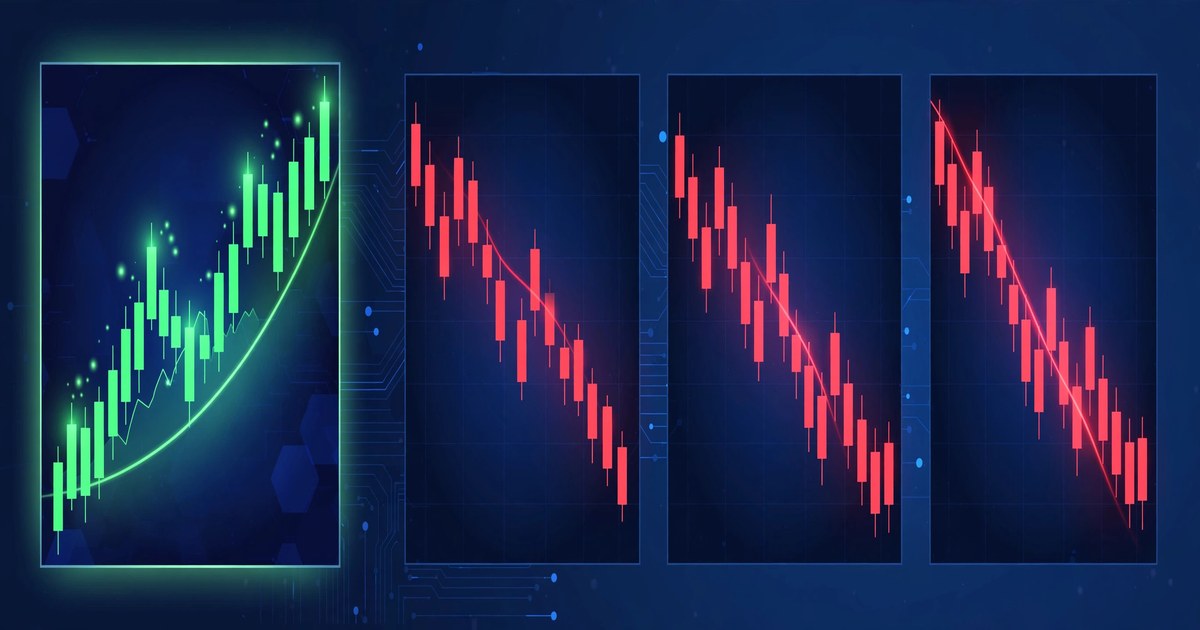
Bitcoin's $75,718 Week: Binance Reopens, Midterms Vote, Payrolls Land — 3 Dates That Decide November
Bitcoin enters November at $77,465 with one line deciding the week: $75,718. Binance reopens Sunday, Americans vote Tuesday, payrolls land Friday — here's the day-by-day map, the 3 scenarios, and the checklist for each event.

Bitcoin enters November at $77,465 with exactly one number deciding the week: $75,718. Hold above it through five trading days packed with three market-moving events, and the crash narrative stalls. Close a week below it, and $72,956 comes into view. Between Sunday and Friday, Binance reopens after the largest theft in crypto history, Americans vote in the midterms, and the October jobs report lands — and each event can move Bitcoin on its own. This is the day-by-day map of that week, the three scenarios that follow from it, and the checklist to use before Monday's open.
The week in one number: why $75,718 matters
Bitcoin starts the week at $77,465, down 3.2% from last Monday's open of $80,048 and capped below $80,000, according to the week-ahead analysis published on October 31. The level that decides the week is $75,718, the weekly average price. A weekly close beneath it exposes $72,956 as the next downside target. That is not a random line on a chart: it is roughly where short-term holders bought in, with on-chain data putting the short-term-holder cost basis near $75,600, and it sits just above the $75,000–$76,000 zone analysts flagged as the likely test if selling resumes in November.
Think of the week as a staircase with three steps. The top step is $80,000 — the level Bitcoin must reclaim to change the conversation, with a daily close above $82,000 the stronger confirmation that buyers are back in control. The middle step is $77,465, where the week begins. The bottom step is $75,718, and below it the floor drops to $72,956. Ethereum has its own version of the same staircase: it enters the week near $2,243, with $2,190 as support and $2,313 as the level a relief rally must clear. A strong payrolls print would test both supports; a weak one could lift the market toward $80,000 and $2,313.
The backdrop explains why the staircase matters so much right now. The Crypto Fear and Greed Index reads 30, classified as Fear, down from 51 last week and 74 last month. United States spot Bitcoin ETFs recorded $643.33 million in net outflows on October 30, led by BlackRock at about $233.7 million and Fidelity at about $201 million. About $427 million in leveraged positions were liquidated in 24 hours, hitting roughly 93,000 traders. Bitcoin closed October down 4.3% on the week and Ethereum down 5.6%. This is a market that has already been hurt — which is exactly why the next five days can either confirm the damage or start repairing it.
The week ahead, day by day
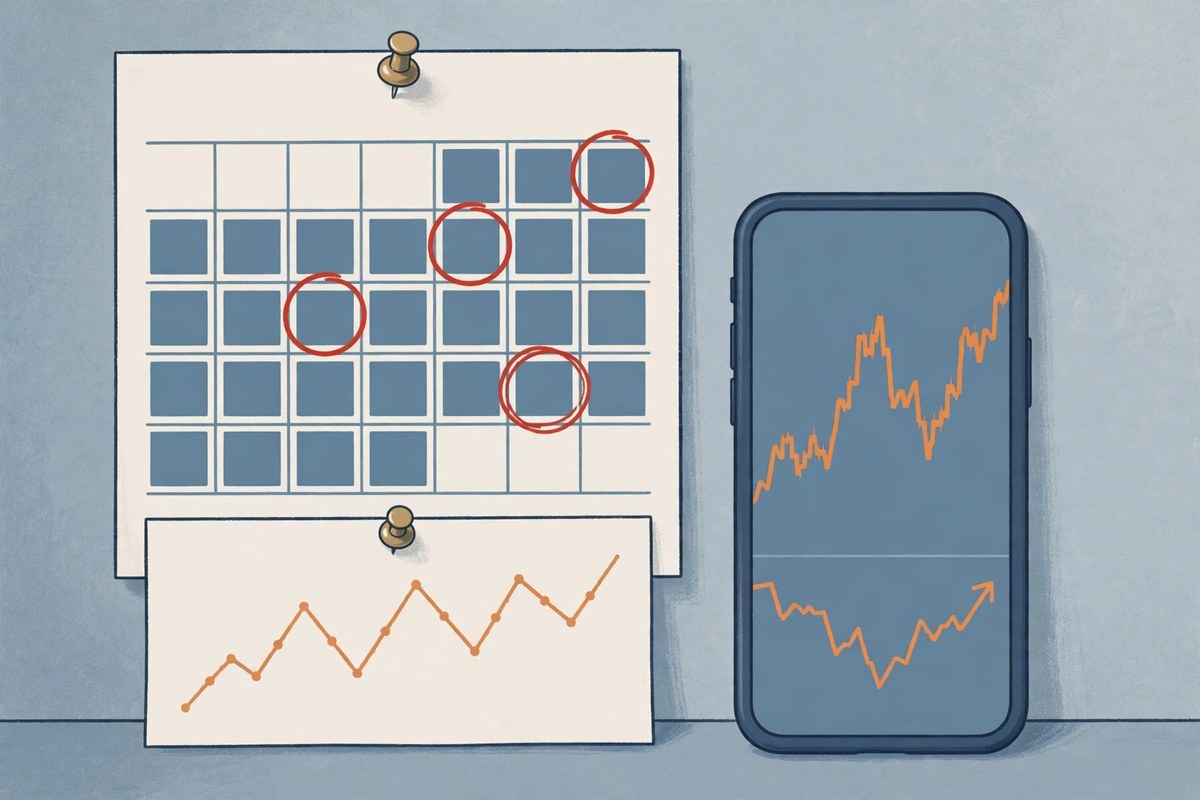
Three catalysts land inside five trading days, and the calendar around them matters too. Here is the full map, with the event, the time that matters, and what to watch in each window.
| Day | Event | What to watch |
|---|---|---|
| Sunday, November 1 | Binance phased withdrawal reopening begins | Do withdrawals actually process, and at what speed? Any new pause or delay is the red flag. |
| Monday, November 2 | US ISM Manufacturing PMI; Binance proof of reserves due | The proof-of-reserves report lands; a clean, detailed report calms nerves, a thin one does not. |
| Tuesday, November 3 | US midterm elections; US JOLTS job openings | Early results and the policy signal for crypto legislation; watch for any shift in the regulatory outlook. |
| Wednesday, November 4 | US ISM Services PMI | Services strength feeds directly into the December rate debate ahead of Friday. |
| Thursday, November 5 | Bank of England decision; Riksbank decision | Global rate signals; a hawkish surprise abroad tightens conditions everywhere. |
| Friday, November 6, 13:30 GMT | US nonfarm payrolls (October) | Forecast +55,000 to +63,000 jobs, unemployment 4.2%. Strong beats keep the December hike priced; weak misses unwind it. |
Note the timing trap: United States clocks change on Sunday, November 1, so the payrolls release at 13:30 GMT on Friday is 8:30 a.m. Eastern — an hour later on London clocks than traders may expect.
Sunday's test: does Binance actually reopen?
The first and most emotional test arrives before markets even open. Attackers moved about $6.3 billion out of Binance's wallets from around 20:05 GMT on October 29, in what is now the largest crypto theft on record. About $3 billion has been frozen on-chain, and Binance has set aside more than $6.34 billion of its own money to restore customer balances, with about $5 billion already held in the exact tokens taken. Deposits were never suspended. Withdrawals were — and Binance has said it is targeting a phased restart from Sunday, subject to security checks, with full proof-of-reserves results due by Monday, November 2.
The question on Sunday is not whether Binance can pay. On paper, the $6.34 billion backstop covers the $6.3 billion estimate. The question is whether users can actually get their coins out, smoothly, at scale, without a second pause. A phased restart that processes normally is the single best outcome for the week: it converts a solvency scare back into a security incident, and it removes the reason many traders have been selling first and asking questions later. A restart that stalls, throttles, or pauses again does the opposite — it tells the market the problem is bigger than the backstop suggests, and it would likely test $75,718 within hours.
History offers a warning against celebrating too early. When Bybit lost about $1.5 billion in February 2025, losses were covered within days, yet Bitcoin still fell by double digits over the following two weeks alongside a tariff-driven macro selloff. A covered loss did not prevent a drawdown then, and the macro backdrop now is also risk-off, with the Nasdaq suffering its worst session since June and the 10-year yield near 4.93%. Covering the money is necessary. It is not, by itself, sufficient. What matters is the flow: coins leaving the exchange normally, no new freezes, no new revelations about how the signing infrastructure was manipulated. Readers who still hold funds on any exchange should revisit the
safety checks in our guide to Binance withdrawals restarting and the 5 checks before moving crypto, and consider whether their setup matches the cold-storage standard in how to store crypto safely with cold storage and seed phrases.
Tuesday's vote: what the midterms can and cannot do
Tuesday, November 3 brings the United States midterm elections, and with them a policy fork. The crypto-specific stakes are real: the industry has been waiting on market-structure legislation, and the balance of power in Congress shapes whether bills like the CLARITY Act advance, stall, or get rewritten. Our earlier analysis of the vote, US midterms in 3 days and what they mean for Bitcoin and the CLARITY Act, sets out the history — Bitcoin fell after every past midterm, yet rose 92% in the year after the 2022 vote.
But the honest version of Tuesday's story is less dramatic than the headlines. Midterms do not pass crypto laws overnight. They change who writes them, who chairs the committees, and which bills get floor time in 2027. The tradable signal on Tuesday night is direction, not legislation: a result that markets read as stable and pro-innovation supports risk assets into Friday; a result read as gridlock plus escalation risk — forecasters also flag the possibility of renewed United States military action against Iran after the vote, with Brent crude already at $113.10 — pushes traders toward safety. Oil at those levels is itself a crypto input: energy shocks feed inflation expectations, which feed the December rate debate, which feeds Friday.
Friday's number: payrolls decide the December hike
Everything in the week funnels into Friday, November 6 at 13:30 GMT, when the October nonfarm payrolls report lands. The forecast range is +55,000 to +63,000 jobs, with unemployment at 4.2% and earnings growth around 0.3%. The stakes are unusually clean: markets are pricing a December Federal Reserve rate hike at close to 80%, after the Fed held rates at 3.75%–4.00% on October 28. A strong payrolls print validates that pricing, supports the dollar and yields, and tests the $75,718 and $2,190 supports. A weak print does the reverse — it drags yields lower, unwinds hike bets, and could lift Bitcoin toward $80,000 and Ethereum toward $2,313.
Why does a jobs number move Bitcoin at all? Because Bitcoin now trades as a risk asset with a macro beta, not as an isolated island. When hike odds rise, the discount rate on every risky cash flow rises with them, and leveraged crypto positions get more expensive to hold — the same mechanism that produced $427 million in liquidations in a single day last week. When hike odds fall, the pressure releases. That is why the week-ahead analysis flags payrolls, not the midterms, as the key event of the week, and why the base case for Bitcoin this week is a wide $72,000–$80,000 range rather than a single price.
There is one more Friday nuance worth knowing. With the Fed decision now behind us and the next meeting weeks away, payrolls is the last major United States data point that can reprice December before the market goes quiet into the holidays. A print far outside the +55,000 to +63,000 range — in either direction — will move more than a print inside it. Position sizes should reflect that: the week is explicitly flagged as high expected volatility with an event-led, bearish tilt,
and the recommended posture from the week-ahead desk is to let event windows pass before adding exposure, and to size positions so that a stop-out is affordable.

Three scenarios: what each outcome looks like
Forecasts that give one price are useless in an event week. Here are the three scenarios that cover the realistic outcomes, with the trigger for each and what it would mean next.
| Scenario | Trigger | Price path | What it means |
|---|---|---|---|
| Bull: confidence returns | Smooth Binance reopening + weak payrolls that unwind hike bets | Reclaim $80,000; daily close above $82,000 confirms | The crash narrative breaks. ETF outflows reverse first, then leveraged shorts cover. Next test: $84,000–$85,000. |
| Base: grinding range | Orderly reopening, mixed politics, payrolls inside forecast | $72,000–$80,000 chop; weekly close above $75,718 | Nothing resolves, nothing breaks. Range traders win; trend followers wait. November stays a stock-picker's market. |
| Bear: support fails | Delayed reopening or strong payrolls that lock in the hike | Weekly close below $75,718 exposes $72,956, then $72,500 | The bearish tilt extends. Short-term holders at breakeven start selling, and the 200-day line near $76,400 becomes resistance. |
The base case deserves emphasis because it is the most likely and the least exciting — which is precisely why traders mishandle it. A $72,000–$80,000 range for a week is an 11% band. That is enough to liquidate leveraged longs at the bottom and leveraged shorts at the top, twice, while spot holders end the week roughly where they started. Anyone trading this week on leverage should read what a crypto liquidation is and the 5 leverage mistakes behind $427 million in losses before Monday, and anyone tempted to buy the whole dip at once should compare that instinct with dollar-cost averaging crypto and how to DCA Bitcoin in 2026. The week rewards staged entries and punishes all-in bets.
What most people get wrong about this week
Three misconceptions are already circulating, and each one costs money if believed.
First, the idea that Binance covering the loss ends the story. It does not. The Bybit precedent shows a covered loss can coexist with a double-digit drawdown, because markets price uncertainty, not just solvency. The reopening flow, the proof-of-reserves detail, and the investigation findings matter more than the headline backstop number.
Second, the idea that the midterms will settle crypto regulation. They will not — they will only set the table for 2027. Anyone buying or selling on Tuesday night as if a law passed is trading a headline, not an outcome. The durable policy signal takes weeks to emerge from committee assignments and bill scheduling.
Third, the idea that one payrolls number decides the Fed. It moves the odds; it does not set policy. The Fed watches a dashboard — inflation, wages, job openings, services data — and Friday is one tile in it. A weak print helps Bitcoin only if it is part of a cooling pattern, and a strong print hurts only if it confirms one. Watch Wednesday's services PMI and Tuesday's JOLTS as the supporting tiles, not just Friday's headline.
Checklist: 5 moves before Monday's open
Use this checklist on Sunday evening, before the week starts moving without you.
- Confirm exchange access first: log in, check balances, and test a small withdrawal if you plan to move funds — do not discover a problem during a volatile event window.
- Review leverage before the events: reduce or close leveraged positions that would liquidate inside the $72,000–$80,000 range, and know your liquidation price for every open position.
- Set alerts, not orders, at the key levels: $75,718, $72,956, $80,000 and $82,000 for Bitcoin; $2,190 and $2,313 for Ethereum. Let the event confirm the level before acting on it.
- Separate trading money from holding money: decide in advance which coins are long-term holdings and which are trades, and do not let a Tuesday headline sell a position you bought for 2027.
- Check your custody setup once: if a large share of your crypto sits on one exchange, the Binance week is the right moment to review the best crypto wallets of 2026, hardware versus software compared — not after the next incident.
The backdrop in numbers
Zoom out and the week looks less like chaos and more like a market working through a shock. Total crypto market capitalization stands near $2.7 trillion, up 0.5% on the day, with Bitcoin dominance at 57.7% and Ethereum at 10.2%. Bitcoin's market capitalization is about $1.55 trillion, roughly 38.8% below its all-time high of $126,080 set in October 2025. Ethereum trades near $2,241, up 2.2% on the day, with a market capitalization near $274 billion. Gold sits at $3,884.90, silver below $50, and Brent at $113.10 — the macro board is risk-off almost everywhere, not just in crypto.
That breadth matters for interpretation. When gold falls to a one-year low at the same time as crypto, the driver is not crypto-specific — it is a broad de-risking tied to rates, equities, and geopolitics. Bitcoin's technical picture reflects it: the price sits 5.71% below its 50-day moving average near $81,901 and exactly on its 30-day low, with four of the five largest daily moves in the past 30 days pointing down, including a 4.32% drop on October 29. The 200-day line near $76,400, examined in Bitcoin tests its 200-day line at $76,400, is now overhead resistance rather than support. Recovery, when it comes, will have to climb through it — another reason the $80,000 reclaim matters more than any single day's bounce.
Frequently asked questions
What is the key Bitcoin level to watch this week?
The $75,718 weekly average. A weekly close above it keeps the $72,000–$80,000 range intact; a weekly close below it exposes $72,956. Intraday, $80,000 is the reclaim level and a daily close above $82,000 is the stronger bullish confirmation.
When does Binance reopen withdrawals?
Binance has targeted a phased restart from Sunday, November 1, subject to security checks, with proof-of-reserves results due by Monday, November 2. Deposits were never suspended. Watch whether withdrawals process smoothly at scale — that, more than the $6.34 billion backstop, is the real test.
When are the US midterms, and why do they matter for crypto?
Voting takes place on Tuesday, November 3. The result shapes who writes crypto market-structure legislation and chairs the relevant committees in 2027. It does not pass a law overnight, but it changes the policy outlook markets trade on.
When is the US payrolls report, and what is expected?
Friday, November 6 at 13:30 GMT (8:30 a.m. Eastern). The forecast is +55,000 to +63,000 jobs, unemployment 4.2%, earnings growth around 0.3%. A strong print supports the roughly 80% priced December rate hike; a weak print unwinds it.
Is Bitcoin a good buy at $77,465?
There is no single answer — it depends on horizon and risk tolerance. For long-term holders, staged buying beats lump-sum timing in a high-volatility event week; for traders, the $75,718 and $80,000 levels define the trade, and leverage inside an 11% weekly range has liquidated $427 million in a day before. This article is not financial advice.
What would change the bearish tilt fastest?
A smooth Binance reopening combined with a weak payrolls print that drags yields lower. That combination hits both drivers of the selloff — exchange confidence and rate expectations — at once, and it is the only scenario in which a fast reclaim of $80,000 looks likely.
Conclusion: a week that rewards the prepared
Bitcoin's $75,718 week is not a week for heroes. It is a week for checklists, alerts, and staged decisions. Sunday tests whether the largest exchange in crypto can reopen normally after the largest theft in its history. Tuesday tests whether politics changes the policy weather. Friday tests whether the jobs market keeps an 80% priced rate hike alive. Any one of them can move the price; together, they define November's opening range.
The prepared trader enters the week knowing the three scenarios, the five levels, and the one rule that matters most: let the event confirm the level before acting on it. The unprepared trader enters the week with leverage, a single prediction, and a hope. Last week liquidated 93,000 of the latter. This week, be the former. Sources for the levels and calendar in this article include the week-ahead analysis putting Bitcoin's $75,718 pivot on the line, the November 2–6 forecast with its $72,000–$80,000 base case, October 31 price and liquidation data, and the October 31 market recap on the Binance refund and ETF flows. Prices move fast in event weeks — check the levels again before you trade, and never risk money you cannot afford to lose.