Bitcoin Miners Quit on December 31: Core Scientific and IREN Just Set the Date — 5 Numbers That Decide What Happens to BTC
Core Scientific and IREN will stop mining Bitcoin on December 31, 2026 — AI now pays $1.5 million per megawatt, triple what mining earns. Here are the 5 numbers that decide what happens to Bitcoin's hash rate, miner stocks, and the BTC price.
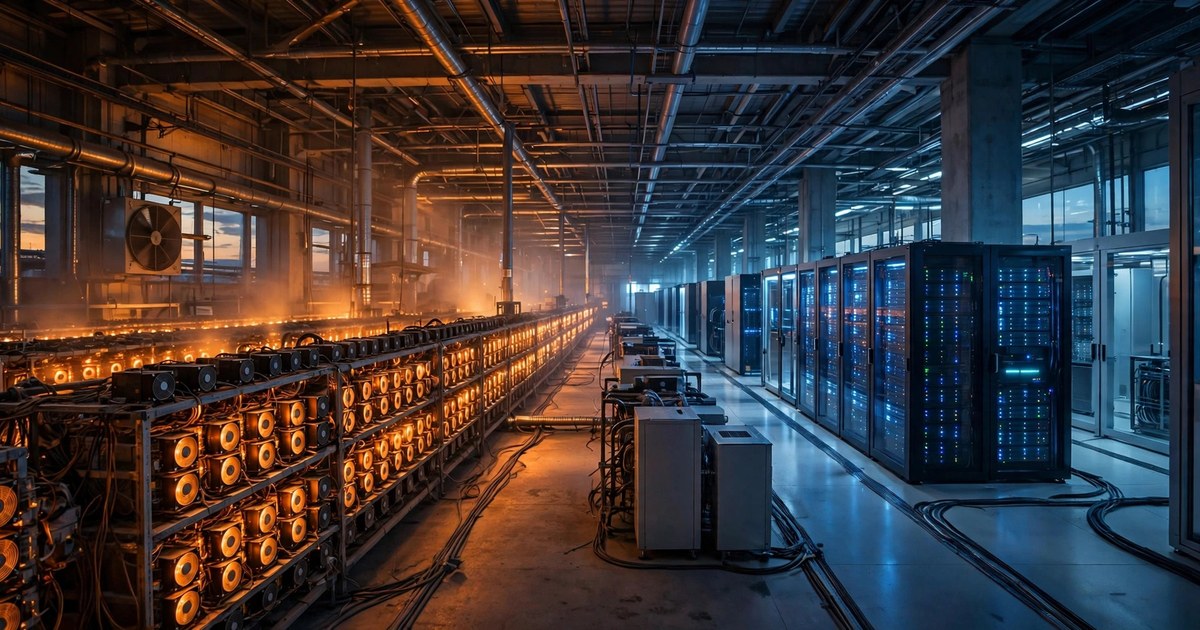
Two of the largest publicly traded Bitcoin miners will stop mining Bitcoin on December 31, 2026. Core Scientific and IREN both set the date in earnings materials released on November 5, because the same megawatt of power earns about $1.5 million a year serving AI tenants — roughly triple the $500,000 it earns mining Bitcoin. This is no longer a pivot on a slide deck. It is a dated exit, backed by more than $100 billion in signed AI contracts, and it raises a question Bitcoin has never had to answer before: what happens to the network when the companies that built its security decide the business is worth more dead than alive?
Bitcoin is trading at roughly $75,000, after flash-crashing to $73,704 on November 8 — its lowest since August. Miner shares fell an average of 35% in October, which VanEck calls a "dislocation" rather than a rejection of the business model. Somebody is wrong about what these companies are worth. Here are the five numbers that decide who.
What Actually Happened on November 5
On the same day, in separate earnings releases, the two companies that have gone furthest down the AI road both put a date on the end of their mining businesses. Core Scientific chief executive Adam Sullivan told investors on the company's earnings call: "We expect to complete our exit from Bitcoin mining by year end." IREN's quarterly filing said its transition would be substantially complete by the same date, with only immaterial mining continuing into 2027.
In the quarter ended September 30, 2026, Core Scientific earned $215.4 million from colocation — renting powered data-center space to AI tenants — against just $17.5 million from self-mining and hosted mining combined. The AI business is now more than twelve times the mining business inside the same company. IREN crossed the same line a quarter earlier: in the second quarter of 2026, its AI cloud revenue hit $70.5 million against $66.7 million from Bitcoin mining, the first time a major listed miner's AI business out-earned its Bitcoin business in a single quarter.
The other large miners are moving in the same direction, just without a shutdown date. Riot Platforms signed a $28 billion Corsicana lease with the AI lab Anthropic that became binding on November 4, covering a planned 910 megawatts of critical IT capacity, with delivery phased from June 2027 through July 2028. Hut 8 signed a 15-year, $7 billion lease for a 245-megawatt AI data center at its Louisiana River Bend campus, backed by Google. HIVE is winding down its Bitcoin mining operations in Sweden while expanding AI and high-performance computing in Canada. Only MARA, which holds the largest Bitcoin treasury among public miners, is still principally a mining company.
The Money: Why AI Pays Three Times What Mining Pays
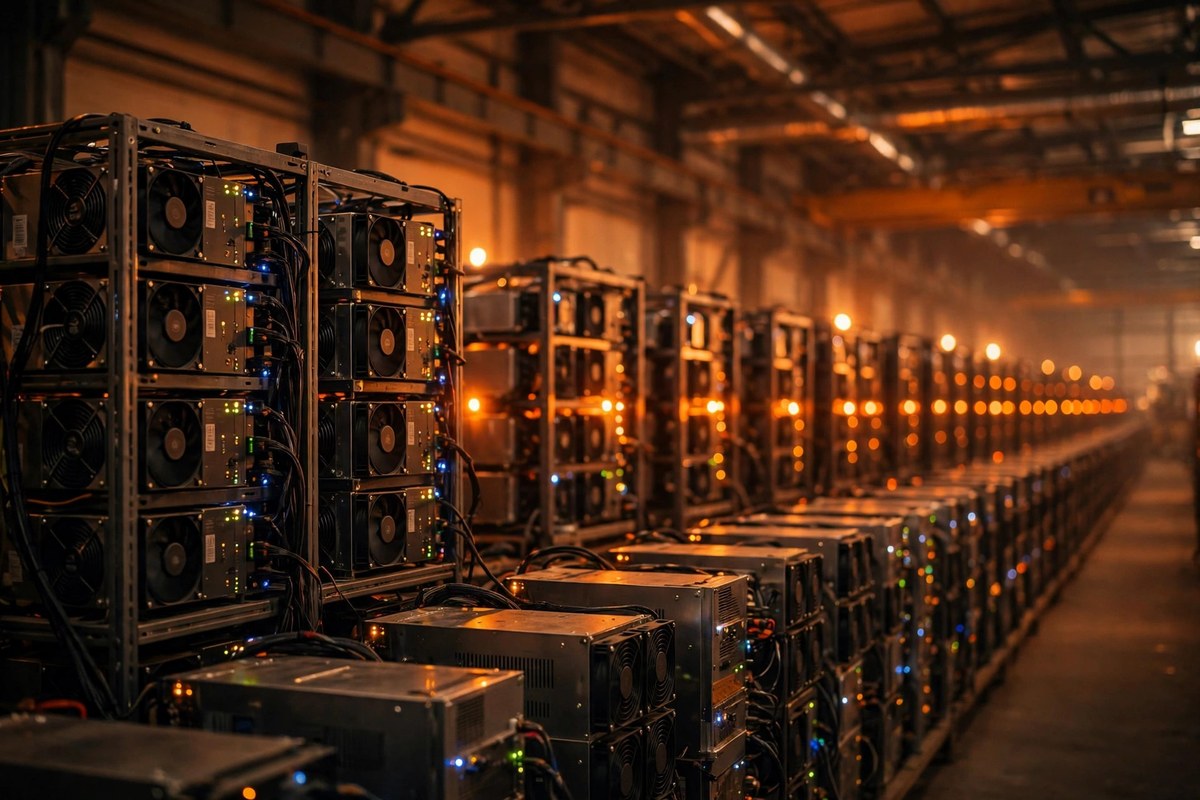
The economics of the switch are not close, and that is the whole story. Research from CoinShares puts the revenue per megawatt at approximately $1.5 million a year for AI and high-performance computing workloads, against roughly $500,000 a year for Bitcoin mining. A megawatt is a megawatt — the same power connection, the same building, the same cooling — but the tenant on the other end pays three times as much, on a multi-year contract, with no exposure to the Bitcoin price.
That last point matters more than the multiple. A miner's revenue is the Bitcoin price times the coins mined, minus electricity — when Bitcoin falls 8% in twenty days, mining revenue falls with it. An AI tenant pays the same rent whether Bitcoin is at $126,080 or $73,704. For a public company reporting quarterly earnings, the choice between a volatile commodity business and a contracted infrastructure business is barely a choice at all.
| Revenue per megawatt, per year | Bitcoin mining | AI / HPC hosting |
|---|---|---|
| Approximate annual revenue | ~$500,000 | ~$1,500,000 |
| Contract length | None — spot market | 12–20 years |
| Exposure to BTC price | Direct — revenue falls with BTC | None — fixed rent |
| Core Scientific Q3 2026 revenue | $17.5M (mining) | $215.4M (colocation) |
| IREN Q2 2026 revenue | $66.7M (mining) | $70.5M (AI cloud) |
CoinShares estimates that AI and high-performance computing revenue could represent up to 70% of listed Bitcoin miners' total revenue by the end of 2026, up from roughly 30% at the start of the year. The post-halving margin squeeze made the pivot economically mandatory; the energy infrastructure the miners spent a decade building made it possible. The miners did not become AI companies by accident. They spent years securing the one thing AI companies now cannot buy quickly enough: grid connections.
5 Numbers That Decide What Happens Next
Number 1: $24 billion — Core Scientific's contracted revenue. Core Scientific now carries more than $24 billion of contracted revenue across its CoreWeave agreement and an AMD-backed block. Its AMD and Neocloud agreement covers about 530 megawatts, with reservation rights for another 1,925. The June 2024 CoreWeave deal — 200 megawatts, $3.5 billion over 12 years — was the template. From January, Core Scientific's shares will be priced on contracted power, credit quality, and construction execution instead of the coin. The market must now re-rate the stock from Bitcoin proxy to infrastructure landlord.
Number 2: $100 billion in backlog, $1.1 billion in billing. More than $100 billion in disclosed AI and high-performance computing contracts have been announced across the public mining sector. But only about $1.1 billion in annualized billing revenue currently supports that backlog, with roughly 550 megawatts actually live against more than 4 gigawatts under contract. The ramp, not the contract, is the story. CoinShares projects roughly 70 contracts ramping later this year should add about $400 million per quarter in AI revenue — a projection, not a reported result. The third-quarter earnings cycle is the first real test of whether the ramp is tracking.
Number 3: 20,264 BTC — what Riot sold to fund the build. Riot Platforms sold 20,264 Bitcoin in the first nine months of 2026, raising roughly $1.5 billion, primarily to fund data-center development. It sold 10,599 BTC in the third quarter alone while mining only 1,637 — a net drop of 8,962 BTC for the quarter — and ended September with just 2,418 BTC on its balance sheet, worth about $202 million at the quarter-end price of $83,554. The proceeds repaid a $200 million Coinbase credit facility; the rest funds construction at about $6 million per megawatt. Hut 8 sold 3,102 BTC since July to fund $250 million in buybacks. Miners are no longer the natural buyers of last resort for Bitcoin. They are sellers, and they are selling to build something else.
Number 4: 35% — the October crash in miner stocks. Shares of Bitcoin miners that shifted to AI data-center infrastructure fell an average of 35% in October, according to VanEck. The trigger was contagion: concerns about debt costs at companies that rent graphics processing units spread to power infrastructure providers, even though no signed leases were cancelled. VanEck argues the physical bottleneck remains power capacity, not demand — grid connection backlogs place a scarcity premium on the energy capacity miners already control — and calls the rout a potentially attractive entry point. The counter-argument: contracts are not cash, and a 4-gigawatt debt-funded build-out is a different risk than a mining fleet. The first quarter of 2027 will prove one side right.
Number 5: $73,704 — and the hash rate underneath it. Bitcoin's hash rate has already fallen to a three-week low, and the network's difficulty is set to adjust. That is the number that matters for Bitcoin itself, rather than for the miners' shareholders. If the largest miners switch off their rigs on December 31, the hash rate falls, blocks slow temporarily, and difficulty adjusts downward — the system is designed to handle exactly this. The real question is who replaces them. Smaller miners with cheaper power, miners in other jurisdictions, and new entrants attracted by lower difficulty all stand to benefit. But the weeks around the turn of the year are when the network is most exposed. Watch the hash rate, not the headlines.
The Timeline: From Mining Rigs to AI Data Centers
The exit happened in stages — and the dates show how fast the industry's center of gravity moved.
- June 2024 — the template is signed: Core Scientific announces 200 megawatts of hosting for CoreWeave, worth a projected $3.5 billion over 12 years. At the time it looks like a side business. It is now the business.
- December 2025 — the Google deal: Hut 8 signs a 245-megawatt AI data-center lease at its Louisiana River Bend campus, a 15-year agreement worth $7 billion and backed by Google. The miners' power is now bankable enough for the largest companies on earth.
- Q2 2026 — parity arrives: IREN's AI cloud revenue ($70.5 million) overtakes its Bitcoin mining revenue ($66.7 million) in a single quarter, the first time a major listed miner's AI business outgrosses its Bitcoin business.
- October 2026 — the market panics: Miner stocks fall 35% on average as GPU-rental financing fears spread to power providers. VanEck calls it a dislocation. No signed leases are cancelled.
- November 4, 2026 — the Anthropic deal binds: Riot's $28 billion Corsicana lease with Anthropic becomes binding, covering 910 megawatts phased from June 2027 through July 2028. Riot says mining at Corsicana could begin winding down in summer 2027.
- November 5, 2026 — the date is set: Core Scientific and IREN both tell investors they expect to end Bitcoin mining by December 31, 2026. From January, their shares price on contracted power instead of the coin.
- December 31, 2026 — the switch-off: The deadline both companies set. What remains to be seen is how much hash rate leaves with them, and how fast difficulty adjusts.
What This Means for Bitcoin's Security
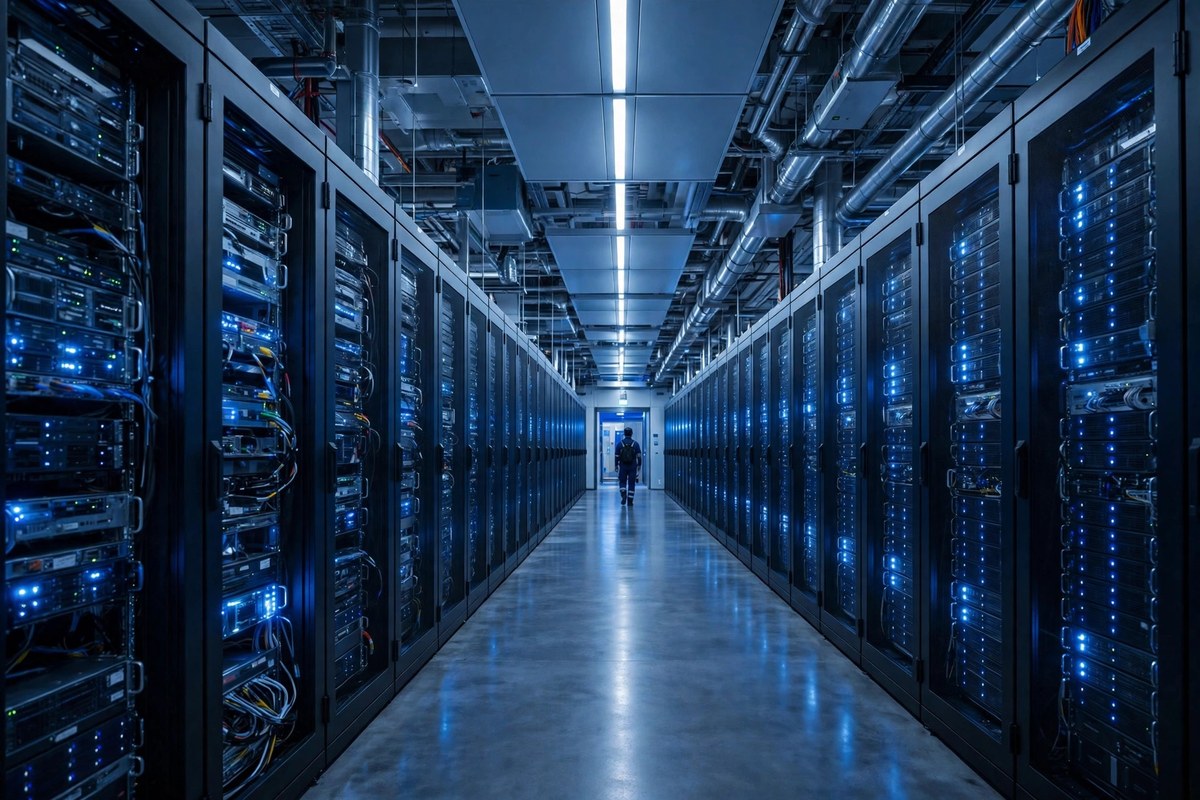
The honest answer is: less than the headlines suggest, but more than nothing. Bitcoin's security comes from the total hash rate securing the network, not from any single company. When large miners leave, difficulty adjusts downward — roughly every two weeks — and mining becomes profitable again for whoever remains. The network has survived bigger shocks: the 2021 China mining ban removed roughly half the global hash rate in weeks, and the network recovered within months.
Two real risks remain. First, concentration: fewer, larger operators weaken decentralization, and three mining pools already control around 63% of all blocks. Second, the transition window: a sharp hash-rate drop around December 31 would slow block times and could temporarily raise fees — feeding "Bitcoin is broken" narratives while the price sits 40% below its $126,080 all-time high. For the longer view on what happens as mining rewards keep shrinking, see our explainer on what happens when all 21 million Bitcoin are mined — only 890,000 BTC remain to be issued, and the end of the subsidy era is the backdrop to everything in this story.
There is also a counter-intuitive upside: miners leaving removes the most price-sensitive sellers from the ecosystem over time. A network secured by operators who mine because it is profitable at the current difficulty may be more stable, not less. That is a prediction, not a fact — the January hash rate data will be the first evidence either way. Our earlier analysis of the hash-rate slide — Bitcoin's hash rate just fell to a three-week low — explains the signals to watch.
What This Means for Miner Stocks
The investor question is simpler than the Bitcoin question, and it splits cleanly into two camps. The VanEck camp says the October sell-off was indiscriminate: investors treated companies in very different sectors as one monolithic trade, punished power providers for GPU-rental companies' financing problems, and ignored that no signed leases were cancelled. Scarce power capacity, grid connection delays, and long-term contracted cash flows make the depressed shares attractive, on this view — the miners own the bottleneck, and the bottleneck is what AI companies cannot replicate quickly.
The skeptical camp says the market is pricing the gap between $100 billion of backlog and $1.1 billion of billing. Hut 8's numbers show it: its AI leases pay little until new halls open in 2027, third-quarter revenue fell 15% to $71.1 million (below the $75.8 million estimate), and its shares dropped more than 22% on earnings day — even as it secured $7.5 billion in project bonds. Debt-funded construction with revenue a year away is a real risk.
For Bitcoin holders, the practical implication is narrower than either camp suggests. Miner stocks are no longer a leveraged way to own Bitcoin — that trade died when the miners started selling their treasuries to fund construction. If you want Bitcoin exposure, the honest route is still to buy Bitcoin itself — our guide to whether Bitcoin is a good investment in 2026 lays out the risks and the allocation math. The worst reason to own a miner stock in 2027 is nostalgia for what it was in 2024.
What Most People Get Wrong About the Miner Exodus
Myth 1: "Miners leaving means Bitcoin is dying." Wrong. Miners leave because a better use of their power appeared, not because Bitcoin failed. What matters is the hash rate trend over months, not any single company's press release.
Myth 2: "The $100 billion backlog means the AI pivot is already a success." Wrong. Backlog is a promise, not revenue: only about 550 megawatts are live against more than 4 gigawatts under contract.
Myth 3: "Miner stocks crashing 35% proves the AI pivot failed." Unproven. The drop was driven by financing fears at GPU-rental firms, not cancelled miner contracts — no signed leases were cancelled. But a 35% drawdown is what happens when a story depends on debt-funded construction.
Myth 4: "Bitcoin's price will crash when the miners switch off." Unproven. Riot's 20,264 BTC in sales are already in the market, and the price absorbed them. The switch-off affects future hash rate, not the supply of coins. The bigger price risk is already visible: spot Bitcoin ETFs shed $1.28 billion in a week, and Bitcoin flash-crashed to $73,704 — see our breakdown of that crash.
Myth 5: "This is a one-off, and mining will go back to normal." Wrong. The economics are structural: $1.5 million per megawatt beats $500,000, every year, on a 12-year contract. The halving cycle keeps cutting mining rewards — see our Bitcoin halving 2028 explainer — while AI demand for power keeps rising. Mining is not coming back to these companies.
Frequently Asked Questions
Are Core Scientific and IREN really stopping Bitcoin mining?
Yes. Both said in earnings materials dated November 5, 2026, that they expect to end Bitcoin mining by December 31, 2026. Core Scientific's CEO said: "We expect to complete our exit from Bitcoin mining by year end." IREN's filing said its transition would be substantially complete by the same date, with only immaterial mining into 2027.
Why are Bitcoin miners switching to AI?
Money. AI and high-performance computing workloads earn roughly $1.5 million per megawatt per year, against about $500,000 for Bitcoin mining, according to CoinShares research. AI tenants also sign 12- to 20-year contracts with fixed rent, while mining revenue rises and falls with the Bitcoin price. For public companies, contracted infrastructure revenue is worth far more than volatile mining revenue.
Will Bitcoin's network be less secure when miners leave?
Not necessarily. Difficulty adjusts roughly every two weeks, so if hash rate falls, mining becomes more profitable for whoever remains. The network survived losing roughly half its hash rate in the 2021 China mining ban. The real risks are concentration and a sharp transition around December 31, not the exit itself.
How much Bitcoin did Riot sell to fund its AI build?
Riot sold 20,264 BTC in the first nine months of 2026, raising about $1.5 billion — 10,599 BTC in the third quarter alone, while mining only 1,637 — ending September with just 2,418 BTC. Hut 8 sold 3,102 BTC since July to fund $250 million in buybacks. The miners are sellers now, not holders.
Are miner stocks a good buy after the 35% October crash?
It depends on which risk you believe. VanEck argues the sell-off was a dislocation — no signed leases were cancelled, and scarce grid capacity carries a premium. Skeptics point to the gap between $100 billion of backlog and $1.1 billion of billing. This is not investment advice; the deciding evidence will be billed megawatts in the next two earnings cycles.
What happens to Bitcoin's price if more miners quit?
The direct price effect is limited: miners' sales are already happening, and the switch-off affects future hash rate, not the supply of coins. The bigger drivers remain ETF flows — spot Bitcoin ETFs shed $1.28 billion in a week in early November — and macro catalysts. If you are deciding whether to buy, sell, or hold, our Bitcoin profit-taking and exit-plan guide covers seven strategies for taking profits without trying to time the top.
Conclusion
December 31, 2026, is now a date in Bitcoin's history. Two of the industry's biggest miners will switch off their rigs, not because Bitcoin failed, but because the power underneath those rigs is worth three times more to someone else. The $24 billion Core Scientific has signed, the $28 billion Riot committed at Corsicana, and the $100 billion backlog across the sector all point the same way: the companies that built Bitcoin's security layer are becoming landlords, and the tenants are AI labs.
For Bitcoin, the question is not whether mining survives — it will, at a lower difficulty, with different operators — but whether the transition is orderly. For investors, the question is harder: is a 35% crash in miner stocks a buying opportunity in scarce power infrastructure, or the market correctly pricing a build-out whose revenue is still a year away? The answer will come from two numbers in the next two earnings cycles: megawatts billed, and hash rate retained. Watch those, and ignore everything else.
Sources: The Inference, CoinDesk, TFTC / CoinShares, Trade News, Cflash, ChosunBiz.