What Is Kaspa (KAS)? The $0.029 Coin With 97% of Its Supply Already Mined — 7 Numbers That Decide What Happens Next
Kaspa (KAS) trades at $0.029 — 86% below its $0.2074 peak — yet 97% of its 28.7 billion supply is already mined and its block reward just got cut again. Here are the 7 numbers that decide whether the fastest proof-of-work chain recovers or keeps fading.

Kaspa (KAS) trades at about $0.029 — 86% below its all-time high — yet 97% of its entire supply is already mined, and its block reward was cut again on November 4. That combination almost never happens in crypto: a coin this close to full emission, still priced like a forgotten altcoin, on the week of its fifth birthday. Here are the 7 numbers that decide whether the fastest proof-of-work chain recovers or keeps fading.
Kaspa launched on November 7, 2021, which means it turned five years old two days ago. It arrived as a fair launch — no premine, no pre-sale, no tokens allocated to founders or investors — and it has spent those five years building one of the most technically ambitious networks in crypto while barely registering on most investors' radar. On November 9, 2026, KAS sits around $0.029 with a market capitalisation of roughly $805 million, ranked around 80th among all cryptocurrencies. It is down 30.7% in the past 30 days and 11% in the past week, even as Bitcoin steadies near $75,000 after a $1 billion liquidation wipeout across the market. This guide explains what Kaspa is, how its BlockDAG actually works, why its supply schedule is unlike almost any other coin, and what would have to change for the price to recover.
What Is Kaspa (KAS)?
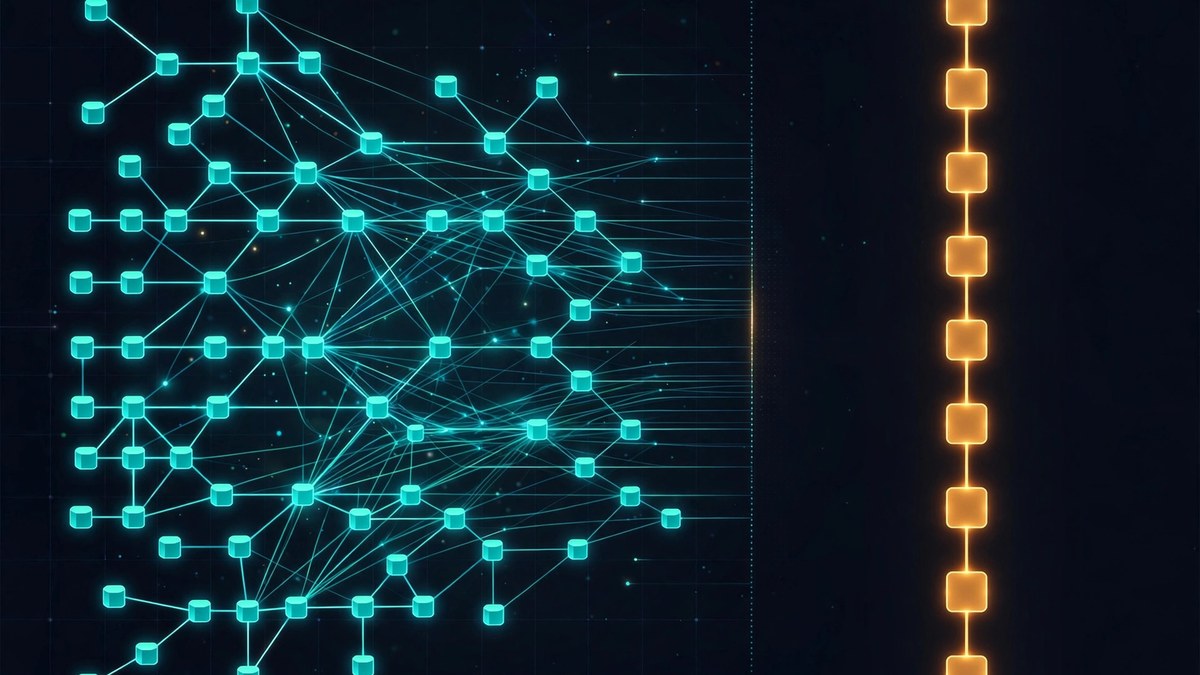
Kaspa is a proof-of-work Layer 1 cryptocurrency built on a BlockDAG — a directed acyclic graph of blocks — instead of a traditional single blockchain. Where Bitcoin discards parallel blocks and keeps only one chain, Kaspa keeps them all. Its GHOSTDAG consensus protocol orders every block miners produce, so the network confirms transactions in seconds while remaining secured by proof-of-work mining.
The project was fair-launched on November 7, 2021, with zero tokens distributed outside open mining. There was no venture funding round, no team allocation and no initial coin offering. That matters for two reasons. First, no insider unlock schedule hangs over the price. Second, it means Kaspa has grown almost entirely on community funding and volunteer development, which explains both its loyal following and its thin exchange presence: KAS is still not tradable on Coinbase spot and Binance does not list it on spot either.
The network launched producing one block per second. The Crescendo upgrade in May 2025 raised throughput to 10 blocks per second, and the Toccata hard fork, activated on mainnet on June 30, 2026, added native covenant functionality, transaction introspection and zero-knowledge verification support. The next big technical milestone on the roadmap is DAGKnight, a planned consensus upgrade that Kaspa researchers — including co-founder Yonatan Sompolinsky — discussed publicly at the Mid-Chain DeFi Conference on October 26, 2026.
How Kaspa's BlockDAG Works — and Why It Matters
Every blockchain faces the same trade-off: make blocks faster and you get more orphaned blocks; keep blocks slow and you get security but sluggish confirmations. Bitcoin chose one block every 10 minutes. Kaspa's answer is to stop throwing parallel blocks away: in a BlockDAG, miners produce blocks in parallel and GHOSTDAG orders all of them into one agreed history, so confirmations take seconds and the network processes 10 blocks per second — roughly 600 times Bitcoin's block rate — without giving up proof-of-work security.
That speed is Kaspa's core selling point and its core risk at the same time. Fast confirmations make it genuinely usable as peer-to-peer electronic cash, the use case its supporters care about most. But a DAG is also harder to reason about than a chain: wallet software, exchanges and developers all need specialised handling, which is one reason integrations have been slow and why Kaspa's ecosystem of apps and DeFi remains tiny compared with its market cap. The network's flagship DeFi venue, the Kasplex indexer, held just $254,365 in total value locked as of October 30, 2026. For a coin worth $805 million, that is almost no on-chain economy at all — and a September 2026 exploit of the Kasplex indexer affecting KRC-20 tokens, on a day KAS fell 7.15%, showed how fragile that thin ecosystem still is.
The 7 Numbers That Decide Kaspa's Next Move
Kaspa's story is a numbers story. Seven figures explain almost everything about where the coin stands — and what would have to change for it to recover.
1. $0.029 — the price, down 30.7% in 30 days
KAS trades at roughly $0.029 as of November 9, 2026, down 11% over the past week and 30.7% over the past month, according to CoinStats market data. The token has traded in a descending channel since a February 2026 high near $0.0532, and analysts note it is now testing the 78.6% Fibonacci retracement of its latest rally — a level that often decides whether a downtrend pauses or accelerates. The broader market is not helping: Bitcoin fell to $73,510 on November 8, its lowest since August, and the Crypto Fear & Greed Index reads 29, firmly in Fear territory.
2. 86% below its all-time high of $0.2074
Kaspa's all-time high of $0.2074 was set in 2024. At $0.029, the coin would need to rise roughly 615% just to get back there. That gap is both the bear case and the bull case in one number: it shows how far confidence has fallen, and the scale of the upside if the network's technology ever gets the adoption its supporters expect. For comparison, Bitcoin is about 40% below its October 2025 peak of roughly $126,000.
3. 97% of the supply is already mined
This is Kaspa's most unusual number. About 27.8 billion KAS are already in circulation out of a maximum supply of roughly 28.70 billion — meaning about 97% of all the Kaspa that will ever exist is already out there. Bitcoin, by contrast, has mined about 95.8% of its 21 million coins. Kaspa has passed Bitcoin on this metric, and the remaining supply is small: only around 905 million KAS are left to be mined, with full emission stretching out to around 2057. New supply is no longer the story. Whatever happens to the price now will be decided by demand, not by miners selling fresh coins.
4. 1.94 KAS — the block reward after the November 4 cut
Kaspa's emission does not halve like Bitcoin's. It shrinks every month by a fixed factor. On November 4, 2026, the block reward fell about 5.6%, from 2.06 to 1.94 KAS per block, and the next reduction — to 1.84 KAS — is scheduled in roughly 29 days. That monthly squeeze is slow and predictable, which is exactly the point: there is no halving event to speculate on, just a steady, grinding reduction in new supply. If demand ever returns, there is very little new issuance left to absorb it.
5. $805 million market cap, ranked around 80th
At roughly $805 million, Kaspa is the 80th-largest cryptocurrency by market capitalisation, with 24-hour trading volume of only about $5.9 million, per Crypheat market data. That thin volume is a warning sign in itself: with so little daily turnover, even modest buying or selling moves the price sharply. Derivatives open interest tells the same story — about $43.87 million, down 46.5% from a 30-day high of $81.96 million. Traders have been walking away, not piling in.
6. $254,365 — the entire DeFi ecosystem's locked value
Kaspa's on-chain economy is almost non-existent. The Kasplex indexer and KaspaCom DEX together hold barely over $330,000 in total value locked. Developers have released a design for a native stablecoin called the Kaspa Dollar, and the Toccata upgrade added the smart-contract primitives that could support DeFi — but as of November 2026, almost nobody is using them. A chain built for speed that nobody builds on is Kaspa's central problem, and DAGKnight plus the stablecoin design are the two developments that could change it.
7. 0 — the number of spot ETFs, trusts and major US listings
No verified Kaspa ETF exists, no Grayscale trust, no corporate treasury allocation — and Kaspa was absent from Grayscale's Q2 2026 Assets Under Consideration list. Coinbase does not offer KAS on spot and Binance does not list it on spot. That absence is a double-edged sword: it explains why Kaspa has missed the institutional wave that lifted Bitcoin, Ethereum, Solana and even Litecoin this cycle, and it means a single major listing would be a genuine catalyst rather than a priced-in event.
Kaspa vs Bitcoin vs Litecoin: The Proof-of-Work Comparison
Kaspa's natural peers are the other proof-of-work coins, not the smart-contract platforms. Here is how the three compare:
| Metric | Kaspa (KAS) | Bitcoin (BTC) | Litecoin (LTC) |
|---|---|---|---|
| Price (Nov 9, 2026) | ~$0.029 | ~$75,030 | ~$51 |
| Market cap | ~$805 million | ~$1.48 trillion | ~$4.0 billion |
| Consensus | Proof-of-work (GHOSTDAG) | Proof-of-work | Proof-of-work (Scrypt) |
| Block time | 10 blocks per second | 1 block per 10 minutes | 1 block per 2.5 minutes |
| Max supply | 28.70 billion KAS | 21 million BTC | 84 million LTC |
| Supply already mined | ~97% | ~95.8% | ~93% |
| Emission schedule | Monthly reduction (~5.6%) | Halving every 4 years | Halving every 4 years |
| Change from all-time high | -86% | ~-40% | ~-87% |
| US spot ETF | None | Yes | Yes (Canary LTCC) |
| Smart contracts | Basic (Toccata covenants) | Limited (Script) | Limited |
The table makes Kaspa's position clear. It is the fastest of the three by an enormous margin and the closest to full emission — but it is also the smallest, the least liquid and the only one without institutional access. Speed alone has not been enough. Litecoin, 87% below its own all-time high at $51 with a $4 billion market cap, shows what a proof-of-work payments coin looks like with an ETF and fifteen years of brand recognition. Kaspa has better technology on paper and a fraction of Litecoin's distribution.
What Most People Get Wrong About Kaspa
Three misconceptions keep showing up in Kaspa discussions, and all three matter for anyone considering the coin.
Myth 1: Kaspa is a new coin. It is not. Kaspa turned five on November 7, 2026. It has survived a full bear market and shipped two major upgrades (Crescendo in May 2025 and Toccata in June 2026) while its price fell 30.7% in a month. Five years is a long time for an altcoin to still be standing — and a long time to still be waiting for its breakout.
Myth 2: the low price means it is cheap. A $0.029 price tag says nothing on its own. What matters is the $805 million market capitalisation against a $5.9 million daily volume and a $254,365 DeFi ecosystem. Kaspa is cheap only if adoption arrives; if it does not, an 86% drawdown from the peak can always become a 95% drawdown. Price per coin is a unit bias trap — the same trap that catches buyers of every sub-dollar token. If you are weighing a position, our guide to dollar-cost averaging into crypto explains how to size entries in a falling market instead of betting everything on one level.
Myth 3: fast blocks mean Kaspa will replace Bitcoin. Speed is not the bottleneck for Bitcoin's adoption — trust, liquidity and institutional rails are. Kaspa's 10 blocks per second is a genuine engineering achievement, but Bitcoin's $1.48 trillion market cap and its spot ETFs are the moat. Kaspa does not need to replace Bitcoin to succeed; it needs to find one use case — fast payments, the Kaspa Dollar stablecoin, or DAGKnight-powered DeFi — that brings real users. Our proof-of-work vs proof-of-stake comparison explains why mining-based security still matters in 2026, and where its limits are.
Bull, Base and Bear: Three Scenarios for KAS
Price predictions for a thin, volatile coin are guesses, not forecasts — but scenarios help frame the risk. These levels are based on the current technical structure, not on any promise of returns.
| Scenario | What happens | Price path | Probability |
|---|---|---|---|
| Bull | DAGKnight ships, Kaspa Dollar launches, a major US exchange lists KAS, and Bitcoin stabilises above $80,000 after the November 10 CPI report | Reclaims $0.053 (February high), then $0.08–$0.10 | Low — needs several catalysts at once |
| Base | No major catalyst, but the 78.6% Fibonacci level holds and the market consolidates through November | Range-bound $0.028–$0.036 | Most likely near term |
| Bear | Hot CPI on November 10, continued ETF outflows, Bitcoin breaks $73,150 support and thin KAS volume amplifies the fall | Breaks $0.028, slides toward $0.020–$0.022 | Real risk while volume stays thin |
The base case deserves emphasis: analysts tracking KAS put a roughly 55% probability on consolidation or a moderate recovery inside a $0.0325–$0.036 range in the near term, with about a 25% chance of an extension toward $0.0375–$0.039 and a 20% chance of another drop toward $0.030–$0.031, according to CaptainAltcoin's technical analysis. Those odds were published before the latest leg down, and KAS has since slipped below the bottom of that range — which is why the $0.028 level matters so much now. Model-based forecasts diverge widely: CoinCodex projects a 2026 range of $0.03426 to $0.05317, while other models label the outlook bearish. Treat all of them as what they are — model outputs, not consensus estimates.
How to Buy Kaspa — and the Risks to Know First
KAS is not available on Coinbase spot or Binance spot, so buying it takes one extra step. The coin is listed on venues including Kraken, KuCoin, MEXC and Gate.io. The usual process is: create and verify an account on an exchange that lists KAS, deposit funds or another cryptocurrency, buy KAS, and then move it to a wallet you control. Our beginner's guide to crypto wallets compares hot and cold storage, and our guide to buying your first Bitcoin walks through the exchange verification and security steps that apply to any first purchase.
The risks are specific to Kaspa, not generic. First, liquidity: $5.9 million of daily volume means large orders move the price and exiting a position in a panic can be expensive. Second, with no ETF, no Grayscale trust and no major US listing, Kaspa depends on retail interest that has been fading — derivatives open interest has nearly halved in a month. Third, ecosystem risk: a $254,365 DeFi footprint and a recent indexer exploit show the app layer is still experimental. Fourth, mining economics: with the block reward shrinking every month, miners need either a higher price or cheaper power to keep securing the network. And fifth, competition: the payments use case Kaspa targets is crowded, from Litecoin and Bitcoin Cash to stablecoins on fast chains. If you want the full picture of how the original proof-of-work coin works before comparing, start with our complete beginner's guide to Bitcoin.
Kaspa and the November 10 CPI Report
Kaspa does not trade in a vacuum. The October US CPI report lands on Tuesday, November 10, at 8:30 a.m. ET, with consensus expecting headline inflation of around +0.2% month-over-month and core CPI near +0.2%, according to pre-release analysis. It is the last full inflation reading before the Federal Reserve's December 8–9 meeting, and markets have priced in a roughly 80% chance of a December rate hike after stronger-than-expected US payrolls. A softer-than-expected print would ease rate fears and could lift risk assets — including thin, beaten-down altcoins like KAS. A hotter print would likely do the opposite, and with Bitcoin sitting just above its 200-day average near $73,150, a hot CPI could drag the whole market lower and take KAS with it.
FAQs About Kaspa (KAS)
What is Kaspa (KAS)?
Kaspa is a proof-of-work cryptocurrency built on a BlockDAG that keeps parallel blocks instead of discarding them. Its GHOSTDAG protocol orders all blocks, allowing 10 blocks per second and confirmations in seconds. It launched fairly on November 7, 2021, with no premine or pre-sale.
How much of Kaspa's supply is already mined?
About 27.8 billion of the 28.70 billion maximum supply is already in circulation — roughly 97%. Only around 905 million KAS remain to be mined, with full emission stretching to about 2057. The block reward shrinks every month, falling from 2.06 to 1.94 KAS per block on November 4, 2026.
Why is Kaspa down so much in 2026?
KAS is down 30.7% in the past 30 days and 86% below its $0.2074 all-time high. The decline reflects the broader market sell-off — Bitcoin has fallen to $73,510, its lowest since August — plus Kaspa-specific factors: thin $5.9 million daily volume, derivatives open interest down 46.5% in a month, a tiny DeFi ecosystem and no US spot listing or ETF.
Can Kaspa reach $1?
At $0.029, KAS would need to rise about 34 times to reach $1, which would imply a market capitalisation of roughly $28 billion at current supply — larger than most top-10 cryptocurrencies today. That would require a major listing, real DeFi or stablecoin adoption, and a broad market recovery. It is mathematically possible but not a base-case expectation.
Where can I buy Kaspa?
KAS is listed on exchanges including Kraken, KuCoin, MEXC and Gate.io. It is not available on Coinbase spot and Binance does not list it on spot. After buying, move KAS to a wallet you control rather than leaving it on an exchange.
Is Kaspa a good investment in November 2026?
Kaspa is a high-risk, speculative asset: a technically interesting proof-of-work chain with almost no on-chain economy, thin liquidity and no institutional access. Its 97%-mined supply and monthly emission cuts are genuinely unusual, but they only matter if demand returns. Anyone considering it should size the position as a speculation, not a core holding. This article is not financial advice.
Conclusion
Kaspa is the rare altcoin whose most interesting number is not its price. At $0.029, down 86% from its peak, it looks like just another casualty of the November sell-off. But 97% of its supply is already mined, its block reward shrinks every month, it just turned five years old, and it runs the fastest proof-of-work network in crypto at 10 blocks per second. None of that guarantees a recovery — the $254,365 DeFi ecosystem, the $5.9 million of daily volume and the absence from every major US venue are real problems. What it does mean is that Kaspa's next move will be decided by demand, not supply: a DAGKnight launch, a Kaspa Dollar stablecoin, a major listing, or simply a market that stops falling. Until one of those arrives, the base case is a slow grind between $0.028 and $0.036 — and the $0.028 level is the line that decides which way it breaks.