US Jobs Report Today at 2:30 PM: 65,000 Jobs Decide Whether Bitcoin Holds $75,000 or Falls to $73,200
Bitcoin is at $75,700, below its 100-day average, after a $1.24 billion liquidation flush. At 2:30 PM CET the October jobs report lands — and the 65,000 consensus number decides whether the Fed hikes again in December. Here are the three scenarios and the exact levels.

Bitcoin Is at $75,700 — and the Next 2 Hours Decide Everything
Bitcoin is trading at roughly $75,700 on Friday, November 6, 2026, down about 5.5% in 24 hours and sitting below its 100-day moving average for the first time in this sell-off. Ethereum has fallen harder, down 7.7% to around $2,230. More than $1.24 billion in leveraged crypto positions were wiped out in the last day. And none of that is the most important number today.
The number that matters lands at 2:30 PM CET: the US October jobs report. Economists expect 65,000 new jobs and unemployment steady at 4.2%. That single print will decide whether the Federal Reserve hikes interest rates again at its December 8–9 meeting — and whether Bitcoin holds $75,000 or slides toward its 200-day average at $73,200.
This is not a normal Friday. Bitcoin has already lost 40% from its $126,080 peak, the Nasdaq just suffered its worst day in months, and the market is pricing an almost 80% chance of a December rate hike. The jobs report is the one release that can change that pricing in minutes. Here is what happened, why the report matters so much, the three scenarios, and the exact levels to watch.
What Happened Overnight: A $120 Billion Rout
The sell-off started in stocks, not crypto. On Thursday, November 5, the Nasdaq Composite fell 5.52% and the S&P 500 dropped 4.36% as artificial intelligence and semiconductor stocks sold off hard on valuation worries. The Nasdaq-100 fell 6.4% in the session, according to CoinDesk. Bitcoin followed equities down, erasing Wednesday's entire 4% rebound and closing below the $77,970 level it had briefly recovered.
The damage in crypto was broad. Ethereum plunged 8.5% at its worst to $2,216 before recovering slightly to around $2,240. XRP fell 6.7% to about $1.21. Solana dropped 6.1%. Nine of the top ten cryptocurrencies moved lower, and total crypto market capitalisation fell to $2.6 trillion, with Bitcoin holding 59.27% dominance, according to KuCoin's daily market report.
Leverage made everything worse. Roughly $1.24 billion in crypto positions were liquidated over 24 hours, and $1.10 billion of that — 88.6% — was long positions, traders betting prices would rise, according to Phemex's liquidation breakdown. Bitcoin alone accounted for $325.18 million in liquidations, 90.2% of them longs. When leveraged longs are forced to sell into a falling market, the selling feeds on itself, which is why the move from $80,800 to $75,259 happened so fast. If you want the full mechanics of how these cascades work, read our guide on crypto liquidations explained.
Sentiment has collapsed with the price. The Crypto Fear and Greed Index reads 28 — firmly in "Fear" territory — down from 50 just a day earlier. Spot Bitcoin ETFs, which had attracted $74.6 million of inflows on November 4 after three straight days of withdrawals, saw $430 million in outflows on November 5, according to our earlier report on Bitcoin ETF outflows. Institutions are not yet buying this dip.

Why Today's Jobs Report Matters More Than Usual
The October Employment Situation report, released by the Bureau of Labor Statistics at 8:30 AM Eastern (2:30 PM CET), is the single most important data point the Federal Reserve will see before its December 8–9 meeting. That meeting also brings new economic projections, so the Fed's next move — and its message about 2027 — will be set there.
Here is the context that makes today's print so loaded. The Fed held its target rate at 3.75% to 4.00% on October 28, by a 10–2 vote, with two officials preferring another quarter-point increase. The statement said the committee would wait for "the accumulation of more information" before deciding. Today's jobs report is the first big instalment of that information.
The labour market is sending mixed signals, which is exactly why the market is so sensitive. The economy grew 3.4% annualised in the third quarter and core PCE inflation ran 3.1% year-on-year in September — the hawks' argument, laid out in this November macro catalyst outlook. But September payrolls rose only 29,000, with July and August revised down by a combined 60,000 — the doves' argument. Job openings actually jumped to 7.523 million in September, up from 7.079 million in August, but that survey covers a different month than today's payrolls.
Markets now price a near-80% chance the Fed hikes again in December, according to a jobs report preview published November 5. That is an extraordinary position for Bitcoin: a rate hike would push up the 10-year Treasury yield — already at 4.98% — and make non-yielding assets like Bitcoin less attractive relative to cash and bonds. A weak jobs report is the one outcome that could take the December hike off the table. A strong one would lock it in.
The consensus is 65,000 new jobs, with some forecasters at 62,000 and others at 55,000. Unemployment is expected to hold at 4.2%. Private payrolls data from ADP showed 86,000 hires in October, which is why some traders expect an upside surprise — the same ADP number that set the trap in our earlier preview of Friday's jobs report.
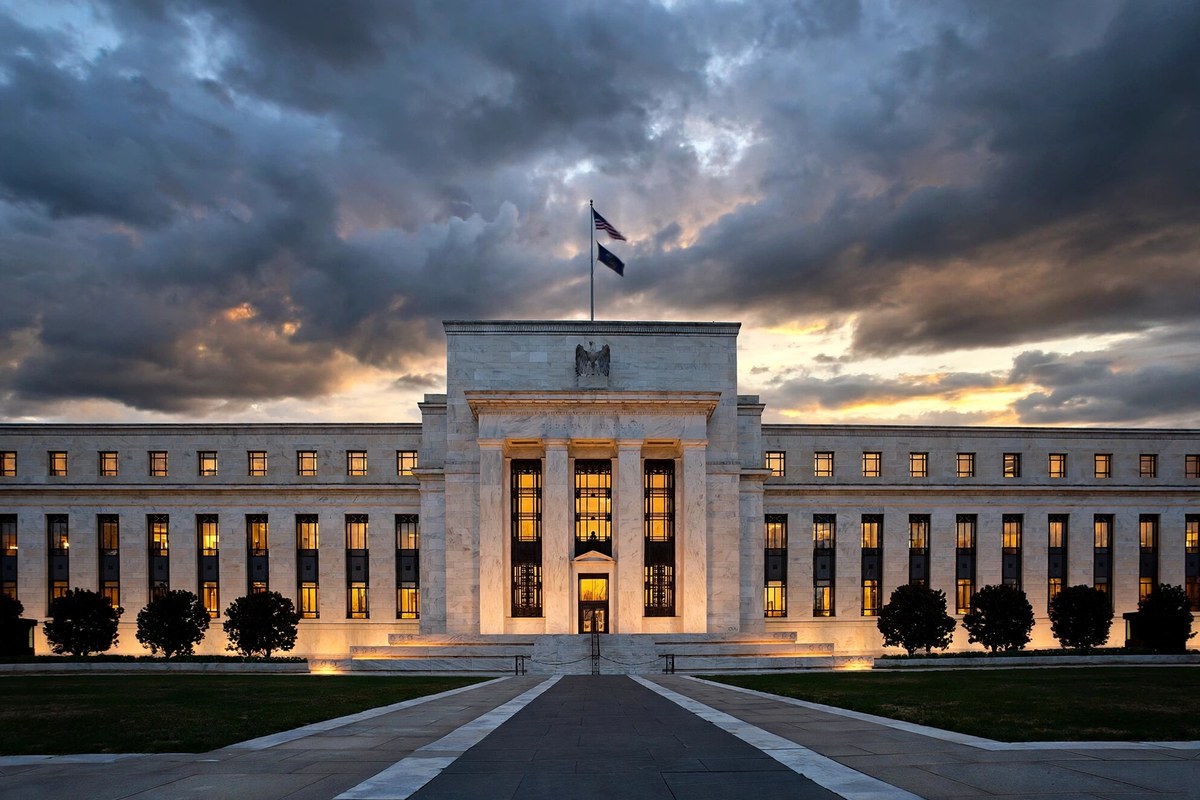
The 3 Scenarios: What Each Jobs Number Does to Bitcoin
Forecast models suggest Bitcoin could move as much as 0.8% up or 3% down in the six hours after the release, with Ethereum facing up to 4% downside. But the direction depends entirely on which of these three scenarios the data delivers.
| Scenario | Jobs print | Fed December odds | Bitcoin reaction |
|---|---|---|---|
| Hot — hike locked in | Above 100,000, unemployment below 4.2%, wages strong | December hike becomes near-certain | Breaks $75,230, tests $73,200 (200-day average) |
| As expected — muddle through | 40,000–90,000, unemployment 4.2%, wages +0.3% | Hike odds stay near 80%, no clear signal | Choppy $75,600–$78,000 range into the weekend |
| Weak — hike off the table | Below 40,000, negative revisions, unemployment above 4.2% | Hike odds collapse toward 50% or lower | Reclaims $76,950 (100-day average), targets $80,000 |
The hot scenario is the dangerous one. A payrolls print above 100,000 with strong wage growth would confirm the hawks' case — a growing economy with sticky inflation — and push Treasury yields higher. Bitcoin, which has already broken below its 100-day moving average near $76,950, would have no technical support until $75,230, and then the 200-day moving average at $73,200. A daily close below $75,625, the prior low Bitcoin defended on November 5, would confirm the breakdown.
The weak scenario is the only one that gives bulls a real lifeline. A print below 40,000 — or a headline near consensus but with big downward revisions to September and August — would signal the labour market is cracking. That would pull December hike odds down sharply, weaken the dollar, and likely send Bitcoin back above its 100-day average. The move could be fast: with $1.10 billion in longs already liquidated, the market is positioned short, and a dovish surprise would force shorts to cover.
The most likely outcome, statistically, is the middle one — a print close to consensus. In that case, nothing is resolved. The Fed waits for the next jobs report on December 4, Bitcoin stays trapped between $75,000 and $78,000, and traders spend the weekend watching tech stocks instead.
The Levels That Decide It: $73,200 or $80,000
Forget the noise and watch these five levels. They are where buyers and sellers have already shown their hands.
| Level | What it is | What happens if it breaks |
|---|---|---|
| $80,000 | Psychological resistance, Thursday's high zone | Reclaiming it flips short-term momentum bullish |
| $78,000 | First resistance above the 100-day average | A close above it ends the breakdown narrative |
| $76,950 | 100-day moving average | Bitcoin is below it now — reclaiming it is step one |
| $75,625 | Wednesday's low, defended on November 5 | A daily close below it confirms the downtrend |
| $75,230 / $73,200 | Next support / 200-day moving average | Losing $73,200 opens the way toward $70,000 |
One level deserves special attention: $75,451. That is Strategy's average cost basis on its 849,327 Bitcoin, and Bitcoin dipped below it earlier today. If the largest corporate holder in the world is underwater on its stack, every other holder is asking the same question — and the answer depends on what the jobs report says at 2:30 PM.
For the bigger picture, these levels sit inside the $72,000–$80,000 zone we mapped in our guide to Bitcoin's bull market support band. That band has decided the 2026 cycle so far, and it is being tested from the inside right now.
What Most Traders Get Wrong About Jobs Reports
Three misconceptions cost traders money every first Friday of the month. This one is no exception.
Myth 1: "Weak jobs always help Bitcoin." Not true. A weak report helps only if it changes Fed expectations without signalling a recession. If payrolls collapse and unemployment jumps, the market reads it as a growth scare, and Bitcoin — which is behaving like a leveraged Nasdaq trade, not digital gold — falls with stocks. The sweet spot for Bitcoin is a moderately soft print: weak enough to kill the hike, strong enough to avoid recession talk.
Myth 2: "The headline number is all that matters." The headline is the least informative part. Revisions to the previous two months, the unemployment rate, the participation rate, and average hourly earnings often move markets more than the headline. September's 29,000 print looked bad enough on its own — but the 60,000 of downward revisions to July and August made it far worse. Watch all four numbers at 2:30 PM, not one.
Myth 3: "The first move is the real move." Bitcoin's initial reaction to jobs data is often reversed within hours. The JOLTS release on November 3 barely moved Bitcoin at all — its 15-minute volatility was just 1.33 times normal, against 2.22 times for a typical JOLTS release, and the price was 0.38% higher an hour later. The market's considered verdict, after bond traders have repriced the December hike odds, is what sticks. Do not chase the first five-minute candle.
The 2:30 PM Checklist: Exactly What to Watch
When the report lands at 2:30 PM CET, check these five things in order:
- Headline payrolls vs 65,000: above 100,000 is hot, below 40,000 is weak, anything in between is noise.
- Revisions to September and August: another downward revision of 50,000+ is as dovish as a weak headline.
- Unemployment rate vs 4.2%: a rise to 4.3% or higher changes the Fed's calculus more than the payrolls number.
- Average hourly earnings: expected +0.3% on the month; a 0.5% print reignites the inflation argument for a hike.
- The 2-year Treasury yield in the 30 minutes after: if it falls, the market is pricing out the December hike — that is Bitcoin's green light. If it rises, the hike is locked in.
One more thing to watch: the reaction in tech stocks. Bitcoin fell this week because the Nasdaq fell, not because of anything crypto-specific. If the jobs report sends the Nasdaq higher, Bitcoin will likely follow. If stocks keep falling, no jobs number will save crypto on its own.
What Happens Next After Today
Whatever the report shows, the calendar stays loaded. The next jobs report lands December 4, four days before the Fed's December 8–9 meeting — the last data point before the decision. The first spot XRP ETF under the 1933 Act could launch next week, with five funds already listed on the DTCC, which is why XRP is worth watching even at $1.21. And the MSCI verdict on Strategy, due November 11, will decide whether the largest Bitcoin treasury company stays in the world's biggest indexes.
The deeper question is whether this is a correction or the start of something worse. Bitcoin is 40% below its $126,080 peak, and our test of whether Bitcoin is in a bear market found the evidence mixed: the drawdown is bear-market sized, but the structure — ETF flows, corporate buying, and a Fed that may yet pause — is not. Today's jobs report will not settle that question. It will decide whether the next leg is $73,200 or $80,000, and that is enough.
For beginners watching this volatility and wondering whether to buy the dip, the honest answer is that timing a jobs-report reaction is a trader's game, not an investor's. If you are considering a first purchase, our complete beginner's guide to buying Bitcoin and our explainer on what Bitcoin actually is cover the basics — including why you should never buy with leverage into a data release like this one.
FAQs
What time is the US jobs report today?
The October Employment Situation report is released at 8:30 AM Eastern Time, which is 2:30 PM CET in Berlin. It covers October payrolls, the unemployment rate, revisions to prior months, and average hourly earnings.
What is the consensus for the November 6 jobs report?
Economists expect about 65,000 new jobs, with forecasts ranging from 55,000 to 65,000 depending on the survey, and unemployment steady at 4.2%. September's print was just 29,000, with July and August revised down by a combined 60,000.
How does the jobs report affect Bitcoin?
It works through interest-rate expectations. A weak report makes a December Fed rate hike less likely, which weakens the dollar and supports Bitcoin. A strong report locks in the hike, pushes Treasury yields higher, and pressures Bitcoin. Forecast models suggest Bitcoin could move up to 0.8% higher or 3% lower in the six hours after the release.
Why is Bitcoin falling today?
Bitcoin fell about 5.5% to roughly $75,700 after the Nasdaq dropped 5.52% and the S&P 500 fell 4.36% on November 5, as AI and semiconductor stocks sold off. More than $1.24 billion in leveraged crypto positions were liquidated, 88.6% of them longs, and spot Bitcoin ETFs saw $430 million in outflows. The market is also positioned defensively ahead of the jobs report.
What is the key Bitcoin support level to watch?
$75,625, the low Bitcoin defended on November 5, is the line in the sand — a daily close below it confirms the breakdown. Below that, support sits at $75,230 and then the 200-day moving average at $73,200. Resistance is the 100-day moving average at $76,950, then $78,000 and $80,000.
Will the Fed hike rates in December 2026?
Markets currently price a near-80% chance of a hike at the December 8–9 meeting, after the Fed held rates at 3.75%–4.00% on October 28. Today's jobs report is the first major data point that can move those odds — a weak print could take the hike off the table, while a hot print would make it near-certain.
Conclusion
Bitcoin is at $75,700, below its 100-day average, after a $1.24 billion liquidation flush and a $430 million ETF outflow day. The market has already priced in the bad news — and an almost 80% chance of a December rate hike. At 2:30 PM CET, the October jobs report delivers the one number that can change that pricing: 65,000 is the consensus, and the surprise, in either direction, will decide whether Bitcoin holds $75,000 or tests $73,200.
Watch the headline, the revisions, unemployment, wages, and the 2-year yield — in that order. And remember the rule that has held all week: Bitcoin is trading like a leveraged Nasdaq position, not a safe haven. Until tech stocks stabilise, no single data point will turn this market around on its own. But a soft jobs report is the closest thing to a green light this market is going to get.