Stock Perpetuals Survive — But the Judge Says Wall Street Will Probably Win: Nov 6 and Nov 10 Decide $5B in Trades
Judge Valerie Caproni refused to halt US stock perpetuals on November 4 — then said the challengers are likely to win. With the CFTC's reply due November 6 and Wall Street's reply November 10, here is what traders holding these contracts must check now.

Stock perpetuals survived their first day in court — and lost the argument that matters most. On November 4, 2026, US District Judge Valerie Caproni refused to halt trading in single-stock perpetual futures, yet she also said the Wall Street group challenging them is likely to succeed on the merits. That paradox is the whole story: the contracts can trade today, but the judge has already signalled they may not survive the lawsuit.
The next two dates decide how fast this moves. The Commodity Futures Trading Commission (CFTC) must respond to the preliminary-injunction request by November 6, and the Capital Markets Alliance must reply by November 10. If you trade, hold, or are even considering these products, those are not abstract court dates — they are the deadlines that could freeze, reshape, or kill a market that Wall Street says is already worth about $5 billion offshore.
This article explains what actually happened in court, why the judge ruled both ways at once, what a stock perpetual is in plain English, and the five checks every trader should run before November 6. It is not legal advice, and it is not a recommendation to trade these products. It is a map of a fast-moving legal fight where the early headline — "perps survive" — is only half the ruling.
What happened on November 4: a win that reads like a warning
On November 3, CFTC Chairman Michael Selig announced that eligible US exchanges could offer perpetual futures on individual stocks. The agency treated the contracts as approved by default under Commission Regulation 40.3, routing them through the joint CFTC-SEC security-futures regime created by the Commodity Futures Modernization Act of 2000. Hours later, the Capital Markets Alliance, backed by Cboe and Citadel Securities, sued the CFTC in federal court in New York.
The group asked for emergency relief: a temporary restraining order that would stop the approvals from taking effect while the case was heard. Judge Caproni, of the US District Court for the Southern District of New York, denied that request after a telephone conference with the parties on November 3, with the order reported on November 4. The challenged approvals therefore remain in place for now, covering stock-linked perpetual derivatives at venues including KalshiEX, Bitnomial Exchange and Coinbase Derivatives.
But the reasoning is what traders should not miss. The judge found that the challengers are likely to succeed on their claim that the CFTC exceeded its authority. In her preliminary assessment, the perpetual contracts appeared to lack the future delivery required for classification as security futures, and looked more like swaps regulated by the Securities and Exchange Commission (SEC). She also found that the balance of equities and public interest favoured the alliance. The emergency request failed on a narrower ground: the alliance did not demonstrate that its members would suffer imminent, irreparable harm if trading continued for now.
In other words, the court did not endorse the CFTC's legal theory. It said, in effect, that the challengers have the stronger argument, but have not yet shown the kind of immediate, concrete injury that justifies an emergency halt. That distinction matters enormously, because the next stage — a preliminary injunction — uses a different test and a fuller record, and the judge has already tipped her hand on the merits.
What is a stock perpetual, in plain English?
A perpetual future, usually shortened to "perp", is a derivative contract that tracks the price of an underlying asset without an expiry date. Unlike a traditional futures contract, which settles on a fixed date, a perp can be held indefinitely. A funding mechanism — periodic payments between long and short traders — keeps the contract's price close to the underlying asset's price.
A stock perpetual applies that crypto-native structure to a single listed stock. Instead of buying shares, a trader takes a leveraged long or short position on that stock's price, often around the clock, without owning the share itself. Supporters argue this gives US traders access to a product that already trades offshore, with transparent pricing and regulated clearing. Critics argue it is a swap in disguise, that it bypasses the investor protections built for securities, and that leverage can magnify losses far beyond a normal stock trade.
The jurisdictional fight is therefore not a technical footnote. If these contracts are security futures, the CFTC's route under Regulation 40.3 can work. If they are security-based swaps, they fall under SEC jurisdiction, and the CFTC approval may have to be vacated. That is exactly what the Capital Markets Alliance is asking the court to do, and it is why the judge's preliminary view carries so much weight. For a fuller primer on how crypto perpetuals work, including funding rates, see our guide to what crypto perpetual futures are and how the CFTC-CME court fight shaped them.

The timeline: 24 hours that changed the market
| Date | What happened | Why it matters |
|---|---|---|
| November 2, 2026 | SIFMA urged both regulators to seek further public input and examine manipulation, surveillance and thin-liquidity risks before allowing the products to trade. | Wall Street warned the process was rushed before the approval landed. |
| November 3, 2026 | CFTC Chairman Selig announced eligible exchanges may offer single-stock perpetuals, deemed approved under Regulation 40.3. | The market opened overnight, without a new Act of Congress. |
| November 3, 2026 | Capital Markets Alliance, backed by Cboe and Citadel Securities, sued the CFTC in Manhattan federal court within hours. | The legal challenge arrived the same day as the approval. |
| November 3–4, 2026 | Judge Caproni denied the emergency temporary restraining order, but said the challengers are likely to succeed on the merits. | Trading continues, but the legal foundation looks fragile. |
| November 6, 2026 | CFTC's opposition to the preliminary-injunction request is due. | The agency must defend its classification in writing. |
| November 10, 2026 | Capital Markets Alliance reply is due. | The last scheduled brief before the judge weighs a longer halt. |
That compressed timeline is itself a risk factor. Products launched under a self-certification-style pathway, then challenged within hours, do not have the settled legal footing of a product approved after years of rulemaking. As our earlier coverage of the lawsuit filing explained, Wall Street sued to kill US stock perpetuals hours after approval, citing four exchanges, a $5 billion offshore market and leverage of up to 6.7 times. The November 4 ruling does not resolve that challenge; it schedules the next round.
Why the judge ruled both ways at once
Emergency relief in US federal court is deliberately hard to win. A party seeking a temporary restraining order must show, among other things, that it will suffer irreparable harm without immediate intervention. Judge Caproni found that the alliance's supporting declarations described possible harmful events, but did not show that its members were likely to suffer irreparable damage right now. That is a failure of proof about timing and concreteness, not a finding that the products are lawful.
Separately, the judge assessed the likelihood of success on the merits — the core legal question — and came down on the challengers' side at this preliminary stage. She found their argument that the CFTC lacks authority to approve the products as security futures is likely to prevail, because the contracts appear to meet the definition of swaps regulated by the SEC. She also found the balance of equities and public interest favoured the alliance. Those are strong signals, even though a preliminary assessment is not a final judgment and can change after fuller briefing.
Traders often misread this kind of split ruling. "The judge let trading continue" is true, but incomplete. "The judge thinks the challengers will win" is also true, but also incomplete, because the judge has not yet decided the preliminary injunction or the merits. The accurate reading is narrower and more useful: trading survives the emergency stage, the challengers enter the next stage with momentum, and the CFTC now has to persuade the same judge that its classification holds up under fuller scrutiny.
What most people get wrong about this ruling
Three misconceptions are already spreading, and each one could cost a trader money if acted on.
First, the misconception that a denied restraining order means the products are legal. It does not. A temporary restraining order is an emergency measure, decided on a thin record and a high bar for immediate harm. The court expressly left the preliminary-injunction request and the merits for later, and its preliminary view on the merits cuts against the CFTC.
Second, the misconception that a likely-to-succeed finding means trading stops tomorrow. It does not. The judge denied immediate relief, so the approvals stand until a later order says otherwise. A preliminary injunction, if granted, could halt or restrict trading, but that decision has not been made, and the briefing schedule runs to November 10.
Third, the misconception that this is only a fight between regulators and Wall Street firms. It is not. If a court later vacates the approvals, contracts already listed could face unwinding, forced closure, or migration to another venue or legal form. Traders who assume their positions are insulated because "the court let it trade" are ignoring the exact risk the judge flagged: an adverse ruling could reach contracts already listed.
5 checks before November 6: a trader's checklist
Use this checklist before adding exposure, and re-run it after the November 6 and November 10 filings. It is about risk management, not prediction.
- Check the venue and the contract terms first: confirm which exchange lists the contract, whether it holds the required SEC notice registration for security futures, and what happens to open positions if the approval is stayed or vacated. If the venue cannot answer that clearly, that silence is itself information.
- Check the leverage and liquidation levels carefully: perpetuals can liquidate quickly in a gap move, and a stock that gaps on earnings or news can move far more than a crypto trader expects. Size the position so that a forced exit is survivable, not just possible.
- Check the funding rate and the cost of holding: funding payments between longs and shorts are the mechanism that keeps a perp near the underlying price. In a crowded trade, funding can turn a correct direction call into a losing hold. Read the funding history before holding overnight.
- Check the exit route, not just the entry price: confirm liquidity, spreads, and whether you can close during extended hours or a halt. A product that is easy to enter and hard to exit is a trap, especially around a court deadline.
- Check the calendar and set alerts for November 6 and 10: the CFTC opposition and the alliance reply are the next information events. Do not hold a leveraged position through those filings without a plan for a headline that goes against you.
What happens next: three scenarios
| Scenario | What triggers it | What it means for traders |
|---|---|---|
| Perps keep trading, case drags on | The judge denies a preliminary injunction, or the case proceeds slowly to a merits ruling. | Trading continues, but legal uncertainty lingers and venues may limit new listings. |
| Preliminary injunction halts or restricts trading | The judge, having already signalled the challengers are likely to succeed, grants a longer halt after November 10 briefing. | Open positions may be closed or frozen; new trading could pause until appeal or reclassification. |
| Reclassification to SEC-regulated swaps | A court or the regulators move the products into the SEC's swap regime. | The product survives in a different legal form, with different venues, margin and disclosure rules. |
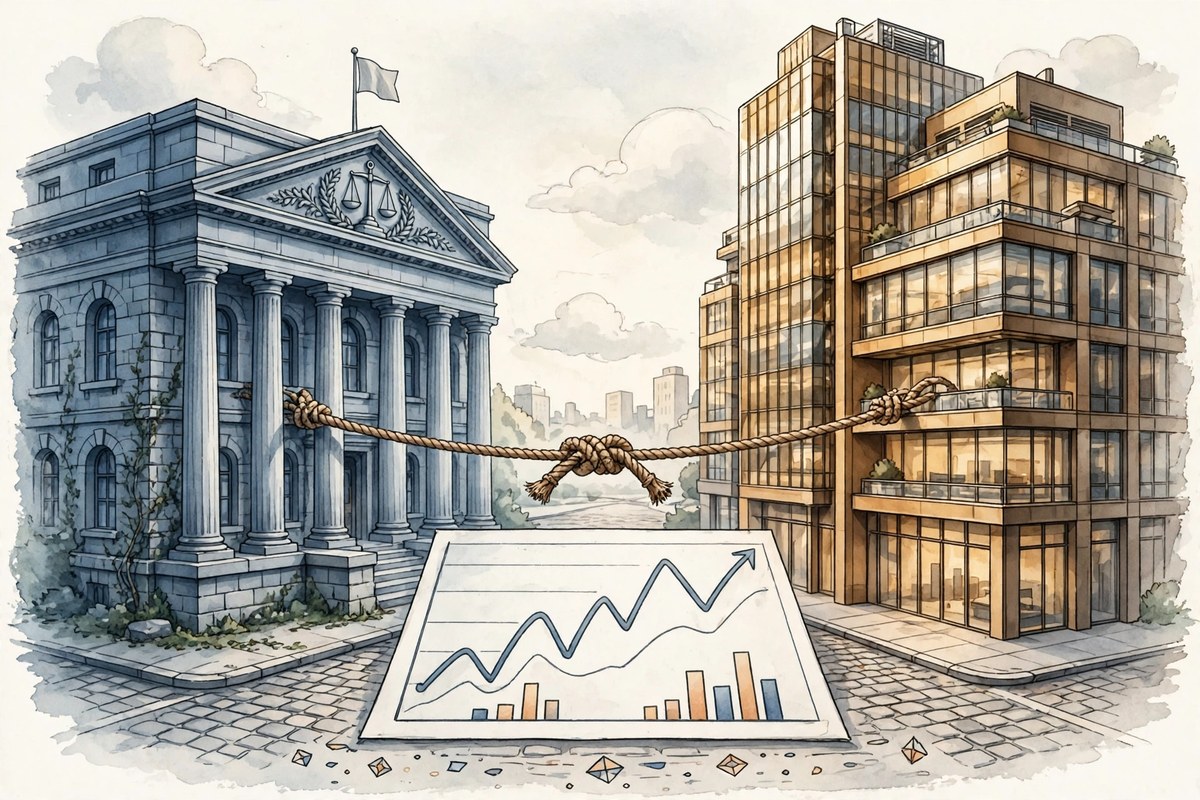
None of these scenarios is a forecast. They are the three branches the court's own reasoning opens up. The first branch is the status quo, the second is the risk the judge's merits comment points toward, and the third is the compromise that would let a version of the product survive under a different regulator. A trader who plans only for the first branch is unprepared for the other two.
Why this fight matters beyond stock perps
This case sits at the intersection of three larger trends that regular readers will recognise. First, the tokenization of stocks: venues are already offering 24/7 on-chain equities, and our coverage of how tokenized stocks work on Solana, BNB Chain and Base shows how fast that market is growing. Second, the prediction-market expansion: Kalshi and others have pushed regulated derivatives into new asset classes, and the CFTC's earlier approval of Kalshi's bitcoin perpetual in May 2026 is part of the same story. Third, the post-midterm regulatory reset: with Democrats now controlling Congress, the CLARITY Act market-structure bill faces a harder path, and regulators are pursuing narrower routes under existing authority instead.
That context explains why both sides are fighting so hard over classification. Who regulates a product decides its margin rules, its surveillance, its disclosure, and which firms can offer it. A win for the CFTC's security-futures route would open a fast lane for more crypto-style derivatives on traditional assets. A win for the SEC's swap route would slow that lane and force products through a different, heavier framework. Either way, the precedent will be cited in the next fight, whether it is about tokenized stocks, prediction markets, or the next derivative that blurs the line between crypto and Wall Street.
For crypto investors, the practical link is simpler. Stock perps are a bridge product: they bring crypto market structure to stocks, and they bring stock traders into venues that also list crypto derivatives. If the bridge is ruled unlawful, that crossover slows. If it survives in SEC form, it still arrives, but on different terms. And if it survives as a CFTC product, expect a wave of copycat listings. The court, not the market, will pick the lane.
Bitcoin and the wider market on November 4
The court ruling landed on a day when crypto itself was rebounding. Bitcoin recovered from an overnight low near $75,736 to trade back above $78,000, after dipping as midterm results pointed to Democratic control of Congress. Ether traded near $2,320, XRP near $1.30 and Solana near $93, according to market reports on November 4. The Fear and Greed Index sat at 34, in Fear territory, even as prices bounced — a reminder that a one-day recovery is not the same as a trend change.
For readers still building their foundation, the basics still matter more than any single court date. Our evergreen guides to Bitcoin versus Ethereum as investments in 2026 and what Ethereum is and how it works explain the assets underneath many of these derivatives, while our hardware versus software wallet comparison covers where to hold coins you actually own, as opposed to derivatives you merely trade.
FAQs
Are US stock perpetuals legal right now?
They are not halted. The CFTC's November 3 approval remains in effect after the court denied an emergency restraining order on November 4. But the judge said the challengers are likely to succeed on the merits, so "not halted" is not the same as "settled law". The preliminary-injunction stage, briefed through November 10, is the next test.
What did Judge Caproni actually decide?
She denied the Capital Markets Alliance's request for a temporary restraining order because the group did not show imminent, irreparable harm. At the same time, she found the group is likely to succeed in arguing the CFTC exceeded its authority, and that the balance of equities and public interest favoured the alliance. The order did not finally decide the lawsuit.
What happens on November 6 and November 10?
November 6 is the deadline for the CFTC's opposition to the preliminary-injunction request. November 10 is the deadline for the alliance's reply. After that briefing, the judge can decide whether to grant a longer halt, deny it, or set further proceedings. Those dates are subject to change by the court.
Which exchanges are involved?
The November 3 order and the lawsuit cover stock-linked perpetual derivatives at venues including KalshiEX, Bitnomial Exchange and Coinbase Derivatives, with four exchanges having submitted listing proposals in total. The CFTC's announcement said eligible exchanges must hold the required SEC notice registration for security futures.
Are stock perps the same as buying the stock?
No. A perp is a leveraged derivative that tracks a stock's price; it does not give you ownership, voting rights, or dividends in the same way as holding shares. It also carries funding costs, liquidation risk, and, in this case, legal risk that the product's approval could be vacated.
Should I trade stock perps before the November deadlines?
That is a personal risk decision, not a recommendation. If you do, use the five-point checklist above, keep leverage modest, confirm the venue's plan for open positions if trading is halted, and do not hold a position through November 6 or November 10 without a plan for an adverse headline. If you cannot explain what happens to your position if the approval is vacated, you are not ready to trade it.
Conclusion
The November 4 ruling is best read as a warning wrapped in a reprieve. Stock perpetuals survived their first court test, but the judge who let them trade also said Wall Street's challenge is likely to win. That combination — trading today, legal doubt tomorrow — is exactly the kind of risk that punishes traders who only read headlines.
Watch November 6 and November 10. Read the filings, not just the summaries. Check your venue, your leverage, your funding, and your exit before you check the price. And remember the distinction the court itself drew: a product that has not been halted is not a product that has been approved for good. In this fight, the next two weeks will tell us far more than the first 24 hours did.
Sources: court reporting via Crypto.News, DefiRate, and Coin Counsel's crypto law brief; market context via CoinDesk's November 4 market report. This article is for information only and is not investment or legal advice.