Nigeria Bans Stablecoin Interest: CBN's ₦15 Billion Rule — 5 Changes Every USDT Holder Must Know
Nigeria's central bank just banned interest on stablecoins and set a ₦15 billion capital floor for dollar-token issuers — a rule that hits 26 million crypto users and $92 billion in annual flows. Here are the 5 changes that matter.

Nigeria's central bank has just banned interest on stablecoins. In new regulations released on Friday, November 5, 2026, the Central Bank of Nigeria (CBN) told stablecoin issuers they may no longer pay Nigerians any yield, interest or return simply for holding a dollar-pegged token — and set a ₦15 billion capital floor for any company that wants to issue foreign-currency stablecoins in the country. The rules landed in Africa's biggest crypto market, where roughly 26 million people use digital assets and more than $92 billion in on-chain value flowed through in a single year.
If you hold USDT or USDC in Nigeria, earn yield on a stablecoin, pay for imports with one, or trade naira for dollars on a peer-to-peer (P2P) platform, this framework changes your position — not in some distant future, but now. The regulations took effect the day they were issued. Here are the five rules that matter, what they mean for your money, and what happens next.
What the CBN Actually Announced
The framework is called the Regulations for the Operations of Non-Security Virtual Assets in Nigeria. It was issued under a circular dated November 5, 2026, signed by Musa Jimoh, Director of the CBN's Payments System Policy Department, and it took effect immediately. It is the most detailed crypto rulebook Nigeria has ever published: licensing, capital adequacy, reserve management, consumer protection, cybersecurity, anti-money-laundering controls and regulatory reporting, all under one risk-based supervisory framework.
The timing is no accident. Nigeria ranks third in the world for crypto adoption in Chainalysis's 2026 Global Crypto Adoption Index, and first in the world for both domestic peer-to-peer activity and cross-border crypto flows. Between July 2024 and June 2025 the country received more than $92.1 billion in on-chain cryptocurrency value, according to Chainalysis data cited by the IMF. An IMF report from June 2026 found Nigeria accounts for about 60% of all stablecoin inflows into sub-Saharan Africa since 2019 — driven overwhelmingly by households and small businesses, not institutions. Stablecoins now make up more than 65% of crypto inflows into the country, and surveys show around 79% of crypto-active Nigerians already hold stablecoins, with 95% preferring to receive payments in stablecoins rather than naira.
In other words, the CBN is not regulating a niche. It is regulating how tens of millions of Nigerians save, get paid and move money across borders. That is why the five rules below deserve a close read.
The 5 Rules That Change Stablecoins in Nigeria
Rule 1: No More Interest or Yield on Stablecoins
The headline rule is blunt. Section 13.3 of the regulations states that a stablecoin issuer "shall not pay, offer, arrange or facilitate interest, yield, dividends, returns or other financial benefits to holders by reason of holding or depositing its stablecoin." Section 27.7 applies the same ban to exchanges, wallet providers and distributors. The definition of a non-security stablecoin in the framework is one that gives its holder no right other than redemption at par in the reference currency — no interest, no return, no financial benefit of any kind.
This kills a whole product category overnight. Yield-bearing stablecoins, tokenised money market funds and staking-return products are all listed in the framework as products that fall outside the permitted model. If you have been earning 4%, 8% or more by parking USDT in a yield product, that income stream is now on the wrong side of Nigerian law — at least from any issuer or platform operating under the CBN's framework. The ban does not make holding USDT illegal. It makes paying you to hold it illegal.
For context, this is the opposite direction from the United States, where the debate over stablecoin yield has been running in the other direction. Nigeria has chosen the stricter path: a stablecoin is a payment instrument, not a savings product. If you want yield on your dollars, the CBN's answer is that you should use a bank, not a token.
Rule 2: The ₦15 Billion Capital Floor
Anyone who wants to issue a foreign-currency stablecoin to Nigerians must now maintain minimum paid-up capital of ₦15 billion — roughly $10 million at current exchange rates — on entry and throughout operations. Issuers of naira-referenced stablecoins face a ₦10 billion floor, and other virtual asset service providers, including exchanges, wallet operators, custodians and remittance providers, must hold at least ₦1 billion.
The capital tiers tell you exactly how the CBN sees the risk ladder. A dollar stablecoin used by millions of people as a shadow dollar is a systemic financial product, so it carries a systemic capital requirement. A naira stablecoin is smaller and simpler, so it carries less. A plain exchange or wallet is a service business, so it carries the least. The message to small offshore issuers is unmistakable: if you cannot put ₦15 billion of real capital behind your token, you cannot sell it in Nigeria.
Rule 3: Foreign Issuers Must Incorporate in Nigeria and Get a Licence
Under Section 11.1, a foreign company can no longer rely on a licence from another jurisdiction to reach Nigerian users. To make a foreign-currency stablecoin available in Nigeria, an issuer must obtain a Class 2 Foreign Currency Issuer Licence and issue the token through a locally incorporated Nigerian entity. The framework also creates a "systemic stablecoin" category: a token qualifies if its naira-equivalent circulating supply exceeds ₦500 billion every day for 30 consecutive days, or if it is held or used by more than five million people in Nigeria. Systemic tokens face enhanced supervision.
This is the rule with the longest fuse and the biggest consequences. USDT is the dominant stablecoin in Nigeria by a wide margin, and its issuer, Tether, has never operated through a Nigerian entity. The framework does not name Tether or any other issuer — but the maths does the talking. A token used by more than five million Nigerians is systemic by definition, and the largest dollar stablecoins in the country clear that bar comfortably. Whether the big issuers incorporate locally, partner with a licensed Nigerian entity, or test the CBN's enforcement appetite is now the single most important open question in African crypto.
Rule 4: Form M for Imports, and P2P Under the FX Framework
The regulations reach deep into everyday commerce. Section 11.10.5(a) requires that any payment for imported goods made in a Class 2 (foreign-currency) stablecoin be supported by a valid Form M — the same documentation Nigerian importers already need for conventional foreign-exchange payments. Payments for imported services need the documentation required under the existing FX regulations. Separately, P2P transactions involving dollar-backed stablecoins are now brought formally under the foreign-exchange framework, with providers required to obtain express CBN approval before facilitating conversions between naira and foreign-currency value.
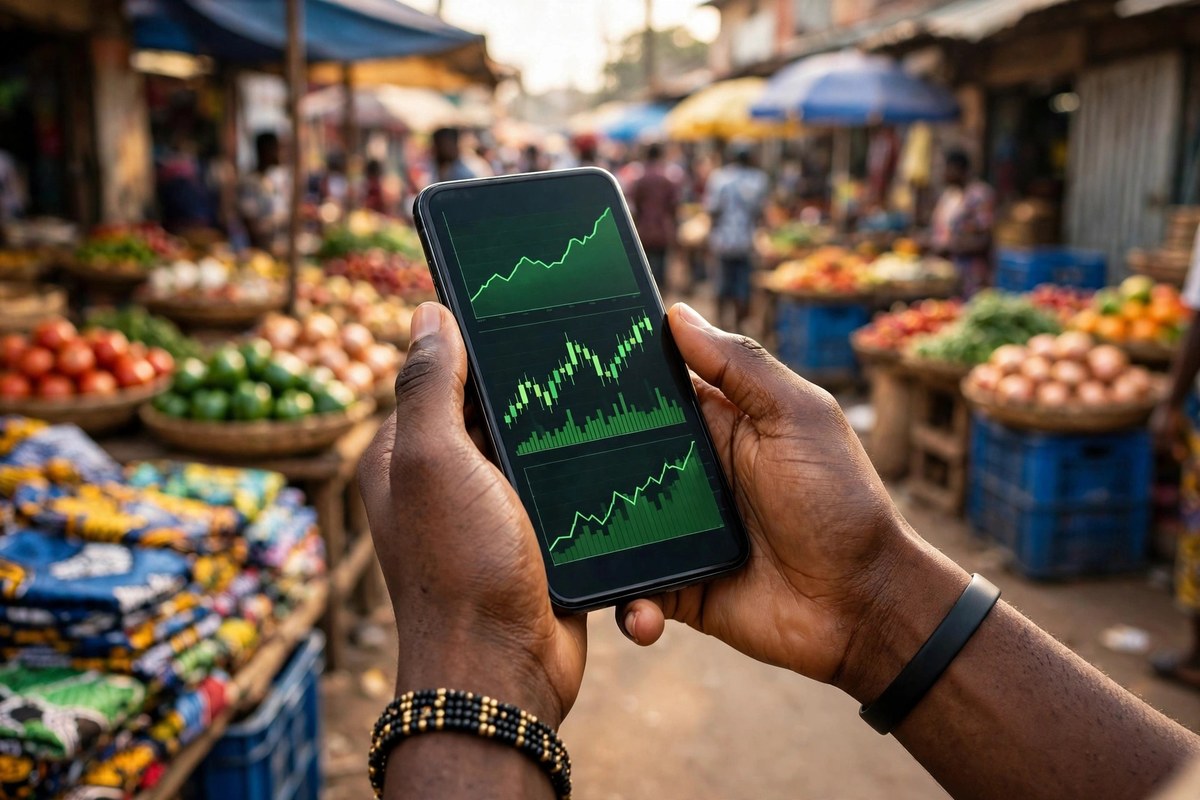
This matters because stablecoins have become a working-capital tool for Nigerian importers. With the naira having lost more than 40% of its value against the dollar in 2024, and conventional remittance corridors charging 5–8% per transfer, many small businesses moved to USDT for paying overseas suppliers. Nigeria records about $48.2 million in daily P2P crypto volume, according to the Nigeria Web3 Landscape Report 2025, and roughly 40% of surveyed Nigerians use crypto platforms for international transfers, against 11% globally. The CBN is not banning those flows — it is putting them inside the same paperwork regime as a bank wire. Importers who cannot produce a Form M will find their stablecoin payments blocked at the platform level.
Rule 5: 100% Reserves Plus a 2% Buffer — and No Algorithmic Stablecoins
Issuers must hold reserves equivalent to at least 100% of their outstanding obligations, plus an additional 2% reserve buffer against potential losses. Algorithmic stablecoins — tokens that depend primarily on supply adjustments rather than adequate reserve backing — are prohibited outright. The framework's reserve rules are designed to make sure that every naira or dollar of stablecoin in circulation is backed by a naira or dollar of real reserves, with a cushion on top.
The 2% buffer is a small number with a big meaning. It says the CBN learned the lesson of the 2022 stablecoin collapses: a token that is "fully backed" on paper can still fail if its reserves lose value or cannot be sold fast enough. The buffer is the CBN's insurance policy against that gap — and the algorithmic ban is its answer to the model that failed most spectacularly.
Why Nigeria Matters: The Numbers Behind the Rules
| Metric | Figure | Source |
|---|---|---|
| Global crypto adoption ranking | #3 in the world | Chainalysis 2026 Global Crypto Adoption Index |
| P2P activity and cross-border flows | #1 in the world | Chainalysis 2026 |
| On-chain value received (Jul 2024 – Jun 2025) | $92.1 billion | Chainalysis |
| Share of sub-Saharan Africa stablecoin inflows since 2019 | ~60% | IMF, June 2026 |
| Digital-asset users in Nigeria | ~26 million | IMF / Intelpoint, 2025 |
| Share of crypto inflows that are stablecoins | Over 65% | IMF |
| Nigerians who prefer stablecoin payments over naira | 95% | Industry surveys, 2025–2026 |
| Daily P2P crypto volume | $48.2 million | Nigeria Web3 Landscape Report 2025 |
| Naira depreciation in 2024 | Over 40% vs the US dollar | IMF / market data |
The table explains why the CBN acted now, and why it acted so firmly. When stablecoins are how a quarter of your population's crypto users store value and get paid, a stablecoin failure is not a crypto problem — it is a consumer-protection and financial-stability problem. The framework reads like a central bank that has decided to treat dollar tokens as part of the payments system, with all the capital, reserve and licensing obligations that implies.
What This Means for Your USDT and USDC: A Checklist
If you hold or use stablecoins in Nigeria, here is what to do in the days after the announcement:
- Check your yield products first: any platform paying you interest, yield or returns for holding USDT or USDC is now operating against the CBN's stated rules. Ask the platform how it plans to comply, and do not deposit fresh funds into a yield product until you have a clear answer.
- Holding USDT is not banned: the framework regulates issuers and service providers, not individual holders. Owning a dollar stablecoin, using it for payments and converting it through a licensed provider remain permitted activities.
- Watch for platform changes: exchanges, wallets and P2P providers must now hold ₦1 billion in capital and get express CBN approval for naira-to-dollar conversions. Expect some smaller platforms to pause, reprice or exit; licensed platforms will advertise their status.
- Importers need Form M ready: if you pay overseas suppliers in USDT, line up a valid Form M now. Payments without it will not clear under the new rules.
- Keep your own records: the framework strengthens reporting obligations on providers, which means more of your transaction data will flow to the regulator. Keep clean records of where your stablecoins came from and what they were used for.
- Do not panic-sell into naira: nothing in the framework forces you to exit stablecoins. The naira's 40%-plus depreciation in 2024 is the reason most Nigerians hold dollars in the first place, and the rules do not change that arithmetic.
What Most People Get Wrong About the CBN Rules
Three misunderstandings are already spreading, and all three are wrong. First, the CBN did not ban stablecoins. It banned paying interest on them and set licensing and capital rules for the companies behind them. Second, it did not ban P2P trading. It brought P2P conversions under the formal foreign-exchange framework, which is a licensing and approval requirement, not a prohibition. Third, it did not target Tether or any single company. The rules are written generically — Class 1, Class 2, systemic designation — and they apply to every issuer that wants access to the Nigerian market.
The honest reading is more interesting than the alarmist one. Nigeria tried a ban before: in 2021 the CBN barred banks from crypto transactions, and the result was that activity moved to P2P and grew anyway. The 2025 Investments and Securities Act then made the SEC the official regulator of digital assets, and scam reports reportedly dropped 63% in six months. This new framework is the third act of the same story — from prohibition, to securities regulation, to full payments-system supervision. The CBN has stopped trying to push crypto out of Nigeria and started trying to govern it.
What Happens Next
The framework is effective now, but its real test comes in the enforcement phase. Four things to watch: first, whether the big global stablecoin issuers apply for Class 2 licences or set up Nigerian entities — a decision that will signal whether the world's largest crypto companies consider the Nigerian market worth the compliance cost. Second, whether any issuer is designated "systemic" under the ₦500 billion or five-million-user threshold, and what enhanced supervision that triggers. Third, how quickly smaller exchanges and P2P providers consolidate or exit under the ₦1 billion capital floor. And fourth, whether the interest ban pushes Nigerian yield-seekers toward offshore platforms outside the CBN's reach — the classic whack-a-mole problem that has defeated every crypto regulator so far.
For the rest of Africa, Nigeria's framework is now the template to watch. Sub-Saharan Africa's stablecoin flows are dominated by one country, and when that country writes the rulebook, its neighbours tend to read it. If the CBN's model works — licensed issuers, full reserves, no yield, documented trade payments — expect similar frameworks in Kenya, Ghana and South Africa within a year. If it drives activity underground instead, expect the opposite lesson to travel just as fast.
Frequently Asked Questions
Did Nigeria ban stablecoins like USDT?
No. The CBN's November 2026 regulations ban stablecoin issuers from paying interest, yield or any return to holders, and they require issuers and service providers to be licensed and capitalised. Holding, receiving and paying with USDT or USDC is not banned.
Can I still earn interest on USDT in Nigeria?
Not from any issuer, exchange, wallet or distributor operating under the CBN framework. Section 13.3 prohibits issuers from paying or facilitating any interest or yield to holders, and Section 27.7 extends the ban to exchanges and wallet providers. Offshore platforms outside the framework are a separate question — and a separate risk.
What is the ₦15 billion capital requirement?
Companies issuing foreign-currency stablecoins (Class 2) to Nigerians must maintain at least ₦15 billion in paid-up capital. Naira stablecoin issuers need ₦10 billion, and other virtual asset service providers — exchanges, wallets, custodians — need ₦1 billion.
Do I need a Form M to pay for imports with USDT?
Yes, under the new rules. Section 11.10.5(a) requires payments for imported goods made in a foreign-currency stablecoin to be supported by a valid Form M, the same documentation used for conventional FX import payments.
Are algorithmic stablecoins banned in Nigeria?
Yes. The framework prohibits algorithmic stablecoins that depend primarily on supply adjustments rather than adequate reserve backing. Issuers must hold reserves of at least 100% of outstanding obligations plus a 2% buffer.
When did the new CBN crypto rules take effect?
The Regulations for the Operations of Non-Security Virtual Assets in Nigeria were issued under a CBN circular dated November 5, 2026, and took effect the same day.
Conclusion
Nigeria just drew the clearest line of any major country between stablecoins as money and stablecoins as investments. As money — a way to hold dollars, get paid and settle imports — they are welcome, licensed and supervised. As investments — a way to earn yield for doing nothing — they are now banned. For the roughly 26 million Nigerians who use crypto, and for the $92 billion a year that flows through the country, that is a consequential distinction. The next test is not the rulebook but the enforcement: whether the world's biggest stablecoin issuers choose to play by Nigeria's rules, and whether the country's P2P economy — the largest on earth — stays inside the formal system the CBN has just built around it. If you hold USDT in Nigeria, the smart move is simple: keep the dollars, drop the yield, and make sure your platform is licensed.
New to buying crypto in Nigeria? Read our guide to how to buy Bitcoin in Nigeria in 2026, and if stablecoins are new to you, start with what a stablecoin is and how USDT and USDC work. For the basics of buying your first coins, see how to buy Bitcoin in 2026, and for the token most Nigerians actually hold, what Tether (USDT) is. Sources: Leadership Nigeria, Independent Nigeria, Nuus, Breet, ThisDay.