Moscow Exchange Bitcoin Trading December 1: Russia's Biggest Stock Market Sells BTC, ETH and USDT — With a $3,700 Retail Cap
Russia's biggest stock exchange starts selling Bitcoin, Ether and USDT on December 1 — but ordinary investors are capped at 300,000 rubles (~$3,700) a year and must pass a test first. Here are the 5 rules that decide whether it's worth using.

Russia's biggest stock exchange will start selling Bitcoin, Ether and USDT on December 1, 2026 — but ordinary Russian investors will be capped at just 300,000 rubles a year, roughly $3,700, and must pass a knowledge test before they can buy a single coin. That cap is the real story: Moscow Exchange is opening crypto trading, yet keeping retail on a very short leash.
The venue, known as MOEX, confirmed the December 1 target in a November 2 release detailing clearing and settlement, after senior managing director Boris Blokhin first put the date on the record at Moscow's Smartlab investment conference on October 31. Trading will run from 6:50 a.m. to 11:50 p.m. Moscow time on the same infrastructure the exchange uses for stocks, with the National Clearing Centre (NCC) clearing trades and same-day or next-day settlement. The launch will begin as a pilot, with brokers joining step by step as their systems come online.
For crypto markets, the move matters less for the money it unlocks on day one — the retail cap keeps that small — and more for what it signals: a major state-linked exchange bringing Bitcoin onto the same screens as Sberbank and Gazprom shares, under a new law that took effect on September 1, 2026. Here is what is actually launching, who can use it, and the five checks that matter before anyone trades on it.
What exactly launches on December 1
The opening lineup is deliberately narrow: Bitcoin (BTC), Ether (ETH) and Tether's USDT stablecoin. Those three were picked by the regulator using criteria including trading history, liquidity and market capitalisation, and they are the only assets ordinary retail investors will be allowed to buy at launch. The exchange has said it may add other international and Russian digital assets later, but no additional names or dates have been confirmed.
Trading will work like stock trading. Deals will go through MOEX's electronic order book in both anonymous and addressed modes, and will be included in the NCC's unified clearing. Clients will be able to trade with same-day (TOD) and next-day (TOM) settlement, and use swaps to manage liquidity. Partner digital depositories will handle custody, while brokers provide clients with trading access — so retail investors will reach crypto through their existing broker, not by opening an account on a crypto exchange.
The launch operates under Federal Law No. 282-FZ on digital currencies and digital rights, whose main provisions took effect on September 1, 2026, with further provisions phasing in during July and September 2027. December 1 is still a target rather than a completed launch: final availability depends on testing, settlement readiness and implementation of the new rules, and the exchange itself frames the start as a plan. Sberbank, Russia's largest bank, has separately said its own crypto offerings are slated for December 1, provided the central bank approves its application and the supporting rules are in place.
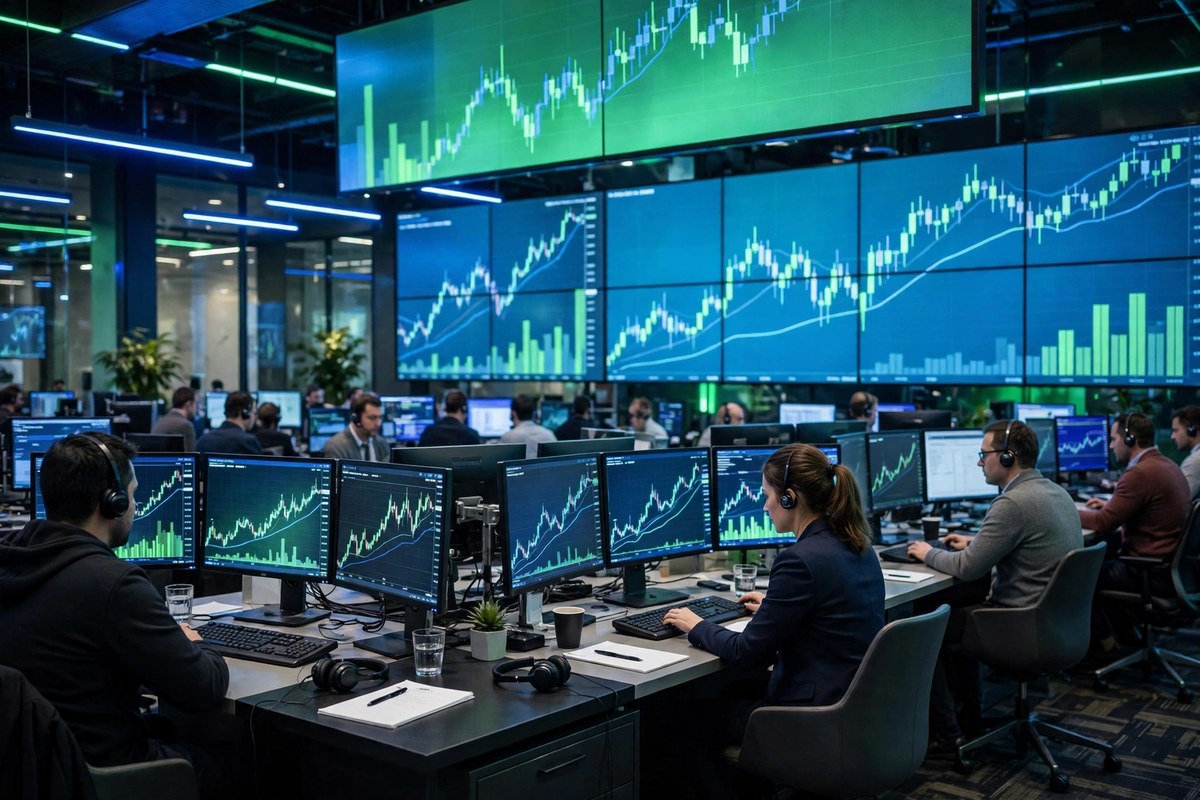
The $3,700 retail cap — and the test you must pass first
The retail rules are the part investors should not skip. Under the new framework, non-qualified investors must pass a knowledge assessment before purchasing approved cryptocurrencies, and their annual purchases are capped at 300,000 rubles through each intermediary — about $3,600 to $3,700 at current indicative exchange rates, depending on the conversion used in reporting. Qualified investors face no equivalent ceiling, though they must still meet applicable testing requirements.
Two details make the cap less airtight than it sounds, and both deserve scrutiny. First, the limit applies per intermediary, so an investor using several brokers could in theory buy more in total — regulators have not publicly explained how, or whether, purchases across brokers will be aggregated. Second, the cap counts purchases, not holdings: it limits how much new crypto an ordinary investor can buy each year through the venue, not the value of what they already own elsewhere.
There is also a hard line on what crypto cannot do in Russia: payments for ordinary domestic goods and services in digital currencies remain prohibited, while separate provisions allow qualifying cross-border transactions. And in a restriction that matters far more than the cap for self-custody fans, Russia's new law bars individuals from moving coins off a digital account to a self-custody wallet — the coins stay inside the regulated account system. Readers who want the full picture on that rule should read our guide to Russia's ban on P2P crypto trading and self-custody transfers.
Why Moscow Exchange, and why now
MOEX is Russia's dominant securities and derivatives venue, and routing crypto through it is a deliberate choice. Brokers already connected to the exchange can reach Bitcoin through the clearing and settlement setup they already use for securities, instead of building a separate venue. For regulators, that means crypto trading happens inside familiar plumbing — central clearing, named depositories, broker intermediation — rather than on offshore platforms outside their reach.
The timing is equally deliberate. Russia has spent years in a tug-of-war over crypto: mining was legalised, crypto payments at home stayed banned, and cross-border use by businesses was tolerated in practice. The September 2026 framework is the first attempt to put retail crypto trading inside a fully regulated domestic market, and the December 1 launch is its first live test. If the pilot works, it gives Moscow a template for widening the asset list and raising the caps. If it stumbles — on custody, settlement, or sanctions friction — it will confirm why so many Russian traders still prefer offshore venues.
The broader market context is worth noting too. Bitcoin traded near $77,800 on November 4, 2026, roughly 38% below its all-time high, with US spot Bitcoin ETFs shedding $1.16 billion across three sessions from October 30 to November 3. A regulated Moscow venue will not move global Bitcoin prices on its own — the retail cap alone guarantees that — but it adds one more regulated demand channel at a moment when crypto's institutional plumbing is expanding on several continents at once.
MOEX vs offshore exchanges vs US ETFs: the honest comparison
For a Russian retail investor, the December 1 launch is not the only way to get crypto exposure — and on several measures it is the most restricted. The table below compares the three routes on the dimensions that actually decide the experience.
| Feature | Moscow Exchange (from Dec 1) | Offshore crypto exchange | US spot Bitcoin ETF |
|---|---|---|---|
| Assets | BTC, ETH, USDT only | Hundreds of coins and tokens | Bitcoin (or Ether) only, per fund |
| Retail annual cap | 300,000 rubles (~$3,700) per broker | Generally none (platform limits vary) | None |
| Self-custody | Not allowed — coins stay in the regulated account | Allowed — withdraw to your own wallet | Not applicable — you hold fund shares |
| Custody | Partner digital depositories, NCC clearing | Exchange wallets; exchange failure is your risk | Regulated custodian, fund structure |
| Trading hours | 6:50 a.m. – 11:50 p.m. Moscow time | 24/7 | Stock market hours only |
| Sanctions exposure | Venue and clearing house under US, UK and EU sanctions | Varies by platform and jurisdiction | None for US investors |
| Paying for goods | Still prohibited domestically | Depends on local law | Not applicable |
The honest read: MOEX wins on domestic legality and familiar broker access, loses on choice, hours and freedom to move your coins, and carries a sanctions question mark no other route has. For a first-time buyer who wants a small, legal, broker-mediated position, it is a reasonable front door. For anyone who wants real control of their coins, it is not a substitute for a self-custody wallet — see our beginner's guide to crypto wallets and our best crypto exchanges for beginners for how those routes compare.
The sanctions problem nobody has answered yet
Both Moscow Exchange and the National Clearing Centre remain under US sanctions imposed in June 2024, and the exchange has also been sanctioned by the United Kingdom and the European Union. That creates an open question around USDT, the dollar stablecoin on the launch list: Tether, USDT's issuer, freezes wallets that land on the US Treasury's sanctions list, and it is not publicly clear how that policy would apply to USDT held through a sanctioned clearing house.
This is not a reason to assume the launch will fail — the venue is designed for domestic Russian trading, and its users are not necessarily touching US-sanctioned wallets directly. But it is a genuine unresolved risk, and it is one reason the pilot phase matters: the first months will show whether clearing, settlement and stablecoin custody work smoothly under sanctions, or whether friction appears. Until that evidence exists, treat any claim that the sanctions issue is "solved" as speculation.
The same caution applies to the launch date itself. MOEX first floated December 1 in early October, repeated it on October 31, and detailed the mechanics on November 2 — a consistent drumbeat, but still a plan. Pilots slip. Brokers join late. Settlement testing finds problems. Anyone planning around December 1 should watch for the exchange's own confirmation that pilot deals have actually started, not just that the date was announced.
5 checks before you trade on Moscow Exchange
If you are eligible and considering the venue, work through this checklist before placing an order:
- Confirm your investor status first — find out whether you count as qualified or non-qualified, because that decides whether the 300,000-ruble cap applies to you and which test you must pass.
- Pass the knowledge test before funding anything — do not transfer rubles to a broker until you know you have cleared the assessment, or your money may sit idle.
- Map the cap across all your brokers — the limit is per intermediary, so add up planned purchases across every broker you use and keep a record; regulators have not explained cross-broker aggregation.
- Accept that you cannot withdraw to self-custody — if holding your own keys matters to you, this venue cannot give you that; read what Bitcoin actually is and how ownership works before deciding.
- Check fees, pairs and settlement before day one — trading pairs, transaction fees and the complete initial asset lineup have not been publicly confirmed, so compare the real costs once published rather than assuming stock-like pricing.

What happens next: 3 dates that decide whether this matters
December 1, 2026 — the pilot opens. Watch whether pilot deals actually execute and whether brokers beyond the first test group come online. A quiet, working pilot is a success; a delayed or broker-only opening is a warning sign.
Early 2027 — the first retail verdict. Within weeks of launch, the real questions get answered: are the knowledge tests passable, is the 300,000-ruble cap enforced per broker or in aggregate, and does USDT custody through the clearing house work without friction?
July and September 2027 — the next legal phase. Further provisions of Law No. 282-FZ phase in during these months. If the pilot holds, this is when the asset list could widen and the framework could harden into something bigger; if it struggles, this is when regulators may tighten rather than loosen.
For Bitcoin and Ether themselves, the launch is a slow-burn story, not a price catalyst. A $3,700-per-broker retail cap cannot move a $1.5 trillion asset. What it can do is normalise regulated crypto access for millions of Russian brokerage clients — and that, over years rather than days, is how new demand channels are built. New to either asset? Start with our beginner's guide to buying Bitcoin and our beginner's guide to buying Ethereum.
Frequently asked questions
When does Moscow Exchange start Bitcoin trading?
December 1, 2026 is the target date, confirmed by MOEX senior managing director Boris Blokhin on October 31 and detailed in a November 2 exchange release. The launch begins as a pilot, with participants joining step by step, so the date is a plan rather than a guarantee.
Which cryptocurrencies can you buy on Moscow Exchange?
At launch: Bitcoin (BTC), Ether (ETH) and Tether's USDT only. These three were selected by the regulator based on trading history, liquidity and market capitalisation. More assets may be added later, but none have been confirmed.
How much crypto can ordinary Russian investors buy?
Non-qualified investors are capped at 300,000 rubles — roughly $3,700 — in annual purchases per intermediary, and must pass a knowledge test first. Qualified investors face no equivalent cap.
Can you withdraw crypto from Moscow Exchange to your own wallet?
No. Under Russia's new framework, individuals cannot move coins off a digital account to a self-custody wallet. Holdings stay inside the regulated account and custody system run through partner digital depositories.
Is crypto legal in Russia now?
Regulated trading through approved venues is being introduced under Law No. 282-FZ, but paying for ordinary domestic goods and services with crypto remains prohibited. The framework is a trading regime, not full legalisation of crypto as money.
Does the Moscow Exchange launch affect Bitcoin's global price?
Almost certainly not in the short term. The retail cap keeps day-one flows tiny relative to Bitcoin's global market, and the launch is a pilot. Its significance is structural — a major regulated venue entering crypto — not a price event.
Conclusion
Moscow Exchange selling Bitcoin on December 1 is a real milestone with a deliberately small door. The regulated plumbing, the broker access and the three-asset lineup are genuine progress for Russian investors who want a legal on-ramp. But the $3,700 retail cap, the mandatory test, the self-custody ban and the unanswered sanctions question around USDT mean this is a first step, not a finished market. Watch the pilot, not the press release: whether brokers join, trades settle cleanly and retail actually gets through the test will decide whether December 1 is remembered as the day Russian crypto went mainstream — or just the day it was announced. Sources: CoinDesk, crypto.news, Unchained, ProCoinNews.