How to Buy Bitcoin in Sweden in 2026: 5 MiCA-Licensed Exchanges Compared — Fees, Swish and the 30% Tax Rule
Sweden taxes every Bitcoin gain at a flat 30% — and only 70% of your losses count. Swish buys land in under a minute on Safello, but the cheapest licensed route costs 10x less. The 5 exchanges ranked, the fee math on 10,000 SEK, and the K4 tax form that catches first-time buyers.
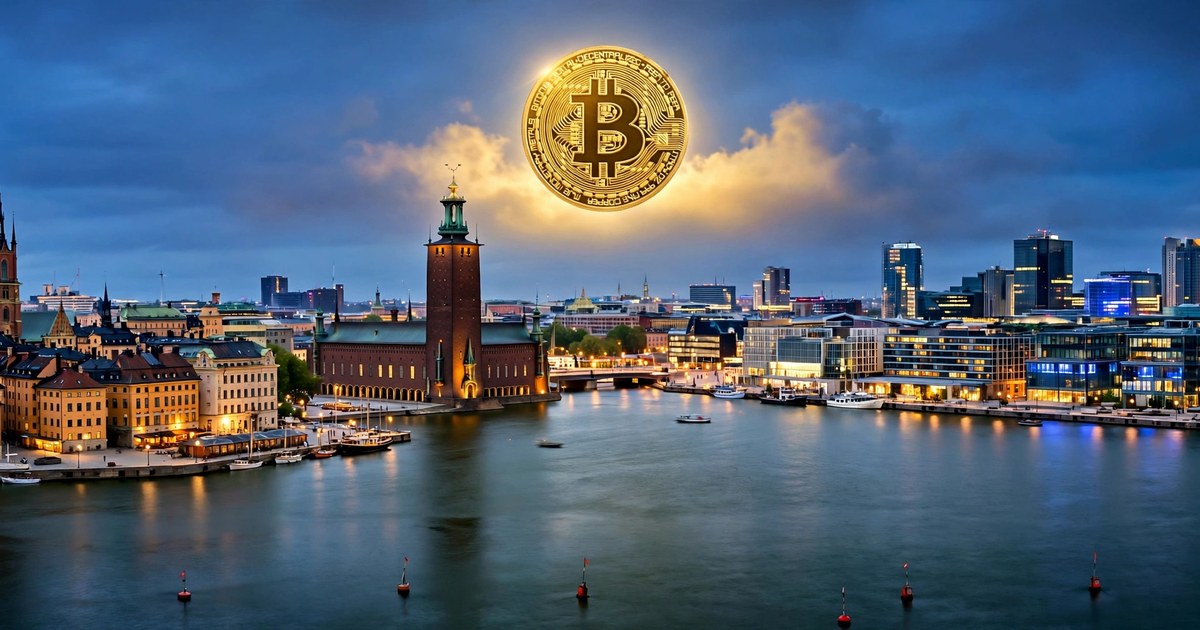
Sweden taxes every krona of Bitcoin profit at a flat 30% — and when you lose money, only 70% of the loss counts against your tax bill. That single rule has cost Swedish first-time buyers more than any exchange fee ever will. The good news: buying Bitcoin in Sweden in 2026 is fast and fully legal, Swish deposits land in under a minute on the local exchange, and the cheapest licensed route costs roughly a tenth of the most convenient one. This guide ranks the 5 best MiCA-licensed exchanges for Swedish buyers, works out exactly what 10,000 SEK buys you on each, and walks through the tax form that catches almost every beginner.
Bitcoin trades near $76,000 today after a sharp 5–6% sell-off that dragged the whole market down, so timing matters less than route: the difference between the cheapest and the priciest way to buy in Sweden is about 90 SEK on every 10,000 SEK — and the tax difference between doing it right and doing it wrong can be thousands.
Bitcoin in Sweden in 2026: the 5-second version
- Buying Bitcoin is legal in Sweden. Crypto is regulated under the EU's MiCA rules, and Finansinspektionen — Sweden's Financial Supervisory Authority — is the national authority.
- Only about 1.59% of Swedes own crypto — roughly 170,000 people — so the market is still early, but the rails are mature: BankID verifies your identity in minutes and Swish moves kronor instantly.
- The cheapest licensed route costs about 0.10% per trade; the most convenient Swedish route costs 0.49–0.99%. On a 10,000 SEK buy, that is the difference between 10 SEK and 99 SEK in fees.
- Tax is a flat 30% on every gain, with no tax-free allowance, and only 70% of losses are deductible. Every sale, swap, and crypto payment is a taxable event, reported on the K4 form, Section D.
- From 1 January 2026, DAC8 reporting applies: exchanges serving Swedish users must report transaction data to Skatteverket, the Swedish Tax Agency. Assume the tax office already knows.
Is Bitcoin legal in Sweden?
Yes. Buying, holding, and trading Bitcoin is legal in Sweden, and the country has one of Europe's clearest regulatory setups. Finansinspektionen supervises crypto-asset service providers under MiCA, the EU's crypto rulebook, and a MiCA licence issued in any EU country lets an exchange serve Swedish customers with the same investor protections. That matters because the July 2026 cutover separated licensed platforms from unlicensed ones: exchanges without a MiCA licence are not supervised by any EU regulator, so if something goes wrong with your account, no EU authority stands behind it.
Sweden's central bank, the Riksbank, has also spent years working on the e-krona, a possible digital version of the krona. And the payment culture helps: Swish is used by more than 80% of the population and BankID by nearly every adult, so the local crypto experience is built around instant, free kronor transfers rather than slow card payments. For a fuller picture of how Bitcoin itself works before you buy, see our complete beginner's guide to Bitcoin.
5 MiCA-licensed exchanges compared for Sweden
We compared the five platforms Swedish buyers actually use — cross-checked against Datawallet's 2026 Sweden exchange comparison — weighing MiCA licensing, SEK funding, fees, and coin choice. The table below is the short version; the mini-reviews underneath explain who each exchange suits.
| Exchange | Trading fee | SEK funding | Coins | Best for |
|---|---|---|---|---|
| Bybit EU | 0.10% | Card, PayPal, Apple/Google Pay (EUR) | 600+ | Lowest fees, widest choice |
| OKX EU | 0.10% maker / 0.20% taker | SEPA, card, Apple/Google Pay, PayPal (EUR) | 300+ | Low fees + full toolkit |
| Kraken | 0.25% maker / 0.40% taker | SEPA + SEPA Instant (EUR), card | 600+ | Security record, staking |
| Safello | 0.49% – 0.99% | Swish, Bankgiro, Klarna, SEPA (SEK) | 20+ | Fastest SEK route, BankID |
| BTCX | Broker spread (varies) | Swish, card, bank transfer (SEK) | Bitcoin-focused | Simplest local Bitcoin buy |
Fee figures are the platforms' published rates at the time of writing and can change; always check the final total in the checkout screen before confirming. For a global comparison of the same platforms, see our best crypto exchanges in 2026 ranking.
1. Bybit EU — the cheapest route at 0.10%
Bybit EU leads on price. Its Vienna-based entity, Bybit EU GmbH, received MiCA authorisation from Austria's FMA in May 2025 and passports across the EEA, Sweden included — so it survived the licensing cull with its product depth mostly intact. Trading costs 0.10% per order, it lists 600+ coins, and deposits arrive by card, PayPal, Apple Pay, Google Pay, or SEPA in euros. The trade-off is currency: you fund in EUR, not SEK, so your bank or card provider sets the krona conversion rate. If you buy regularly and in size, the fee saving dwarfs the conversion cost; if you buy small amounts in kronor, the local options below may work out cheaper overall.
2. OKX EU — low fees with the full toolkit
OKX EU runs under a MiCA licence from Malta and charges 0.10% maker / 0.20% taker on spot trades. Euros go in by SEPA, card, Apple Pay, Google Pay, PayPal, or bank transfer, and come back out by SEPA. It suits buyers who want low fees plus advanced tools — margin, futures, and earn products — inside EU rules. Like Bybit, funding is in euros, so check your bank's SEK-to-EUR rate before depositing.
3. Kraken — the security-first pick
Kraken is the pick for buyers who rank safety above the last fraction of a percent. It holds a MiCA licence, has one of the longest clean security records in crypto, and publishes proof of reserves. Spot trades cost 0.25% maker and 0.40% taker, it lists 600+ coins, and you can deposit euros by SEPA or SEPA Instant, card, PayPal, or Apple Pay, and withdraw by SEPA straight back to your Swedish bank. Staking is available too — useful if you later diversify into coins that pay rewards, as explained in our Solana staking guide.
4. Safello — the Swedish route: Swish in, Bitcoin out
Safello is the platform built around how Swedes already move money. Founded in Stockholm in 2013 and listed on Nasdaq First North since 2021, it became the first Swedish company to receive a CASP licence from Finansinspektionen — the only exchange in this list answering directly to the Swedish regulator. You log in with BankID and pay in kronor through Swish, Bankgiro, Klarna, or SEPA, with no euro conversion at all. A Swish deposit lands in under a minute, the fastest fiat-to-crypto path available in Sweden. Fees run brokerage-style from 0.49% on Auto-Save purchases to 0.99% on swaps, with a 35 SEK minimum, and the list covers around 20 major coins. There is no margin trading and no advanced order book — this is a buy-and-hold platform, not a trading terminal.
5. BTCX — the simplest local Bitcoin broker
BTCX is a Swedish Bitcoin broker built around delivering purchased Bitcoin to your own wallet. Verify with BankID, pay with Swish, card, or bank transfer, and the Bitcoin goes to an address you control. It is deliberately narrow — Bitcoin first, minimal frills — which makes it the easiest first buy in Sweden if you have no interest in altcoins or trading tools. Compare the final price in the checkout flow, since broker pricing is a spread rather than a flat fee and varies by route.
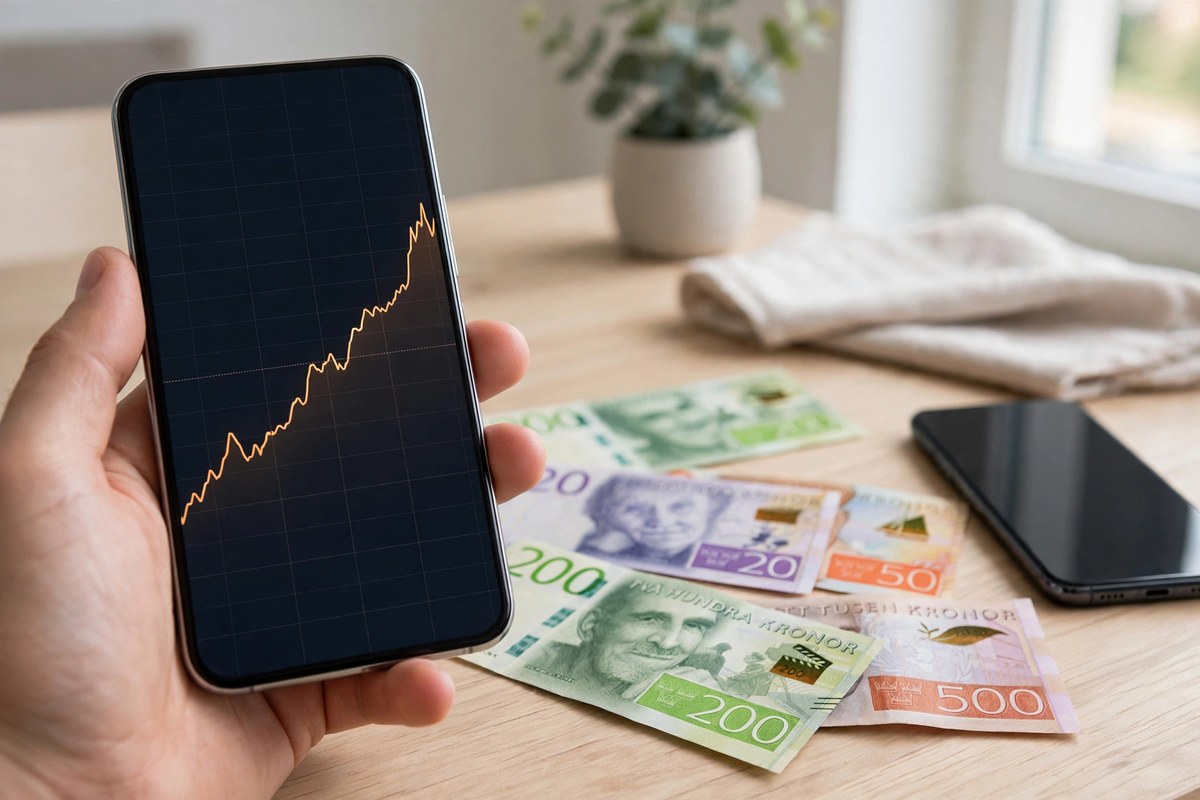
How to buy Bitcoin in Sweden: step by step
The whole process takes about ten minutes once you have BankID set up. Here is the route we recommend for a first purchase:
- Pick your exchange by funding style. Choose Safello or BTCX if you want to pay in kronor via Swish with BankID, or Bybit EU, OKX EU, or Kraken if you want the lowest fees and are happy funding in euros by SEPA. Confirm the platform holds a live MiCA authorisation before depositing.
- Create the account and clear KYC. Swedish platforms verify through BankID in minutes. Global exchanges take a passport or national ID plus a selfie; entering your details exactly as printed avoids the usual verification stall.
- Fund the account. Swish lands instantly on Safello. SEPA transfers to the global exchanges typically take a few hours to a day; SEPA Instant is faster where supported. Cards and PayPal are instant but usually carry a higher fee.
- Place a limit order, not a market order. On order-book exchanges, a limit order lets you name your price and usually costs less than a market order — on Kraken, for example, makers pay 0.25% versus 0.40% for takers. On Safello and BTCX, check the quoted total before confirming.
- Move the Bitcoin to your own wallet. Leaving coins on an exchange is convenient but adds counterparty risk — the $6.3B Binance hack in October 2026 was a reminder that even giants get hit. A hardware wallet costs around 500–1,000 SEK and removes the biggest single risk in crypto. Compare options in our best crypto wallets for beginners guide.
What 10,000 SEK actually buys you
Fees look small as percentages and large as kronor. Here is the maths on a 10,000 SEK purchase, using Bitcoin near $76,000 — roughly 720,000 SEK per coin at current exchange rates, so 10,000 SEK buys about 0.0138 BTC before fees:
- Bybit EU at 0.10%: about 10 SEK in trading fees. You keep about 0.0138 BTC, minus any SEK-to-EUR conversion your bank charges.
- OKX EU at 0.10–0.20%: about 10–20 SEK in trading fees, same euro-conversion caveat.
- Kraken at 0.40% taker: about 40 SEK in trading fees; a limit order at 0.25% cuts that to about 25 SEK.
- Safello at 0.49–0.99%: about 49–99 SEK, but zero currency conversion and Swish speed included.
- Paybis via Swish: 3.49% on larger transactions — about 349 SEK on 10,000 SEK. Convenient, but roughly 35 times the cost of Bybit EU. Use it only if no other route works for you.
Two costs hide outside the headline fee. First, the spread: brokers quote a buy price slightly above the market price, and on small orders the spread can exceed the stated fee. Second, the withdrawal fee: moving Bitcoin to your own wallet costs a network fee, so withdrawing tiny amounts repeatedly wastes money — batch your withdrawals instead. And remember that Bitcoin's price itself moved 5–6% in a single day this week, so the fee difference between exchanges is small next to normal daily volatility. For context on whether Bitcoin fits your portfolio at all, read is Bitcoin a good investment in 2026.
Sweden's 30% crypto tax — the rule that catches everyone
Swedish crypto tax is simple to state and easy to get wrong. Skatteverket treats cryptocurrencies as "other assets", not currency, and every disposal is a taxable event: selling for SEK, swapping one coin for another, and paying for goods with crypto all count. The capital gains rate is a flat 30% regardless of income, with no tax-free threshold and no long-term relief — holding for a year changes nothing.
Three details catch beginners out. First, the loss rule: only 70% of a capital loss is deductible. Sell at a 10,000 SEK loss and only 7,000 SEK offsets your gains — the missing 3,000 SEK of deduction costs you 900 SEK in extra tax. Second, the cost basis: Sweden uses the average cost method, so your acquisition cost is the average price across your purchases, not the price of the specific coins you sold. Third, the paperwork: gains and losses are declared on Section D of the K4 form with your annual return, filed between mid-March and 2 May, and gains and losses must be reported on separate lines per asset.
A worked example: you buy 10,000 SEK of Bitcoin and later sell for 15,000 SEK. The 5,000 SEK gain is taxed at 30%, so you owe 1,500 SEK — and Skatteverket expects it declared even though no employer or bank reports it for you. Staking rewards and mining income are generally taxed at 30% as capital income too, or at income-tax rates if the activity counts as a business. And since DAC8 took effect on 1 January 2026, exchanges must report your transaction data to the tax authorities — the era of "the tax office won't know" is over. Keep a record of every buy, sell, swap, and fee from day one; tax tools such as Koinly can import exchange data and generate the K4 figures. Full details are in Koinly's Sweden crypto tax guide for 2026 and on Skatteverket's own cryptocurrency pages.
5 mistakes that cost Swedish buyers money
Most losses in Sweden are not market losses — they are avoidable mistakes. Run through this checklist before your first buy:
- Buying on an unlicensed exchange. After the July 2026 MiCA cutover, platforms without a licence have no EU regulator behind them. Stick to the five above, and verify the licence on the regulator's register, not the exchange's marketing page.
- Paying 3.49% for Swish convenience. Instant-payment routes are the most expensive way to buy. If you can wait a day for a SEPA transfer, the saving on a 10,000 SEK buy is roughly 300 SEK.
- Forgetting the 30% tax until April. Set aside 30% of every realised gain the moment you sell. The K4 deadline is 2 May, and Skatteverket charges interest on late payment.
- Leaving coins on the exchange. Exchange balances are unsecured claims on a company. Withdraw to a wallet you control — the guide linked above shows how — and keep your seed phrase offline, never in a photo or cloud note.
- Treating a swap as tax-free. Trading Bitcoin for Ethereum is a disposal of the Bitcoin, taxed at 30% on the gain, even though no kronor touched your bank account. DeFi yields have the same problem: swapping and staking rewards are taxable events, as our yield farming guide explains.
Storing your Bitcoin safely in Sweden
Once you own Bitcoin, the storage decision matters more than the exchange choice. A hardware wallet — a small offline device that holds your private keys — is the standard recommendation for amounts above a few thousand kronor. Software wallets on your phone are fine for small amounts and daily use, but never store your 12- or 24-word recovery phrase digitally: write it on paper, keep it somewhere safe, and never share it with anyone, including people claiming to be exchange support. Swedish buyers should also know that BankID phishing is a real attack vector — no legitimate exchange will ever ask for your BankID code over the phone or in a chat message.
For larger holdings, consider splitting storage: most coins in cold storage, a small amount on the exchange for quick trades. And keep your purchase records — exchange statements, Swish receipts, wallet addresses — in one folder. You will need them for the K4 form, and they are the first thing Skatteverket asks for if anything is questioned.
FAQs
Is it legal to buy Bitcoin in Sweden?
Yes. Bitcoin is legal to buy, hold, and trade in Sweden. Finansinspektionen supervises crypto providers under the EU's MiCA framework, and a MiCA licence from any EU country covers Sweden. Crypto is treated as an asset for tax purposes, not as legal tender.
What is the cheapest way to buy Bitcoin in Sweden?
Bybit EU at 0.10% per trade is the cheapest licensed route in this comparison, followed by OKX EU at 0.10% maker / 0.20% taker. The trade-off is funding in euros rather than kronor, so factor in your bank's SEK-to-EUR conversion. For pure SEK convenience, Safello via Swish costs 0.49–0.99% but lands in under a minute with no conversion.
Can I buy Bitcoin with Swish?
Yes. Safello and BTCX both accept Swish, and some international platforms such as Paybis support it too. Swish deposits on Safello land in under a minute. Watch the fee, though: Swish routes range from 0.49% at Safello to 3.49% at Paybis, so the same payment method can cost very different amounts depending on the platform.
How much tax do I pay on Bitcoin in Sweden?
A flat 30% capital gains tax on profits, with no tax-free allowance. Only 70% of losses are deductible. You declare disposals on K4 Section D with your annual return, due by 2 May. Swapping one crypto for another and paying with crypto are also taxable disposals.
Do I need BankID to buy Bitcoin in Sweden?
Not strictly — global exchanges accept a passport or national ID — but Swedish platforms such as Safello and BTCX verify through BankID in minutes, and it is the fastest route. Without BankID, expect manual ID checks that can take a day or more.
How much Bitcoin can I buy with 10,000 SEK?
At Bitcoin near $76,000, roughly 720,000 SEK per coin, 10,000 SEK buys about 0.0138 BTC before fees. The exact amount depends on the price at the moment of purchase and the platform's fee: about 10 SEK in fees on Bybit EU versus 49–99 SEK on Safello.
Conclusion
Sweden is one of the easiest places in Europe to buy Bitcoin: the law is clear, BankID makes verification instant, Swish moves kronor in under a minute, and five MiCA-licensed exchanges compete for your business. The ranking is simple. If you want the lowest cost, use Bybit EU or OKX EU and fund in euros by SEPA. If you want the fastest kronor route, use Safello with Swish and BankID and accept the 0.49–0.99% fee as the price of convenience. If you want the longest security record, use Kraken.
Whatever you choose, do the two things that actually protect your money: move the Bitcoin to a wallet you control, and set aside 30% of every gain for Skatteverket — because in Sweden, the tax bill is the one part of crypto that is guaranteed. With Bitcoin down 5–6% this week and sitting near $76,000, the entry price is lower than it was a month ago; the route you pick and the records you keep will matter far more than the exact day you buy.