Dogecoin Labs Launch Explained: What It Means for DOGE Price and Adoption in 2026
Dogecoin Labs unites MyDoge, DogeOS and Such App under one roof to turn DOGE into a payments and developer ecosystem. Here's what it means for Dogecoin's price and real-world adoption.
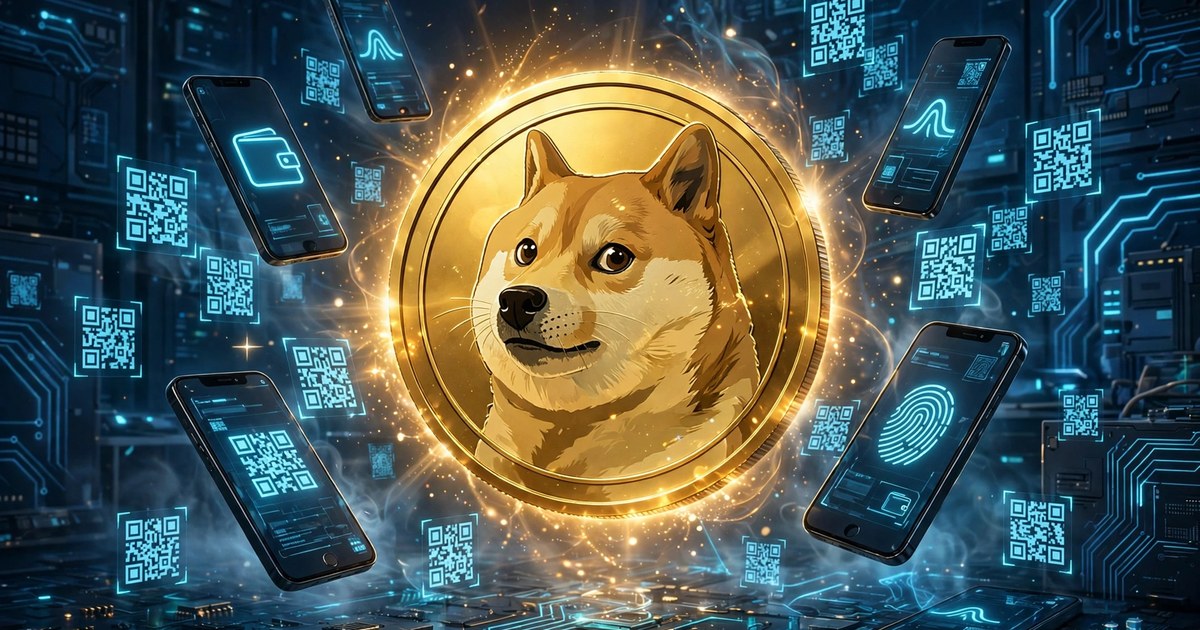
Dogecoin has spent over a decade being the crypto market's most famous joke. On October 21, 2026, it took one of its most serious steps yet toward becoming a real product ecosystem. A new entity called Dogecoin Labs was announced, bringing three existing projects — the MyDoge wallet company, the DogeOS EVM-compatible development layer, and the Such App consumer app — under a single roof, with a mandate to build wallets, payments, commerce, trading, DeFi, gaming, AI and social products on and around Dogecoin.
This is not another coin launch or a protocol fork. It is an organizational bet: that Dogecoin's real problem was never its meme branding, but the lack of a coordinated product team turning its brand recognition into usable payment and developer infrastructure. For a deeper look at where DOGE's price could head in this environment, see our Dogecoin price prediction analysis.
Why does this matter? Because the "Dogecoin to $1" dream has survived for years on hope and celebrity tweets, while the actual utility story barely moved. Dogecoin Labs is the first credible attempt to change that equation — and if it works, the thesis for DOGE changes from "fun money" to "payments network with a developer ecosystem." If it fails, it joins a long list of crypto announcements that produced press releases instead of products. This article breaks down exactly what was announced, what each piece does, what it means for the DOGE price, and what skeptics get right.
What Is Dogecoin Labs? The MyDoge + DogeOS + Such App Union
Dogecoin Labs is a new lab and product division announced on October 21, 2026, dedicated to building on Dogecoin. According to reporting from CoinGabbar, the division unites three previously separate efforts — MyDoge (a Dogecoin wallet company), DogeOS (an EVM-compatible layer for Dogecoin developers), and Such App (a consumer social app with DOGE payments) — under one organizational roof.
The focus areas listed in the announcement are broad: consumer wallets, Dogecoin payments, merchant commerce tools, trading, DeFi, gaming, AI and social products. In other words, Labs is positioned as both a payments company and a developer platform — two roles the Dogecoin ecosystem has historically struggled to fill in any organized way.
A few important details stand out from the reporting:
- No timeline was given for new products. CoinGabbar notes that the release included no dates or milestones for what Labs will ship. This is the standard caveat that should temper any immediate excitement.
- This is a consolidation, not a from-scratch launch. Each of the three component projects already exists in some form — MyDoge is an established Dogecoin wallet brand, DogeOS launched its testnet in late September 2026, and Such App already has a beta with DOGE payments. Labs is about coordinating them.
- The framing is explicitly about utility. The announcement's language centers on making DOGE usable — payments, wallets, merchant tools — rather than on price speculation. For the meme coin that has always lived on hype, that is a genuine strategic shift.
If you are new to Dogecoin entirely, our beginner's guide to Dogecoin covers the basics of how the coin works and why it still matters in 2026.
Dogecoin QR Payments and Merchant Tools: The Payments Play
The most immediately tangible pillar of Dogecoin Labs is the payments play: QR-code payments for in-person shopping and merchant payment tools for local businesses. These were named explicitly as focus areas in the October 21 announcement.
The logic is straightforward. Dogecoin's original 2013 vision was a "fun" internet currency for tipping and small payments — fast, cheap, and approachable. Thirteen years later, the coin is still mostly used for speculation on exchanges. The Labs thesis is that the missing piece was never the blockchain's speed or fees, but the last-mile tooling: easy QR payment flows at the counter, simple settlement for small merchants, and consumer wallets that ordinary people can actually use.
This is a crowded field. Bitcoin's Lightning Network, stablecoins on mobile wallets, and even legacy QR systems already compete for the "pay at the register with crypto" use case. Dogecoin's differentiators, if Labs executes, would be:
- Brand recognition that needs no explanation. The Shiba Inu is one of the most recognizable brands in finance. A merchant seeing a Dogecoin QR sticker needs no education about what it is.
- Low transaction fees. Dogecoin on-chain transactions remain cheap, which matters for the small-ticket purchases (coffee, snacks, tips) that QR payments target.
- An existing wallet base via MyDoge. Rather than building consumer adoption from zero, Labs inherits MyDoge's established Dogecoin wallet users.
The counterpoint is equally clear: brand recognition has existed for a decade without producing meaningful merchant adoption, and the crypto payment graveyard is full of projects that had great logos and empty registers. The test for this pillar will be actual merchant sign-ups and transaction volume — metrics the announcement did not commit to. For anyone evaluating DOGE as a payment asset today, see our guide on how to buy Dogecoin.

DogeOS: The Developer Play — an EVM-Compatible Layer for Dogecoin
The second pillar is the developer play. DogeOS, launched as a testnet on September 30, 2026, gives developers an EVM-compatible environment — meaning Ethereum-style tooling, smart contracts, and developer workflows can be used to build applications connected to the Dogecoin ecosystem. This was reported via GlobeNewswire and covered in detail by ad-hoc-news.
Why does this matter? Dogecoin's base layer has always been deliberately simple — essentially Bitcoin's code with different parameters. That simplicity is a feature for payments but a limitation for programmability: you cannot easily build DeFi protocols, games, or complex apps directly on Dogecoin's chain. DogeOS is an attempt to add that programmability layer without changing the base chain.
The EVM-compatible angle is strategically smart. The Ethereum developer ecosystem is by far the largest in crypto; making DogeOS compatible with Ethereum-style tooling means thousands of existing developers can build for the Dogecoin ecosystem without learning a new stack. The announced ambition includes DogeOS developer infrastructure plus Dogecoin DeFi, trading and gaming apps as target categories.
But honesty requires noting the competition. EVM-compatible layers are now a commodity — dozens of chains offer the same pitch. DogeOS's edge would have to come from its connection to Dogecoin's brand and user base rather than from technical novelty. The key milestone to watch is testnet → mainnet progression and actual developer uptake: how many real applications deploy, and whether any of them attract users beyond crypto-native experimenters.

Such App: The Consumer App Play — DOGE Payments Already in Beta
The third pillar is the consumer app play, and it is arguably the furthest along. Such App already has a beta that supports DOGE payments for goods and services, per ad-hoc-news reporting. In other words, while the payments and developer pillars are largely forward-looking, Such App is already doing the thing Dogecoin Labs wants the ecosystem to do: letting people spend DOGE on real things.
The strategic vision described in the announcement is that a planned DogeOS integration would connect merchants with the wider app ecosystem — linking the consumer app, the merchant tools, and the developer infrastructure into a single loop. If a merchant accepts DOGE through the Labs payment stack, that merchant could in theory plug into Such App's user base; if a developer builds a Dogecoin app on DogeOS, it could reach Such App users.
This is the classic platform flywheel argument, and it is the most ambitious part of the Labs vision. Platform flywheels are powerful when they spin — and brutal when they don't, because each side of the loop needs the others to exist first. The cold-start problem is real: merchants need users, users need merchants, developers need both. Such App's existing beta at least gives the flywheel one blade that is already turning.
For context on the broader Dogecoin news landscape and where stories like this break, see Cryptoflo's roundup of Dogecoin news sources.
What It Means for DOGE Price: Can This Fuel a Rally to $1?
Let's talk about the question every DOGE holder is actually asking: does Dogecoin Labs change the price outlook?
First, the honest market snapshot. On October 22, 2026, the day after the announcement, DOGE traded at roughly $0.08 — CoinGecko showed about $0.0805 (down ~1.5%), while Investing.com listed around $0.082 with a market cap near $14 billion, ranking around #11 among all cryptocurrencies. The circulating supply sits near 172 billion DOGE. Crucially: no source links the 24-hour dip to the announcement. The market's reaction to the Labs news was, as of reporting, a shrug — which is itself informative.
The market context around the announcement is also worth noting. Bitwise's spot Dogecoin ETF (BWOW) reached its end — its final trading day was October 14, 2026, with cash distribution to remaining shareholders expected on or around October 22, 2026, per Bitwise SEC filings reported by The Orbit Post and CoinGabbar. The other spot Dogecoin funds — Grayscale's GDOG and 21Shares' TDOG — remain open. Zero net flows were recorded for the Dogecoin spot ETF category on the October 21 session (TokenPost via ad-hoc-news). Our dedicated analysis of the Dogecoin price outlook after the Bitwise ETF closure digs deeper into this dynamic.
So what could Labs actually do for the price? The bull case runs like this:
- Narrative upgrade. DOGE's valuation has always been a multiple of attention. A credible "payments + developer ecosystem" story gives the market something to price beyond meme momentum.
- Demand sinks. Real merchant and consumer usage creates organic buy pressure — people acquiring DOGE to spend it, merchants holding or cycling it. This is fundamentally healthier demand than pure speculation.
- Developer optionality. If DogeOS attracts real applications, DOGE gains the kind of ecosystem-driven demand that has historically supported other layer-1 valuations.
But the $1 math is brutal and deserves an honest treatment. At ~172 billion DOGE in circulation, $1 per DOGE implies a ~$172 billion market cap — roughly 12x from current levels, larger than most of the current top-10 cryptocurrencies. Dogecoin also has no supply cap: about 5 billion new DOGE enter circulation every year, and that inflation never reaches zero. A $1 target therefore requires not just a rally but a sustained, massive inflow of new capital against a permanently diluting supply. Dogecoin Labs makes the fundamental story better — it does not change the arithmetic. Anyone modeling a $1 scenario should read our broader DOGE price prediction for the full framework.
The Skeptics' Case: Announcements vs. Delivery
The skeptical reading of Dogecoin Labs is simple: crypto has a long history of "labs," "foundations," and "ecosystem funds" that produced press releases instead of products. Every major coin has had its moment of announcing a serious developer push; few have converted announcements into sustained shipping.
The specific red flags a skeptic would cite:
- No timeline was given. When an announcement lists eight focus areas (wallets, payments, commerce, trading, DeFi, gaming, AI, social) and zero dates, it is fair to ask whether this is a roadmap or a wishlist.
- The market shrugged. A ~1.5% down day after the announcement is not a verdict, but it shows that traders — who are usually quick to front-run a good story — did not see immediate price implications.
- Each component predates Labs. MyDoge, DogeOS and Such App existed before October 21. The announcement is largely a rebranding of existing efforts under one name. That can still be valuable (coordination matters), but it is not the same as new capability being created.
- Execution in payments is brutally hard. Merchant adoption requires sales teams, support, chargeback handling, and accounting integrations — the unglamorous work that crypto projects chronically underinvest in.
The honest middle ground: Dogecoin Labs is a real organizational commitment with real existing components, but its value will be determined entirely by shipping. The announcement deserves attention; the products deserve the benefit of the doubt; and the price deserves skepticism until adoption metrics appear. This is not financial advice — it is a framework for evaluating the news. Always do your own research, and see our is Dogecoin a good investment analysis for the full risk picture.
What to Watch Next
If you want to track whether Dogecoin Labs is real or rhetorical, here are the concrete milestones to watch:
- Product timelines. The first test of seriousness: does Labs publish dates and milestones for its wallet, payments, and merchant products? A roadmap with dates is the single most important next signal.
- DogeOS mainnet. The September 30, 2026 testnet was step one. Watch for mainnet launch, developer grants or hackathons, and — most importantly — real applications deploying.
- Merchant uptake. Look for announced merchant partnerships, point-of-sale integrations, and any published transaction-volume data from the QR payments push.
- Such App's DogeOS integration. The planned integration connecting merchants with the wider app ecosystem is the flywheel moment. Watch for beta or launch announcements.
- Such App user growth. The consumer app is the furthest along; its user and transaction metrics are the closest thing to a live KPI for the whole Labs thesis.
- DOGE on-chain activity. If the payments play works, it should eventually show up in transaction counts and active addresses — the on-chain data cannot be faked with press releases.
FAQs
What is Dogecoin Labs?
Dogecoin Labs is a new lab and product division announced on October 21, 2026, dedicated to building wallets, payments, commerce, trading, DeFi, gaming, AI and social products on and around Dogecoin. It brings three existing projects — the MyDoge wallet company, the DogeOS EVM-compatible development layer, and the Such App consumer app — under one roof.
What are MyDoge, DogeOS and Such App?
MyDoge is an established Dogecoin wallet company; DogeOS is an EVM-compatible layer (testnet launched September 30, 2026) that lets developers build Ethereum-style applications for the Dogecoin ecosystem; and Such App is a consumer app whose beta already supports DOGE payments for goods and services. Dogecoin Labs unites all three under a single product division.
Will Dogecoin Labs push DOGE to $1?
No announcement alone can do that. At ~172 billion DOGE in circulation, $1 per coin implies a ~$172 billion market cap — about 12x current levels — and Dogecoin's supply grows by ~5 billion new coins per year with no cap. Labs improves the fundamental story (payments, developers, real usage), which is the kind of thing that can support a sustained rally, but $1 remains a long-shot target requiring massive sustained capital inflows. Our DOGE price prediction breaks down the scenarios in detail.
Can I pay with Dogecoin at stores now?
Such App's beta already supports DOGE payments for goods and services, and Dogecoin QR payments for in-person shopping plus merchant tools for local businesses are named focus areas of Dogecoin Labs. But broad, mainstream merchant acceptance does not exist yet — that is exactly what Labs says it wants to build. Check our how to buy Dogecoin guide if you want to get started.
What happened to the Bitwise Dogecoin ETF?
Bitwise's spot Dogecoin ETF (BWOW) ended — its final trading day was October 14, 2026, with cash distribution to remaining shareholders expected on or around October 22, 2026. Grayscale's GDOG and 21Shares' TDOG remain open. See our analysis of what the ETF closure means for DOGE.
Is Dogecoin still inflationary in 2026?
Yes. Dogecoin has no supply cap — roughly 5 billion new DOGE are created every year, and that issuance never reaches zero. This permanent inflation is one of the key headwinds for any long-term price target, and it is why adoption-driven demand (the Dogecoin Labs thesis) matters more for DOGE than it does for capped-supply assets. Our Dogecoin beginner's guide explains the tokenomics in plain language.
Conclusion
Dogecoin Labs is the most serious product pivot in Dogecoin's history: a payments network (QR codes, merchant tools), a developer platform (DogeOS's EVM-compatible layer), and a consumer app (Such App, already in beta with DOGE payments) — all under one roof, announced October 21, 2026. If the division ships, DOGE's investment thesis genuinely changes from meme speculation to utility-driven demand. If it doesn't, it becomes another entry in crypto's long catalog of announcements that outran delivery.
The honest position for now: watch the shipping, not the press release. Product timelines, a DogeOS mainnet, merchant partnerships, and on-chain transaction growth are the metrics that will decide whether this was the moment Dogecoin grew up. The $1 dream survives on adoption, not announcements — and for the first time in years, there is an organized team whose job is to deliver that adoption. That alone makes Dogecoin Labs the most important Dogecoin story of 2026.
Disclaimer: This article is for informational purposes only and is not financial advice. Cryptocurrency investments carry substantial risk, including the possible loss of principal. Always do your own research and consider consulting a qualified financial advisor before making investment decisions.