Crypto in Africa Hits $101 Billion — the World's Fastest-Growing Market, and Stablecoins Just Overtook Bitcoin
Sub-Saharan Africa's crypto economy grew 13.4% to $101 billion — the fastest growth on earth — while stablecoin payments surged 6x to $14.6 billion and caught Bitcoin. The catch: Africans still can't easily spend it.
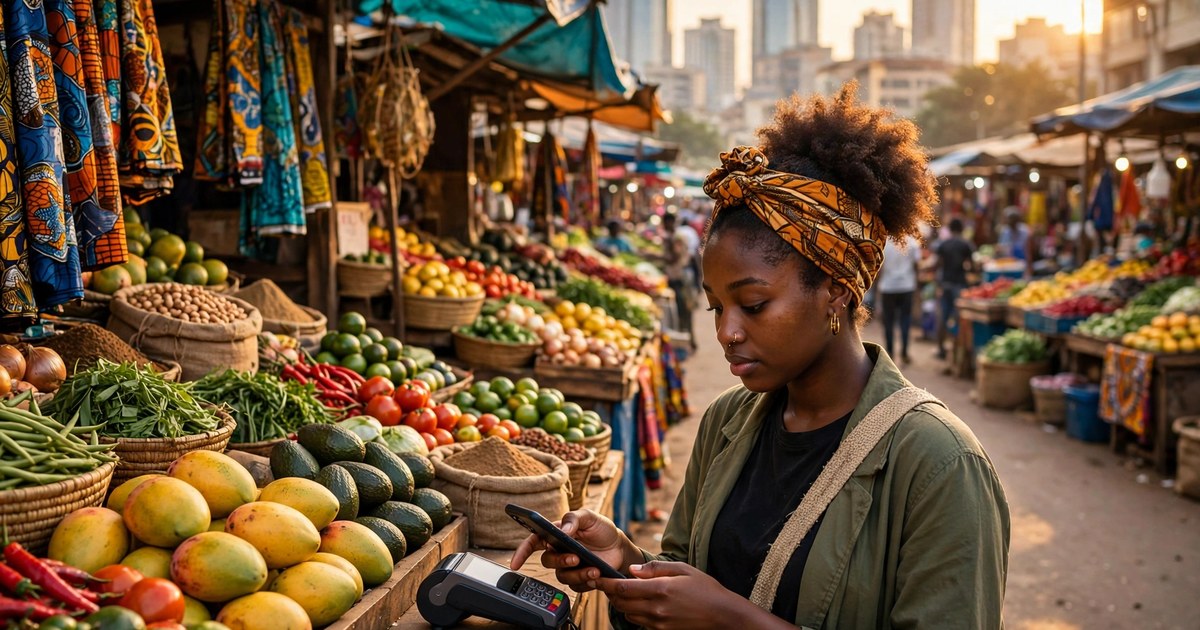
Africa Is Now Crypto's Fastest-Growing Market — and It Doesn't Look Like You Think
Sub-Saharan Africa's crypto economy grew 13.4% to $101 billion in the year to June 2026, making it the fastest-growing crypto region in the world, according to Chainalysis' 2026 geography report published on October 29, 2026. Stablecoin payments sent between people surged more than sixfold in four years, from $2.3 billion to $14.6 billion — and in that same channel, Bitcoin's value fell about 60%, from $36 billion to the same $14.6 billion. In other words, the world's fastest-growing crypto market just quietly stopped being a Bitcoin story. It became a payments story, and the payment rail is the dollar-pegged stablecoin.
That single flip reframes almost everything outsiders assume about crypto in Africa. This is not primarily a speculation market. Chainalysis found that personal wallets — people holding their own keys rather than leaving funds on exchanges — accounted for 32.3% of all value received across the region, the highest share anywhere in the world. And 70.9% of that wallet activity was cross-border transfers between people. The money is moving because it needs to move: pay a supplier abroad, receive a freelance payment, send money home, or hold dollars when the local currency weakens. The question now is not whether Africans will use crypto. It is whether they will ever be able to spend it as easily as they can send it.
The $101 Billion in Context: Smallest Market, Fastest Growth
Two facts sit side by side and both matter. Sub-Saharan Africa remains the smallest crypto economy by transaction value — yet it grew faster than every other region Chainalysis tracks. Growth of 13.4% in a year when global crypto prices roughly halved from their peak is not a bull-market artifact. Chainalysis' global data showed total tracked crypto activity worldwide falling only 1.6%, from $9.5 trillion to $9.4 trillion, in the 12 months to June 2026 — but Africa grew while prices fell, which points to usage rather than hype.
The regional picture is dominated by two countries. South Africa and Nigeria together account for more than three-quarters of Sub-Saharan Africa's crypto activity — but they got there by completely different routes. South Africa's crypto economy expanded 52% to $39.3 billion, driven by cross-border peer-to-peer stablecoin flows and crypto service activity. Nigeria recorded $38.1 billion, down 3% overall, as growth in centralized exchange and service activity was offset by a 45% drop in decentralized exchange activity and a 17% fall in cross-border peer-to-peer flows. One market is accelerating; the other is consolidating around domestic platforms. Both are converging on the same instrument: the stablecoin.
South Africa vs Nigeria: Two Playbooks, One Winner
South Africa's surge has a corporate and retail spine. The country recorded $8.34 billion in domestic business transactions, and retail adoption initiatives such as Scan to Pay now enable Bitcoin payments at a reported 650,000 storefronts. South Africa's growth was broad-based, with gains across every category Chainalysis measures, led by cross-border peer-to-peer stablecoin flows. It looks like a market where crypto is becoming ordinary commercial infrastructure.
Nigeria's story is more complicated — and more instructive. The country ranks third in the world in Chainalysis' 2026 Global Crypto Adoption Index, behind only Brazil and the United States, and it ranks first in the world on two of the index's four measures: crypto sent directly between people inside the country, and crypto moving across its borders. Nigerian users sent $25.2 billion to crypto services in the report period, up 172% from four years earlier. Domestic exchanges drove nearly all of that increase, receiving $6.22 billion — half of the country's centralized exchange inflows, up from 27% in 2025 and just 7% in 2022. After authorities restricted access to several international exchanges in 2024, Nigeria's crypto economy did not shrink away. It went domestic.
The divergence matters for anyone trying to read Africa as one market. It isn't. South Africa is building outward, with cross-border flows and merchant acceptance. Nigeria is building inward, with homegrown exchanges capturing the activity that once went offshore. What unites them is the asset doing the work: dollar-pegged stablecoins such as USDT and USDC, used to pay suppliers, receive freelance income, and preserve value when the naira weakens.
What Most People Get Wrong About Crypto in Africa
The persistent myth is that African crypto adoption is driven by speculation — people gambling on volatile coins in hopes of getting rich. The data says the opposite, and the stablecoin-Bitcoin crossover is the proof. Between 2022 and 2026, the value of stablecoins received through peer-to-peer channels rose more than sixfold while Bitcoin's value through the same channel fell 60%. People did not abandon crypto. They abandoned volatility for the specific jobs crypto does better than banks: moving money across borders cheaply and holding dollar value without a dollar bank account.
A second misconception is that this is a fringe, informal economy. The numbers are now at national scale. Active intra-regional crypto payment corridors nearly doubled, from 80 to 152, while transaction volume across those corridors more than tripled, from $34.3 million to $116.5 million. Crypto remittances into Sub-Saharan Africa from Western nations reached $888 million in the report period, up 36% year over year, across more than one million transactions. North America was the largest source at $645 million, while inflows from Australia and New Zealand nearly tripled to $143 million and Western Europe sent $100 million. Stablecoin remittance value alone more than doubled, from $235 million to $492 million, while Bitcoin remittance value stayed largely flat. This is a payments system with corridors, volumes, and growth rates that any bank would envy.
A third misconception cuts the other way: that crypto has already "won" in Africa. It hasn't — not yet. The panel discussion at TechCabal's Moonshot event on October 29, 2026, titled "The Adoption Gap," put the problem plainly. Stablecoins already move money in and out of Africa faster and more cheaply than banks, said the panelists — but people still can't spend them easily, and regulators still can't see where they go. Sending money is solved. Spending it is not.
Bank Transfer vs Stablecoin: The Comparison That Explains Everything
The reason stablecoins keep winning in Africa fits in one table. For a worker sending money home or a business paying a supplier, the comparison is not theoretical — it is the difference between money arriving today and money arriving next week, minus a fee that can exceed a day's wages.
| What matters | Traditional bank transfer | Stablecoin transfer |
|---|---|---|
| Cost to send | Up to 8% of the amount, and a World Bank average of 7.9% for a $200 transfer into Sub-Saharan Africa | As little as 10 cents, even for transfers from $5 to $500,000, according to Nigerian payments platform Breet |
| Speed | Days, with currency-conversion margins widening while the money is in transit | Minutes, settled on-chain at any hour |
| Availability | Banking hours, correspondent banks, and paperwork | 24/7, from any smartphone with internet access |
| Currency risk | African currencies can move before a transfer lands, so banks build wide margins into exchange rates | Dollar-pegged value held until the moment of conversion to local currency |
| Spendability | Arrives as spendable local currency in a bank account | Still the weak link: converting to local currency and spending it remains friction-filled |
That last row is the whole story of the next phase. The rails are built. The on-ramps and off-ramps — and the shops, bills, and salaries at the end of them — are not. As one panelist put it at Moonshot, stablecoin adoption will grow as more banks enter the market, because banks are what turn a transfer rail into spendable money. Until then, most crypto in Africa eventually has to become local currency for rent, school fees, fuel, and salaries, and for most people that conversion still happens through peer-to-peer trading.
The Spending Gap: A $101 Billion Market You Still Can't Spend
Nigeria has already run the experiment in central bank digital currency — and it failed the spendability test. The Central Bank of Nigeria launched the eNaira, Africa's first central bank digital currency, in October 2021. By 2023, the International Monetary Fund found that 98.5% of eNaira wallets went unused in any given week. A government-issued digital currency with no merchant acceptance and no compelling use case could not compete with the stablecoins people were already using to solve real problems.
The private sector is now trying to close the gap from the other direction. The naira-pegged stablecoin cNGN, issued by WrappedCBDC, went live in February 2025 under the Securities and Exchange Commission's regulatory incubation programme. Payment apps are racing to make crypto spendable where people already pay — one Nigerian app, Apexpay, now supports 12 coins including USDT across multiple networks, USDC, Bitcoin, Solana, and Dogecoin, with instant transactions and separate naira and cedis wallets. The pitch is simple: the crypto is already in people's phones; the product that wins is the one that lets them spend it without a tutorial.
Regulation will decide how fast that gap closes. Nigeria's July 2026 Executive Order on Virtual Asset Coordination and South Africa's draft crypto asset manual for cross-border activity both point toward clearer rules. But Nigeria's Securities and Exchange Commission has also proposed rules that would require foreign-pegged stablecoins to win approval before they can be listed or held on regulated Nigerian platforms — a rule that, once it lands, will shape the next phase as much as anything product builders do. The tension is real: regulators want visibility into flows they currently cannot see, while users want the low cost and speed that attracted them in the first place. For a deeper look at how regulators elsewhere are treating dollar-pegged coins, see our coverage of USDC's new status as Europe's first "significant" stablecoin and where USDC actually pays yield right now.

What Happens Next: 5 Dates and Decisions to Watch
Africa's crypto story will not be decided by prices. It will be decided by a handful of regulatory and product decisions over the coming months. Here is what to watch, in order:
- Nigeria's proposed stablecoin approval rules move from proposal to enforcement, deciding which foreign-pegged coins regulated platforms can list or hold.
- South Africa's draft crypto asset manual for cross-border activity is finalized, giving banks and services a compliance template for the region's largest cross-border flows.
- Merchant acceptance expands beyond pilots, following South Africa's Scan to Pay model, so stablecoin balances become spendable at ordinary shops rather than only convertible through peer-to-peer trades.
- Bank partnerships deepen, with more banks entering stablecoin settlement, turning transfer rails into spendable money and giving regulators the visibility they say they need.
- Remittance corridors keep compounding, with intra-African payment corridors growing from 152 and stablecoin remittance value building on its doubling to $492 million.
Chainalysis itself frames the next phase the same way: continued growth depends on regulatory clarity, continued investment, and closer integration with existing financial infrastructure. The technology argument is over. The distribution argument is just beginning.
5 Checks Before You Send or Hold Stablecoins in Africa
If you use stablecoins for payments, remittances, or savings in the region, the risks are different from those of a Western exchange user — and so is the checklist:
- Confirm the stablecoin's peg and reserves before holding large balances, and prefer coins with transparent, audited backing over opaque alternatives.
- Keep spending money and savings money separate, holding only what you need for transfers in a hot wallet and the rest in self-custody — the region's 32.3% personal-wallet share exists for a reason.
- Verify the network before you send, since USDT on TRC20, ERC20, and BEP20 are not interchangeable and sending on the wrong network can strand funds.
- Compare the full conversion cost, not just the transfer fee, because the exchange rate at the peer-to-peer or off-ramp step is where most of the real cost hides.
- Check the regulatory status of your platform, especially in Nigeria, where proposed approval rules for foreign-pegged stablecoins could change which coins regulated platforms can offer.
New to self-custody? Our guides explain what Bitcoin is and how it works, compare the best crypto wallets for beginners, and explain how to buy Bitcoin safely. If you mostly move money between people rather than exchanges, our explainer on what a DEX is and how decentralized trading works is worth reading before your first swap.
Why This Matters Beyond Africa
Africa is often treated as a late adopter of financial technology. In crypto, it is a leading indicator. The pattern visible there — stablecoins displacing volatile coins for real payments, personal wallets dominating, domestic platforms replacing offshore ones, and regulators racing to catch up with flows they cannot see — is the pattern now emerging in Latin America, Southeast Asia, and parts of the Middle East. The regions where crypto solves an expensive, slow, or restricted payments problem adopt it fastest, and they adopt the boring version of it: the dollar-pegged coin, not the speculative token.
That has implications for the rest of the market too. When a region of more than a billion people uses stablecoins as its dollar banking system, demand for transparent reserves, cheap settlement, and clear rules stops being a niche policy debate and becomes a mass-market product requirement. The companies and protocols that win Africa's spending gap — the gap between sending money and spending it — will have built the product the rest of the emerging world needs next. The $101 billion figure is not the destination. It is the down payment.
Frequently Asked Questions
How big is Africa's crypto market in 2026?
Sub-Saharan Africa's crypto economy reached $101 billion in the year to June 2026, up 13.4% year over year, according to Chainalysis' 2026 geography report. It was the fastest-growing crypto region in the world, though it remains the smallest by total transaction value.
Which African countries use crypto the most?
South Africa and Nigeria together account for more than three-quarters of Sub-Saharan Africa's crypto activity. South Africa's market grew 52% to $39.3 billion, while Nigeria's reached $38.1 billion. Nigeria ranks third globally in grassroots crypto adoption and first in the world for both domestic and cross-border peer-to-peer trading.
Why are stablecoins more popular than Bitcoin in Africa?
Because the dominant use case is payments, not speculation. Stablecoin value received through peer-to-peer channels rose from $2.3 billion in 2022 to $14.6 billion in 2026, while Bitcoin's value through the same channel fell about 60% from $36 billion to $14.6 billion. Dollar-pegged coins hold their value, settle in minutes, and cost as little as 10 cents to send — a decisive advantage over bank transfers that can cost up to 8% and take days.
Can you spend crypto easily in Africa?
Not yet — and that is the market's biggest gap. Stablecoins move money across borders cheaply, but converting them to local currency and spending them at ordinary shops remains difficult. South Africa's Scan to Pay initiative, reportedly accepted at 650,000 storefronts, and Nigeria's spendable-crypto apps are early attempts to close that gap.
Is crypto legal in Nigeria and South Africa?
Both countries are moving toward clearer frameworks rather than bans. Nigeria issued a July 2026 Executive Order on Virtual Asset Coordination, and its Securities and Exchange Commission runs an incubation programme for local stablecoins such as cNGN. South Africa has drafted a crypto asset manual for cross-border activity. Rules for foreign-pegged stablecoins on regulated Nigerian platforms are still being finalized, so the regulatory picture remains in flux.
What is the cheapest way to send money to Africa?
For many corridors, stablecoin transfers are now the cheapest option on paper — fees as low as 10 cents versus a World Bank average of 7.9% for a $200 traditional transfer into Sub-Saharan Africa. The real cost depends on the exchange rate at the conversion step, so compare the full door-to-door cost, including the peer-to-peer or off-ramp rate, before choosing a route.
Conclusion
The headline number — $101 billion, up 13.4%, the fastest growth on earth — is impressive. The more important number is $14.6 billion: the value of stablecoins moving between people in Sub-Saharan Africa, up from $2.3 billion in four years, now equal to Bitcoin's share of the same channel. Africa did not adopt crypto to gamble. It adopted crypto to get paid, to send money home, and to hold dollars without a dollar bank account. The market's next chapter will not be written by prices. It will be written by whoever makes that money spendable — and by regulators deciding whether to help or hinder them. Watch the spending gap. That is where the $101 billion becomes real.
Sources: Chainalysis 2026 Geography of Crypto report on Sub-Saharan Africa (published October 29, 2026), as reported by Blockchain.News and CoinPasar; TechCabal's Moonshot "Adoption Gap" panel coverage, Stablecoins in Africa are held back by spending; and Nairametrics' coverage of Nigeria's adoption rankings, Apexpay rides Nigeria's crypto boom. This article is for information only and is not financial advice.